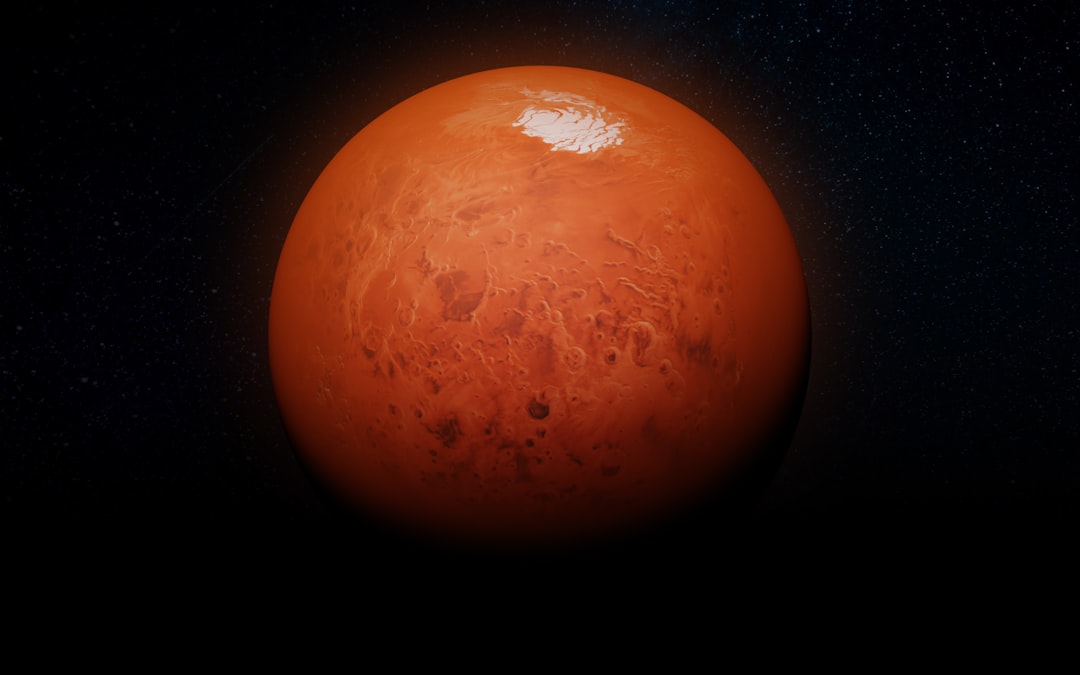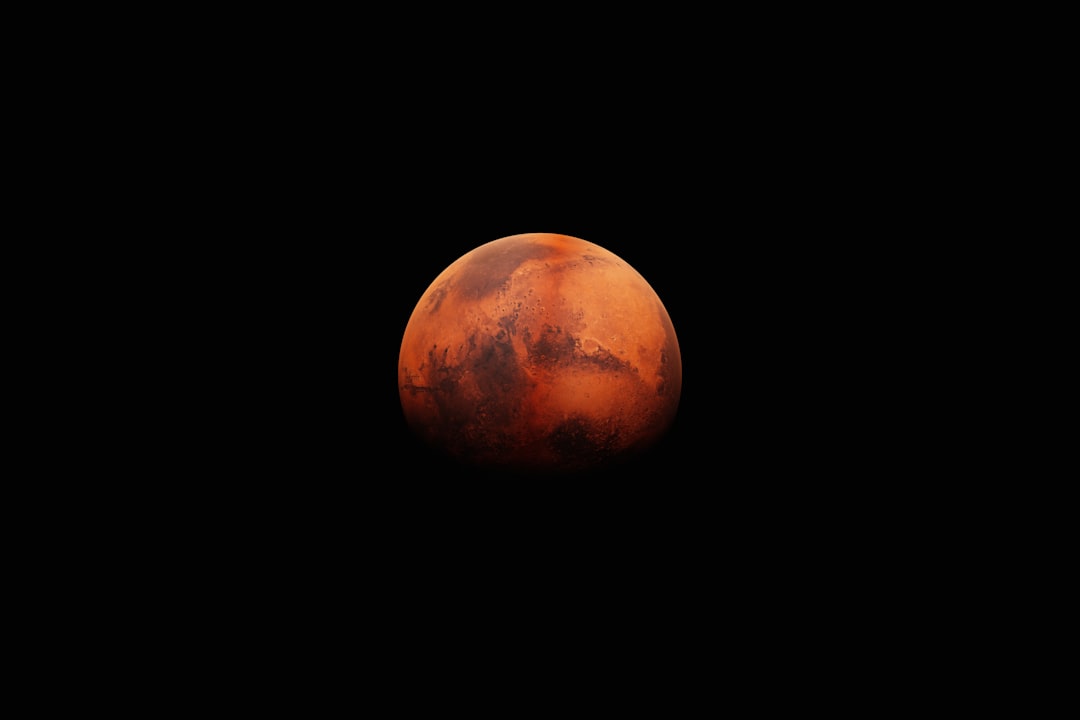
The dream of transforming Mars into a second Earth has captivated humanity's imagination for generations, bridging the gap between science fiction and scientific possibility. Since renowned astronomer Carl Sagan first proposed the concept in the 1970s, the idea of planetary engineering on our neighboring world has evolved from pure speculation into a subject of serious scientific inquiry. Now, a groundbreaking research paper from Edwin Kite at the University of Chicago and his colleagues presents the most comprehensive technical roadmap yet for making Mars habitable—while candidly addressing the monumental challenges that stand in our way.
Published as a pre-print on arXiv, this ambitious study deliberately sidesteps the profound ethical debates surrounding planetary modification to focus on a more fundamental question: setting aside whether we should terraform Mars, can we actually accomplish it with foreseeable technology? The answer, as the research reveals, is a qualified yes—but the path forward requires unprecedented engineering feats, massive resource investments, and technologies that currently exist only in theoretical form. This isn't just about planting a few greenhouses on the Martian surface; it's about fundamentally restructuring an entire planet's climate system over the course of centuries.
The implications extend far beyond Mars itself. Understanding the feasibility of large-scale climate engineering on another world could provide crucial insights into managing Earth's own climate challenges, while simultaneously laying the groundwork for humanity's potential expansion into the solar system. As we stand on the threshold of becoming a multi-planetary species, this research represents a critical step in transforming science fiction dreams into engineering blueprints.
Phase One: Advanced Greenhouse Technology and Localized Warming
The first stage of the proposed terraforming roadmap focuses on creating controlled microclimates using next-generation greenhouse structures—but these aren't your typical backyard greenhouses. The research team envisions deploying sophisticated enclosures constructed from silica aerogel, an ultra-lightweight material that's 99.8% air and possesses remarkable insulating properties. According to studies from NASA's Space Technology Mission Directorate, aerogel has already proven its worth in space applications, including its use on Mars rovers as insulation.
These Martian greenhouses would feature specially engineered canopies designed with precise optical properties: transparent to visible sunlight but opaque to infrared radiation. This selective permeability would create a powerful greenhouse effect, allowing solar energy to enter while preventing heat from escaping back into the thin Martian atmosphere. The temperature differential could be dramatic—potentially raising local temperatures by 50-60 degrees Celsius compared to the frigid Martian baseline of around -60°C.
Within these protected environments, the abundant subsurface ice deposits discovered by missions like the Phoenix Mars Lander could melt, providing critical water resources for human settlements. However, there's a significant chemical hurdle: Martian soil contains high concentrations of toxic perchlorates—compounds that would need to be removed or neutralized before any Earth-based plants could thrive. Despite this challenge, the localized approach offers immediate practical benefits for early Mars colonization efforts.
"The beauty of the greenhouse approach is its scalability and modularity. We can start small with individual structures supporting specific habitats, then gradually expand and interconnect them as our capabilities grow," the research paper notes, highlighting the incremental nature of this strategy.
The ultimate vision extends to what futurist Isaac Arthur has termed a "World House"—an interconnected network of these advanced greenhouses that could eventually span entire regions or even the whole planet. While this remains firmly in the realm of long-term speculation, it represents a logical extension of proven greenhouse technology adapted for an alien environment.
Phase Two: Orbital Solar Reflectors and Atmospheric Enhancement
The second phase escalates the engineering challenge dramatically by proposing the deployment of massive orbital mirrors to concentrate additional solar energy onto Mars's surface. These wouldn't be conventional mirrors but rather enormous solar sails—gossamer-thin reflective sheets positioned in carefully calculated orbits to redirect sunlight toward specific targets on the Martian surface.
Initially, these orbital reflectors would focus concentrated sunlight on human settlements, providing supplemental heating and extending the habitable zones created by surface greenhouses. But the long-term strategy is far more ambitious: directing this amplified solar radiation toward Mars's southern polar ice cap, which contains vast deposits of frozen carbon dioxide. Sublimating this CO₂ ice would release massive quantities of greenhouse gas into the atmosphere, potentially initiating a self-reinforcing warming cycle.
The atmospheric physics here are compelling. Mars's current atmospheric pressure is less than 1% of Earth's—far too thin to support liquid water or retain heat effectively. By releasing the estimated several trillion tons of CO₂ locked in the polar caps, the atmospheric pressure could potentially increase several-fold, creating conditions where liquid water might persist on the surface during warmer seasons.
However, the research identifies a critical technological bottleneck: current solar sail technology is simply too heavy for this application to be economically feasible. The paper calculates that engineers would need to develop ultra-lightweight sails massing less than 20 grams per square meter—approximately one-third the mass of today's most advanced designs. For context, The Planetary Society's LightSail 2 demonstrated solar sailing technology, but at mass ratios still too high for Mars terraforming applications.
Geological Consequences of Rapid Warming
Beyond the engineering challenges, the research highlights potentially severe geological side effects of rapidly warming Mars. The planet's surface has been frozen for billions of years, and sudden temperature increases could trigger:
- Massive landslides: As ground ice melts, it could destabilize cliff faces and crater walls across the planet
- Subsurface volatility: Trapped gases released from thawing permafrost could create unpredictable eruptions
- Atmospheric dust storms: Increased temperature gradients might intensify Mars's already formidable dust storm activity
- Surface erosion: Flowing liquid water, absent for eons, could rapidly reshape Martian topography
These consequences aren't necessarily deal-breakers, but they would require careful monitoring and potentially active management to prevent damage to human infrastructure and settlements.
Phase Three: Engineered Atmospheric Nanoparticles
The third and most speculative phase involves deliberately introducing manufactured aerosols into Mars's atmosphere—essentially engineering an artificial greenhouse effect using custom-designed nanoparticles. This approach draws inspiration from our understanding of how volcanic eruptions and industrial pollution affect Earth's climate, but with a crucial difference: instead of cooling the planet, these particles would be optimized for warming.
The research team proposes two promising candidate materials: aluminum nanorods and nitrogen-doped graphene. These exotic materials would be engineered at the molecular level to absorb and trap infrared radiation while remaining suspended in the thin Martian atmosphere for extended periods. Studies published in Nature Astronomy have explored similar concepts for planetary climate modification, though mostly in theoretical contexts.
The scale of this undertaking is staggering. The research estimates that achieving a measurable impact on Mars's global climate would require dispersing approximately 3 million metric tons of these specialized nanoparticles into the atmosphere. At the paper's projected future launch costs of $2,000 per kilogram to Mars's surface, transporting this material from Earth would cost an astronomical $6 trillion—making in-situ manufacturing on Mars an absolute necessity.
"The aerosol approach represents the most uncertain element of our roadmap, primarily because we lack experimental data on how these particles would behave in Mars's unique atmospheric conditions over extended timescales," the researchers acknowledge in their analysis.
Critical Unknowns and Research Gaps
Several fundamental questions remain unanswered about the atmospheric nanoparticle strategy:
- Settling rates: How quickly would particles fall out of the thin Martian atmosphere, and how frequently would they need replenishment?
- Particle aggregation: Would the nanoparticles clump together over time, reducing their effectiveness?
- Chemical stability: How would Mars's harsh UV radiation and oxidizing surface chemistry affect particle longevity?
- Manufacturing feasibility: Can we develop the industrial infrastructure on Mars to produce these specialized materials at scale?
- Atmospheric circulation: How would Mars's dust storms and seasonal winds distribute and potentially remove these particles?
Answering these questions will require extensive laboratory experiments simulating Martian conditions, computer modeling of atmospheric dynamics, and potentially small-scale field tests on Mars itself before any full-scale implementation could be attempted.
Economic Realities and Timeline Projections
Perhaps the most sobering aspect of the research is its frank assessment of the economic and temporal scales involved. Even under optimistic scenarios with rapid technological advancement and sustained funding, the paper suggests we're at least several decades away from attempting global-scale warming of Mars. A complete transformation to Earth-like conditions would likely require centuries of continuous effort.
The financial requirements dwarf any current space program. For comparison, the entire NASA Artemis program to return humans to the Moon is projected to cost roughly $93 billion through 2025. Terraforming Mars would likely require investments measured in the trillions of dollars, sustained over multiple human generations—a commitment unprecedented in human history.
However, the research emphasizes an encouraging conclusion: nothing in the laws of physics prevents us from terraforming Mars. Unlike science fiction concepts such as faster-than-light travel or perpetual motion machines, planetary engineering operates entirely within known physical principles. The barriers are technological, economic, and organizational—formidable, certainly, but not insurmountable given sufficient time and resources.
Broader Implications for Planetary Science and Human Expansion
Beyond its specific technical proposals, this research roadmap contributes to several broader scientific and philosophical discussions. Understanding how to modify planetary climates could provide unexpected insights into Earth's climate system, potentially informing strategies for managing anthropogenic climate change. The engineering challenges of creating a breathable atmosphere on Mars might inspire new approaches to atmospheric chemistry and environmental management.
The study also reinforces Mars's position as humanity's most viable target for interplanetary expansion. While proposals for colonizing Venus, Europa, or even exoplanets capture public imagination, Mars remains the only body in our solar system where terraforming appears remotely feasible with foreseeable technology. Its 24-hour day cycle, substantial water ice deposits, and relatively moderate radiation environment (compared to other options) make it uniquely suited for long-term human habitation.
As private space companies like SpaceX work toward establishing permanent human presence on Mars within the coming decades, research like this provides the scientific foundation for thinking beyond simple survival toward genuine planetary transformation. While Elon Musk's timelines for Mars colonization may be optimistic, the underlying vision of making Mars habitable aligns with the incremental approach outlined in this roadmap.
The journey from today's robotic exploration to a terraformed Mars capable of supporting complex ecosystems will be long and challenging. But as this comprehensive research demonstrates, it's a journey grounded in sound science, requiring not miraculous breakthroughs but rather sustained engineering innovation, massive resource commitment, and most importantly, the collective will to undertake humanity's greatest engineering project. Whether we should embark on this path remains an open ethical question—but this research makes clear that we're beginning to understand how we could, if we choose to do so.