The quest to find habitable worlds beyond Earth has long focused on a simple criterion: the presence of liquid water. However, groundbreaking new research published in The Planetary Science Journal reveals that this approach may be dangerously oversimplified. Scientists at the University of Washington have discovered that exoplanets need far more than just trace amounts of water to sustain the delicate planetary processes that maintain long-term habitability—they require substantial water reservoirs equivalent to at least 20-50% of Earth's ocean mass.
This revelation fundamentally reshapes our understanding of the habitable zone and challenges decades of assumptions about where life might exist in the cosmos. While astronomers have traditionally focused on whether planets orbit within the so-called "Goldilocks zone"—the region around a star where temperatures allow liquid water to exist—this new research demonstrates that location alone tells only part of the story. The critical factor isn't merely whether water can exist, but whether a planet possesses enough of it to power the geological machinery that prevents catastrophic climate runaway.
Led by doctoral student Haskelle White-Gianella from the University of Washington's Department of Earth and Space Sciences, the research team developed sophisticated computational models to explore how arid terrestrial planets maintain—or fail to maintain—their carbon cycles. Their findings carry profound implications for the search for extraterrestrial life and may help explain why Venus, Earth's sister planet, transformed from a potentially habitable world into the hellish inferno we observe today.
The Planetary Thermostat: Understanding Earth's Carbon Cycle
To appreciate why water inventory matters so profoundly, we must first understand the elegant planetary mechanism that has kept Earth habitable for billions of years. Our planet operates what scientists call the carbonate-silicate weathering cycle, also known as the Urey cycle, named after Nobel laureate Harold Urey who first described its importance in the 1950s. This geological process functions as Earth's natural thermostat, preventing the kind of runaway greenhouse effect that transformed Venus into an oven with surface temperatures exceeding 450°C.
The cycle begins in Earth's atmosphere, where water vapor combines with carbon dioxide to form carbonic acid—a weak acid that makes all rainfall slightly acidic with a pH around 5.6. When this acidic precipitation falls on exposed silicate rocks, it triggers chemical weathering reactions that gradually dissolve minerals containing calcium, magnesium, and other elements. According to research from NASA's Planetary Science Division, this process removes approximately 0.3 billion tons of carbon from the atmosphere annually on Earth.
The dissolved minerals and carbon then flow via rivers and streams into the oceans, where marine organisms incorporate them into shells and skeletal structures. When these organisms die, their remains sink to the ocean floor, forming carbonate sediments. Over millions of years, plate tectonics—Earth's system of moving crustal plates—subducts these carbon-rich sediments deep into the planet's mantle. Eventually, volcanic activity releases some of this carbon back into the atmosphere as CO₂, completing the cycle.
"These sophisticated, mechanistic models of the carbon cycle have emerged from people trying to understand how Earth's thermostat has worked—or hasn't—to regulate temperature through time. What we've learned is that water isn't just important for life directly, it's the lubricant that keeps the entire planetary climate system functioning."
Modeling Arid Worlds: A Complex Computational Challenge
White-Gianella and her colleague Joshua Krissansen-Totton, an assistant professor of Earth and Space Sciences at UW, constructed highly detailed models incorporating 18 distinct variables to simulate how desert-like exoplanets might maintain or lose their carbon cycle balance over billions of years. This represents one of the most comprehensive attempts yet to model planetary habitability beyond simple temperature calculations.
The model accounts for factors including:
- Atmospheric escape rates: How quickly hydrogen and other light elements leak into space, which affects water retention over geological timescales
- Volcanic outgassing rates: The pace at which carbon dioxide and other gases are released from the planet's interior through volcanic activity
- Land-ocean distribution: The fraction of a planet's surface covered by continents versus oceans, which dramatically affects weathering efficiency
- Rock chemistry and porosity: The mineral composition and physical structure of surface rocks, determining how readily they weather
- Hydrological efficiency: The percentage of rainfall that becomes surface runoff versus what infiltrates underground or evaporates
- Planetary temperature: Overall climate conditions that influence both weathering rates and water distribution
The researchers ran their model through tens of thousands of iterations, varying these parameters to explore how different combinations affect long-term climate stability. The computational work, supported by resources from the National Science Foundation, revealed a critical threshold that many arid planets fail to meet.
The Critical Water Threshold
The modeling results paint a sobering picture for water-poor exoplanets. Even when located squarely within their star's habitable zone, planets with insufficient water inventories enter what the researchers call a "runoff-limited weathering regime." In this state, there simply isn't enough precipitation to generate the surface runoff needed to dissolve silicate rocks at rates comparable to volcanic CO₂ outgassing.
The team's calculations indicate that terrestrial planets require an initial surface water inventory of at least 20-50% of Earth's ocean mass to maintain a balanced geologic carbon cycle over the 4.5 billion year timescale relevant to biological evolution. Earth's oceans contain approximately 1.4 billion cubic kilometers of water, so this threshold represents 280-700 million cubic kilometers—still an enormous amount by any measure.
As lead author White-Gianella explained in a press release: "When you are searching for life in the broad landscape of the universe with limited resources, you have to filter out some planets. We were interested in arid planets with very limited surface water inventory—far less than one Earth ocean. Many of these planets are in the habitable zone of their star, but we weren't sure if they could actually be habitable."
Venus: A Cautionary Tale Next Door
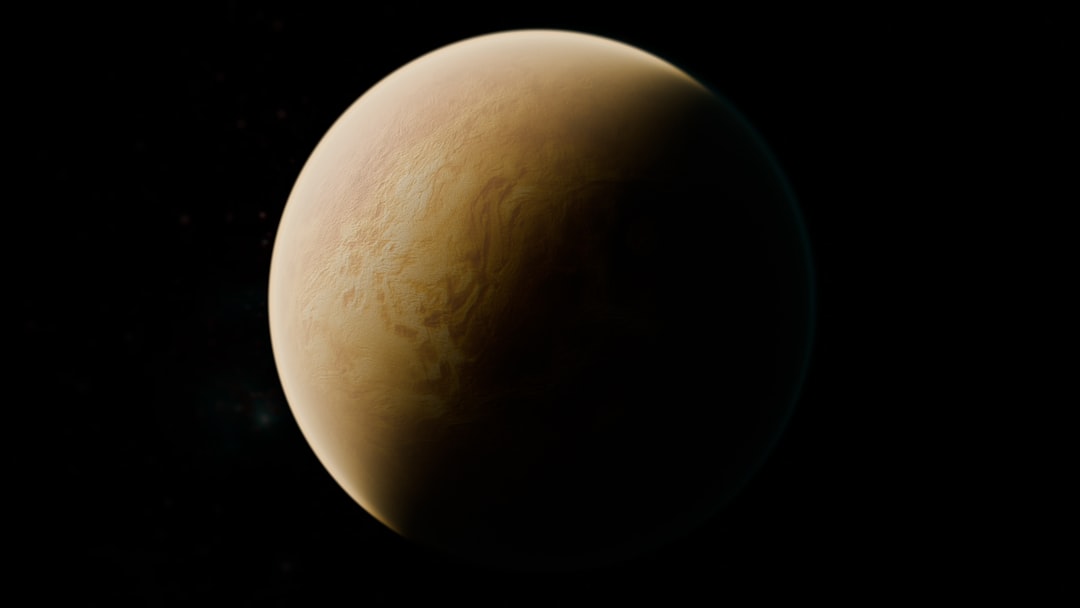
The research carries particularly intriguing implications for understanding Venus's climatic history. Our planetary neighbor, often called Earth's twin due to its similar size and composition, presents one of the solar system's greatest mysteries: how did a world that may have once harbored oceans transform into a scorching wasteland with atmospheric pressure 92 times that of Earth?
The new modeling suggests a compelling answer. Venus orbits much closer to the Sun than Earth—about 108 million kilometers versus Earth's 150 million kilometers. This proximity means Venus likely formed with a smaller initial water inventory than Earth, as the inner solar system was hotter during planetary formation, causing more water to remain in vapor form and potentially be lost to space.
With insufficient water to maintain robust weathering, Venus's carbon cycle would have become progressively unbalanced. Volcanic outgassing continued to pump CO₂ into the atmosphere, but without adequate rainfall and runoff, the weathering process couldn't remove carbon at comparable rates. This led to a positive feedback loop: increasing atmospheric CO₂ raised temperatures, which accelerated water loss through evaporation and atmospheric escape, which further reduced weathering efficiency, allowing even more CO₂ to accumulate.
According to studies by ESA's Venus Express mission, the planet's atmosphere today is 96.5% carbon dioxide, creating a greenhouse effect so extreme that surface temperatures reach 462°C—hot enough to melt lead. The planet's history serves as a stark reminder that habitability can be lost when planetary water budgets fall below critical thresholds.
"It's very unlikely that we will land something on the surface of an exoplanet in our lifetime, but Venus—our nextdoor neighbor—is arguably the best exoplanet analog. Understanding what happened to Venus could be the key to understanding the fate of countless worlds across the galaxy."
Implications for TRAPPIST-1 and Other Exoplanetary Systems
These findings have immediate relevance for some of the most exciting exoplanetary systems discovered in recent years. The TRAPPIST-1 system, located approximately 40 light-years away in the constellation Aquarius, contains seven Earth-sized planets, with four potentially residing in the habitable zone. Discovered using data from NASA's Spitzer Space Telescope and confirmed by ground-based observations, these worlds have captivated astronomers as prime targets in the search for life beyond Earth.
However, the new research suggests we should temper our enthusiasm. TRAPPIST-1 is an ultra-cool dwarf star, much smaller and cooler than our Sun. Planets orbiting such stars must be much closer to receive equivalent energy, which may have affected their initial water inventories during formation. Additionally, close-in planets around red dwarfs experience intense stellar activity during their star's youth, including powerful flares and extreme ultraviolet radiation that can strip away atmospheric water.
Determining whether TRAPPIST-1's potentially habitable planets—designated TRAPPIST-1e, f, g, and h—possess sufficient water to maintain long-term carbon cycles represents a critical observational challenge. The James Webb Space Telescope has already begun characterizing these worlds' atmospheres, but detecting surface water inventories remains extremely difficult with current technology.
The Promise of Future Observations
The researchers are optimistic that upcoming observational facilities may provide the data needed to test their theoretical predictions. NASA's proposed Habitable Worlds Observatory, currently in the conceptual design phase, would be specifically optimized to study potentially habitable exoplanets. Using advanced reflected light spectroscopy, this next-generation space telescope could potentially constrain both surface water abundance and land fraction on nearby terrestrial exoplanets.
As the authors note in their paper: "Our results linking the size of the water reservoir with long-term climate will potentially be testable with the upcoming Habitable Worlds Observatory, which will constrain surface habitability and land fraction via reflected light spectroscopy."
The technique works by analyzing the spectrum of starlight reflected off an exoplanet's surface and atmosphere. Different materials—liquid water, ice, vegetation, desert sand, clouds—have distinctive spectral signatures called spectral albedo features. By carefully analyzing these signatures, astronomers can potentially estimate what fraction of a planet's surface is covered by oceans versus land, and whether those oceans are extensive enough to support robust weathering cycles.
Refining the Search for Life in the Universe
This research fundamentally challenges the traditional concept of the habitable zone as a simple band around stars where temperatures permit liquid water. Instead, it suggests we need a more nuanced framework that considers planetary water budgets as a first-order constraint on long-term habitability.
The implications extend beyond academic interest. With thousands of exoplanets now confirmed and new discoveries announced regularly through missions like NASA's TESS (Transiting Exoplanet Survey Satellite), astronomers must prioritize which worlds deserve intensive follow-up study. Telescope time on premier facilities like the James Webb Space Telescope is extraordinarily competitive and expensive—each hour of observation time represents a significant investment of resources.
According to senior author Krissansen-Totton: "This has implications for a lot of the potentially habitable real estate out there. We need to be strategic about where we point our most powerful telescopes if we want to maximize our chances of detecting biosignatures."
The research suggests that arid terrestrial exoplanets, despite potentially being numerous in the galaxy, should receive lower priority in biosignature searches. Even if such worlds initially develop simple microbial life during wetter periods, they're unlikely to maintain habitability over the billions of years required for complex, detectable biospheres to evolve.
Broader Context in Planetary Science
This work fits into a growing body of research demonstrating that habitability depends on far more factors than previously appreciated. Recent studies have highlighted the importance of:
- Plate tectonics: Research suggests that active plate tectonics may be essential for maintaining the carbon cycle, yet many planets may lack this geological activity
- Magnetic fields: Planetary magnetic fields shield atmospheres from stellar wind erosion, but not all terrestrial planets generate strong fields
- Stellar activity: The radiation and particle environment around different types of stars dramatically affects atmospheric retention and surface conditions
- Planetary mass: A planet's size affects its ability to retain both atmosphere and internal heat, which drives geological activity
Each of these factors represents an additional filter that reduces the fraction of potentially habitable worlds. The famous Drake Equation, formulated by astronomer Frank Drake in 1961 to estimate the number of communicative civilizations in the galaxy, may need additional terms to account for these newly recognized constraints on habitability.
Future Research Directions and Remaining Questions
While this study represents a significant advance in understanding planetary habitability, numerous questions remain. The models, sophisticated as they are, still rely on assumptions derived primarily from our understanding of Earth's geology and climate. Planets with different compositions, geological activity levels, or atmospheric configurations might behave in unexpected ways.
Some key areas for future investigation include:
- Alternative weathering mechanisms: Could planets with different rock chemistries maintain carbon cycles with less water through alternative weathering pathways?
- Subsurface water reservoirs: How do underground aquifers and subsurface oceans factor into planetary water budgets and weathering efficiency?
- Atmospheric composition effects: How do different atmospheric compositions (varying nitrogen, oxygen, or other gas concentrations) affect weathering rates and climate stability?
- Stellar evolution impacts: How do changing stellar luminosity and activity over billions of years affect the long-term habitability of planets with marginal water inventories?
The research team plans to continue refining their models and hopes that data from future Venus missions will provide critical validation of their theoretical framework. Several missions to Venus are currently in development, including NASA's DAVINCI and VERITAS missions, and ESA's EnVision orbiter. These spacecraft will study Venus's atmosphere, surface, and geological history in unprecedented detail, potentially revealing whether the planet once had oceans and how it lost them.
As White-Gianella emphasized, Venus offers an unparalleled opportunity to test theories about planetary climate evolution: "Venus is arguably the best exoplanet analog we have access to. Understanding its history could unlock secrets about countless worlds we'll never be able to visit directly."
Conclusions: A More Sophisticated View of Habitability
This research marks an important evolution in how we think about habitable worlds and the search for life beyond Earth. The traditional habitable zone concept, while useful as a first approximation, proves insufficient for identifying truly promising targets for biosignature searches. Planets must not only reside at the right distance from their stars—they must also possess adequate water inventories to maintain the geological processes that stabilize climate over billions of years.
The findings suggest that many worlds currently classified as potentially habitable may actually be poor candidates for life, particularly complex life capable of producing detectable biosignatures. This sobering conclusion doesn't diminish the search for extraterrestrial life; rather, it helps focus that search on the most promising targets, making efficient use of limited observational resources.
As we continue to discover