How Inversion and NASA Plan to Unlock Interplanetary Aerocapture
Using a planet's atmosphere to secure a spacecraft's place in orbit — a process known as aerocapture — has been the dream of aerospace engineers for decades. The concept is elegant in its ambition: rather than expending enormous quantities of precious propellant to decelerate a spacecraft into orbit around another world, a vehicle instead dives into the planet's upper atmosphere, using aerodynamic drag as a natural brake. The only problem? Actually executing it is extraordinarily difficult. It requires control systems, thermal management, and orbital mechanics to coordinate in a precise, high-speed dance — one that allows a spacecraft to not merely slow down during an atmospheric pass, but to emerge on the other side in a stable, controlled orbit. For now, that remains an unrealized dream, but a recent NASA contract awarded to a California-based startup called Inversion Space represents a meaningful step toward making it a reality.
What Is Aerocapture, and Why Does It Matter?
To appreciate the significance of this technology, it helps to understand the physics involved. When a spacecraft is sent to another planet, it arrives carrying enormous kinetic energy accumulated during its interplanetary cruise. To achieve orbit, that energy must be shed — traditionally through a propulsive burn, firing rocket engines against the direction of travel. This is expensive in terms of propellant mass, which in turn drives up launch costs and constrains mission design. For a mission to a distant destination like Saturn or Uranus, the propellant required for orbital insertion can represent a substantial fraction of the spacecraft's total mass.
Aerocapture sidesteps this problem entirely. By making a precisely calculated pass through a planet's atmosphere, a spacecraft can shed the necessary velocity through aerodynamic drag alone, emerging into orbit without a major propulsive burn. Executed correctly, it is, as some engineers have described it, essentially a free lunch in the physics of space exploration. The challenge lies in that word: correctly. The atmospheric pass must be executed within an extraordinarily narrow corridor. Fly too shallow, and the spacecraft skips back out into space, escaping the planet's gravity. Fly too deep, and the vehicle plunges into increasingly dense atmosphere, generating heat and forces that could destroy it entirely. The margin for error is measured in kilometers of altitude — at speeds that can exceed 10 kilometers per second.
"Aerocapture has the potential to fundamentally change the economics of deep space exploration, enabling missions that would otherwise be impossible or prohibitively expensive with conventional propulsion alone."
Beyond Mars, the appeal grows even stronger. Worlds like Titan — Saturn's moon, with its thick nitrogen atmosphere — and Venus represent compelling targets where aerocapture could dramatically reduce mission costs and expand scientific payloads. NASA's own trajectory analyses have shown that aerocapture could reduce the propellant mass needed for certain missions by 50% or more, directly translating into either smaller, cheaper launch vehicles or larger, more capable science instruments.
Inversion Space: From Terrestrial Deliveries to Deep Space Technology
Inversion Space was founded by former engineers from SpaceX and ABL Space, with a mission focused squarely on orbital reentry vehicles. The company's core business proposition is commercially compelling: design spacecraft capable of delivering mission-critical cargo — vaccines, biological samples, time-sensitive medical equipment, or key military materiel — to virtually any point on Earth's surface, exploiting the dramatically shorter travel times that orbital flight makes possible. Where a conventional aircraft might take 18 hours to traverse the globe, an orbital vehicle can complete the same journey in under 90 minutes.
It is a business model that, as the company has noted with some humor, could have spared the sled dogs of the famous 1925 Serum Run to Nome their harrowing 1,085-kilometer journey across Alaskan wilderness — had the technology existed a century earlier.
The Arc Spacecraft
The vehicle at the center of Inversion's plans is a spacecraft called Arc. Designed to attach to one of today's modern orbital launch systems, Arc is released into Low Earth Orbit (LEO) before executing a controlled reentry to deliver its payload to a designated landing zone anywhere on the planet's surface. What makes Arc technically distinctive — and what caught NASA's attention — is the sophistication of its control architecture across three distinct flight phases.
- Chemical propulsion stage: Traditional chemical thrusters handle orbital maneuvering, allowing Arc to adjust its trajectory after separation from the launch vehicle.
- Cold gas system: As the spacecraft approaches its desired reentry trajectory, a cold gas thruster system takes over, providing fine positional control with smaller, more precise impulses.
- Aerodynamic control flaps: During reentry itself, the real engineering challenge begins. Specially designed control flaps — engineered to withstand extreme thermal and mechanical stresses — guide the spacecraft with precision through the hypersonic regime, directing it to its intended landing point.
According to Inversion CEO Justin Fiaschetti, Arc is not designed to be reusable. It employs traditional heat shields and parachutes to manage descent and is not intended to be refurbished after use. This is a deliberate design choice: by optimizing for performance and cost rather than reusability, Inversion can focus its engineering resources on the thermal protection systems that are central to the vehicle's value proposition. The more extreme a thermal environment Arc can survive, the broader the range of missions it can support — and the larger its potential customer base becomes.
Inversion has already demonstrated its capacity for rapid development. In a field where hardware timelines are notoriously long, the company launched Ray, its first prototype spacecraft, just four years after its founding — a timeline that compares favorably with even the most agile commercial space ventures. You can learn more about Inversion's technology and mission at their official website.
The NASA Contract: A Bridge Between Earth and the Outer Solar System
It is Arc's controllability under extreme atmospheric conditions — specifically, its ability to maneuver precisely while enduring reentry heating — that has drawn NASA's interest as a potential aerocapture demonstrator. The logic is straightforward: the physics of managing heat and executing aerodynamic maneuvers during a high-speed atmospheric pass are fundamentally the same whether a spacecraft is entering Earth's atmosphere or that of Mars. Arc's existing design therefore represents a potentially valuable testbed for demonstrating aerocapture principles without the cost and complexity of an immediate interplanetary mission.
Under the terms of the contract, Inversion will study and demonstrate what the company describes as "mission design, aerodynamics, trajectory analysis, and vehicle definition" in the context of aerocapture. Critically, the initial plan is not to send Arc directly to Mars for a first attempt. Instead, the demonstration would take place in Earth orbit — using our own planet's atmosphere as the proving ground. This incremental approach is scientifically sound: Earth's atmosphere is well-characterized, recovery operations are straightforward, and the costs of failure, while significant, are manageable compared to a failed interplanetary insertion.
"We don't want this to be a ten-year development cycle. We want to move fast and show what's possible." — Justin Fiaschetti, CEO, Inversion Space
Fiaschetti has been explicit about his ambitions for pace. In an interview, he emphasized the company's intention to launch a demonstration vehicle as quickly as possible — a sharp contrast to the multi-decade timelines that have historically characterized early-stage NASA technology development contracts. While the exact schedule remains fluid and NASA has not yet formally committed to an accelerated timeline, Inversion's track record with Ray suggests this is more than aspirational rhetoric.
For deeper context on NASA's broader aerocapture research efforts, the NASA Game Changing Development Program provides an overview of how this technology fits into the agency's long-term exploration strategy. Similarly, ESA has conducted parallel research into aerocapture and aerobraking techniques for future European deep space missions.
Target Worlds: Where Aerocapture Could Transform Exploration
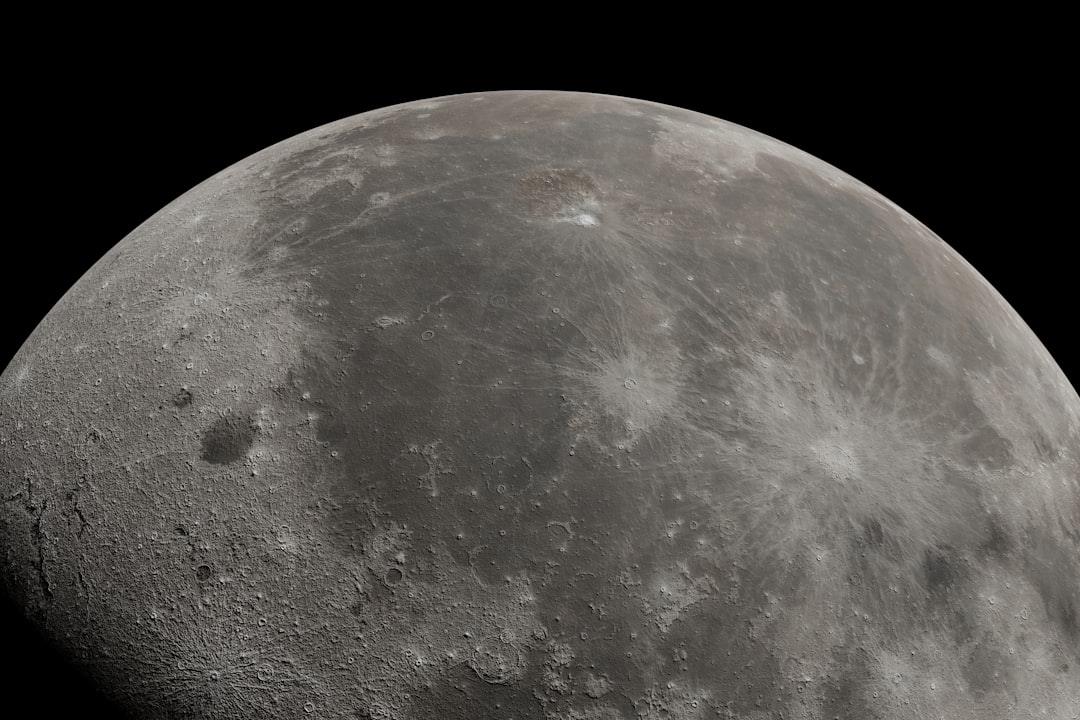
While demonstrating aerocapture at Earth is an important first step, the technology's most transformative applications lie deeper in the solar system. Earth itself has little need for aerocapture — we can launch to essentially any desired orbit using conventional propulsion. The Moon, lacking a meaningful atmosphere, offers no opportunity for the technique at all. But moving either inward or outward from Earth, the calculus changes dramatically.
Mars
Mars is the most immediate and oft-cited candidate. With a thin but workable carbon dioxide atmosphere, Mars presents a viable aerocapture corridor that could significantly reduce the propellant burden of crewed or large robotic missions. NASA's Mars exploration program has long considered aerocapture as a key enabling technology for human missions, where the mass savings could prove decisive for mission feasibility.
Venus
Venus possesses a dense atmosphere that makes it an almost ideal aerocapture target from a physics standpoint, though its extreme surface conditions and corrosive cloud layers present formidable engineering challenges. Several proposed missions to Venus, including studies related to the DAVINCI and VERITAS concepts, have examined aerocapture as a mass-saving strategy for orbital insertion.
Titan
Perhaps the most scientifically exciting prospect is Titan, Saturn's largest moon. With a thick nitrogen-rich atmosphere denser than Earth's at sea level, Titan is arguably the most aerocapture-friendly destination beyond Earth in the solar system. A future orbiter mission to Titan — designed to study its hydrocarbon lakes, complex organic chemistry, and potential subsurface ocean — could benefit enormously from aerocapture, freeing up mass for scientific instruments rather than propellant. The NASA Dragonfly mission, currently in development, underscores the growing scientific interest in Titan as a priority destination.
The Ice Giants
Looking further still, Uranus and Neptune represent perhaps the most propellant-intensive destinations in the solar system for conventional orbital insertion. Studies have shown that aerocapture at these worlds — while technically demanding due to the speeds involved — could be the difference between a practical mission and one that is simply not achievable with near-term launch technology. A Uranus orbiter and probe, ranked as the top priority for large planetary missions in the most recent Planetary Science Decadal Survey, could potentially leverage aerocapture to make its ambitious science goals achievable.
The Road Ahead
It would be unrealistic to suggest that controllable aerocapture around other worlds is imminent. The engineering challenges — precise atmospheric modeling for distant planets, real-time guidance systems operating with significant communication delays, thermal protection systems capable of surviving hypersonic passes through alien atmospheres — are formidable. We may indeed be decades away from seeing this technology deployed operationally around Mars, let alone Titan or the ice giants.
But every transformative capability in spaceflight history has had to start somewhere. Aerobraking — a gentler cousin of aerocapture that uses repeated shallow atmospheric passes over many weeks to gradually reduce orbital energy — has already been demonstrated successfully at Mars by missions including Mars Global Surveyor, Mars Odyssey, and the Mars Reconnaissance Orbiter. Aerocapture is the logical, more aggressive next step: executing the same energy reduction in a single, controlled pass.
Inversion's NASA contract does not solve all of these challenges at once. What it does is initiate the engineering work, build the experimental foundation, and — perhaps most importantly — demonstrate that the private sector can bring speed and innovation to a problem that has long been the exclusive domain of government research programs. In the broader context of the commercial space revolution, that may prove to be its most lasting significance.
- Aerocapture can reduce mission propellant requirements by 50% or more for certain destinations.
- Arc's three-stage control system — chemical propulsion, cold gas, and aerodynamic flaps — makes it a strong candidate for aerocapture demonstration.
- The initial demonstration will target Earth's atmosphere before any interplanetary application.
- Prime targets for operational aerocapture include Mars, Venus, Titan, Uranus, and Neptune.
- Inversion's rapid development of the Ray prototype suggests the company can move faster than traditional aerospace timelines.
The dream of using the universe's own physics to navigate its vast distances more efficiently is one of spaceflight's most enduring aspirations. With this contract, that dream has taken one more tangible, measurable step toward reality.