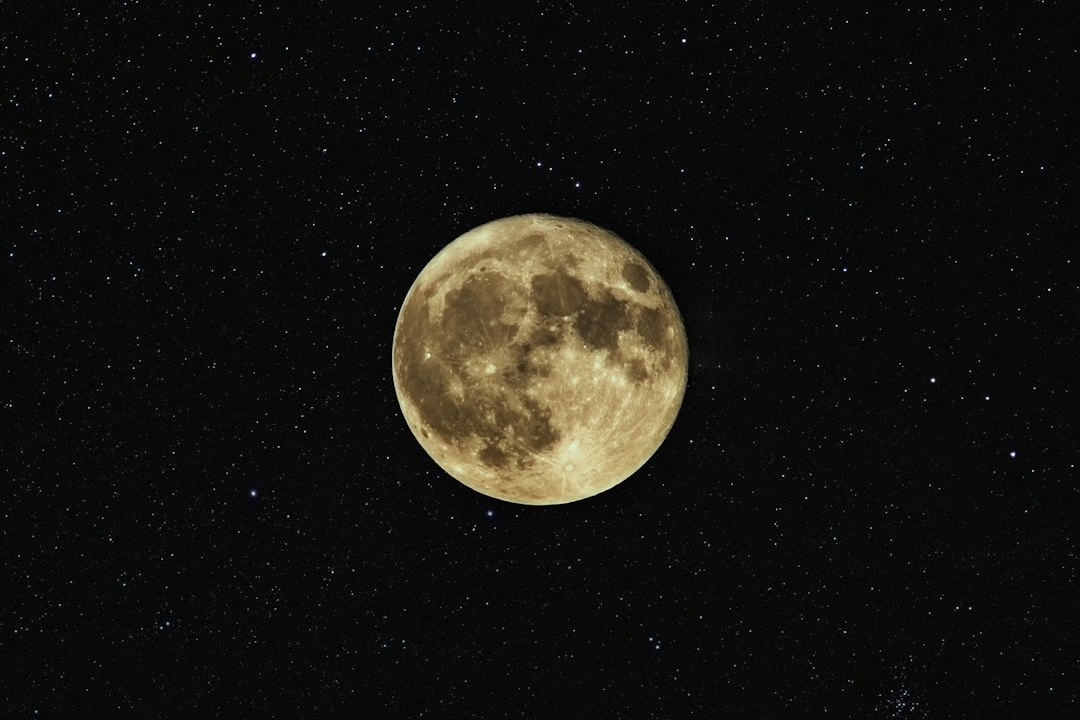
As humanity prepares for an unprecedented return to the lunar surface, one of the most critical challenges facing mission planners isn't the vacuum of space or extreme temperature variations—it's something far more insidious: lunar dust. This electrostatically charged, razor-sharp material has plagued every mission since the Apollo era, infiltrating equipment, damaging seals, and posing serious health risks to astronauts. However, groundbreaking new research from the NASA Artemis Program suggests that a particular type of lunar soil could provide the solution to creating safe, dust-free roadways on the Moon.
The convergence of multiple international lunar exploration initiatives—including NASA's Artemis Program, the European Space Agency's Moon Village concept, and the Sino-Russian International Lunar Research Station (ILRS)—signals a fundamental shift in space exploration strategy. Unlike the brief Apollo visits of the 1960s and 70s, these programs envision permanent human presence on the lunar surface, complete with infrastructure, habitats, and transportation networks. This ambitious vision demands innovative solutions to challenges that were merely inconveniences during short-duration missions but become critical obstacles for long-term habitation.
Recent research presented at the 2026 Lunar and Planetary Science Conference by geoscientists Vanesa Muñiz Lloréns and Michael Lucas from the University of Notre Dame and the Florida Space Institute's Exolith Lab at the University of Central Florida has revealed promising findings about "immature" lunar regolith. Their comprehensive trafficability study demonstrates that this coarser-grained, less weathered material remains remarkably stable even after hundreds of rover passes, making it an ideal candidate for constructing lunar roadways and transportation corridors.
Understanding the Lunar Dust Dilemma
To appreciate the significance of this research, one must first understand the unique nature of lunar regolith and why it poses such formidable challenges. Unlike terrestrial soil, which forms through biological processes, water erosion, and atmospheric weathering, lunar regolith is the product of approximately 4.5 billion years of relentless meteorite bombardment and exposure to the harsh space environment. This extended geological history has created a substance unlike anything found on Earth.
The lunar surface lacks the protective blanket of atmosphere that shields Earth from micrometeorite impacts and solar radiation. Consequently, rocks and minerals on the Moon are continuously pulverized into increasingly finer particles through a process called space weathering. This phenomenon includes constant micrometeorite impacts that shatter surface materials and solar wind irradiation that chemically alters the regolith's composition, creating nanophase iron particles (npFe) that give mature lunar soil its distinctive properties.
During the Apollo missions, astronauts quickly discovered that lunar dust was far more problematic than anticipated. Commander Eugene Cernan of Apollo 17 famously described it as "one of the most aggravating, restricting facets of lunar surface exploration." The dust's electrostatic charge causes it to adhere tenaciously to spacesuits, equipment, and even the interior of spacecraft. More alarmingly, the particles are extremely fine—often smaller than 20 micrometers—with jagged, glass-like edges that can penetrate seals, damage mechanical systems, and potentially cause respiratory problems when inhaled.
The Science of Regolith Maturity
Not all lunar soil is created equal. Scientists classify regolith based on its maturity level, which reflects how long it has been exposed to space weathering processes. Mature regolith, found in areas that have remained undisturbed for billions of years, consists of extremely fine particles with high concentrations of nanophase iron and agglutinates—tiny glass beads formed when micrometeorite impacts melt and fuse soil particles together.
In contrast, immature regolith is found in areas with more recent geological activity, such as crater ejecta blankets or regions with relatively young volcanic deposits. This material features coarser grain sizes, fewer agglutinates, and lower concentrations of nanophase iron. The lunar highlands and certain areas near the Moon's south pole—prime targets for the Artemis landing sites—contain significant deposits of this less-weathered material.
"While rover mobility and wheel-regolith interactions have been extensively studied using lunar simulants, the influence of wheel design on particle-scale morphology remains poorly constrained, despite its role in controlling shear strength, traction, and dust generation," the researchers noted in their presentation.
Experimental Design and Methodology
To investigate whether immature regolith could serve as a stable surface for repeated rover traffic, Lloréns and Lucas designed a comprehensive series of experiments using the RIDER terramechanics testbed at UCF's Exolith Lab. This specialized facility allows researchers to simulate lunar gravity conditions and test rover wheel performance under realistic conditions.
The team utilized LHS-1E, an engineering-grade lunar simulant specifically designed to replicate the properties of immature regolith found in the feldspathic lunar highlands. This simulant closely matches the composition and particle size distribution expected in the south polar regions targeted by Artemis missions, making it particularly relevant for near-term exploration planning.
Three distinct rover wheel designs were tested to understand how different engineering approaches might affect regolith disturbance:
- Astrobotic Polaris Prototype (APP): A modern wheel design incorporating advanced materials and tread patterns optimized for lunar conditions
- Resource Prospector Prototype (VRP): Similar to the design proposed for NASA's VIPER rover, which was intended to explore the Moon's south pole in search of water ice
- Apollo Lunar Roving Vehicle (LRV) Replica: A reproduction of the iconic wire-mesh wheels used during the Apollo 15, 16, and 17 missions, providing historical baseline data
Each wheel was subjected to up to 900 passes over a carefully prepared two-layer column of LHS-1E simulant measuring approximately 35 centimeters (14 inches) in depth. The experiments were conducted under simulated lunar gravity—approximately one-sixth of Earth's gravitational pull—to ensure realistic loading conditions and wheel-soil interactions.
Groundbreaking Results and Implications
The experimental results proved remarkably encouraging for future lunar infrastructure development. Surface samples collected before testing began and after every 100 wheel passes revealed that the immature regolith simulant remained largely unchanged even after extensive trafficking. Detailed particle size and shape analyses showed minimal degradation of the coarser grains, with only minor variations attributable to specific wheel designs and construction materials—whether metal or carbon fiber composites.
This stability stands in stark contrast to what might be expected with mature regolith, which tends to generate substantial dust clouds when disturbed. The coarser grain structure and lower concentration of ultra-fine particles in immature regolith means that repeated rover passes don't progressively pulverize the material into hazardous dust. Instead, the soil maintains its structural integrity, providing consistent traction and minimizing the risk of dust generation and dispersion.
The practical implications of these findings extend far beyond simple rover mobility. The research suggests that carefully selected routes through areas of immature regolith could serve as natural roadways for lunar surface operations. By concentrating traffic along these corridors, mission planners could create a transportation network that minimizes dust hazards while maintaining reliable vehicle performance over extended operational periods.
Engineering Applications for Lunar Infrastructure
The identification of immature regolith as a stable surface material opens numerous possibilities for lunar base construction and operations. Future Artemis missions could strategically position habitats, landing pads, and scientific installations along natural deposits of this coarser material, creating zones of reduced dust contamination around critical infrastructure.
Transportation planning for the Moon could follow geological mapping of regolith maturity, with primary routes established through immature deposits and secondary paths potentially requiring dust mitigation technologies. This approach would be particularly valuable for the lunar south pole region, where permanently shadowed craters containing water ice are surrounded by areas of varying regolith maturity.
The research also has implications for in-situ resource utilization (ISRU) strategies. Understanding how different types of regolith respond to mechanical processing will be crucial for developing technologies to extract water, oxygen, and construction materials from lunar soil. The stability of immature regolith under repeated disturbance suggests it might be easier to process and handle than mature material, potentially simplifying ISRU operations.
Future Research Directions and Challenges
While these findings are promising, the researchers acknowledge that additional work is needed to fully characterize regolith behavior under actual lunar conditions. The experiments were conducted in Earth's atmosphere rather than in vacuum, which could affect electrostatic charging and particle adhesion properties. Future studies will need to incorporate vacuum chamber testing to validate these results under true lunar environmental conditions.
Additionally, the research team plans to investigate how different operational parameters—such as vehicle speed, wheel loading, and turning maneuvers—might affect regolith disturbance patterns. Understanding these variables will be essential for developing comprehensive operational guidelines for lunar rover missions and establishing safety protocols for astronaut activities near trafficked areas.
The study also raises important questions about long-term effects. While 900 passes represents substantial traffic by current mission standards, permanent lunar bases might see thousands or even tens of thousands of vehicle transits along primary routes. Extended duration studies will be necessary to determine whether immature regolith maintains its stability over truly long-term operational timescales, or whether cumulative effects eventually lead to material degradation.
Broader Context for Lunar Exploration
This research arrives at a critical juncture for lunar exploration planning. As NASA prepares for the Artemis III mission—currently targeted to return humans to the lunar surface—understanding regolith behavior becomes increasingly urgent. The lessons learned from Apollo, combined with modern scientific understanding and advanced testing capabilities, position the next generation of lunar explorers to overcome challenges that plagued earlier missions.
The international nature of current lunar exploration efforts adds another dimension to this research. Whether developed by NASA, ESA, China, Russia, or commercial entities like SpaceX, lunar infrastructure will benefit from standardized understanding of regolith properties and best practices for surface operations. Sharing data from studies like this one contributes to a global knowledge base that will support sustainable lunar development regardless of which nation or organization leads specific initiatives.
As humanity takes its next giant leap toward becoming a truly spacefaring civilization, seemingly mundane questions about soil mechanics and wheel design take on profound importance. The discovery that immature lunar regolith can withstand repeated rover traffic without generating hazardous dust clouds represents more than just a technical achievement—it's a crucial stepping stone toward establishing the permanent lunar presence that will serve as humanity's gateway to the broader solar system.
The work of Lloréns, Lucas, and their colleagues at the Exolith Lab demonstrates how careful scientific investigation of basic physical properties can yield insights with far-reaching implications for exploration architecture. As we stand on the threshold of a new era of lunar exploration, such research provides the foundation upon which humanity will build its future among the stars.