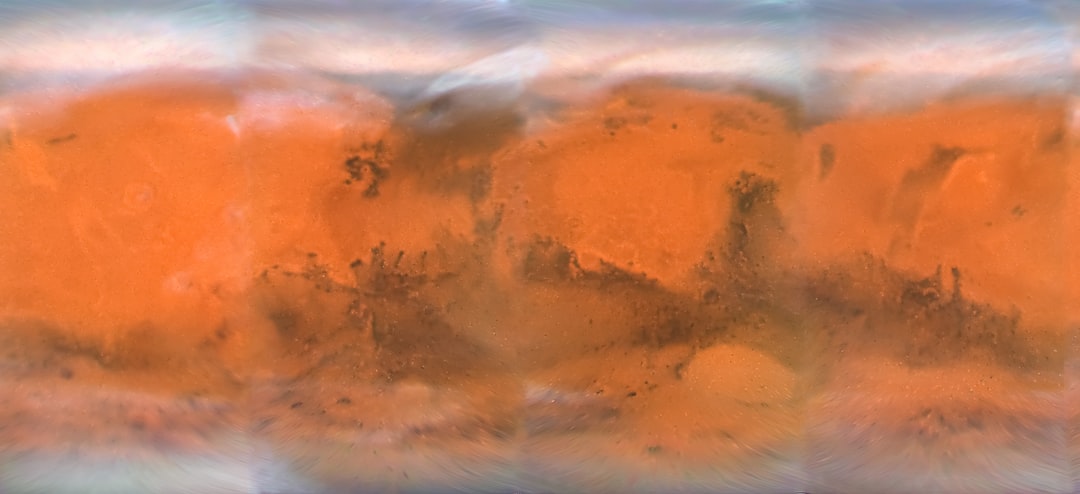
In a devastating blow to planetary science, NASA's ambitious Mars Sample Return (MSR) mission has effectively been terminated through severe congressional budget cuts, marking one of the most significant setbacks in the agency's exploration program in decades. This cancellation not only abandons years of meticulous planning and technological development but also opens a clear pathway for China's space agency to become the first nation to return pristine Martian samples to Earth—a prize that would fundamentally reshape the geopolitical landscape of space exploration.
The mission, which was designed to answer some of humanity's most profound questions about ancient Martian habitability and the potential for past life on the Red Planet, has fallen victim to political pressures and budgetary constraints. Despite being identified as a top priority by the planetary science community for over a decade, the estimated costs—ballooning from initial projections to as high as $11 billion—proved too politically contentious in an era of competing national priorities and fiscal austerity measures.
This cancellation represents more than just a budgetary decision; it signals a fundamental shift in America's approach to deep space exploration and raises serious questions about the nation's commitment to maintaining its leadership in planetary science. The 33 carefully selected rock and dust samples currently cached by the Perseverance rover, each chosen for its potential to unlock secrets of Mars' ancient past, now sit abandoned on the Martian surface with an uncertain future.
The Scientific Imperative Behind Mars Sample Return
Understanding why this mission's cancellation is so devastating requires examining the fundamental limitations of remote planetary exploration. While NASA's robotic explorers—particularly the Mars Science Laboratory Curiosity and Perseverance rovers—have dramatically expanded our understanding of Martian geology and climate history, they operate under severe constraints. The analytical instruments aboard these rovers, though remarkably sophisticated, represent only a fraction of the investigative power available in terrestrial laboratories.
Since 2011, the Planetary Science Decadal Survey—a comprehensive report compiled by the National Research Council that guides NASA's strategic priorities—has consistently ranked Mars sample return as one of the highest-priority objectives in solar system exploration. The reasoning is compelling: returned samples would enable researchers to apply the full arsenal of modern analytical techniques, including high-resolution mass spectrometry, electron microscopy, and isotopic analysis with precision levels impossible to achieve with spacecraft-borne instruments.
"Mars Sample Return would fulfill one of the highest priority solar system exploration goals from the science community. Returned samples would revolutionize our understanding of Mars, our solar system and prepare for human explorers to the Red Planet," according to NASA's official MSR program description.
The Perseverance rover, which landed in Jezero Crater in February 2021, has been executing its sample collection mission with remarkable success. The rover has carefully documented and cached 33 sample tubes containing rock cores and regolith from scientifically significant locations, including ancient river delta deposits that likely formed when Mars possessed liquid water on its surface billions of years ago. These samples represent a geological time capsule that could potentially preserve biosignatures—chemical or physical evidence of past microbial life.
The Complex Architecture of a Doomed Mission
The technical complexity of the MSR mission cannot be overstated. The mission architecture developed by NASA and the European Space Agency (ESA) represented one of the most ambitious robotic endeavors ever conceived, involving multiple spacecraft, unprecedented autonomous operations, and the first rocket launch from another planet.
The planned mission sequence involved several critical phases:
- Sample Retrieval Lander: A sophisticated landing platform would touch down near Perseverance's location, carrying a Mars Ascent Vehicle (MAV)—the first rocket designed to launch from another planet's surface
- Sample Transfer: Perseverance would deliver the cached sample tubes to the lander, with two innovative Sample Recovery Helicopters serving as backup retrieval systems if the rover couldn't complete the delivery
- Orbital Rendezvous: The MAV would launch the samples into Martian orbit within a specialized container, executing a precision rendezvous with an Earth Return Orbiter
- Earth Return: The orbiter would capture the sample container and initiate a multi-year journey back to Earth, culminating in a high-speed atmospheric entry and recovery
- Biosecurity Protocol: The returned samples would be received in a specialized Sample Receiving Facility designed to prevent any potential Martian contamination of Earth's biosphere
Each of these phases required breakthrough technologies and carried substantial risk. The estimated cost reduction from $11 billion to approximately $7 billion came through innovative redesigns, but significant uncertainties remained about whether even these revised estimates were realistic given the unprecedented nature of the mission.
Political and Economic Pressures Seal the Mission's Fate
The cancellation of MSR cannot be separated from the broader political and economic context shaping NASA's budget. The 2026 appropriations document, specifically the Commerce, Justice, Science, and Related Agencies Appropriations Act, delivers a carefully worded death sentence to the program while attempting to salvage some technological development.
The legislation provides only $110 million for a newly designated "Mars Future Missions program"—a dramatic reduction from the billions required for MSR. This funding is earmarked for developing component technologies including radar systems, spectroscopy instruments, and entry, descent, and landing capabilities that could theoretically support future missions. However, this represents a fundamental retreat from the integrated mission approach that MSR embodied.
The timing of this cancellation coincides with unprecedented increases in defense spending, with proposed military budgets reaching $1.5 trillion—a 50% increase that critics argue demonstrates misplaced national priorities. This stark contrast highlights the ongoing tension between investments in scientific exploration and military expenditure, a debate that has characterized American space policy since the Apollo era.
International Cooperation in Jeopardy
The MSR cancellation also jeopardizes the transatlantic partnership between NASA and ESA that has been a cornerstone of planetary exploration for decades. The European Space Agency had committed substantial resources to developing the Earth Return Orbiter, representing one of the most significant European contributions to Mars exploration. The dissolution of this partnership amid broader geopolitical tensions raises questions about future international collaboration in space science.
ESA's investment in MSR technologies and mission planning represents years of work by European scientists and engineers. Whether the agency will attempt to pursue an independent sample return mission, or redirect these resources to other programs, remains uncertain. The technical and financial challenges of executing such a mission without American partnership would be formidable.
China's Mars Ambitions Take Center Stage
With NASA's withdrawal from the Mars sample return race, China's Tianwen-3 mission now stands as the leading contender to achieve this historic milestone. The China National Space Administration (CNSA) has outlined plans for a sample return mission potentially launching in the late 2020s or early 2030s, though specific timelines remain subject to revision.
However, China's approach differs fundamentally from the abandoned NASA/ESA mission in both scope and scientific methodology. While Perseverance's samples were meticulously selected based on detailed geological analysis and strategic scientific objectives—targeting locations most likely to preserve evidence of ancient habitability—China's mission design emphasizes a more straightforward "grab and go" approach. The Chinese mission would likely collect samples from a single landing site without the extensive geological reconnaissance that has characterized NASA's strategy.
This distinction matters profoundly for the scientific value of returned samples. The astrobiological potential of Martian samples depends critically on their geological context and provenance. Perseverance's samples come from Jezero Crater's ancient delta deposits, sedimentary rocks that formed in an aqueous environment billions of years ago—precisely the type of setting where biosignatures would most likely be preserved. A less selective sampling strategy may still yield valuable scientific insights but could miss the most compelling evidence for past Martian life.
The Fate of Perseverance's Precious Cargo
The 33 sample tubes now resting on the Martian surface represent an extraordinary scientific resource in limbo. Each tube contains carefully documented rock cores or regolith samples, with detailed records of their geological context, collection location, and preliminary analysis by Perseverance's onboard instruments. These samples were selected through a rigorous process involving the mission's science team, targeting the most scientifically valuable materials the rover encountered.
Fortunately, Mars' environmental conditions favor long-term preservation. The planet's cold, dry atmosphere and minimal geological activity mean these samples will likely remain intact for decades or even centuries. Unlike samples left on Earth's dynamic surface, which would rapidly degrade through weathering, biological activity, and geological processes, Martian samples face minimal degradation risks. The primary concern is potential contamination from Martian dust, though the sealed sample tubes provide substantial protection.
This durability offers a glimmer of hope for future retrieval efforts. Whether through a revived NASA mission, an independent ESA initiative, or even an eventual Chinese retrieval of American-cached samples (which would require unprecedented international cooperation), these samples could still fulfill their scientific destiny. However, for the researchers who devoted years to the MSR program, watching their life's work languish on another planet represents a profound professional and personal disappointment.
Alternative Pathways and Future Possibilities
Despite the cancellation of the integrated MSR mission, several alternative approaches to Martian sample analysis remain possible, though each carries significant limitations:
- Advanced In-Situ Analysis: Future Mars missions could carry more sophisticated analytical instruments, potentially approaching the capabilities of terrestrial laboratories. However, the fundamental constraints of mass, power, and environmental conditions will always limit what's achievable on the Martian surface
- Reduced-Cost Sample Return: The $110 million allocated for Mars Future Missions could theoretically lead to breakthrough technologies that make sample return more affordable. Novel propulsion systems, miniaturized spacecraft, or simplified mission architectures might reduce costs sufficiently to revive the concept
- International Consortium: A broader international partnership involving multiple space agencies could distribute costs and technical challenges. However, current geopolitical tensions make such collaboration increasingly difficult
- Commercial Space Involvement: Private space companies like SpaceX have expressed interest in Mars missions, potentially offering lower-cost alternatives to traditional government programs. However, the technical complexity and lack of immediate commercial return make this scenario unlikely in the near term
Each of these alternatives faces substantial obstacles, and none offers the comprehensive scientific return that the original MSR mission promised. The cancellation represents not just a delay but potentially a generational setback in our understanding of Mars and its potential to have hosted life.
Implications for Planetary Science and Space Exploration
The termination of Mars Sample Return reverberates far beyond this single mission, raising fundamental questions about America's commitment to planetary science leadership and the future of ambitious space exploration initiatives. For decades, NASA has maintained preeminence in solar system exploration through a combination of technical excellence, sustained funding, and visionary mission planning. The MSR cancellation suggests this leadership position may be eroding.
The decision also affects the broader scientific community's confidence in long-term mission planning. Researchers invest years or decades in preparing for sample analysis, developing specialized techniques, and building careers around anticipated mission outcomes. When flagship missions are cancelled after substantial investment, it creates uncertainty that can discourage talented scientists from entering planetary science fields.
Moreover, this cancellation occurs as other nations—particularly China—demonstrate growing capabilities and ambitions in space exploration. The geopolitical dimension of space science cannot be ignored. Scientific firsts carry symbolic weight and influence international perceptions of technological leadership. Allowing China to achieve the first Mars sample return would represent a significant shift in the space exploration narrative that has favored American achievement since the Apollo era.
The technological capabilities being developed in the MSR program are not only critical to the success of future science missions but also to human exploration of the Moon and Mars, according to the congressional appropriations document.
This acknowledgment highlights an important point: the technologies developed for MSR have applications beyond this single mission. Autonomous rendezvous systems, precision landing capabilities, and planetary ascent vehicles represent enabling technologies for future exploration, including eventual human missions to Mars. The question is whether the modest funding allocated for technology development can preserve these capabilities without the driving force of an integrated mission.
Looking Forward: An Uncertain Future for Martian Exploration
As the dust settles on this decision, the planetary science community faces difficult questions about the future of Mars exploration. The scientific imperative for returning Martian samples hasn't diminished—if anything, recent discoveries by Perseverance have strengthened the case for detailed laboratory analysis. But the political and economic realities that led to MSR's cancellation show no signs of changing.
The path forward likely involves a combination of continued robotic exploration with increasingly sophisticated instruments, sustained technology development that keeps sample return options alive, and perhaps most importantly, efforts to rebuild the political consensus around the value of planetary science. The scientific community must make the case not just for Mars exploration specifically, but for the broader importance of understanding our place in the universe and the conditions that make life possible.
For now, Perseverance's carefully cached samples remain on the Martian surface—a testament to human ingenuity and ambition, waiting for a future generation that might possess both the capability and the will to bring them home. Whether that future arrives in a decade, a generation, or longer remains one of the great uncertainties in the evolving story of Mars exploration.