Radio Array Detects Polarized Light From a GRB — A Historic Milestone in High-Energy Astrophysics
On March 10, 2026, the Fermi telescope gamma-ray burst team reported the detection of a remarkable long-duration gamma-ray burst (GRB) — designated GRB 260310A — that occurred when a massive star violently exploded inside a dense, highly magnetized cloud of hydrogen gas. This particular burst unfolded within an HII region, a bubble of ionized hydrogen sculpted by the powerful stellar winds of a young, massive star. The event immediately triggered a worldwide observational response, as astronomers scrambled to point as many telescopes as possible at the burst and its fading afterglow, including the NSF's Karl Jansky Very Large Array (VLA) in New Mexico.
What followed was a discovery that has already rewritten the observational record books. The VLA detected polarized light at radio wavelengths emitted by a relativistic jet streaming away from the site of the stellar explosion. Not only was this the first time such polarized radio emission had been detected at centimeter-wavelength frequencies from a GRB, but it also marked an even more profound milestone: the first confirmed observation of Faraday Rotation in a gamma-ray burst afterglow. Faraday Rotation is a phenomenon in which polarized light is caused to twist as it travels through a strong magnetic environment, and its detection here opens an extraordinary new window into the physics of the most violent explosions in the known universe.
"GRBs are the most powerful explosions in the Universe, and magnetic fields are thought to play a central role in powering them, but probing those fields has been extraordinarily difficult. By detecting polarized radio emission, we can now directly measure the magnetic environment of one of the Universe's most violent events. Our new GRB observations allow us to use the Universe as our laboratory to test our understanding of how physics operates in such extreme conditions." — Tanmoy Laskar, Professor, University of Utah
What Are Gamma-Ray Bursts?
Gamma-ray bursts (GRBs) are among the most energetic and luminous events ever recorded in the observable universe. First serendipitously discovered in the late 1960s by U.S. military Vela satellites designed to monitor for nuclear weapons tests, GRBs have since captivated astrophysicists for decades. In the span of mere seconds to minutes, a single GRB can release more energy than our Sun will emit over its entire 10-billion-year lifetime — and can briefly outshine the entire galaxy in which it resides.
GRBs are broadly classified into two categories based on duration:
- Short-duration GRBs (lasting less than ~2 seconds) are associated with the catastrophic mergers of two compact objects, such as two neutron stars or a neutron star and a black hole. The landmark detection of GRB 170817A, coincident with the gravitational wave event GW170817, provided the first direct confirmation of this mechanism.
- Long-duration GRBs (lasting more than ~2 seconds), like GRB 260310A, are thought to be produced by the core collapse of extremely massive stars — a process sometimes called a collapsar or hypernova — in galaxies billions of light-years away.
In a collapsar event, when a star many times more massive than our Sun exhausts its nuclear fuel, the outward pressure that once counteracted gravity collapses catastrophically. The stellar core implodes to form a black hole or rapidly spinning neutron star (magnetar), while the outer layers are ejected in a titanic explosion. Along the rotational axis, an ultra-relativistic jet of plasma and energy is launched, punching through the dying star's envelope and producing the intense initial flash of gamma rays. As these jets decelerate by plowing into surrounding interstellar material, they create the multi-wavelength afterglow — detectable in X-ray, ultraviolet, optical, infrared, and, crucially, radio wavelengths. You can learn more about the nature of gamma-ray bursts from NASA's Fermi Gamma-ray Space Telescope science pages.
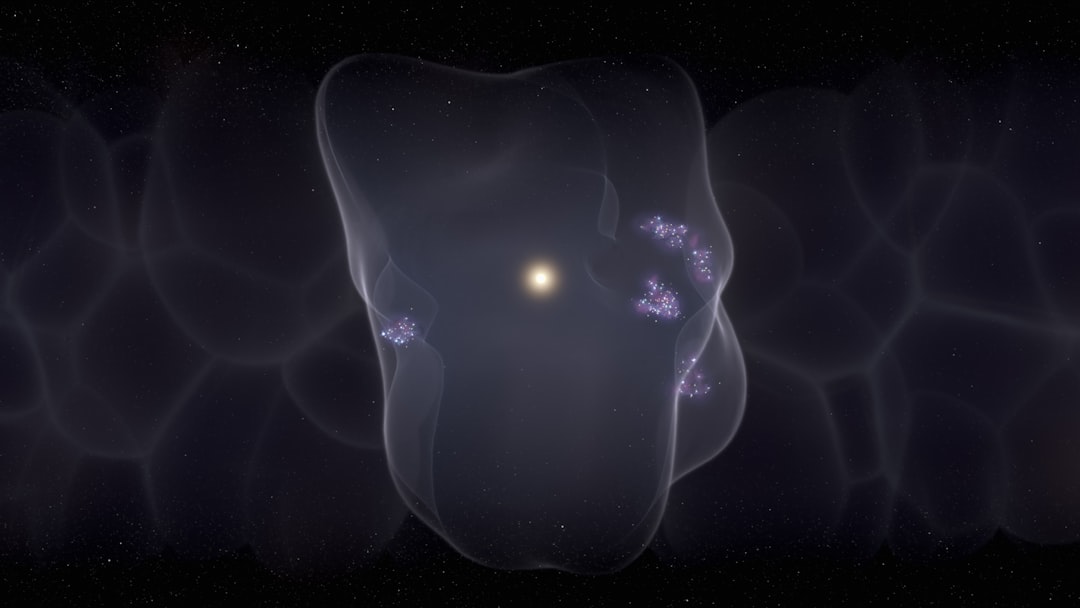
The fact that GRB 260310A appears to have exploded inside a dense HII region is entirely consistent with this theoretical picture. Such regions are the birthplaces of the most massive stars — the very stars believed to produce long-duration GRBs. The dense, magnetized environment of an HII region provides precisely the kind of extreme conditions needed to produce and preserve the magnetic signatures detected by the VLA.
The Mechanics of Faraday Rotation
To appreciate why the detection of Faraday Rotation in GRB 260310A is so significant, it helps to understand what polarized light is and how it interacts with magnetic fields. Polarized light is electromagnetic radiation whose electric field oscillates in a preferred plane or direction, rather than in all orientations randomly. Anyone who has worn polarized sunglasses has experienced this: the lenses filter out horizontally polarized light reflected from surfaces like roads or water, dramatically reducing glare.
In astrophysics, polarized light is a powerful diagnostic tool. When light from an energetic source — such as a GRB jet — passes through a magnetized plasma, the plane of polarization is rotated by an amount that depends on both the strength of the magnetic field and the density of free electrons along the line of sight. Crucially, this rotation is wavelength-dependent: longer radio wavelengths are rotated more than shorter ones. The quantitative measure of this effect is known as the Rotation Measure (RM), which encodes direct information about the magnetic field strength and the electron density along the path the light has traveled.
In the case of GRB 260310A, the VLA observations revealed an extraordinarily high Rotation Measure — corresponding to a magnetic field along the light's path that was thousands of times stronger than what could be attributed to either our own Milky Way galaxy or the diffuse intergalactic medium. This overwhelming excess points unmistakably to a powerfully magnetized environment local to the GRB itself — almost certainly the dense HII region surrounding the progenitor star.
- High Rotation Measure: Indicates an exceptionally strong, ordered magnetic field threading the material around the GRB.
- Low Polarization Fraction: Despite the strong RM, the degree of polarization was relatively low, suggesting that the magnetic field geometry within the jet may be complex and partially disordered.
- Wavelength Dependence: The precise rate at which the polarization angle changed across different radio frequencies allowed astronomers to calculate the Rotation Measure with high precision.
- Environmental Fingerprint: The data constrains the density and magnetization of the surrounding HII region, offering a unique probe of the GRB's immediate cosmic neighborhood.
This combination of a high Rotation Measure with a relatively low polarization fraction is itself scientifically rich. It suggests that while the bulk magnetized medium surrounding the burst is highly ordered and strong, the internal magnetic structure of the jet itself may involve turbulent or tangled field components — a distinction that has profound implications for theories of how relativistic jets are formed and sustained. For further reading on the physics of polarized radio emission, see the NSF's National Radio Astronomy Observatory (NRAO) VLA overview.
Why This Detection Was So Difficult — and Why the VLA Was Essential
Detecting Faraday Rotation in a GRB afterglow is not simply a matter of pointing a radio telescope at the sky. The afterglow fades rapidly — often over hours to days — and the polarization signal is faint, easily washed out by noise or by the overwhelming brightness of the burst itself in the early phases. Previous attempts to detect radio polarization in GRBs using facilities like the Atacama Large Millimeter/submillimeter Array (ALMA) targeted shorter (millimeter) wavelengths and required extremely rapid follow-up observations before the signal faded.
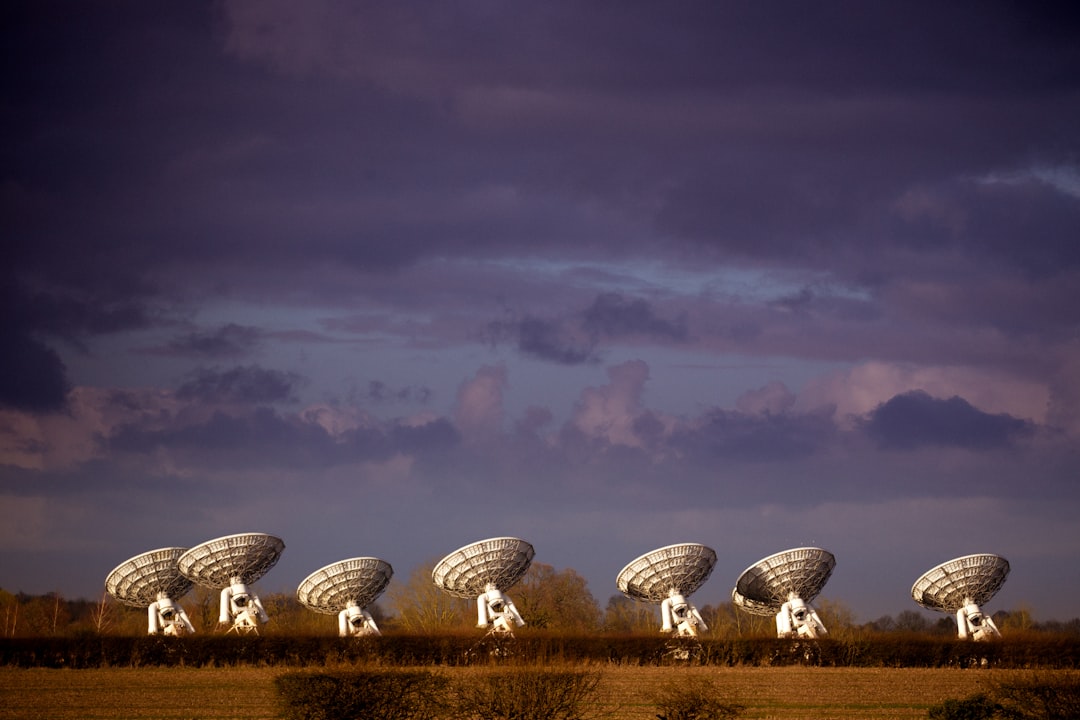
The key advantage of the NSF Karl Jansky Very Large Array is its ability to observe at longer centimeter wavelengths, where the Faraday Rotation effect is dramatically enhanced — since it scales as the square of the observing wavelength. This means that even as the afterglow fades, the centimeter-band observations can continue to yield usable polarization data for longer than millimeter observations, effectively buying precious observational time.
"Previous searches for polarization in GRBs used facilities like the Atacama Large Millimeter/submillimeter Array (ALMA) telescope that measure shorter wavelengths and had to happen early, before the afterglow light faded. Now, with the NSF VLA, we've pushed into the centimeter bands and made the first ever measurement of Faraday rotation in a GRB. Each new observation reveals another layer of the magnetic story these explosions are telling us." — Collin Christy, Graduate Researcher and Lead Author
Collin Christy, a graduate student on the observation team and lead author on the published paper describing the findings, emphasized that this detection represents a methodological breakthrough as much as it does a scientific one. By demonstrating that Faraday Rotation is measurable at centimeter wavelengths in GRB afterglows, the team has effectively established a new observational technique that can be systematically applied to future bursts.
Implications for Our Understanding of GRB Jet Physics
The detection of Faraday Rotation in GRB 260310A is far more than a technical achievement — it carries deep implications for some of the most fundamental open questions in high-energy astrophysics. Chief among these is the role of magnetic fields in the formation and collimation of relativistic jets. Despite decades of theoretical work, the precise mechanism by which a newly formed black hole or magnetar launches a jet at close to the speed of light remains poorly understood.
Two broad classes of models exist. In magnetically dominated jet models, the jet is powered and collimated by large-scale, ordered magnetic fields threading the accretion disk surrounding the central compact object — a scenario known as Blandford-Znajek type mechanisms. In internal shock models, kinetic energy from collisions within the jet itself is the primary energy dissipation mechanism, with magnetic fields playing a secondary role. The high Rotation Measure seen in GRB 260310A, combined with its relatively modest polarization fraction, provides new constraints that can help discriminate between these competing frameworks.
Furthermore, the dense, magnetized HII region in which GRB 260310A occurred provides a rare opportunity to study the interplay between the GRB jet and its immediate environment at an unprecedented level of detail. As the jet plows into the surrounding magnetized gas, it drives a forward shock into the interstellar medium and a reverse shock back into the jet itself. Both shocks can amplify magnetic fields and accelerate electrons to relativistic speeds, producing the synchrotron radiation that dominates the afterglow. Pinning down the magnetic field strength in the surrounding medium — as the Rotation Measure allows — is critical to understanding this energy transfer process. Explore more about relativistic jets and magnetic fields at NASA's Chandra X-ray Observatory educational pages on GRBs.
The Progenitor Star and Its Environment
The connection between GRB 260310A and its host HII region is particularly revealing about the nature of the progenitor star. HII regions are zones of ionized interstellar gas, typically carved out by the intense ultraviolet radiation and strong stellar winds from OB-type stars — the hottest, most luminous, and most massive stars in the universe, with masses often exceeding 20–100 times that of the Sun. These stars live fast and die young, burning through their nuclear fuel in just a few million years before ending their lives in core-collapse supernovae — or, for the most massive among them, in the hypernova events that produce long-duration GRBs.
The presence of the GRB within such a region strongly implies that the progenitor star had not yet escaped its natal molecular cloud. This is consistent with Wolf-Rayet stars — a class of highly evolved, stripped massive stars that are among the leading candidates for GRB progenitors. Wolf-Rayet stars shed their outer hydrogen envelopes through intense stellar winds, and it is the bare, rapidly rotating cores of these stars that are thought to produce the ultra-relativistic jets required for a GRB. The dense, wind-blown bubble of ionized hydrogen left behind by such a star is precisely the kind of HII region in which GRB 260310A appears to have detonated. Learn more about massive star evolution from HubbleSite's overview of stellar lifecycles.
Future Observations and the Road Ahead
The success of the VLA in measuring Faraday Rotation from GRB 260310A has opened a new and productive avenue for GRB research. Now that the technique has been demonstrated to work at centimeter wavelengths, future observations of GRB afterglows with the VLA and complementary radio facilities — such as the MeerKAT array in South Africa, the Australian Square Kilometre Array Pathfinder (ASKAP), and eventually the Square Kilometre Array (SKA) — promise a systematic characterization of the magnetic environments of GRBs across cosmic time.
Of particular scientific value will be time-resolved polarimetry: monitoring how the Rotation Measure and polarization fraction evolve as the afterglow fades. Such temporal evolution encodes information about how the jet decelerates, how the surrounding magnetic field is structured on large scales, and how magnetic energy is dissipated as the blast wave expands. This is a capability that, until now, has been entirely inaccessible to observers.
"Future monitoring of GRB afterglows with the NSF VLA and other radio telescopes will allow scientists to watch magnetic field structures evolve in real time. This is a capability that could transform our understanding of how relativistic jets form, how they are powered, and how magnetic energy is released in the most extreme environments the Universe has to offer." — Assistant Professor Dr. Kate Denham Alexander, University of Arizona
Beyond individual GRB studies, the methodology developed from GRB 260310A observations could be applied more broadly to other classes of transient phenomena involving relativistic jets, including tidal disruption events (TDEs) — in which a star is shredded by a supermassive black hole — and fast radio bursts (FRBs), whose polarization properties are already known to encode information about magnetized environments but whose detailed physical interpretation remains an active area of research.
In a very real sense, this detection marks the beginning of a new era in GRB radio polarimetry. With each successive observation, astronomers will accumulate a richer statistical picture of how magnetic