In a damning assessment that echoes the gravity of America's most catastrophic space disasters, NASA has officially classified Boeing's troubled Starliner crewed test flight as a Type A mishap—placing it in the same severity category as the Challenger and Columbia tragedies. The unprecedented designation, announced nearly two years after the mission's June 2024 launch, marks a watershed moment for commercial spaceflight and raises fundamental questions about oversight, engineering culture, and the future of NASA's dual-provider strategy for crew transportation.
The reclassification stems from a comprehensive 311-page independent investigation report that uncovered systemic failures in both NASA's oversight and Boeing's engineering practices. At the heart of the crisis: five critical thrusters in Starliner's propulsion system failed during the spacecraft's approach to the International Space Station, creating a life-threatening scenario that ultimately stranded two astronauts in orbit for over nine months—far beyond their planned eight-day mission.
NASA Administrator Jared Isaacman, who assumed leadership of the agency in December 2024, pulled no punches in his assessment of what went wrong. His stark warning to NASA employees signals a potential transformation in how the space agency approaches commercial partnerships and safety protocols moving forward.
The Anatomy of a Near-Catastrophe: What Went Wrong in Orbit
The Starliner mission began with high expectations in June 2024, carrying NASA astronauts Butch Wilmore and Suni Williams to the International Space Station for what should have been a routine eight-day certification flight. However, as the spacecraft approached the orbital laboratory, engineers on the ground watched in growing alarm as the reaction control system thrusters began experiencing catastrophic failures.
Of the five thrusters that malfunctioned, four were eventually coaxed back to operational status through emergency procedures. But the incident revealed deeper, more troubling issues with the spacecraft's propulsion architecture. The Commercial Crew Program team faced an agonizing decision: risk bringing the astronauts home aboard a spacecraft with compromised systems, or leave them in orbit while seeking alternative transportation.
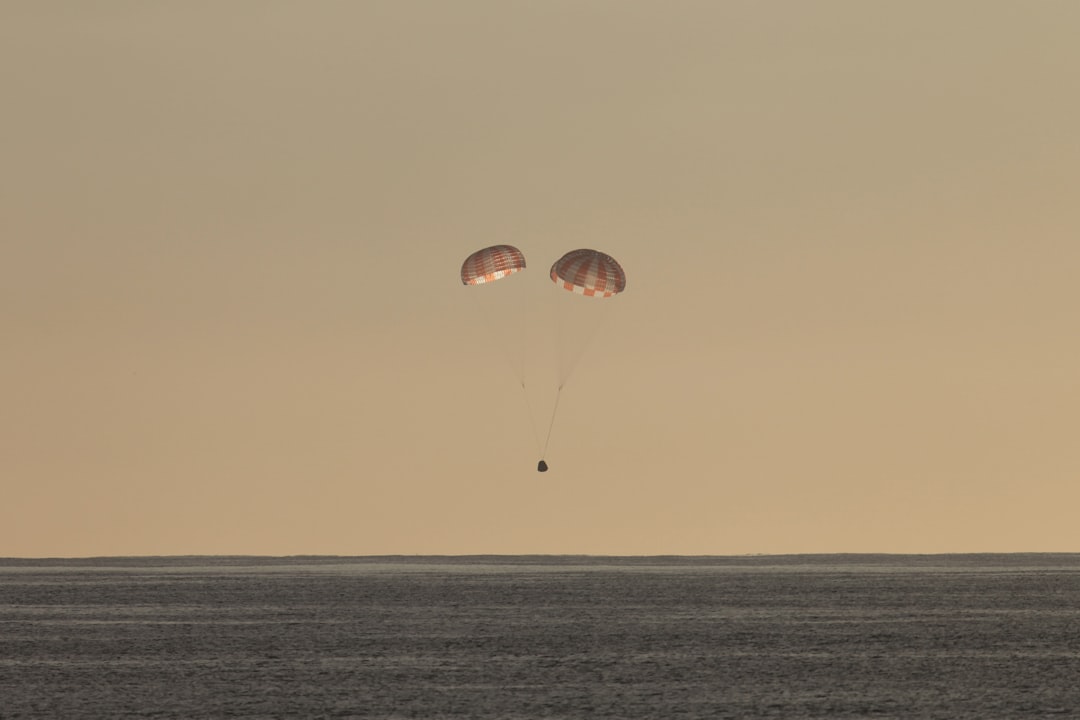
NASA ultimately chose the conservative path—a decision that proved prescient given the investigation's findings. The agency opted to return Starliner to Earth uncrewed in September 2024, three months after docking. Meanwhile, Wilmore and Williams remained aboard the ISS, their mission extended from days to months as they awaited rescue via a SpaceX Dragon capsule that finally brought them home in March 2025.
Systemic Failures: A Culture of Complacency Revealed
The independent panel's investigation uncovered failures that extended far beyond simple hardware malfunctions. In a scathing letter to NASA employees, Administrator Isaacman identified the core problem:
"Starliner has design and engineering deficiencies that must be corrected, but the most troubling failure revealed by this investigation is not hardware. It is decision-making and leadership that, if left unchecked, could create a culture incompatible with human spaceflight."
The report documented a troubling pattern of inadequate testing protocols that predated even the crewed mission. During Starliner's uncrewed test flight to the ISS in 2022—itself a do-over after a failed 2019 attempt—engineers had already identified concerning anomalies that should have triggered more rigorous investigation. Instead, the report found that Boeing's team relied excessively on heritage designs approved for different applications, assuming compatibility without sufficient validation.
Perhaps most alarmingly, the investigation revealed that hardware was routinely operated outside qualification limits without proper documentation or NASA oversight. The space agency's "limited-touch" management approach—intended to give commercial partners operational flexibility—instead created dangerous blind spots in system knowledge and development insight.
The Oversight Gap: When Commercial Partnership Becomes Commercial Risk
NASA's Commercial Crew Program was designed to foster innovation by allowing private companies greater autonomy than traditional government contracts. However, the Starliner investigation exposed how this approach can backfire when not balanced with rigorous oversight.
Isaacman noted that NASA's management posture "left the agency without the systems knowledge and development insight required to confidently certify a human-rated spacecraft." The report found that insight versus oversight was not applied consistently across the program, creating gaps in understanding that proved dangerous when critical decisions needed to be made.
Confirmation Bias and the Rush to Launch: Cultural Parallels to Past Disasters
One of the most disturbing findings in the report centers on what investigators termed a "bias toward mission success" that colored decision-making before, during, and after the crewed flight. This phenomenon—where teams unconsciously favor information that supports proceeding with a mission while downplaying warning signs—has been identified in previous space disasters, most notably the Challenger explosion in 1986 and the Columbia breakup in 2003.
The investigation found that both NASA and Boeing teams exhibited this bias throughout the Starliner program. Engineers and managers made decisions "inconsistent with NASA's safety culture," according to Isaacman, prioritizing schedule adherence and program success over thorough risk assessment.
This cultural failure is particularly significant given NASA's decades of work to reform its safety culture following previous disasters. The Columbia Accident Investigation Board in 2003 specifically warned about organizational factors that can lead to catastrophic failures—warnings that appear to have been insufficiently heeded in the Starliner program.
The Type A Classification: Understanding the Severity
NASA's decision to classify the Starliner mission as a Type A mishap carries profound implications. This designation is reserved for the most serious incidents in spaceflight and typically involves one or more of the following criteria:
- Loss of human life: While no lives were lost, the thruster failures created genuine risk to crew safety
- Loss of spacecraft control: The propulsion system failures temporarily compromised vehicle controllability during critical flight phases
- Destruction of spacecraft: Though Starliner survived, the mission failure and extended investigation effectively removed it from service
- Financial impact exceeding $2 million: The costs associated with the botched flight, extended ISS crew time, and investigation far exceeded this threshold
The thruster problems alone would have been serious, but combined with the substantial financial costs and the systemic failures uncovered by the investigation, NASA determined that Type A classification was warranted. This designation triggers mandatory corrective actions and extensive oversight before the spacecraft can carry crew again.
The Road Ahead: Dozens of Corrective Actions Required
Administrator Isaacman made clear that Starliner will not carry another crew until comprehensive reforms are implemented. "NASA will not fly another crew on Starliner until technical causes are understood and corrected, the propulsion system is fully qualified, and appropriate investigation recommendations are implemented," he stated unequivocally.
The report mandates dozens of corrective actions spanning multiple categories:
- Hardware redesign and qualification: Complete requalification of the propulsion system with expanded testing protocols
- Testing procedures: Implementation of more rigorous ground testing that better simulates flight conditions
- Management oversight: Enhanced NASA involvement in design reviews and operational decisions
- Cultural reforms: Changes to decision-making processes to eliminate confirmation bias and encourage dissenting opinions
- Documentation requirements: Improved tracking and reporting of hardware operating outside qualification limits
An ongoing investigation continues to probe the direct technical causes of the thruster anomalies experienced during the 2024 flight. Until those root causes are fully understood and addressed, crewed operations remain grounded indefinitely.
Interim Solutions: SpaceX Carries the Load
With Starliner sidelined, NASA finds itself temporarily dependent on a single commercial provider for crew transportation—the very scenario the Commercial Crew Program was designed to avoid. SpaceX's Dragon spacecraft now shoulders the entire burden of American crew rotation to the ISS, supplemented by seats purchased on Russian Soyuz flights.
This situation highlights the importance of redundancy in human spaceflight systems. While SpaceX has demonstrated remarkable reliability with over 40 successful crewed missions to date, relying on a single provider creates vulnerability to any technical issues or operational disruptions that might affect Dragon.
NASA and Boeing are preparing an uncrewed Starliner cargo mission scheduled for no earlier than April 2025. This flight will serve as a critical test of implemented fixes and provide valuable data for the ongoing investigation, though it represents only a small step toward restoring the spacecraft to crewed service.
Boeing's Response: Acknowledging Failures While Pledging Reform
Boeing's official statement acknowledged the investigation's findings while emphasizing progress made since the troubled 2024 flight. The aerospace giant expressed gratitude for "NASA's thorough investigation and the opportunity to contribute to it," and claimed that substantial corrective actions have been implemented over the past 18 months.
The company highlighted "significant cultural changes" across the Starliner team that "directly align with the findings in the report." Boeing insisted that "safety is and must always be our highest priority" and reaffirmed commitment to "NASA's vision for two commercial crew providers."
However, these assurances come against a backdrop of mounting financial losses. Operating under a fixed-price contract with NASA, Boeing has absorbed over $2 billion in losses on the Starliner program to date. The company faces difficult decisions about how much additional investment it can justify in a program that has yet to complete a successful crewed mission.
Broader Implications: Rethinking Commercial Space Partnerships
The Starliner mishap investigation raises fundamental questions about how NASA structures and oversees commercial partnerships for critical human spaceflight systems. The "limited-touch" approach that worked well for cargo delivery may require significant modification when human lives are at stake.
Future commercial crew programs may need to incorporate more robust NASA oversight mechanisms while still preserving the innovation and efficiency benefits of commercial partnerships. Finding this balance will be crucial as the space agency looks ahead to Artemis lunar missions and eventual Mars exploration, where commercial partnerships will play even larger roles.
The investigation also underscores the enduring relevance of safety culture in human spaceflight. Despite decades of effort to reform organizational culture following previous disasters, the Starliner experience demonstrates how easily problematic patterns can re-emerge. Maintaining vigilance against confirmation bias, groupthink, and schedule pressure requires constant attention and institutional commitment at the highest levels.
Looking Forward: Can Starliner Recover?
The question now facing NASA, Boeing, and the broader space community is whether Starliner can recover from this setback and fulfill its intended role as America's second commercial crew vehicle. The path forward is long and uncertain, requiring not just technical fixes but fundamental cultural transformation.
Success will depend on Boeing's ability to implement comprehensive reforms while maintaining financial commitment to the program despite mounting losses. It will require NASA to find the right balance between oversight and autonomy, ensuring safety without stifling innovation. And it will demand sustained focus on the safety culture principles that Administrator Isaacman has emphasized as non-negotiable for human spaceflight.
The stakes extend beyond a single spacecraft program. NASA's vision of a robust commercial space economy, with multiple providers competing to drive down costs and improve capabilities, depends on successfully navigating the challenges exposed by the Starliner investigation. The lessons learned here will shape how America approaches commercial human spaceflight for decades to come.
As the investigation continues and corrective actions proceed, the space community watches carefully to see whether Boeing and NASA can transform this near-catastrophe into an opportunity for meaningful reform—or whether the Starliner program becomes another cautionary tale about the perils of complacency in the unforgiving environment of space.