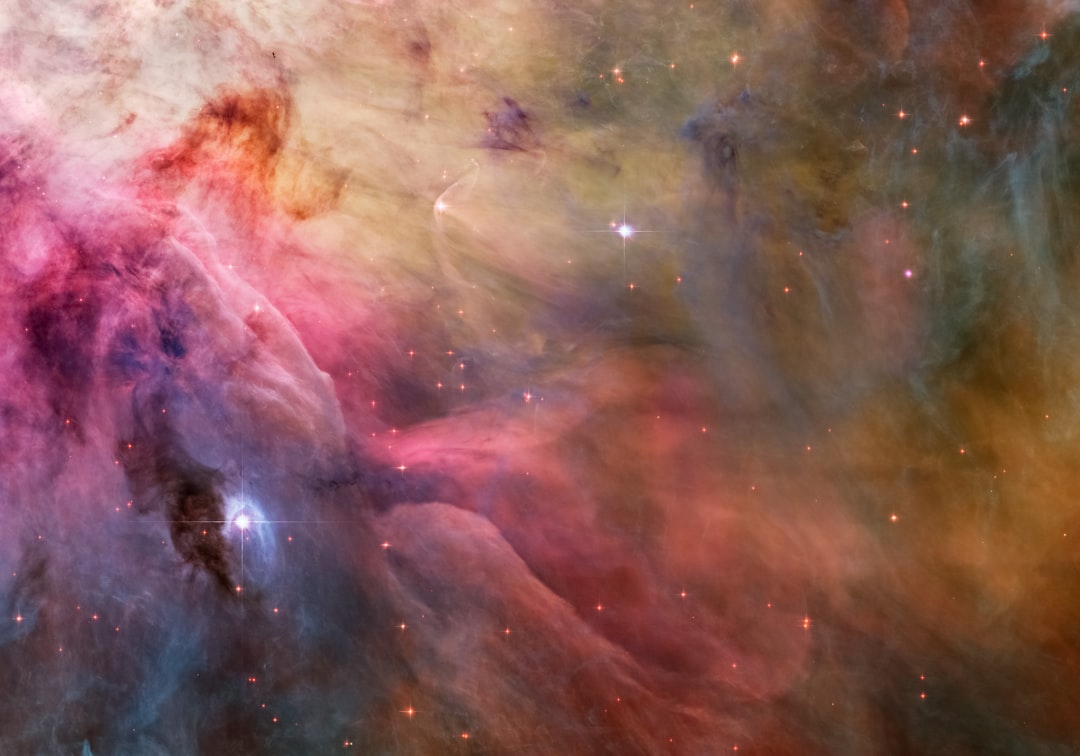
In the vast cosmic theater, where stellar death gives birth to breathtaking beauty, the James Webb Space Telescope (JWST) has captured one of nature's most peculiar masterpieces. The Exposed Cranium Nebula, officially designated as PMR 1, presents an extraordinary case of cosmic pareidolia—our human tendency to recognize familiar patterns in random structures. This glowing cloud of ionized gas and stellar debris, located approximately 5,000 light-years away in the constellation Vela, bears an uncanny resemblance to an X-ray image of a human brain, complete with what appears to be a bilateral hemispheric structure that mirrors our own neural architecture.
What makes this celestial object particularly fascinating isn't just its appearance, but what it represents in the grand cycle of stellar evolution. As a planetary nebula—a somewhat misleading term that has nothing to do with planets—this structure marks the twilight years of a star's existence. The nebula showcases the dramatic transformation occurring as an aging star sheds its outer layers into the cosmos, creating a spectacular light show that will eventually fade into the darkness of space. The James Webb Space Telescope's unprecedented observational capabilities have revealed intricate details that were completely invisible to previous generations of astronomical instruments, transforming our understanding of this stellar phenomenon.
Before JWST's penetrating infrared gaze illuminated the Exposed Cranium Nebula in exquisite detail, astronomers relied on images from the Spitzer Space Telescope, captured in 2013. While those earlier observations hinted at the nebula's intriguing structure, they lacked the resolution and sensitivity to reveal the complex chemical and physical processes at work within this cosmic crucible. The technological leap from Spitzer to JWST represents more than just improved optics—it's a fundamental transformation in our ability to probe the universe's most intricate stellar phenomena.
Unveiling the Wolf-Rayet Enigma at the Nebula's Heart
At the center of this cosmic brain lies a stellar object of remarkable complexity—a Wolf-Rayet type star that defies simple classification. However, this isn't your typical Wolf-Rayet star. Classical Wolf-Rayet stars are massive stellar behemoths, burning at extraordinary temperatures and often meeting their end in spectacular supernova explosions. The central star of the Exposed Cranium Nebula tells a different evolutionary story altogether.
This particular stellar remnant, classified as either a WC4 or WO4 star, began its life as a relatively modest main-sequence star. After exhausting its core hydrogen fuel, it expanded dramatically into a red giant phase, swelling to potentially hundreds of times its original size. What distinguishes WC4 and WO4 stars from their massive Wolf-Rayet cousins is their evolutionary pathway—these lower-mass stars exhibit Wolf-Rayet characteristics not because of their initial mass, but because of the extreme conditions they've experienced during their late-stage evolution.
The classification nomenclature tells us something crucial about the star's composition: the "C" in WC4 indicates strong carbon emission lines in the star's spectrum, while the "O" in WO4 denotes prominent oxygen features. Both classifications share a defining characteristic—they've completely shed their outer hydrogen envelopes, exposing the products of nuclear fusion that would normally remain hidden deep within the stellar interior. The detection of highly-ionized nitrogen emission lines in the nebula's spectrum suggests an even more complex evolutionary history, indicating that the star has undergone multiple phases of mass loss and nuclear processing.
The Mechanics of Stellar Wind-Driven Mass Loss
The transformation of this star into its current Wolf-Rayet-like state is driven by phenomenally powerful stellar winds—streams of charged particles racing away from the star's surface at velocities reaching thousands of kilometers per second. These winds are so intense that they've literally blown away the star's entire hydrogen envelope, leaving behind a bare helium-burning core. The mass loss rate during this phase can be staggering, with the star shedding material equivalent to Earth's mass every few years.
The stellar winds from Wolf-Rayet-type stars represent some of the most extreme conditions in stellar astrophysics, with velocities exceeding 2,000 kilometers per second and mass loss rates up to a million times greater than our Sun's solar wind.
These same powerful winds have excavated deep into the star's interior, exposing nitrogen that was produced through the CNO cycle—a series of nuclear reactions that convert hydrogen into helium while using carbon, nitrogen, and oxygen as catalysts. Under normal circumstances, this nitrogen would remain buried beneath layers of hydrogen and helium, invisible to external observation. Its presence in the nebula's spectrum provides astronomers with a unique window into the nuclear furnace that once burned at the star's core.
Decoding JWST's Multi-Wavelength Revelations
The JWST's observations of the Exposed Cranium Nebula employed two of its powerful instruments: the Near Infrared Camera (NIRCam) and the Mid-Infrared Instrument (MIRI). Each instrument reveals different aspects of the nebula's structure and composition, painting a comprehensive picture of this complex stellar ecosystem.
The NIRCam images showcase a striking color contrast that directly corresponds to temperature and chemical composition. The outer shell, rendered in blue in processed images, consists primarily of cool hydrogen gas—material that was gently expelled during the star's red giant phase. This hydrogen forms a relatively smooth, spherical envelope around the nebula's more chaotic interior. The temperature of this outer shell hovers around 10,000 Kelvin, cool by astronomical standards but still hot enough to emit a distinctive hydrogen-alpha glow.
The inner regions present a far more complex picture. Here, hot ionized gases create a turbulent, morphologically intricate structure. The temperatures in these inner zones can exceed 100,000 Kelvin, hot enough to ionize elements far beyond hydrogen. This inner cauldron contains a rich mixture of elements including helium, carbon, nitrogen, and oxygen—the products of nuclear fusion from the star's earlier evolutionary phases. The chaotic appearance of these inner regions reflects the violent processes of stellar wind interaction, shock heating, and photoionization occurring as the central star's intense ultraviolet radiation slams into the surrounding material.
The Mysterious Hemispheric Division
One of the most intriguing features visible in JWST's images is the dark lane running through the nebula's center, creating the illusion of two distinct hemispheres—much like the division between the left and right sides of a human brain. This equatorial dark lane has captured the attention of astronomers, who propose several potential explanations for its origin.
The most compelling hypothesis suggests that this feature results from a stellar outburst or focused outflow from the central star. Such outbursts, known as thermal pulses, occur when the star briefly reignites nuclear fusion in a shell around its core, creating a sudden surge in luminosity and mass loss. Alternatively, the dark lane might represent a more stable equatorial density enhancement—a disk or torus of material concentrated along the star's rotational plane. The MIRI observations provide tantalizing evidence for this interpretation, showing what appears to be material being actively ejected from the nebula's polar regions, perpendicular to the dark equatorial lane.
Cosmic Chemistry: Seeding the Galaxy with Heavy Elements
Beyond its visual splendor, the Exposed Cranium Nebula plays a crucial role in the chemical evolution of our galaxy. Throughout its lifetime, the progenitor star has been a nuclear forge, fusing lighter elements into heavier ones through successive stages of stellar nucleosynthesis. During its main-sequence phase, it converted hydrogen into helium. As it evolved into a red giant, helium fusion produced carbon and oxygen. Further nuclear processing created nitrogen through the CNO cycle and possibly even heavier elements through advanced burning stages.
When the star expelled its outer layers to create the planetary nebula we see today, it released these heavy elements—what astronomers call "metals"—into the interstellar medium. Over time, this enriched material will mix with the surrounding gas and eventually incorporate into new generations of stars and planetary systems. This process of galactic chemical enrichment has been occurring throughout cosmic history, gradually increasing the metallicity of the universe from its primordial composition of almost pure hydrogen and helium.
The implications for planetary formation and the emergence of life are profound. The key elements necessary for life as we know it—carbon, nitrogen, oxygen, phosphorus, and sulfur—were all forged in stellar interiors and dispersed through events like the formation of the Exposed Cranium Nebula. Without billions of years of stellar nucleosynthesis and mass return to the interstellar medium, the raw materials for rocky planets, organic chemistry, and ultimately biological systems would simply not exist. In this sense, every planetary nebula represents a crucial link in the chain connecting the Big Bang to the emergence of complex life.
Ephemeral Beauty: The Nebula's Transient Existence
Despite its current magnificence, the Exposed Cranium Nebula is a fleeting phenomenon on cosmic timescales. Planetary nebulae typically persist for only 10,000 to 20,000 years before dissipating into the interstellar medium. This brief lifetime—merely a blink of an eye in astronomical terms—makes our current observations all the more precious. Within a few tens of thousands of years, the nebula's glowing gases will have expanded and cooled to the point where they become invisible, merging seamlessly with the surrounding interstellar clouds.
The central star, meanwhile, continues its own inexorable evolution. Having shed its outer layers and exhausted its nuclear fuel, it will gradually cool and contract, eventually becoming a white dwarf—a dense, Earth-sized stellar remnant composed primarily of carbon and oxygen, supported against gravitational collapse by electron degeneracy pressure. This white dwarf will slowly radiate away its residual heat over billions of years, eventually cooling to become a black dwarf—a theoretical endpoint of stellar evolution that the universe is not yet old enough to have produced.
Implications for Stellar Evolution Theory
The detailed observations of the Exposed Cranium Nebula provided by JWST offer astronomers an unprecedented opportunity to test and refine models of late-stage stellar evolution. The complex morphology, chemical composition, and the presence of the Wolf-Rayet-like central star all provide crucial constraints on theoretical models. Understanding how lower-mass stars can develop Wolf-Rayet characteristics challenges simplified evolutionary scenarios and highlights the importance of factors like rotation, binary interaction, and mass loss history in determining a star's fate.
The nebula's structure also provides insights into the asymptotic giant branch (AGB) phase of stellar evolution—the period when stars like the Sun's progenitor undergo their final transformation before becoming planetary nebulae. The interaction between stellar winds from different evolutionary phases, the role of magnetic fields in shaping mass loss, and the mechanisms driving the complex morphologies observed in planetary nebulae remain active areas of research. Each new high-resolution observation adds pieces to this cosmic puzzle.
Future Observations and Unanswered Questions
While JWST has provided unprecedented views of the Exposed Cranium Nebula, many questions remain unanswered. Future observations might focus on:
- Spectroscopic mapping: Detailed spectroscopy across the nebula could reveal velocity structures, temperature gradients, and chemical abundance variations that would further illuminate the mass loss history and stellar evolution of the central star
- Time-domain studies: Monitoring the nebula over years or decades could reveal expansion rates, variability in the central star, and evolution of the nebular structure, providing direct observational constraints on theoretical models
- Comparative analysis: Studying similar planetary nebulae with Wolf-Rayet-type central stars could help astronomers understand whether the Exposed Cranium Nebula represents a common evolutionary pathway or an unusual case
- Multi-wavelength coordination: Combining JWST's infrared observations with data from ground-based telescopes and other space observatories could provide a complete picture spanning radio waves to X-rays
The Cosmic Mirror: Pareidolia and Scientific Discovery
The human tendency to see familiar patterns in random structures—pareidolia—has led to countless celestial objects being named for their resemblance to earthly things. From the Horsehead Nebula to the Crab Nebula, astronomers have long recognized shapes that remind us of our terrestrial experience. The Exposed Cranium Nebula's resemblance to a human brain represents a particularly striking example of this phenomenon, creating a poetic connection between the cosmic processes that created the heavy elements in our bodies and the neural structures we use to study those very processes.
Yet this pareidolia serves a purpose beyond mere whimsy. The pattern-recognition capabilities that lead us to see a brain in a planetary nebula are the same cognitive tools that allow scientists to identify structure, recognize patterns in data, and formulate hypotheses about natural phenomena. Our brains evolved to find patterns because pattern recognition confers survival advantages—and in the realm of science, this same capability drives discovery and understanding.
The James Webb Space Telescope, itself a product of human ingenuity and our evolved cognitive capabilities, has closed a cosmic loop by revealing this "brain" in the night sky—a stellar remnant that helped create the very elements that make our own brains possible.
The Exposed Cranium Nebula stands as a testament to the universe's capacity for creating beauty through destruction, complexity through chaos, and ultimately, the conditions necessary for life through stellar death. As JWST continues its mission to explore the cosmos, it will undoubtedly reveal more such wonders, each adding to our understanding of the intricate dance of matter and energy that has shaped our universe across 13.8 billion years of cosmic history. In studying objects like this remarkable planetary nebula, we are quite literally examining our own origins—the stellar furnaces and cosmic recycling processes that made our existence possible.