In a remarkable fusion of cutting-edge space technology and grassroots scientific collaboration, astronomers are calling upon citizen scientists worldwide to help identify some of the universe's most spectacular optical phenomena. The European Space Agency's Euclid space telescope has just released an unprecedented dataset containing observations of approximately 72 million galaxies, and hidden within this cosmic treasure trove are thousands of gravitational lenses—celestial magnifying glasses that bend and distort light across billions of light-years of space. Through the Space Warps citizen science project, anyone with an internet connection can now contribute to one of astronomy's most ambitious surveys, potentially discovering phenomena that have remained hidden since the dawn of the universe.
This collaborative effort represents far more than a simple search for pretty pictures in space. Gravitational lensing stands as one of the most powerful tools available to modern astrophysics, offering unique insights into the distribution of dark matter, the expansion rate of the universe, and the evolution of cosmic structures across 13.8 billion years of history. The data release from Euclid's first full year of operations is approximately 30 times larger than its initial dataset, presenting both an extraordinary opportunity and a monumental challenge for the astronomical community.
Understanding the Cosmic Magnifying Glass Effect
To grasp the profound nature of gravitational lensing, consider a simple but illuminating analogy. When you hold a wine glass between your eye and a distant light source, the curved glass distorts and bends the light, creating elongated streaks and circular patterns. This everyday optical phenomenon operates on the same fundamental principle as gravitational lensing, but on an almost incomprehensibly larger scale. Instead of glass, we have massive galaxies or galaxy clusters containing trillions of times the mass of our Sun. Instead of a candle flame, we observe entire galaxies located billions of light-years beyond these massive objects.
The theoretical foundation for this phenomenon comes directly from Einstein's general theory of relativity, published in 1915. Einstein revolutionized our understanding of gravity by demonstrating that massive objects don't simply pull on other objects through some mysterious force—instead, they warp the very fabric of spacetime itself. Light, despite having no mass, must follow the curves and contours of this warped spacetime. When light from a distant galaxy passes near a massive foreground object, its path bends, sometimes dramatically. The NASA Astrophysics Division has extensively documented how this effect serves as a natural telescope, magnifying and distorting background objects in ways that reveal the invisible architecture of the cosmos.
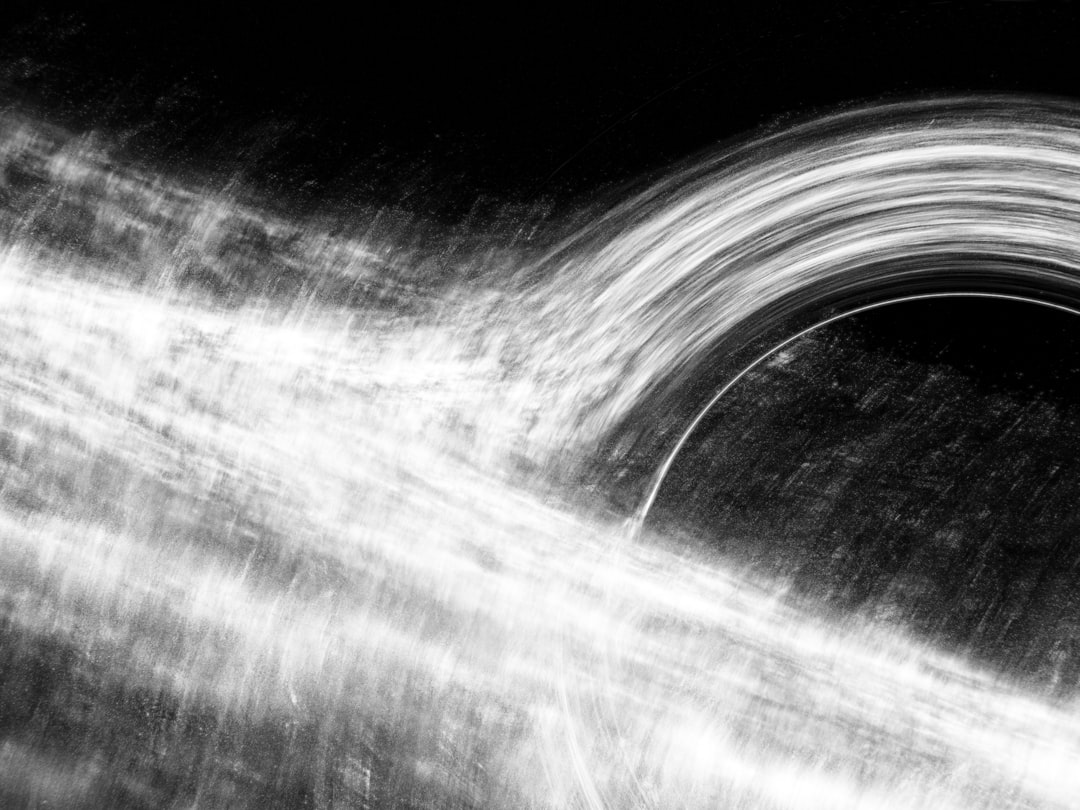
When the alignment between observer, lens, and background source achieves near-perfect geometry, the results are breathtaking. Background galaxies appear stretched into luminous arcs of light, sometimes forming complete circles known as Einstein rings. These aren't optical illusions or artifacts of telescope instrumentation—they represent real light that has traveled across vast cosmic distances, bent around corners by the gravitational influence of intervening mass. In some cases, a single background galaxy may appear multiple times in the same image, its light having taken different paths around the lensing object.
The Euclid Mission's Revolutionary Capabilities
Launched by the European Space Agency in July 2023, the Euclid space telescope represents a quantum leap in our ability to map the large-scale structure of the universe. Positioned at the second Lagrange point (L2), approximately 1.5 million kilometers from Earth, Euclid operates far from the distorting effects of our planet's atmosphere and thermal interference. The telescope's primary mission focuses on investigating the nature of dark energy and dark matter by surveying billions of galaxies across more than one-third of the sky.
The spacecraft carries two sophisticated instruments: a visible-wavelength camera (VIS) capable of capturing extraordinarily sharp images, and a near-infrared spectrometer and photometer (NISP) that can measure the distances to galaxies and analyze their light across multiple wavelengths. This combination allows Euclid to not only identify gravitational lenses but also to measure their properties with unprecedented precision. The ESA's Euclid mission page provides detailed technical specifications showing how the telescope achieves resolution comparable to the Hubble Space Telescope while covering vastly larger areas of sky.
The latest data release encompasses observations from Euclid's first full year of operations, containing detailed information on approximately 72 million galaxies. To put this number in perspective, that's roughly equivalent to cataloging every star visible to the naked eye from Earth, multiplied by a million. Within this enormous dataset, astronomers estimate that tens of thousands of gravitational lenses await discovery—more than have been found in the entire history of astronomical observation combined.
Why Human Eyes Still Outperform Artificial Intelligence
In an era where artificial intelligence and machine learning algorithms seem poised to automate every aspect of scientific research, the Space Warps project highlights a surprising truth: human visual pattern recognition remains uniquely valuable for certain tasks. Advanced AI systems have already pre-screened Euclid's vast dataset, identifying approximately 300,000 candidate images that might contain gravitational lenses. This initial filtering reduces the search space by more than 99%, making the task manageable for human reviewers.
However, gravitational lenses exhibit enormous variety in their appearance. Some form perfect, symmetrical Einstein rings. Others appear as subtle, irregular arcs that might easily be mistaken for background noise or instrumental artifacts. The human brain, refined by millions of years of evolution to detect patterns and anomalies in complex visual environments, excels at identifying these irregular cases that AI systems might miss or misclassify. As researchers analyzed just 0.04% of the available data in preliminary studies, they discovered approximately 500 previously unknown gravitational lenses—a success rate that validates the human-AI collaborative approach.
"The combination of machine learning pre-selection and human visual inspection represents the optimal strategy for discovering gravitational lenses in massive astronomical surveys. AI handles the initial heavy lifting, while citizen scientists provide the nuanced pattern recognition that remains difficult to automate," explains Dr. Aprajita Verma, a researcher at the University of Oxford involved in gravitational lens studies.
The Scientific Treasure Hidden in Gravitational Lenses
Beyond their aesthetic beauty, gravitational lenses serve as extraordinarily powerful scientific instruments. They function as natural cosmic weighing scales, allowing astronomers to measure the total mass of galaxies and galaxy clusters—including the mysterious dark matter that comprises approximately 85% of all matter in the universe but neither emits nor reflects light. By studying how strongly a lens bends background light, scientists can calculate the total mass contained within the lensing object, regardless of whether that mass is visible or invisible.
This capability has profound implications for understanding dark matter distribution throughout the universe. Traditional astronomical observations can only detect matter that interacts with light—stars, gas clouds, dust, and other luminous material. Dark matter, by contrast, reveals itself only through its gravitational effects. Gravitational lenses provide a direct probe of dark matter's distribution, allowing researchers to map its presence with unprecedented detail. Studies published in the Astrophysical Journal have used gravitational lensing to create three-dimensional maps of dark matter structure, revealing how it forms the invisible scaffolding upon which visible galaxies assemble.
The scientific applications extend far beyond dark matter studies:
- Cosmic Expansion Measurements: By comparing the arrival times of light from multiply-imaged lensed sources, astronomers can measure the expansion rate of the universe (the Hubble constant) using a technique independent of traditional distance ladder methods.
- Galaxy Evolution Studies: Gravitational lenses naturally magnify distant galaxies, allowing detailed studies of objects that would otherwise be too faint to observe. This magnification effect enables research into galaxy formation during the universe's first billion years.
- Dark Energy Constraints: Large samples of gravitational lenses at various distances provide crucial data for understanding how dark energy has influenced cosmic expansion over billions of years.
- Substructure Detection: Subtle anomalies in lensed images can reveal the presence of smaller dark matter clumps, testing fundamental predictions of cosmological models.
- Exoplanet Discovery: In rare cases, gravitational lensing can even detect planets orbiting stars in distant galaxies, a technique called microlensing that extends planet-hunting capabilities far beyond conventional methods.
Joining the Cosmic Hunt: How Citizen Science Works
Participating in the Space Warps project requires no specialized equipment, advanced degrees, or prior astronomical knowledge—just curiosity and a willingness to learn. The project operates through the Zooniverse platform, the world's largest and most successful citizen science portal, which has facilitated discoveries across fields ranging from astronomy to zoology. Since its launch, Zooniverse has engaged more than two million volunteers in authentic research projects, resulting in hundreds of peer-reviewed scientific publications.
The workflow is straightforward but scientifically rigorous. Participants view images from Euclid's survey and answer simple questions about what they observe: Do you see any arc-shaped features? Are there any ring-like structures? Do multiple images appear to be connected? The system presents the same images to multiple volunteers, and the collective responses help identify the most promising candidates for professional follow-up. This redundancy ensures reliability—a single volunteer's mistake won't derail the search, while genuine discoveries receive confirmation from multiple independent observers.
The project includes comprehensive tutorials that teach participants what gravitational lenses look like and how to distinguish them from other astronomical phenomena. Interactive examples showcase the variety of lensing configurations, from spectacular Einstein rings to subtle arcs barely visible against the background sky. As volunteers gain experience, they develop increasingly sophisticated pattern recognition skills, often rivaling those of professional astronomers in identifying unusual or ambiguous cases.
The Legacy of Distributed Scientific Discovery
The Space Warps initiative continues a proud tradition of citizen science in astronomy. The SETI@home project, launched in 1999, pioneered the concept of distributed computing for scientific research, enlisting millions of personal computers worldwide in the search for extraterrestrial intelligence. While SETI@home eventually concluded its public computing phase, it demonstrated conclusively that motivated amateur scientists could contribute meaningfully to cutting-edge research. The SETI Institute continues this work through various programs that engage public participation.
More recent projects have achieved remarkable successes. Galaxy Zoo, another Zooniverse project, enlisted volunteers to classify galaxy shapes in images from the Sloan Digital Sky Survey. Citizen scientists discovered entirely new categories of astronomical objects, including the enigmatic "green pea galaxies"—compact, star-forming galaxies that professional astronomers had overlooked. Several volunteers became co-authors on scientific papers describing their discoveries, a testament to the genuine research value of their contributions.
The current search for gravitational lenses stands to eclipse all previous efforts in scale and impact. Professional astronomers estimate that the complete Euclid dataset may contain more than 10,000 new gravitational lenses—potentially doubling or tripling the number of known systems. This dramatic increase will enable statistical studies previously impossible due to small sample sizes, opening new windows into cosmic evolution, dark matter physics, and the fundamental nature of spacetime.
Implications for Future Cosmological Research
The gravitational lenses discovered through this citizen science effort will serve as targets for follow-up observations with the world's most powerful telescopes. The James Webb Space Telescope, with its unprecedented infrared sensitivity, can peer through the dusty lenses to study the magnified background galaxies in exquisite detail. Ground-based facilities like the upcoming Extremely Large Telescope will provide complementary observations, measuring the velocities and chemical compositions of lensed objects.
These follow-up studies address some of the most profound questions in modern cosmology. How did the first galaxies form in the aftermath of the Big Bang? What is the precise nature of dark matter—is it composed of yet-undiscovered elementary particles, or does it require modifications to our understanding of gravity itself? How has dark energy's influence on cosmic expansion changed over billions of years? Each newly discovered gravitational lens provides another piece of evidence in this cosmic detective story.
The project also demonstrates the enduring value of human curiosity and engagement in scientific discovery. In an age of increasing automation and artificial intelligence, Space Warps reminds us that science remains fundamentally a human endeavor—one enriched by diverse perspectives and democratized participation. The next groundbreaking discovery might come from a student in Mumbai, a retiree in Manchester, or a curious parent in Melbourne, all united by their fascination with the universe's hidden wonders.
For those interested in contributing to this cosmic census, the Space Warps project welcomes participants of all backgrounds and experience levels. No telescope required—just an internet connection and a sense of wonder at the universe's ability to bend light around corners, revealing its deepest secrets to anyone willing to look.