For more than half a century, a fundamental mystery has captivated planetary scientists and challenged our understanding of the Moon's ancient past. When Apollo astronauts returned from humanity's greatest exploration achievement, they carried with them 382 kilograms of lunar samples—an unprecedented scientific treasure trove that would fuel decades of research and debate. Hidden within these precious rocks was evidence of something unexpected: powerful magnetization that suggested our celestial companion once possessed a magnetic field rivaling or even surpassing Earth's own protective shield. Yet this discovery created a profound scientific paradox that has remained unresolved until now.
The contradiction was stark and seemingly irreconcilable. On one hand, the physical evidence from the Apollo samples demonstrated strong magnetic signatures that could only have been imprinted by a robust planetary magnetic field. On the other hand, theoretical models of lunar evolution insisted this was impossible—the Moon's iron core is simply too small, measuring barely one-seventh of the Moon's total radius, far too diminutive to generate the kind of powerful dynamo mechanism that creates Earth's magnetic field. Both camps wielded compelling evidence, yet their conclusions stood in direct opposition, creating one of planetary science's most enduring enigmas.
Now, groundbreaking research from the University of Oxford has finally cracked this decades-old puzzle, revealing an elegant solution that reconciles the seemingly contradictory evidence. The answer, as published in their recent study, demonstrates how a biased sample collection inadvertently led scientists astray, while simultaneously uncovering a fascinating chapter in the Moon's volcanic and magnetic history.
The Apollo Sample Collection Bias
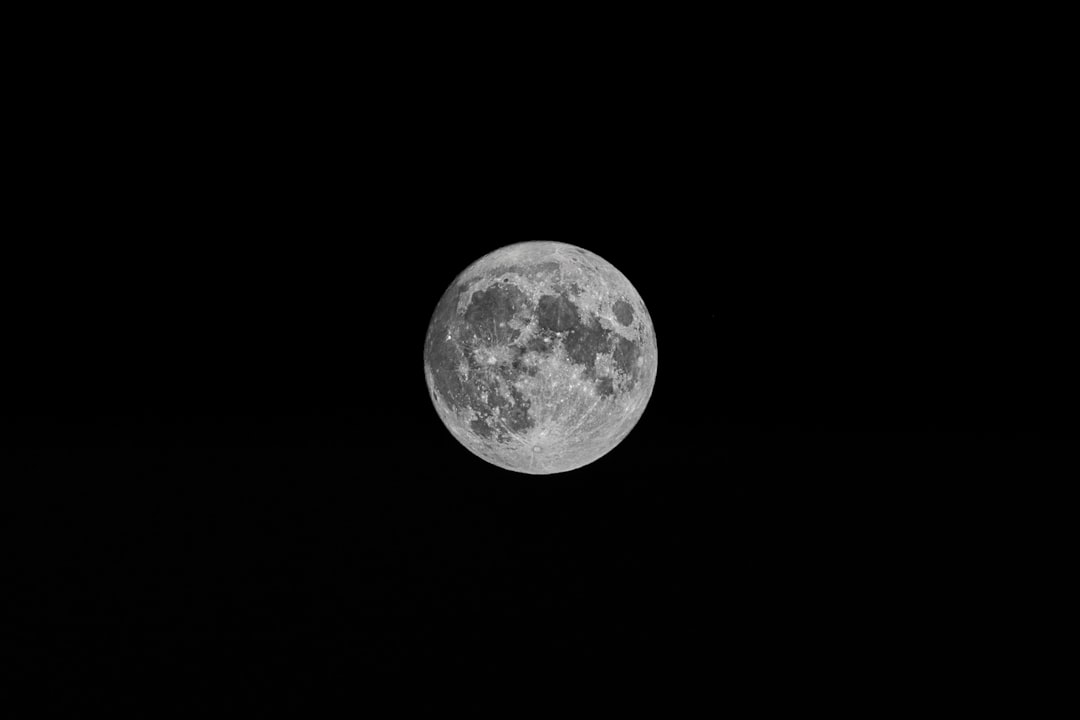
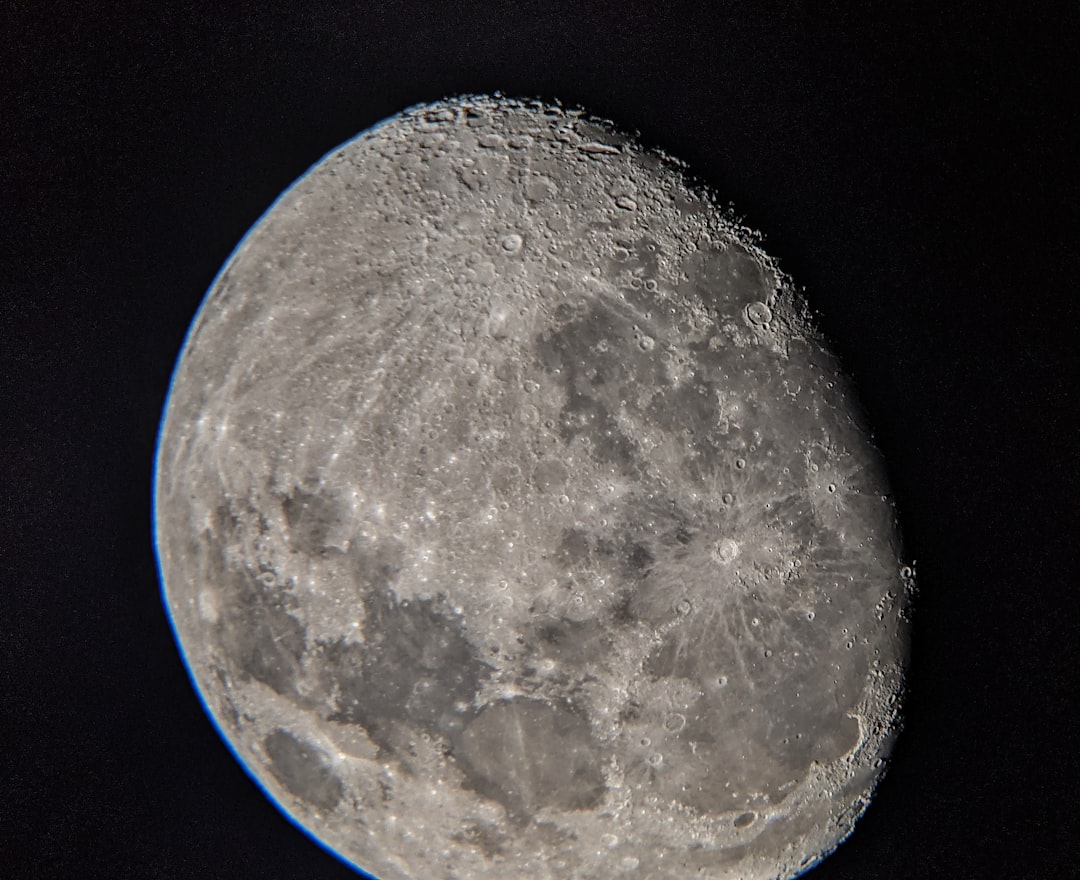
The resolution to this mystery begins with understanding what the Apollo missions actually brought home. Between 1969 and 1972, six Apollo missions successfully landed on the lunar surface, with astronauts carefully selecting and collecting rock samples from their landing sites. However, these landing sites were not chosen randomly. Mission planners at NASA deliberately selected the flat, dark plains known as Mare basalts—the ancient volcanic regions that give the Moon its distinctive "man in the moon" appearance when viewed from Earth.
These basaltic plains were ideal landing sites for practical reasons: they offered relatively smooth terrain, reduced landing hazards, and geologically stable surfaces. However, this sensible selection criterion inadvertently introduced a profound sampling bias that would mislead researchers for generations. The Mare regions, it turns out, are extraordinarily rich in titanium-bearing rocks—a chemical characteristic that would prove to be the key to unlocking the magnetic field mystery.
Associate Professor Jon Wade, a co-author of the Oxford study, illustrated this problem with a compelling thought experiment. If extraterrestrial visitors landed on Earth just six times, selecting only flat terrain for safety, they would likely encounter a similarly skewed sample of our planet's geology. They might land repeatedly in plains, deserts, or oceanic regions, completely missing mountain ranges, volcanic zones, or other geologically diverse areas. The Apollo program, despite its extraordinary achievements, fell victim to precisely this kind of sampling limitation.
Titanium: The Magnetic Field Catalyst
The Oxford research team, led by Associate Professor Claire Nichols, conducted a comprehensive chemical analysis of the Mare basalt samples, focusing particularly on their titanium content. What they discovered was a remarkably clean correlation that had somehow eluded detection for decades. Every single lunar sample that recorded evidence of a strong magnetic field also contained substantial quantities of titanium. More specifically, samples with titanium concentrations exceeding six percent by weight were consistently associated with strong magnetic signatures, while those below this threshold showed only weak magnetization.
This correlation was not merely suggestive—it was systematic and consistent across the entire Apollo dataset. The pattern pointed to a specific mechanism: titanium-rich materials melting at the boundary between the Moon's small iron core and its rocky mantle could temporarily supercharge the lunar dynamo, generating brief but intense episodes of magnetic field activity that far exceeded the Moon's normal weak magnetic state.
"We now believe that for the vast majority of the Moon's history, its magnetic field has been weak. But that for very short periods of time, probably no more than 5,000 years, but possibly as short as a few decades, melting of titanium-rich rocks at the Moon's core-mantle boundary resulted in the generation of a very strong field," explained Associate Professor Claire Nichols, the study's lead author.
This discovery fundamentally reframes our understanding of lunar magnetic history. Rather than a sustained, Earth-like magnetic field that persisted for billions of years, the Moon experienced only sporadic episodes of intense magnetic activity—brief geological moments when specific conditions at the core-mantle boundary created temporary dynamo enhancement.
The Mechanism Behind Transient Magnetic Intensification
Understanding how titanium-rich melts could amplify the lunar dynamo requires examining the Moon's internal structure and thermal evolution. The Moon's core, though small, consists primarily of iron with some lighter elements. Surrounding this core is the rocky mantle, composed of silicate minerals. At the boundary between these two regions—the core-mantle boundary—conditions exist where temperature, pressure, and chemical composition can interact in complex ways.
When titanium-rich materials from the mantle melted and interacted with the core region, they appear to have temporarily enhanced the convective processes that drive dynamo action. Planetary dynamos generate magnetic fields through the motion of electrically conductive fluids—in this case, molten iron in the lunar core. The titanium-rich melts likely altered the thermal and chemical gradients at the core-mantle boundary, intensifying convection and thereby strengthening the magnetic field generation process.
These episodes of magnetic field intensification were extraordinarily brief on geological timescales. While 5,000 years might seem lengthy in human terms, it represents merely a blink of an eye in the Moon's 4.5-billion-year history. Some episodes may have been even shorter—potentially lasting only decades—making them remarkably transient phenomena that would be exceptionally difficult to detect without the right samples.
Implications for Lunar Volcanic History
The titanium connection also provides new insights into the Moon's volcanic past. The Mare basalts were formed through massive volcanic eruptions that occurred primarily between 3 and 4 billion years ago, when the Moon was still geologically active. These eruptions brought titanium-rich magmas from deep within the lunar interior to the surface, where they solidified into the dark plains we observe today.
The fact that these titanium-rich rocks recorded strong magnetic fields suggests that the volcanic episodes themselves may have been linked to the magnetic intensification events. The melting and movement of titanium-bearing materials could have simultaneously fed surface volcanism while enhancing core dynamo activity—a fascinating coupling between surface and deep interior processes that reveals the Moon as a more dynamically integrated system than previously recognized.
Resolving the Theoretical Paradox
The Oxford team's findings elegantly resolve the long-standing contradiction between observational evidence and theoretical constraints. The theorists were correct: the Moon's core is indeed too small to sustain a powerful, Earth-like magnetic field over geological timescales. The lunar dynamo, for most of the Moon's history, was weak and ineffective, generating only a feeble magnetic field insufficient to provide any meaningful protection from solar radiation or cosmic rays.
However, the Apollo samples were also telling the truth—they genuinely recorded strong magnetic fields. The resolution lies in recognizing that these samples captured only the exceptional moments, not the typical state. The astronauts, by landing exclusively in titanium-rich Mare regions, inadvertently collected rocks that documented the Moon's brief magnetic outbursts while missing the far more common periods of magnetic quiescence.
This discovery has profound implications for how we interpret planetary magnetic field records. It demonstrates that sampling bias can fundamentally distort our understanding of planetary evolution, and that seemingly contradictory evidence may actually represent different aspects of a more complex reality. As researchers at the Lunar and Planetary Institute have noted, this finding will likely prompt re-evaluation of magnetic field data from other planetary bodies where sample coverage is limited.
Future Exploration and Testing the Oxford Model
The Oxford team's model makes specific, testable predictions that can be verified through future lunar exploration. Dr. Simon Stephenson, a co-author of the study, emphasized that researchers can now predict which types of rocks should preserve which magnetic field strengths based on their titanium content. This predictive capability transforms the model from an interesting hypothesis into a framework that can guide future sample collection and analysis.
The upcoming Artemis program, NASA's ambitious initiative to return humans to the Moon, provides an ideal opportunity to test these predictions. Unlike Apollo, which concentrated on equatorial Mare regions, Artemis missions will target diverse landing sites including the lunar south pole and highland regions with different geological characteristics. These areas likely contain rocks with varying titanium concentrations, offering a more representative sample of lunar magnetic history.
Key Predictions for Artemis Sampling
- Highland samples: Rocks from the lunar highlands, which are older and compositionally distinct from Mare basalts, should show consistently weak magnetic signatures, confirming the Moon's typically feeble magnetic state
- Low-titanium basalts: Volcanic rocks with titanium concentrations below six percent should record only weak magnetic fields, regardless of their age or location
- Titanium-rich deposits: Any samples with high titanium content from volcanic episodes should show strong magnetization, providing additional examples of the transient magnetic intensification phenomenon
- Temporal correlation: The timing of strong magnetic field episodes should correlate with periods of titanium-rich volcanic activity, demonstrating the causal link between these processes
Broader Implications for Planetary Science
Beyond solving a specific lunar mystery, this research carries important lessons for planetary science more broadly. It demonstrates how sampling strategies profoundly influence our understanding of planetary processes, and how practical constraints on exploration missions can inadvertently introduce systematic biases into our knowledge base.
The findings also highlight the value of long-term, multi-generational scientific research. The Apollo samples, collected more than 50 years ago, continue to yield new insights as analytical techniques improve and theoretical frameworks evolve. Modern instruments can detect chemical and magnetic signatures that were invisible to earlier generations of researchers, allowing scientists to extract information from these precious samples that their original collectors could never have imagined.
For other planetary bodies where our sample collection is even more limited—such as Mars, where we have only Martian meteorites that randomly fell to Earth—this research emphasizes the importance of recognizing potential sampling biases and interpreting data within that context. The Oxford team's work serves as a cautionary tale about drawing broad conclusions from limited datasets, while simultaneously demonstrating how careful analysis can extract profound insights even from biased samples.
As humanity prepares to return to the Moon and eventually venture to Mars and beyond, the lessons learned from reanalyzing Apollo samples will inform how we design future sample collection strategies, ensuring that we gather truly representative materials that can answer fundamental questions about planetary evolution, magnetic field generation, and the conditions that make worlds habitable. The Moon rocks, it seems, still have secrets to reveal—we just needed to ask the right questions.