In the rarefied air of Chile's Atacama Desert, where oxygen bottles are mandatory and every breath comes with effort, a groundbreaking astronomical facility has just opened its eyes to the cosmos. The Fred Young Submillimeter Telescope (FYST), perched at an oxygen-starved elevation of 5,612 meters (18,400 feet) on the summit of Cerro Chajnantor, represents the culmination of more than three decades of scientific ambition, engineering innovation, and sheer human determination. On April 9th, over one hundred scientists, engineers, and dignitaries braved the extreme conditions—higher than Mount Everest's base camp—to witness the inauguration of what promises to be one of the most revolutionary instruments in modern astronomy.
This isn't just another telescope joining the global network of observatories. FYST is specifically engineered to capture submillimeter wavelengths—a largely unexplored region of the electromagnetic spectrum that sits tantalizingly between infrared and radio waves. These wavelengths, measuring less than a millimeter in length, hold the keys to understanding some of the universe's most profound mysteries, from the echo of the Big Bang itself to the hidden birthplaces of stars shrouded in impenetrable dust clouds. The location, while brutally inhospitable to human visitors, is precisely what makes FYST so extraordinary.
Why Build at the Edge of Human Endurance?
The decision to construct a major scientific facility at such an extreme altitude wasn't made lightly—it was driven by the unforgiving physics of atmospheric absorption. Water vapor, the bane of submillimeter astronomy, acts like an opaque curtain to these wavelengths, absorbing the precious photons before they can reach ground-based instruments. According to research published by the European Southern Observatory, the Atacama Desert ranks among the driest places on Earth, receiving less than 15 millimeters of precipitation annually in some areas.
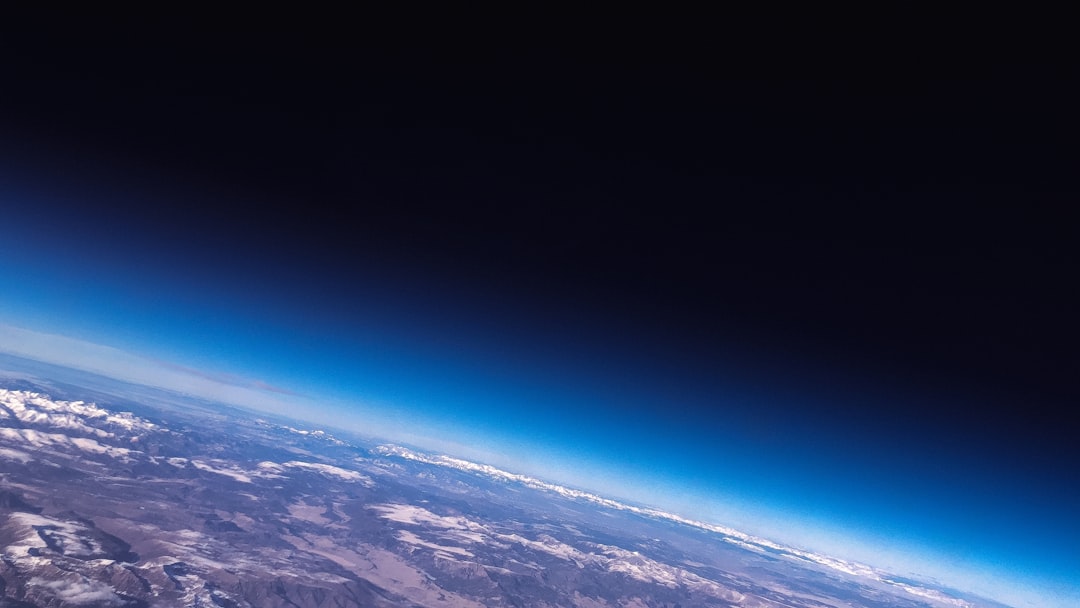
At nearly 5,600 meters above sea level, Cerro Chajnantor offers something even more valuable than aridity: atmospheric transparency. The air is so thin that approximately 40% of Earth's atmosphere lies below the observatory. This dramatic reduction in atmospheric mass, combined with the desert's extreme dryness, creates observing conditions that are quite simply unmatched anywhere else on the planet for submillimeter astronomy. The site's precipitable water vapor levels—the total amount of water in a column of atmosphere—can drop below 0.5 millimeters during optimal conditions, compared to several centimeters at sea level.
"The Atacama site represents the best compromise between accessibility and atmospheric conditions for submillimeter observations. Going higher would require space-based facilities at exponentially greater cost, while lower altitudes would severely compromise our scientific capabilities," explained Dr. Michael Niemack, CCAT Observatory project scientist.
Revolutionary Optical Design: The Crossed-Dragone Architecture
What truly sets FYST apart from its predecessors isn't just its location, but its innovative engineering. The telescope employs a Crossed-Dragone optical design, a sophisticated configuration that represents a significant departure from traditional telescope architectures. Unlike conventional designs where mirrors are aligned along a single optical axis, the Crossed-Dragone system uses two mirrors tilted at precise angles to each other.
This seemingly subtle geometric difference delivers profound advantages. By eliminating central obstructions that plague traditional designs, the system produces exceptionally clean, high-quality images across an unusually wide field of view. For submillimeter astronomy, where every photon counts and image quality directly translates to scientific capability, this design choice is transformative. The configuration allows FYST to survey large swaths of sky with unprecedented efficiency—more akin to a high-speed celestial camera than a traditional telescope painstakingly pointed at individual targets.
Prime-Cam: A Detector Array Like No Other
Complementing the optical innovation is Prime-Cam, FYST's primary instrument and a technological marvel in its own right. This sophisticated camera system can accommodate up to seven interchangeable detector modules, providing flexibility to optimize observations for different scientific goals. The true breakthrough, however, lies in the sheer scale of its detector array: over 100,000 superconducting detectors working in concert.
These aren't ordinary detectors. Operating at temperatures just fractions of a degree above absolute zero, these superconducting sensors achieve sensitivity levels that would have seemed impossible just a decade ago. The massive detector count translates directly into mapping speed—FYST can survey the submillimeter sky more than ten times faster than any previous observatory. According to specifications from the CCAT Observatory, this capability will enable the creation of unprecedented wide-field surveys that would take competing facilities years or decades to complete.
A Scientific Agenda Spanning Cosmic History
With such powerful capabilities comes an ambitious scientific program that spans virtually the entire history of the universe. FYST's research agenda reads like a roadmap of fundamental questions in modern cosmology and astrophysics:
Probing the Cosmic Microwave Background
One of FYST's primary missions involves detailed studies of the cosmic microwave background (CMB)—the faint afterglow of the Big Bang that permeates all of space. While previous missions like ESA's Planck spacecraft have mapped the CMB with exquisite precision, FYST will search for something even more elusive: the distinctive polarization patterns created by primordial gravitational waves.
According to inflation theory, the universe underwent a period of exponential expansion in the first fraction of a second after the Big Bang. This violent expansion should have generated gravitational waves that left their imprint on the CMB's polarization. Finding this signature would provide direct evidence for inflation and offer a window into physics at energy scales far beyond anything achievable in terrestrial particle accelerators.
Mapping the Hidden Universe
Perhaps FYST's most transformative capability lies in its ability to peer through cosmic dust. Visible light gets scattered and absorbed by dust grains, rendering vast regions of the universe effectively invisible to optical telescopes. Submillimeter radiation, however, passes through dust clouds as if they weren't there, revealing hidden structures and processes.
- Star Formation: FYST will trace the birth of stars within dense molecular clouds, mapping the earliest stages of stellar formation that remain completely obscured at optical wavelengths
- Galaxy Evolution: By surveying galaxy clusters across cosmic time, the telescope will help reconstruct how large-scale structures in the universe assembled and evolved over billions of years
- The Epoch of Reionization: FYST will study the period when the first stars and galaxies ionized the neutral hydrogen that filled the early universe, a crucial transition in cosmic history
- Dusty Star-Forming Galaxies: The telescope will identify and characterize distant galaxies undergoing intense bursts of star formation, hidden behind thick veils of dust that make them invisible to optical surveys
Engineering Triumph: From Germany to the Andes
The physical construction of FYST represents an engineering achievement that rivals its scientific ambitions. The telescope is a project of the CCAT Observatory, an international collaboration led by Cornell University and including partner institutions from Germany, Canada, and Chile. The telescope structure itself was fabricated in Germany from a specially formulated steel alloy called Invar—a material chosen for its remarkable thermal stability.
Unlike conventional steel, which expands and contracts significantly with temperature changes, Invar maintains its dimensions across a wide temperature range. This property is crucial for a telescope that must maintain precise optical alignment while experiencing the brutal temperature swings of high-altitude desert conditions, where daytime heat can give way to nighttime temperatures well below freezing.
The logistics of installation were staggering. The entire telescope structure was assembled in Germany, then disassembled into transportable components, shipped across the Atlantic Ocean, and trucked approximately 300 miles across the Andes Mountains. Teams then reassembled the precision instrument at the summit, working in conditions where physical exertion is severely limited by the thin atmosphere and where every tool, every component, and every worker required careful planning to reach the site via unpaved roads subject to brutal weather.
A New Window on the Cosmos Opens
As FYST prepares for first light observations, the astronomical community awaits with considerable anticipation. The telescope represents not just an incremental improvement over existing facilities, but a qualitative leap in humanity's ability to observe the submillimeter universe. Thirty-four years of planning, design, fundraising, construction, and installation are about to yield their first scientific returns.
The coming years will see FYST conducting systematic surveys of the submillimeter sky—creating datasets that will fuel astronomical research for decades to come. Early observations will focus on commissioning the telescope's systems and verifying its performance, but even these initial data are expected to yield scientific discoveries. The telescope's unprecedented combination of sensitivity, field of view, and mapping speed means it will detect phenomena and structures that have simply been invisible to previous instruments.
"FYST will give us our first truly comprehensive view of the submillimeter universe. We're not just looking at individual objects anymore—we're filming the cosmos in wavelengths that reveal processes and structures hidden from every other type of telescope," noted Dr. Riccardo Giovanelli, Cornell professor of astronomy and CCAT board member.
The telescope also represents a new model for international scientific collaboration, bringing together expertise and resources from multiple continents to tackle questions that transcend national boundaries. As climate change and light pollution increasingly threaten astronomical sites worldwide, FYST's success demonstrates both the value of extreme locations and the possibility of constructing cutting-edge facilities in challenging environments.
Looking Forward: The Future of Submillimeter Astronomy
FYST's inauguration marks not an ending but a beginning—the start of a new era in submillimeter astronomy. The data it collects will complement observations from other facilities across the electromagnetic spectrum, from radio telescopes like ALMA (the Atacama Large Millimeter Array, located at a nearby site) to infrared observatories like the James Webb Space Telescope in orbit.
The telescope's wide-field survey capabilities will also serve a crucial role in identifying targets for detailed follow-up observations by other facilities. By rapidly mapping large areas of sky, FYST will create a catalog of interesting objects and phenomena that can then be studied in greater detail by telescopes optimized for high-resolution imaging or spectroscopy.
As astronomical instrumentation continues to advance, FYST's modular design allows for future upgrades. New detector technologies, improved cameras, and additional instruments can be integrated as they become available, ensuring the telescope remains at the forefront of submillimeter astronomy for decades to come. The investment in this extreme site—in terms of both financial resources and human effort—will continue paying scientific dividends long into the future.
From a back garden telescope to a 6-meter instrument at 18,400 feet, the journey of astronomical observation continues to push boundaries, seeking ever-clearer views of our universe. FYST now stands ready to reveal cosmic secrets written in wavelengths of light that have remained largely unread until now, opening a new chapter in humanity's ongoing quest to understand the cosmos.