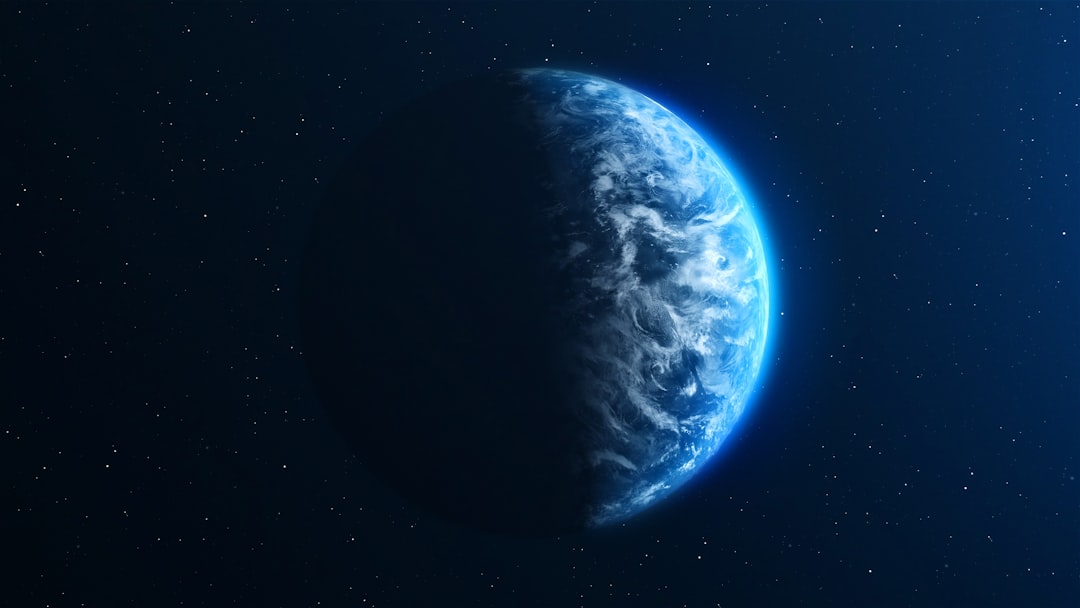
In one of the most dramatic chapters of Earth's ancient history, our planet transformed into a frozen wasteland—not just once, but potentially multiple times in a cosmic dance between fire and ice. New research from Harvard University is revolutionizing our understanding of the Sturtian glaciation, a 56-million-year period when Earth became encased in ice during the Cryogenian Period approximately 720 to 635 million years ago. Rather than a single, uninterrupted deep freeze, scientists now propose that our planet experienced a series of dramatic climate oscillations, alternating between extreme glaciation and relatively warm periods—a finding that could fundamentally change how we understand the survival of early life and the habitability of distant worlds.
The implications of this discovery extend far beyond Earth's geological history. This research, published in the Proceedings of the National Academy of Sciences, addresses one of paleoclimatology's most perplexing mysteries: how could complex life have survived such an extreme and prolonged climatic catastrophe? The answer may lie in understanding that Snowball Earth wasn't the monolithic frozen nightmare previously imagined, but rather a dynamic system of repeated freezing and thawing cycles driven by a geological tug-of-war between volcanic carbon emissions and rock weathering processes.
The Enigma of Earth's Ancient Ice Ages
The Cryogenian Period witnessed two catastrophic global glaciation events that have captivated scientists for decades. The Sturtian glaciation, lasting from approximately 717 to 661 million years ago, and the later Marinoan glaciation, occurring around 650 to 635 million years ago, represent the most extreme climate events in Earth's recorded geological history. Evidence for these events is preserved in sedimentary rocks across every continent, creating what geologists call a stratigraphic record—essentially a frozen snapshot of advancing and retreating ice sheets preserved in stone.
According to research from NASA's Earth Science Division, during these periods, glaciers may have extended from the poles to the equator, with ice sheets potentially several kilometers thick covering both land and ocean. The planet's albedo—its reflectivity—would have increased dramatically, creating a powerful feedback loop where ice reflected more solar radiation back into space, further cooling the planet. Yet despite overwhelming geological evidence for these events, existing climate models have struggled to explain how such conditions could persist for tens of millions of years while still allowing life to survive.
Volcanic Fire Meets Planetary Ice: A Climate Tug-of-War
The breakthrough in understanding the Sturtian glaciation centers on the Franklin Large Igneous Province, a massive volcanic region in what is now northern Canada. This geological behemoth erupted more than 700 million years ago and remained active for approximately 2 million years, representing one of the largest magmatic episodes in Earth's entire history. Lead author Charlotte Minsky from Harvard's John A. Paulson School of Engineering and Applied Sciences and her team used sophisticated climate simulations to model the interaction between this volcanic activity and Earth's climate system.
The researchers discovered a fascinating climate mechanism: volcanic eruptions released enormous quantities of carbon dioxide into the atmosphere, triggering greenhouse warming that caused ice sheets to retreat. As the ice melted, it exposed fresh basaltic rock—the dark, iron-rich volcanic rock that forms much of Earth's oceanic crust. This newly exposed basalt then underwent chemical weathering, a process where atmospheric CO₂ reacts with minerals in the rock, effectively removing carbon dioxide from the atmosphere and locking it away in carbonate minerals.
"Thus, instead of a single, continuous Snowball, the climate repeatedly flipped between short, self-terminating Snowball glaciations and similarly short warm, largely ice-free interglacial climates," the researchers explain in their groundbreaking paper.
This creates a natural thermostat: warming leads to ice retreat, which accelerates carbon removal, which causes cooling, which triggers ice advance again. The cycle repeats, creating what scientists call a limit cycle—a self-regulating system that oscillates between two extreme states. Each complete cycle likely lasted on the order of one to several million years, rather than the entire 56-million-year duration of the Sturtian glaciation.
Solving the Oxygen Paradox
One of the most compelling aspects of this new model addresses what scientists call the "oxygen paradox" of Snowball Earth. For life to survive, particularly the emerging complex organisms of the Neoproterozoic Era, the atmosphere needed to maintain sufficient oxygen levels. Traditional Snowball Earth scenarios presented a severe problem: if the planet remained frozen for 56 million years continuously, photosynthetic organisms would have been severely limited, unable to produce oxygen, while volcanic gases would continuously consume atmospheric oxygen through chemical reactions.
Research from the European Space Agency's Earth observation programs has helped scientists understand the critical role of oxygen in Earth's biosphere. The new Harvard model elegantly resolves this paradox. If each individual Snowball episode lasted only one to several million years, separated by warm periods, the atmospheric oxygen reservoir could persist without complete depletion. During the warm interglacial periods, photosynthetic life could recover and replenish atmospheric oxygen, creating a buffer that carried life through the subsequent glaciation.
The research team's modeling shows that even without photosynthetic oxygen production during Snowball episodes, the atmosphere could retain significant oxygen levels—potentially 10-15% of Present Atmospheric Level (PAL), compared to today's 21%. This would be sufficient to support aerobic organisms that had evolved to depend on oxygen for metabolism, explaining how complex life not only survived but potentially thrived during this tumultuous period.
The Geologic Evidence Speaks
The stratigraphic record preserved in rocks worldwide provides compelling evidence for these repeated climate oscillations. Geologists have identified distinctive rock formations called cap carbonates—layers of carbonate rock that sit directly atop glacial deposits. These carbonates form rapidly in warm, carbon-dioxide-rich oceans, exactly what would be expected following the termination of a Snowball episode. The presence of multiple such layers within Sturtian-age rocks suggests multiple glacial-interglacial cycles, precisely as the new model predicts.
Additionally, researchers have found evidence of banded iron formations (BIFs) within Sturtian deposits—sedimentary rocks with alternating layers of iron-rich and iron-poor minerals. These formations typically require specific ocean chemistry conditions that would be difficult to maintain during a single, continuous glaciation but make perfect sense in a scenario of repeated climate cycling.
Implications for Early Life and Evolution
The timing of the Cryogenian glaciations coincides with a crucial period in the evolution of complex life. Fossil evidence suggests that the first multicellular organisms were emerging during this era, and the Ediacaran biota—Earth's first large, complex organisms—appeared shortly after the end of the Marinoan glaciation. Scientists have long debated whether Snowball Earth events accelerated evolution by creating extreme selective pressures, or whether they nearly extinguished complex life entirely.
The new limit cycle model suggests a middle ground: repeated climate oscillations would have created dynamic environmental pressures that could drive evolutionary innovation while providing periodic refugia during warm phases. Marine organisms could have survived in ice-free equatorial regions or in isolated pockets of open water, then rapidly diversified during warm periods. This pattern of environmental stress followed by opportunity may have been a crucial driver of the evolutionary innovations that eventually led to the Cambrian explosion—the rapid diversification of animal life that began about 540 million years ago.
"This could help explain how aerobic life persisted through such an extreme interval," lead author Charlotte Minsky noted, highlighting the model's power to resolve longstanding biological puzzles.
Broader Implications for Planetary Science
Perhaps most intriguingly, this research has profound implications for understanding climate dynamics on exoplanets—planets orbiting distant stars. As astronomers discover an ever-growing catalog of Earth-like worlds using facilities like the James Webb Space Telescope, questions about their habitability become increasingly urgent. Could these distant worlds experience their own Snowball episodes? If so, would they be permanent frozen states, or could they exhibit the same kind of limit cycle behavior that may have characterized Earth's Cryogenian?
The Harvard team's model suggests that planets with active volcanism and appropriate atmospheric composition could experience similar climate oscillations. This expands the potential for life on worlds that might otherwise be dismissed as uninhabitable. A planet caught in a Snowball state might not be permanently frozen but could be in a temporary phase of a longer climate cycle, with warm, potentially habitable periods interspersed throughout its history.
Furthermore, the research provides a framework for interpreting observations of exoplanet atmospheres. The NASA Exoplanet Exploration Program is developing techniques to analyze the atmospheric composition of distant worlds. If scientists detect signatures consistent with recent volcanic activity combined with evidence of ice coverage, it might indicate a planet undergoing its own version of the Sturtian limit cycle.
Key Findings and Future Research Directions
- Climate Cycling Mechanism: The Sturtian glaciation consisted of multiple shorter Snowball episodes (1-5 million years each) separated by warm periods, driven by the interplay between volcanic CO₂ emissions and basalt weathering
- Oxygen Preservation: The limit cycle model explains how atmospheric oxygen levels could remain sufficient to support aerobic life throughout the 56-million-year period, resolving a major biological paradox
- Geological Consistency: The model aligns with stratigraphic evidence including multiple cap carbonate layers and banded iron formations that suggest repeated climate transitions
- Evolutionary Implications: Repeated climate oscillations may have created dynamic selective pressures that accelerated the evolution of complex life while providing periodic environmental refugia
- Exoplanet Applications: The mechanism could help identify potentially habitable exoplanets experiencing temporary Snowball states as part of longer-term climate cycles
Looking Forward: Unanswered Questions
While this research represents a major advance in understanding Snowball Earth, significant questions remain. Scientists still need to better constrain the exact timing and duration of individual glacial-interglacial cycles within the Sturtian. More detailed geological studies of Cryogenian rock formations worldwide will be necessary to test the model's predictions. Additionally, researchers must investigate whether similar mechanisms operated during the later Marinoan glaciation, or whether different processes dominated that event.
The role of other factors—such as changes in solar luminosity, continental configurations, and ocean circulation patterns—also requires further investigation. Earth's climate system is immensely complex, and while the volcanic-weathering tug-of-war appears to be a crucial mechanism, it likely operated alongside other processes that modulated its effects.
As our understanding of Earth's climate history deepens, it provides not only insight into our planet's past but also a crucial testing ground for climate models that can be applied to understanding other worlds. The story of Snowball Earth—once thought to be a simple tale of a frozen planet—is revealing itself to be far more nuanced and dynamic, a testament to the complexity and resilience of Earth's climate system and the life it supports.