A Rare, Distant Clump of Early Galaxies Reveals Ancient Cosmic Secrets
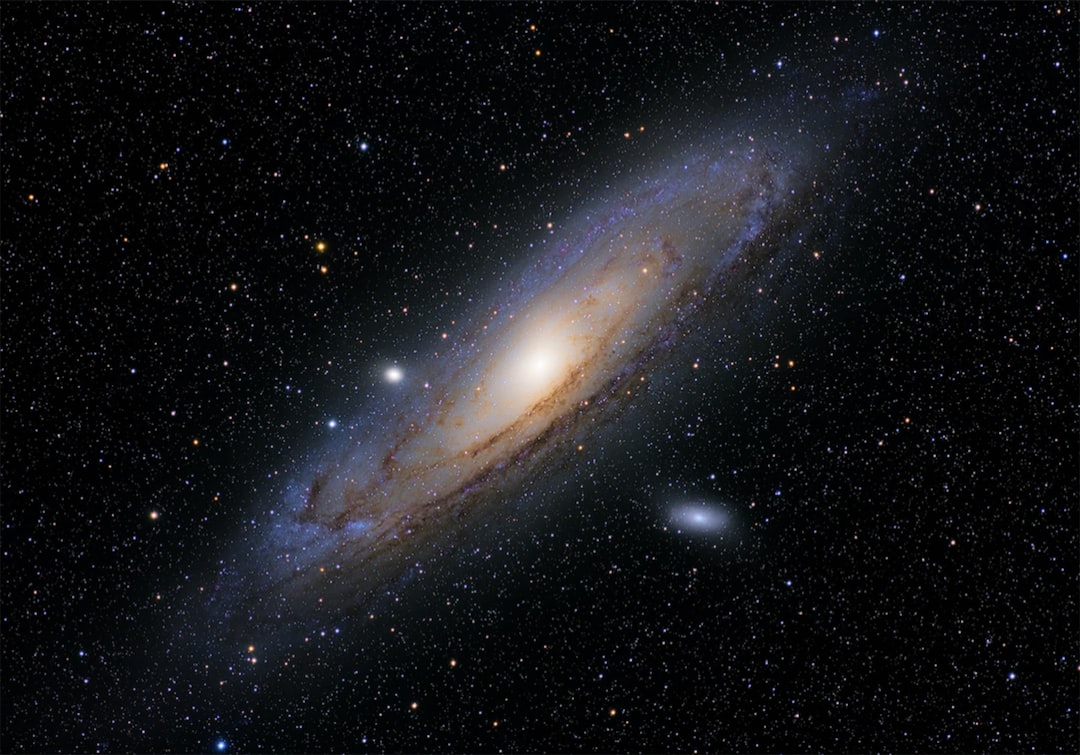
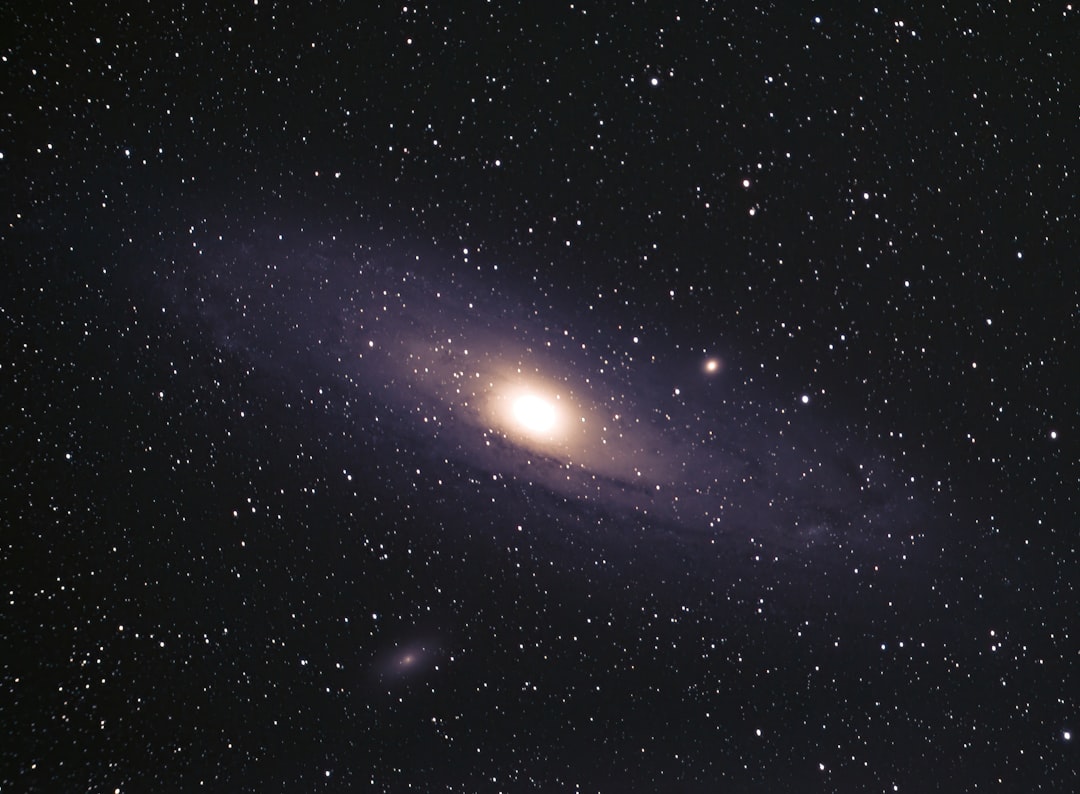
We live on a tiny world, embedded in a galaxy that is, itself, part of a vast, interconnected lattice of galaxies, galaxy clusters, gas, dust, and dark matter called the Cosmic Web. This lattice traces its way through the entire observable Universe, making it the largest known cosmic structure ever identified. For decades, astronomers have been probing this web with ever-more-powerful telescopes, pushing deeper into cosmic time, searching for its seeds and roots in the early Universe — the primordial scaffolding from which everything we see today eventually grew.
Now, a remarkable discovery has brought scientists dramatically closer to understanding how that scaffolding first assembled itself. A team analyzing data from a survey made using the Dark Energy Camera on the Victor M. Blanco Telescope in Chile has found the most distant-known piece of the cosmic web: a galaxy proto-supercluster designated COSMOS-z3.1-A. Observed as it appeared approximately 12 billion years ago, this ancient structure represents a loose but gravitationally connected collection of galaxies that was still in the process of coalescing into a fully bound supercluster — a cosmic construction site frozen in time by the finite speed of light.
A Cosmic Web in Its Infancy
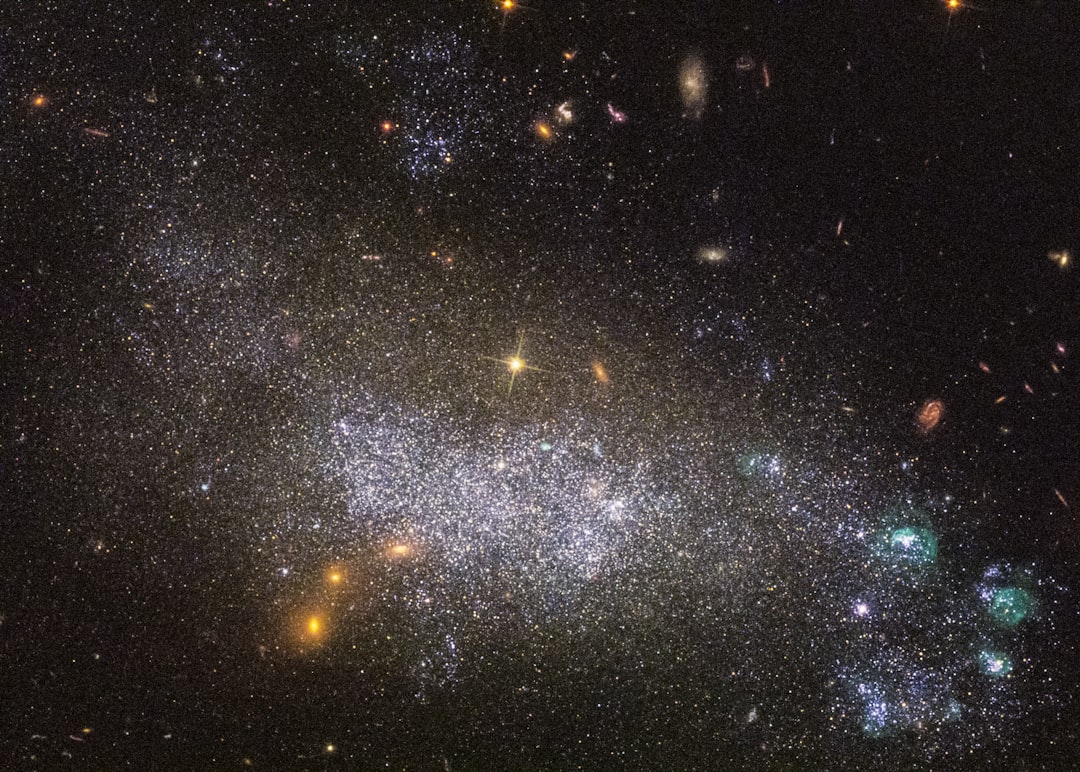
The structure of this infant proto-supercluster is extraordinary. It contains 10 dense groups of galaxies existing at a time when the Universe was only about 2 billion years old — barely a teenager in cosmic terms. These individual groups were each in the process of forming their own gravitationally bound clusters before, over billions of subsequent years, merging and combining to assemble the far larger proto-supercluster. Understanding how these primordial structures behaved at such early epochs gives astronomers an unprecedented window into how the modern large-scale structure of the Universe was forged.
The discovery team was led by Vandana Ramakrishnan, a graduate student at Purdue University, whose careful analysis of the survey data revealed the exceptional nature of this ancient structure. The scientific implications extend well beyond a single discovery, touching on some of the most fundamental questions in cosmology.
"With this project, we're hoping to understand the growth of massive structures in the Universe and how they influence the evolution of galaxies within them. We also hope to get a better sense of how these protoclusters are connected to the larger cosmic web." — Vandana Ramakrishnan, Purdue University
This is not simply an exercise in cataloguing remote objects. The environments within protoclusters are known to profoundly influence the properties of the galaxies they contain. Galaxies in dense cluster environments tend to form stars more rapidly in the early Universe, and then quench their star formation earlier than isolated field galaxies. By studying proto-superclusters like COSMOS-z3.1-A, researchers can trace this environmental influence back to its origins, asking not just what the Universe looks like today, but why it looks the way it does.
ODIN Peers Back Through the Eons
The data for this landmark discovery came from the ODIN Survey — the One-hundred-deg² DECam Imaging in Narrowbands. This ambitious observational program was conducted over 100 nights of dedicated telescope time spread across a three-year observing campaign. Using specialized narrowband filters, ODIN captured some of the deepest images of the southern hemisphere sky ever obtained, penetrating deep into the cosmos to reveal the very early epochs of galaxy cluster formation.
The narrowband imaging technique is particularly powerful for this type of research. By observing light at precisely tuned wavelengths corresponding to the Lyman-alpha emission line — a characteristic ultraviolet glow produced by hydrogen gas excited by young, hot stars — redshifted to visible wavelengths by cosmic expansion, astronomers can identify very distant galaxies at specific epochs in cosmic time. This technique acts like a precise cosmological filter, slicing through billions of light-years to reveal galaxies at a particular moment in history.
From the wealth of ODIN data, the team identified a catalog of 150 very distant protoclusters, all formed during the first three billion years of cosmic history. This statistical sample is itself scientifically invaluable. Seeing these structures that early gives scientists a chance to investigate not just the galaxies and their clusters individually, but the collective role they played in weaving the cosmic web we inhabit today.
The Dark Energy Camera (DECam) that performed the ODIN survey is attached to the Victor M. Blanco 4-meter Telescope at Cerro Tololo Inter-American Observatory (CTIO) in Chile, operated by NOIRLab. Originally built for the Dark Energy Survey, DECam is one of the world's most powerful wide-field optical imagers, capable of capturing images of enormous swaths of sky with exceptional sensitivity — making it ideally suited for surveys hunting for rare, ancient cosmic structures.
Connecting Ancient Structures to the Modern Universe
The connection between these primordial protoclusters and the modern Universe of superclusters is one that astronomers have been painstakingly tracing for decades. According to astronomer Eric Gawiser at Rutgers University, determining this evolutionary link is critical for understanding the full arc of cosmic evolution.
"When we look at galaxy clusters in the nearby Universe, we are seeing the finished product. This distant structure takes us back to a much earlier stage when the individual pieces were still coming together. It allows us to study how the Universe built structures on its largest scales." — Eric Gawiser, Rutgers University
The analogy is a powerful one. Imagine trying to understand how a skyscraper is built by only ever seeing completed buildings. Observing protoclusters like COSMOS-z3.1-A is the equivalent of watching construction in real time — seeing the steel framework being assembled, the foundations being laid, and the first floors taking shape. It is this kind of multi-epoch observation, spanning billions of years of cosmic history, that allows cosmologists to build a complete, coherent narrative of structure formation.
Furthermore, the data from the ODIN survey reveals that COSMOS-z3.1-A is a genuinely exceptional object, even by the standards of early-Universe structures. Its estimated mass is approximately 5,000 times that of the Milky Way — a staggeringly large concentration of matter to have assembled in the relatively brief window of cosmic time available. This extreme mass density makes it a true outlier, a statistical rarity that cosmologists are eager to understand.
"COSMOS-z3.1-A represents the most extreme, most overdense regions of the Universe. We think there should be fewer than one such object for every 10,000 galaxy clusters!" — Vandana Ramakrishnan, Purdue University
Supporting a Hierarchical Evolutionary Process
The discovery of COSMOS-z3.1-A provides compelling new evidence for one of the cornerstones of modern cosmology: the hierarchical model of structure formation, sometimes described as a "bottom-up" construction process. Gawiser and colleagues note that the detailed structure of this proto-supercluster is powerfully consistent with this theoretical framework — and that consistency is precisely what makes the finding so scientifically significant.
The hierarchical model works roughly as follows. In the immediate aftermath of the Big Bang, the Universe was an extraordinarily hot, dense, and nearly uniform plasma of fundamental particles. As it expanded and cooled over the first hundreds of thousands of years, protons and electrons combined to form neutral hydrogen atoms — an event cosmologists call recombination. Tiny quantum fluctuations in the density of this primordial gas, imprinted by processes in the earliest moments of cosmic history, became the seeds of all future structure.
- Dark matter halos began to collapse around the densest regions, amplifying the original fluctuations through gravity.
- Ordinary baryonic matter — hydrogen and helium gas — fell into these dark matter potential wells, forming the first stars and galaxies within the first few hundred million years.
- Individual galaxies were drawn together gravitationally into galaxy groups, the smallest gravitationally bound multi-galaxy systems.
- Galaxy groups merged over billions of years to form galaxy clusters, the largest individual bound structures in the Universe.
- Clusters, in turn, are embedded within sprawling superclusters and interconnected by the filaments and sheets of the Cosmic Web.
The three-dimensional maps of COSMOS-z3.1-A and its companion structures, constructed from the ODIN data, vividly illustrate this process in action. The ancient structures appear clumpy and irregularly shaped, lacking the smooth, rounded morphology of mature, relaxed galaxy clusters in the local Universe. Moreover, they appear to be positioned at the intersections of multiple cosmic web filaments — precisely where theory predicts the densest nodes of the Cosmic Web should reside and where protoclusters are expected to preferentially form.
This clumpy substructure is regarded by the science team as strong observational evidence for the bottom-up construction model. Over billions of subsequent years, these irregularly shaped clumps are expected to collapse inward, shed their asymmetries through a process called violent relaxation, and eventually settle into the smoother, more spherical clusters we observe in the local Universe today. COSMOS-z3.1-A is, in a very real sense, a snapshot of the Universe's architectural process caught mid-assembly.
Galaxy Clusters, Superclusters, and the Scale of the Cosmos
Galaxy clusters are among the most impressive structures the Universe has produced. Each cluster can contain hundreds to thousands of individual galaxies, all held together by gravity and permeated by vast quantities of hot, X-ray-emitting gas. They span millions of light-years and represent the densest concentrations of matter in the cosmos. Critically, they are also repositories of enormous amounts of dark matter — the mysterious, invisible substance that provides the gravitational skeleton around which ordinary matter assembles. Astronomers can detect this dark matter indirectly through its gravitational influence, including the bending of light from background galaxies in a phenomenon known as gravitational lensing.
Galaxy clusters themselves are organized into even larger superclusters, loose associations of multiple clusters that span hundreds of millions of light-years. Our own cosmic address places us within the Virgo Supercluster, a structure spanning nearly 150 million light-years that contains the Virgo Cluster along with our home, the Local Group. The Virgo Supercluster is itself merely one lobe of a far larger cosmic structure called Laniakea, a supercluster complex stretching some 520 million light-years that was only fully mapped in 2014. Across the entire observable Universe, astronomers estimate that there are approximately 10 million superclusters — each one a vast island of matter in the cosmic ocean.
Understanding how structures like Laniakea came to be requires observing their precursors — objects like COSMOS-z3.1-A — at the earliest possible cosmic epochs. Each discovery of a distant protocluster or proto-supercluster adds another data point to our understanding of how cosmic architecture evolved from near-perfect uniformity to the breathtaking complexity we see today. You can explore our own cosmic neighborhood further through resources at NASA's Galaxy Science page.
Looking Ahead: New Telescopes, New Discoveries
The ODIN survey represents the current frontier of ground-based wide-field imaging, but it is only the beginning of a new era of large-scale structure surveys. The forthcoming Vera C. Rubin Observatory, currently under construction in Chile, is expected to transform the field when it begins its Legacy Survey of Space and Time (LSST). Over a ten-year program, the Rubin Observatory will image the entire southern sky repeatedly, producing a movie of the Universe that will reveal transient events, moving objects, and, crucially, vast numbers of distant galaxy clusters and protoclusters that remain undiscovered.
The statistical power of such surveys will be transformative. Where ODIN identified 150 distant protoclusters, future surveys may identify thousands, providing the sample sizes needed to move from individual case studies to rigorous statistical analysis of how protocluster properties vary with mass, redshift, environment, and cosmic web connectivity. Complementary observations from space observatories — including the James Webb Space Telescope (JWST), operated by NASA and ESA — will allow astronomers to zoom into the galaxies within these protoclusters, studying their stellar populations, gas content, and star formation histories in exquisite detail.
Together, wide-field surveys and targeted follow-up observations will paint an increasingly detailed portrait of the Universe's formative years. Each ancient proto-supercluster discovered is not merely a curiosity — it is a key that unlocks a deeper understanding of why the Universe looks the way it does, and, by extension, why our own galaxy, our solar system, and ultimately our world exist at all.
Key Takeaways
- COSMOS-z3.1-A is the most distant known proto-supercluster, observed as it appeared approximately 12 billion years ago.
- The structure contains 10 dense galaxy groups, all in the process of merging into a larger gravitationally bound system.
- Its estimated mass is roughly 5,000 times that of the Milky Way, making it an exceptionally rare, extreme overdensity in the early Universe.
- The discovery was made using the ODIN Survey, conducted with the Dark Energy Camera on the Blanco Telescope at CTIO in Chile.
- The structure's clumpy, irregular morphology supports the hierarchical (bottom-up) model of cosmic structure formation.
- Its position at the intersection of cosmic web filaments aligns closely with theoretical predictions for where superclusters should form.
- Future observatories, including the Vera C. Rubin Observatory and JWST, are expected to expand the catalog of such distant structures dramatically.
For More Information
- NOIRLab — Extremely Massive Galaxy Proto-Supercluster Smashes Distance Records
- Rutgers University — Astronomers Help Identify 10 Developing Galaxy Clusters from About 12 Billion Years Ago
- ESA/Webb — James Webb Space Telescope Science Overview
- Vera C. Rubin Observatory — Legacy Survey of Space and Time
- NASA — Galaxy Science and the Large-Scale Structure of the Universe