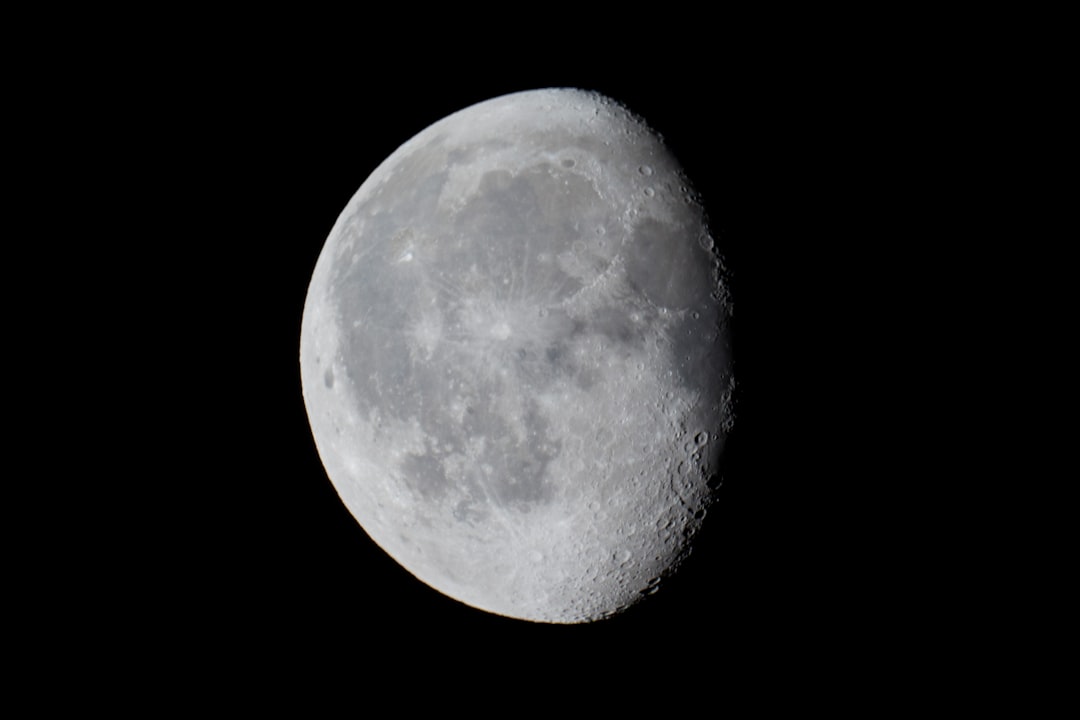
In a breathtaking display of humanity's renewed ambitions for lunar exploration, the Artemis II mission has transmitted a stunning new photograph of our home planet, capturing Earth from the unique vantage point of deep space. Commander Reid Wiseman, leading NASA's four-person crew aboard the spacecraft Integrity, photographed this remarkable image on April 3rd, 2026, as the mission progressed through its critical early phases following a successful launch just two days earlier. The image, poignantly titled "Hello, World," serves not only as a technical milestone but as a powerful reminder of humanity's place in the cosmos as we venture once again beyond low Earth orbit.
This historic mission, which launched on April 1st, 2026, represents the first crewed journey to lunar orbit in over half a century, marking a pivotal moment in NASA's Artemis program. The four astronauts aboard Integrity are currently conducting a complex series of maneuvers and systems checks as they traverse the 240,000-mile journey to the Moon, testing equipment and procedures that will prove essential for future lunar surface missions and eventual Mars expeditions.
Capturing Earth from the Void: A Technical and Artistic Achievement
The photograph transmitted from Integrity showcases Earth as a luminous sphere suspended against the infinite darkness of space, revealing intricate details of our planet's geography and atmospheric phenomena. Northern Africa dominates the left portion of the visible hemisphere, with the distinctive outline of the Strait of Gibraltar and southern Spain clearly visible. On the opposite side of the globe, the eastern coastline of Brazil emerges from the darkness, its major cities appearing as delicate pinpoints of light that trace the Atlantic shoreline.
What makes this image particularly remarkable from a scientific perspective is its capture of multiple atmospheric and astronomical phenomena simultaneously. The Aurora Borealis and Aurora Australis—the spectacular light shows created when charged particles from the Sun interact with Earth's magnetic field—are visible as ethereal glows around the lower left and upper right portions of the planet. These auroral displays, typically observed from Earth's surface near the polar regions, take on an entirely different character when viewed from space, appearing as luminous rings that trace the lines of our planet's magnetosphere.
Additionally, the image captures zodiacal light on the lower right side, a subtle glow produced by sunlight reflecting off interplanetary dust particles in the plane of the solar system. This faint illumination becomes visible as Earth eclipses the Sun from the spacecraft's perspective, creating a natural filter that allows this normally difficult-to-observe phenomenon to be photographed.
Mission Trajectory: A Complex Dance of Orbital Mechanics
The photograph was taken following the successful completion of the Trans-Lunar Injection (TLI) burn, a critical maneuver that altered Integrity's trajectory from Earth orbit to a path that will carry it around the Moon. This burn, executed on April 2nd, represents one of the most technically demanding aspects of the mission, requiring precise timing and thrust to ensure the spacecraft reaches lunar orbit at exactly the right moment and velocity.
Prior to the TLI burn, the crew had already completed two essential maneuvers: the Apogee Raise Burn (ARB) and the Perigee Raise Burn (PRB). These burns gradually lifted the spacecraft's orbit, transitioning it from a relatively low Earth orbit to an elongated elliptical path that set the stage for the final push toward the Moon. This multi-stage approach, while more complex than a direct trajectory, provides multiple opportunities for systems checks and allows mission controllers to verify that all spacecraft systems are functioning correctly before committing to the lunar journey.
"Every photograph we take serves a dual purpose—it documents our journey for the public and provides our navigation team with visual confirmation of our position and trajectory. This image of Earth represents not just where we've been, but the home we're working to better understand through lunar science," noted Commander Reid Wiseman during a live transmission from Integrity.
Onboard Operations: Testing Systems for Future Missions
While the stunning Earth photography captures public attention, the Artemis II crew has been engaged in intensive systems testing and operational procedures that will prove crucial for future missions. The four astronauts have been conducting proximity operations, testing the spacecraft's ability to maneuver precisely in space—skills that will be essential when future Artemis missions need to dock with lunar landers or other spacecraft in lunar orbit.
The crew has also been thoroughly evaluating Integrity's flight instruments and life support systems, including troubleshooting the spacecraft's waste management system (colloquially known as the zero-gravity toilet). While this might seem mundane, reliable waste management in microgravity environments represents a significant engineering challenge and a critical component of crew health and comfort during extended space missions. The lessons learned from these tests aboard Artemis II will directly inform improvements for the longer-duration missions planned for NASA's Gateway lunar space station.
Scientific Objectives: Observing the Moon Like Never Before
As Integrity continues its journey, the mission's scientific objectives are coming into sharper focus. The lunar science team at mission control has begun developing a comprehensive Lunar Targeting Plan (LTP), which will guide the crew's observations of the lunar surface during a critical six-hour observation window. This period, beginning on April 4th, will see the astronauts documenting a wide array of lunar features with unprecedented detail and context.
The crew will focus on observing and photographing several categories of lunar features:
- Impact Craters: These ancient scars provide a geological record of the early solar system's violent history, preserving evidence of impacts that occurred billions of years ago when planetary formation was still actively reshaping the inner solar system
- Ancient Lava Flows: Known as mare (Latin for "seas"), these dark basaltic plains formed when volcanic activity flooded low-lying areas of the Moon's surface, offering insights into the Moon's thermal evolution and internal structure
- Tectonic Features: Cracks, ridges, and scarps that formed as the Moon's lithosphere shifted and cooled over geological time, creating a historical record of how conditions in the Earth-Moon system evolved over billions of years
- Volcanic Features: Domes, rilles, and other structures that reveal the Moon's volcanic past and help scientists understand the composition of the lunar interior
These observations will significantly enhance our understanding of lunar geology and the broader processes of planetary formation. By documenting these features from the unique perspective of human observers in lunar orbit, the Artemis II crew can provide contextual information and make real-time decisions about what to photograph that automated systems cannot match.
Far Side Observations: Monitoring Impacts in Shadow
Perhaps one of the most scientifically exciting aspects of the mission will occur as Integrity passes behind the Moon, entering a hour-long period where the spacecraft will be completely cut off from direct communication with Earth. During this time, the crew will experience a solar eclipse as the Moon blocks the Sun from view, creating ideal conditions for observing phenomena typically obscured by sunlight.
The astronauts will monitor the lunar far side for meteoroid impacts, which appear as brief flashes of light when space debris strikes the airless surface. These impact observations provide valuable data about the flux of small bodies in the inner solar system and help scientists understand the rate at which the Moon's surface is being modified by ongoing bombardment. This information is crucial for planning future surface missions and understanding the hazards posed by micrometeorites to both equipment and astronauts.
Additionally, the crew will observe the solar corona—the Sun's outer atmosphere—which will be visible as a delicate halo extending beyond the Moon's edge during the eclipse. Ground-based observations of the corona are rare and typically require special expeditions to locations where total solar eclipses occur. The Artemis II crew's observations will provide valuable data to solar physicists studying the Sun's magnetic field and the mechanisms that heat the corona to temperatures exceeding one million degrees Celsius.
Paving the Way for Artemis IV: Boots on the Moon
Every aspect of the Artemis II mission serves a dual purpose: achieving the mission's immediate scientific and operational objectives while simultaneously preparing for future missions that will return humans to the lunar surface. The crew's observations, systems tests, and operational procedures are all being carefully documented and analyzed to inform the planning for Artemis IV, now scheduled to launch in 2028 as the next crewed lunar landing mission.
The data gathered during Artemis II will help mission planners identify optimal landing sites, understand the challenges of operating in the lunar environment, and refine the procedures that will be used when astronauts once again set foot on the Moon. This mission represents a crucial bridge between the Artemis I uncrewed test flight and the more ambitious surface missions to come, validating systems and procedures in the actual operational environment.
The Artemis program's broader goals extend far beyond simply returning to the Moon. NASA envisions establishing a sustainable human presence in lunar orbit and on the surface, using the Moon as a proving ground for technologies and operational concepts that will eventually enable crewed missions to Mars. The scientific knowledge gained from studying the Moon—a relatively accessible world that preserves a record of the early solar system—will also provide crucial context for understanding planetary processes throughout the cosmos.
Public Engagement and the Human Element of Space Exploration
The transmission of images like "Hello, World" serves an important role beyond their scientific value. These photographs remind the public of the human element in space exploration and create emotional connections between Earth-bound audiences and the astronauts venturing into deep space. In an era where robotic probes can capture technically superior images with specialized equipment, there remains something uniquely powerful about photographs taken by human hands from the frontier of exploration.
NASA has made extensive efforts to share the Artemis II experience with the public through multiple channels. The agency maintains continuous coverage of the mission through its NASA TV and streaming platforms, providing 24/7 access to mission communications, crew activities, and expert commentary. The Artemis II Multimedia Resource Page offers high-resolution versions of photographs and videos transmitted from Integrity, allowing educators, journalists, and space enthusiasts to follow along with the mission in unprecedented detail.
Looking Ahead: The Next Chapter in Lunar Exploration
As Integrity continues its journey around the Moon, each passing hour brings new milestones and opportunities for scientific observation. The crew's successful completion of the initial mission phases and their transmission of this remarkable Earth photograph demonstrate that humanity's return to deep space is not merely a replay of past achievements but a bold step forward into a new era of exploration.
The coming days will see the spacecraft reach its closest approach to the Moon, providing the crew with views of the lunar surface that no human has witnessed in over fifty years. These observations, combined with the technical data being gathered about spacecraft performance and crew operations, will form the foundation upon which NASA builds its vision of sustained lunar exploration and eventual human missions to Mars.
The "Hello, World" photograph stands as a testament to human curiosity and our enduring drive to explore the cosmos. As we venture once again beyond the protective embrace of Earth's atmosphere, we carry with us not just sophisticated technology and scientific instruments, but the hopes and dreams of a species that has always looked to the stars and wondered what lies beyond the next horizon.