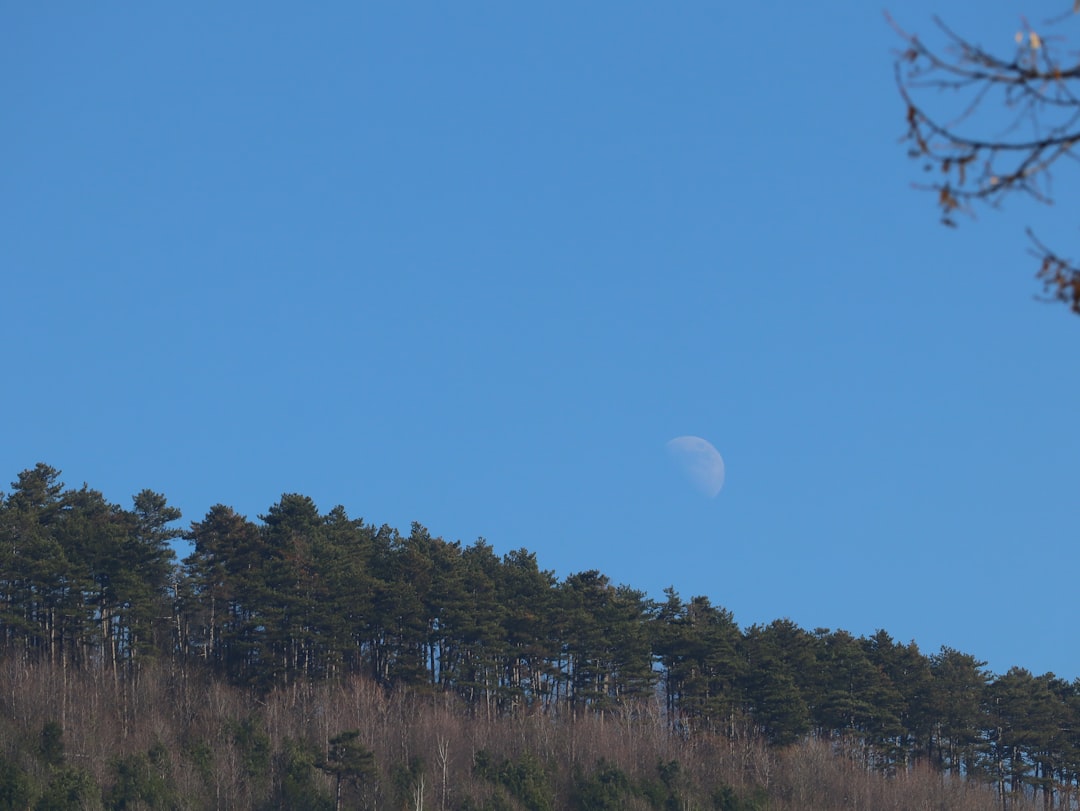
The lunar surface endures a relentless cosmic bombardment that would be catastrophic for any unprotected human presence. Unlike Earth, where our protective atmospheric shield incinerates most incoming space debris, the Moon stands naked against the universe's onslaught. Meteoroids of all sizes slam into the lunar regolith at velocities exceeding several kilometers per second, creating brilliant flashes of light that can be observed from Earth—violent reminders of the hazards awaiting humanity's return to our celestial neighbor.
Hong Kong is preparing to launch an ambitious solution to this critical safety challenge. The Yueshan mission—named after the Chinese phrase for "moon flashes"—will deploy a dedicated lunar orbiter designed to provide the first comprehensive, continuous monitoring system for these transient lunar phenomena. As China and other spacefaring nations advance plans for permanent lunar infrastructure, understanding the frequency, location, and intensity of these impacts has transformed from academic curiosity into an urgent engineering necessity.
The mission represents a significant milestone not only for lunar science but also for Hong Kong's emergence as a serious contributor to space exploration. With China's lunar research station plans accelerating and international partnerships expanding, the data Yueshan collects will prove essential for architects designing the first permanent human settlements beyond Earth.
The Invisible Threat: Understanding Lunar Impact Dynamics
The Moon's lack of atmospheric protection creates a unique hazard profile that engineers must account for when designing lunar infrastructure. On Earth, our atmosphere acts as an ablative shield, with friction heating incoming objects to temperatures exceeding 1,650°C, vaporizing most meteoroids before they reach the ground. The Moon enjoys no such protection—every piece of cosmic debris, from microscopic dust grains to boulder-sized rocks, reaches the surface with its full kinetic energy intact.
The physics of these impacts are sobering. A meteoroid weighing just one kilogram, traveling at the typical lunar impact velocity of 20 kilometers per second, carries kinetic energy equivalent to approximately 48 kilograms of TNT. Such an impact could easily penetrate habitat walls, shatter solar panels, or damage life-support systems. Larger impactors, while rarer, pose even more catastrophic risks to any human presence on the lunar surface.
"No such devices have been built before. The mission aims to fill a critical gap in our understanding of the lunar impact environment," explained Su Meng, executive director of the Laboratory for Space Research at the University of Hong Kong. "Before we can safely establish permanent human presence on the Moon, we must quantify these risks with precision."
Current impact monitoring efforts from Earth-based telescopes have documented hundreds of these flash events, but ground-based observation faces significant limitations. Atmospheric turbulence, weather conditions, and the lunar day-night cycle all constrain when and how effectively we can observe these phenomena. Yueshan's orbital vantage point will eliminate these obstacles, providing uninterrupted coverage regardless of terrestrial conditions or lunar phase.
Engineering Hong Kong's Window to the Moon
The Yueshan mission showcases Hong Kong's rapidly advancing aerospace engineering capabilities. The orbiter's sophisticated optical telescope system will be entirely designed and manufactured within the city, marking a significant achievement for the region's growing space technology sector. This isn't simply a matter of regional pride—the mission demonstrates Hong Kong's ability to contribute cutting-edge instrumentation to international space exploration efforts.
The telescope must meet demanding specifications to fulfill its mission objectives. It needs sufficient sensitivity to detect the brief, faint flashes produced by small impactors while maintaining the dynamic range to observe larger events without saturating its detectors. The instrument must also operate reliably in the harsh space environment, enduring temperature extremes, radiation exposure, and the vacuum of space for years without maintenance.
Manufacturing and testing will leverage partnerships with research institutions across the region, while several Chinese space agencies have already expressed interest in providing the launch vehicle and mission support infrastructure. The collaborative nature of the project reflects the increasingly interconnected character of modern space exploration, where expertise and resources from multiple institutions combine to achieve ambitious scientific goals.
International Context: A Global Effort to Understand Lunar Hazards
Yueshan will join an emerging constellation of missions dedicated to understanding the lunar environment. The European Space Agency's LUMIO CubeSat mission plans to observe the lunar far side from a unique vantage point at the Earth-Moon L2 Lagrange point. This gravitational equilibrium location, positioned approximately 65,000 kilometers beyond the Moon's far side, allows spacecraft to maintain a stable position relative to both Earth and Moon while keeping the lunar far side in constant view—a perspective impossible to achieve from Earth or standard lunar orbit.
Meanwhile, NASA's Meteoroid Environment Office has been tracking lunar impacts from Earth-based observatories for over a decade, accumulating a valuable baseline dataset. Their observations have documented impact rates and helped establish preliminary hazard models, but ground-based monitoring faces inherent limitations that only orbital missions can overcome.
What distinguishes Yueshan from these complementary efforts is its singular focus on long-duration, continuous monitoring specifically optimized for impact flash detection. While other missions incorporate impact observation as one objective among many, Yueshan's dedicated design allows it to maximize data collection efficiency and provide the comprehensive statistical baseline that lunar safety planning requires.
China's Lunar Ambitions: Building the Foundation for Permanent Presence
The Yueshan mission directly supports China's ambitious lunar exploration roadmap. The country plans to establish an International Lunar Research Station as part of its expanding space program, with the Chang'e-7 and Chang'e-8 missions laying crucial groundwork for this permanent facility. Chang'e-7, scheduled for launch in 2026, will conduct detailed reconnaissance of the lunar south polar region, searching for water ice deposits and assessing potential base locations.
Future astronauts working at this research station will need comprehensive environmental hazard data to ensure their safety. Impact statistics will inform decisions about habitat design, including whether structures should incorporate meteoroid shielding layers and how thick those protective barriers must be. The data will also influence site selection—some lunar regions may experience higher impact rates than others due to gravitational focusing effects or proximity to debris streams.
Hong Kong's participation extends beyond Yueshan. The city is contributing instrumentation to the Chang'e-7 mission and will support the Tianwen-3 Mars sample return mission scheduled for the late 2020s. Additionally, a Hong Kong-born payload specialist is currently undergoing training to become the region's first astronaut—a powerful symbol of the city's commitment to space exploration and its integration into China's broader space program.
Lessons from Previous Close Calls
NASA's experience with the Lunar Reconnaissance Orbiter (LRO) provides sobering evidence of the very real risks that Yueshan aims to quantify. In 2014, LRO was struck by a meteoroid while orbiting the Moon—an impact that went undetected until engineers noticed anomalous jitter patterns in camera images. Analysis revealed that the collision had slightly altered the spacecraft's orientation, requiring attitude control corrections.
The spacecraft survived this encounter, but the incident highlighted several important points. First, impacts are not merely theoretical concerns—they occur with sufficient frequency to affect operational spacecraft. Second, even relatively small impactors carry enough momentum to affect spacecraft systems. Third, without dedicated impact monitoring, we may not even recognize when strikes occur unless they cause obvious damage or operational anomalies.
For crewed missions, the stakes escalate dramatically. A meteoroid impact that merely creates a camera jitter in a robotic spacecraft could prove fatal if it strikes a habitat module or damages life-support equipment. The statistical characterization that Yueshan will provide becomes essential for calculating acceptable risk levels and designing appropriate protective measures.
The Path Forward: From Data to Safety Standards
By 2028, when Yueshan reaches lunar orbit and begins its systematic vigil, it will start accumulating the comprehensive dataset that lunar safety standards require. Engineers need to know not just average impact rates but also their spatial and temporal distribution. Do certain regions experience higher impact frequencies? Do rates vary with lunar orbital position or seasonal factors? How does the size distribution of impactors vary?
These questions have direct engineering implications. If impact rates prove higher than current models predict, habitat designs may need additional shielding mass, increasing launch costs and construction complexity. Conversely, if rates are lower in certain regions, those areas become more attractive for base locations. The mission will help transform lunar safety planning from educated guesswork into evidence-based engineering.
The data will also support international cooperation in space safety standards. As multiple nations pursue lunar exploration, shared environmental hazard data becomes a common resource benefiting all programs. Organizations like the United Nations Office for Outer Space Affairs may eventually incorporate Yueshan's findings into recommended practices for lunar surface operations.
Implications for Humanity's Multi-World Future
The Yueshan mission addresses a fundamental question that extends beyond lunar exploration: how do we quantify and mitigate environmental hazards in airless environments throughout the solar system? The Moon serves as humanity's testing ground for technologies and operational procedures that will eventually support exploration of Mars, asteroids, and the moons of the outer planets. Many of these destinations share the Moon's lack of atmospheric protection, making impact hazard characterization a universal challenge for space exploration.
The mission also demonstrates how regional capabilities can contribute meaningfully to international space exploration. Hong Kong's investment in space technology infrastructure, from telescope manufacturing to mission operations expertise, creates capabilities that can support future missions beyond Yueshan. This model of distributed expertise and specialized contributions may characterize the next era of space exploration, where many nations and regions each contribute their unique strengths to shared objectives.
As Yueshan prepares for its 2028 launch, it represents more than just another lunar mission. It embodies humanity's methodical approach to making space accessible and safe for permanent human presence. The flashes of light it will observe—each one a violent reminder of the cosmos's indifference to human ambitions—will be transformed into the data foundation upon which we build our multi-world future. The question isn't whether the Moon is dangerous for humans who plan to call it home, but rather how we can understand and manage those dangers well enough to thrive there despite them.