Asteroids' Oddball Shapes Make Deflecting Them Challenging
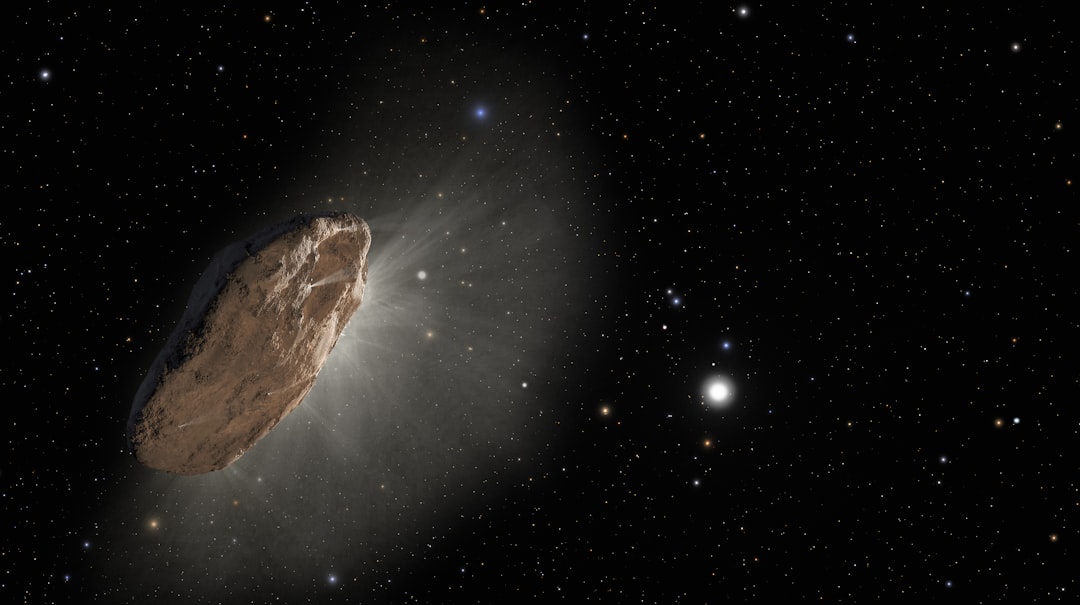
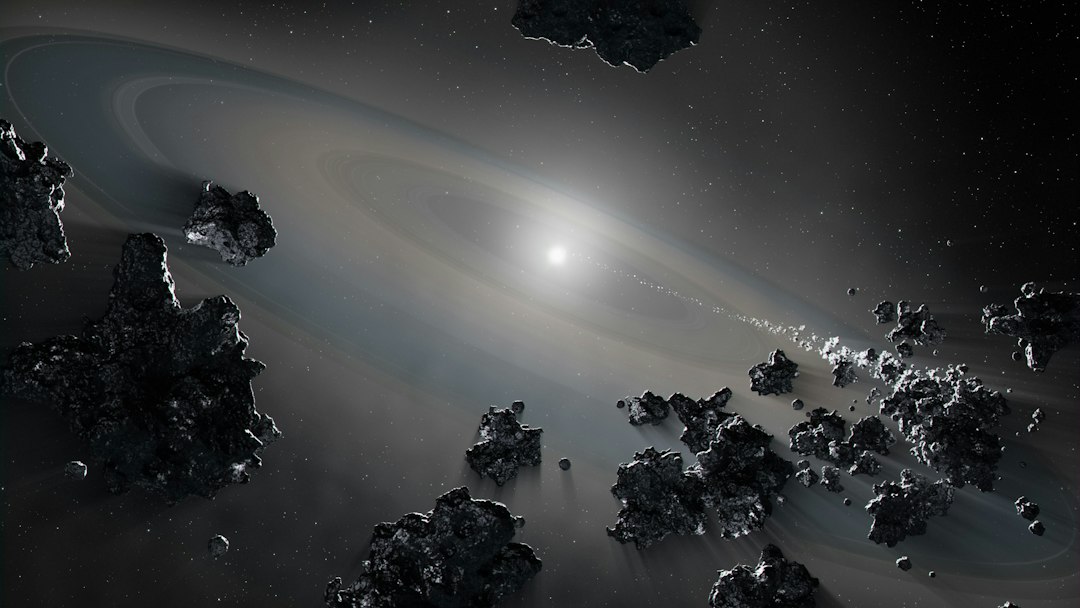
If you're looking for uniformity in Nature, you won't find it in the asteroid belt. Not only are asteroid compositions wildly different — reflecting the diverse parent bodies from which they originated — but their shapes defy easy categorization as well. Unlike planets, asteroids simply lack the gravitational mass required to pull themselves into neat, spherical forms through a process known as hydrostatic equilibrium. The result is a solar system populated by tumbling, irregular, sometimes deeply bizarre rocky bodies, each one a unique challenge for planetary scientists.
This is far more than just another space factoid. Asteroid shapes matter enormously — especially when it comes to one of the most consequential challenges humanity may ever face: deflecting a dangerous space rock headed directly for Earth. It is considered a near-certainty, given enough geological time, that a hazardous asteroid will eventually be found on a collision course with our planet. Scientists are actively developing strategies to prevent such a catastrophe, and those strategies are more complicated than Hollywood would have us believe.
Two landmark missions have already begun to chart this territory. NASA's Double Asteroid Redirection Test (DART) successfully demonstrated kinetic impactor technology in September 2022, deliberately crashing a spacecraft into the moonlet Dimorphos and measurably altering its orbit. The ESA's Hera mission, launched in October 2024, is now on its way to perform a detailed post-impact survey of the Didymos-Dimorphos system, assessing the full consequences of that collision. Together, these missions represent humanity's first real steps toward a planetary defense capability.
Beyond the Kinetic Impactor: The Nuclear Option
While the kinetic impactor remains the preferred and most politically palatable tool for asteroid deflection, it has a critical limitation: it requires significant lead time. A kinetic impactor only needs to nudge an asteroid's velocity by a tiny fraction — but that nudge must happen years, or even decades, before the projected impact date to allow the small velocity change enough time to translate into a meaningful positional shift. What happens if a dangerous asteroid — or comet — is discovered too late for that approach?
This is where the concept of a nuclear standoff detonation enters the picture. Rather than physically striking the asteroid, a nuclear device would be detonated in close proximity, releasing an intense burst of X-ray radiation in a scenario known as a stand-off X-ray mitigation. In the vacuum of space, there is no atmospheric shock wave; instead, the energy is delivered almost entirely as a powerful radiation pulse. That pulse rapidly heats and vaporizes the asteroid's surface material, and the resulting vapor ejecta acts like a rocket exhaust — pushing the asteroid in the opposite direction.
"While considered an option of last resort, it has been argued that late-time interception of a near-Earth object (NEO) or comet, either for disruption or deflection, might only be possible with the higher energy concentration available from detonation of a pulsed energy device."
— Moore et al., Icarus
Critically, researchers prefer a standoff detonation — where the weapon is detonated at a calculated distance from the surface — over a surface or subsurface explosion. A standoff burst is more likely to deflect the asteroid as a coherent body, rather than shattering it into a swarm of dangerous fragments. As any planetary defense expert will note, trading one large impactor for thousands of smaller ones is not necessarily an improvement.
The Shape Problem: Why Irregular Asteroids Stymie Modelers
Here is where the problem becomes genuinely difficult. The effectiveness of a radiation pulse depends critically on the surface topography of the target asteroid — which side is facing the blast, how much surface area is irradiated, and how the resulting vapor plume propagates. And asteroids, as a class of objects, are stubbornly irregular.
Previous computational models largely sidestepped this complexity by assuming that asteroids are perfect spheres — a convenient fiction that made the mathematics tractable but introduced potentially enormous errors into real-world deflection planning. A new study published in the journal Icarus, titled "Efficient computation of vapor ejecta over asteroid geometries during pulsed energy deflection," tackles this problem head-on. The lead author is Nathan Moore, a physicist at Sandia National Laboratories, a premier U.S. institution with deep expertise in nuclear physics and national security science.
"The effectiveness of deflecting Near Earth Objects (NEOs) using pulsed radiation is challenging to quantify because it hinges critically on surface topography, which is often unknown."
— Moore et al., Icarus
Moore and his colleagues developed a revolutionary new algorithm capable of modeling radiation-driven deflection across the actual, irregular three-dimensional geometries of real, spacecraft-mapped asteroids. The computational speedup achieved was staggering.
"Our new algorithm is over 1,600 times faster, which was critical to this breakthrough. With the old models, computers just couldn't handle it."
— Nathan Moore, Sandia National Laboratories
Three Asteroids, Three Very Different Shapes
To demonstrate the power of their new approach, the research team selected three well-characterized asteroids, each with a markedly different morphology, as test cases:
- Asteroid (101955) Bennu — A spinning-top or diamond-shaped carbonaceous asteroid approximately 500 meters in diameter, famously sampled by NASA's OSIRIS-REx mission. Bennu's equatorial ridge and rough, boulder-strewn surface make it a complex deflection target.
- Asteroid (25143) Itokawa — A peanut-shaped, rubble-pile S-type asteroid roughly 500 meters long, visited and sampled by Japan's Hayabusa spacecraft. Its bifurcated, contact-binary structure presents an entirely different topographic challenge.
- Asteroid (6489) Golevka — A highly irregular, angular Q-type near-Earth asteroid approximately 530 meters across, notable for its distinctly faceted, multi-lobed shape modeled from radar observations.
These three bodies represent the kind of morphological diversity that planetary defense planners must be prepared to handle. The team simulated both near-field (close detonation) and far-field (standoff detonation) irradiation scenarios for each body, carefully accounting for the full three-dimensional surface geometry in their calculations.
The Physics of a Nuclear Deflection Event
When a nuclear device is detonated near an asteroid, a rapid and violent sequence of events unfolds on timescales of microseconds to seconds:
- X-ray pulse delivery: An intense burst of X-ray radiation, released essentially instantaneously, strikes the illuminated hemisphere of the asteroid.
- Surface vaporization: The outermost layer of rock and regolith absorbs this energy and explosively vaporizes, creating a rapidly expanding plume of hot gas and plasma. This vapor ejecta is the primary driver of deflection thrust.
- Internal shock wave propagation: The energy couples into the asteroid's interior as a powerful compressional wave, traveling through the body at the speed of sound in rock.
- Fracturing and spallation: As the shock wave reaches the far side and edges of the asteroid, it can cause fracturing and spallation — the violent ejection of rock fragments from the surface opposite the blast — which can contribute additional (though less predictable) momentum transfer.
Understanding each of these stages is essential to predicting whether a deflection attempt will work, and the new algorithm from Sandia is designed to model these processes with unprecedented fidelity across realistic asteroid shapes.
Surprising Results: Aim Is Everything
The results of the team's simulations were striking — and in some cases, surprising even to the researchers themselves. The orientation of the asteroid at the moment of detonation turned out to be a far more critical factor than previously appreciated. Because different faces of an irregular asteroid expose vastly different surface areas and topographic features to the radiation pulse, the deflection velocity achieved can vary by a factor of up to five depending on which side is facing the explosion.
Specifically, the team found that orientation-dependent deflection velocity increases of up to nearly 2× for Bennu, 4× for Itokawa, and an astonishing 5× for Golevka compared to the minimum response for each body.
"We expected aim to matter. What surprised us was how much."
— Nathan Moore, lead author
This finding has profound implications for planetary defense planning. It means that a poorly aimed nuclear deflection attempt — one that happens to hit the "wrong" side of an irregularly shaped asteroid — could be as little as one-fifth as effective as an optimally aimed one. In a time-critical emergency, that difference could mean the boundary between a successful deflection and a catastrophic impact.
"Our study shows how important it is to aim carefully. Pick the right side and you win. Guess wrong and it could be a bad day."
— Nathan Moore, Sandia National Laboratories
Limitations and the Path Forward
Like all models, Moore's algorithm has limitations that the team is careful to acknowledge. The current version accounts only for surface vaporization and near-surface rock breakup; it cannot yet accurately model the wholesale disruption of the asteroid's internal structure. This is a significant gap, since many near-Earth asteroids — including Itokawa and likely Bennu — are thought to be rubble piles: loosely bound collections of rock and dust held together by gravity rather than coherent monolithic bodies. The behavior of a rubble-pile asteroid under intense radiation and shock loading may be fundamentally different from that of a consolidated, solid-rock body.
"Right now, our computer model only considers breakup of rocks on the surface. We can't predict breakup of the entire asteroid body accurately yet."
— Nathan Moore
Furthermore, the shape and orientation of an incoming NEO might not be known at the time a deflection mission would need to be planned and executed. This uncertainty underscores the need for rapid characterization capabilities — spacecraft that could race ahead of a deflection device to map an incoming asteroid's topography using high-resolution imagery or altimetry before the nuclear device is detonated.
The research team suggests several pathways for improving planetary defense readiness:
- Pre-positioned reconnaissance spacecraft kept in readiness to quickly fly past and map an incoming NEO with radar and optical instruments.
- Paired spacecraft systems combining a mapping vehicle with a deflection payload, allowing topographic data to be gathered and transmitted back before the deflection event.
- Integrated single-spacecraft solutions that combine both characterization and deflection capabilities in one vehicle, reducing the complexity of a multi-launch response.
- Continued algorithm development to incorporate rubble-pile internal structure models and more sophisticated shock physics into future deflection simulations.
The geopolitical dimensions of placing nuclear weapons in space cannot be overlooked. The Outer Space Treaty of 1967 prohibits the placement of nuclear weapons in orbit, but planetary defense scenarios occupy a legally ambiguous space. International frameworks and cooperation would be essential — and difficult to achieve rapidly in a real emergency — making advance planning and diplomacy as important as the science itself.
Why This Research Matters Now
The study's findings arrive at a moment of growing institutional seriousness about planetary defense. NASA's Planetary Defense Coordination Office actively monitors the sky for potentially hazardous asteroids, and the success of DART has demonstrated that humanity possesses the basic technical capability to alter an asteroid's trajectory. The next frontier is ensuring that our deflection models are accurate enough to work under real-world conditions — with real, irregular, poorly understood targets.
Moore's algorithm represents a meaningful step in that direction. By enabling fast, accurate simulation of radiation-driven deflection across actual asteroid shapes rather than idealized spheres, it provides planetary defense planners with a far more realistic picture of what a nuclear standoff intervention would actually accomplish. The simulation can be applied to any asteroid that has been previously mapped by a flyby spacecraft — a growing catalog that includes dozens of well-characterized near-Earth objects.
The broader message of this research is both sobering and actionable: in planetary defense, as in so many domains, the difference between success and failure may come down to the quality of your aim — and the intelligence you gather before you pull the trigger.
"The strong sensitivity of deflection and disruption to asteroid topography is especially pertinent given that the shape of an incoming NEO might not be known, and its orientation at time of intercept may be uncontrolled."
— Moore et al., Icarus
Humanity's best defense against a cosmic impact threat will be a combination of early detection, rapid characterization, and deflection capabilities informed by the most accurate models science can provide. This new work from Sandia National Laboratories pushes that frontier meaningfully forward — a reminder that in planetary defense, knowing your target is just as important as having the tools to deflect it.