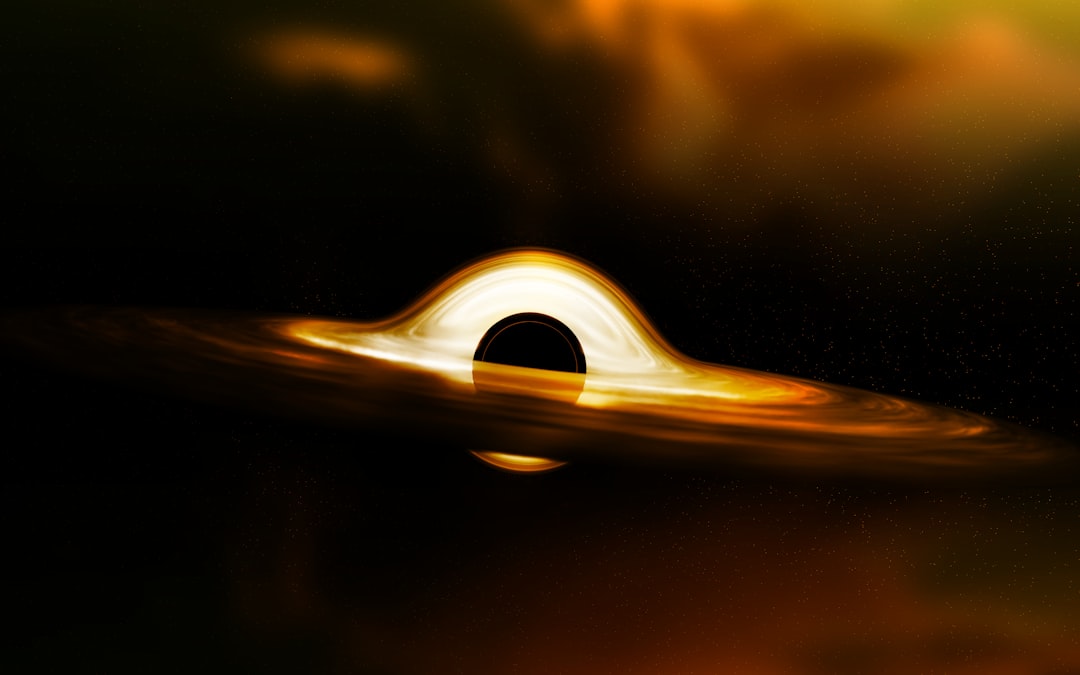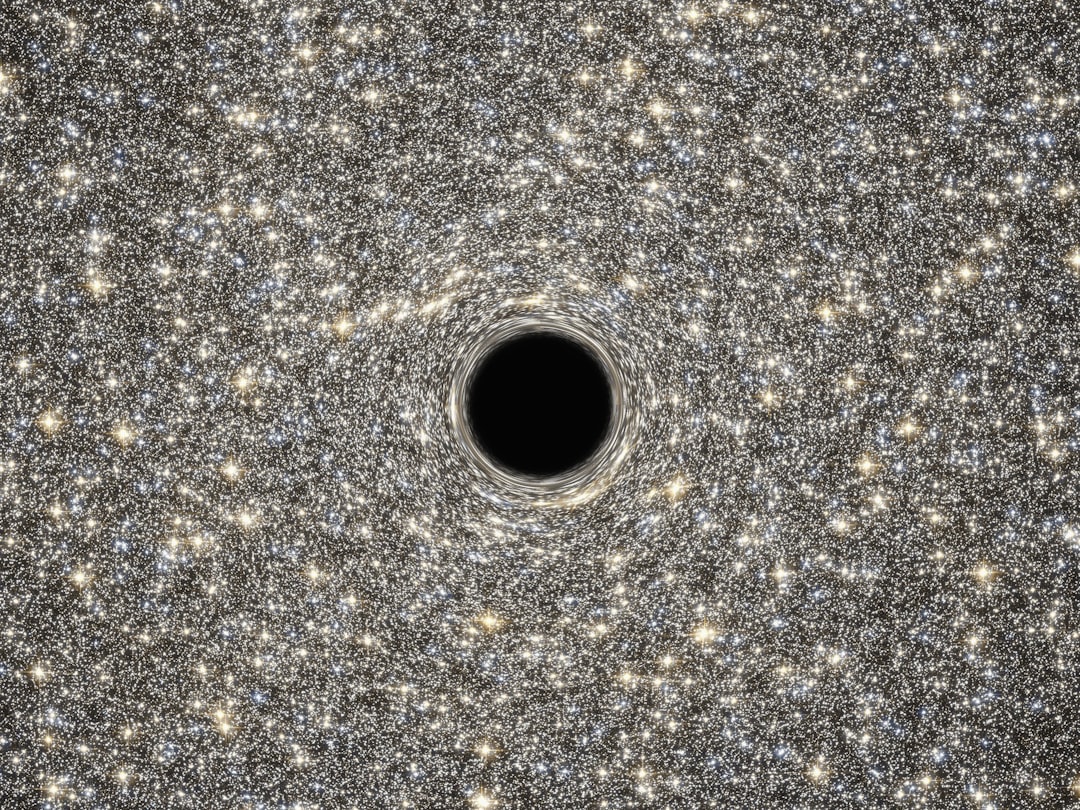
In the vast cosmic theater where galaxies collide and merge, astronomers have long sought evidence of one of the universe's most dramatic phenomena: supermassive black holes being violently ejected from their galactic homes. A groundbreaking new study, led by an international research team and published on arXiv, has finally uncovered compelling statistical evidence for these "recoiling" black holes—cosmic behemoths traveling at thousands of kilometers per second through the depths of space. This discovery represents a significant milestone in our understanding of galactic evolution and the extreme physics governing black hole mergers.
When two galaxies collide—events that unfold over hundreds of millions of years—their central supermassive black holes inevitably spiral toward each other in an intricate gravitational dance. This cosmic ballet, governed by Einstein's theory of general relativity, doesn't always end with a peaceful merger. Instead, asymmetries in the black holes' properties can trigger a phenomenon that launches these massive objects away from their galactic centers at velocities that would make even the fastest spacecraft seem stationary by comparison.
The challenge of detecting these wandering titans has plagued cosmologists for decades, but the new research introduces an innovative observational technique that leverages the relationship between a black hole's velocity and its surrounding dust environment. By analyzing data from thousands of active galactic nuclei, the team has provided the first robust statistical evidence that recoiling black holes are not just theoretical curiosities—they may represent a significant fraction of the quasars we observe throughout the universe.
The Physics Behind Black Hole Recoil
To understand this remarkable discovery, we must first examine the fundamental physics that enables supermassive black holes to achieve such extraordinary velocities. When two black holes merge, they don't simply combine like droplets of water. Instead, the process is governed by general relativity, which predicts that asymmetric mergers produce gravitational waves—ripples in spacetime itself that carry energy and momentum away from the system.
According to NASA's research on gravitational waves, if the merging black holes have misaligned spins or significantly different masses, these gravitational waves are emitted preferentially in one direction. By Newton's third law, this asymmetric emission creates a "kick" in the opposite direction, accelerating the merged black hole to speeds ranging from hundreds to thousands of kilometers per second—fast enough to escape even the gravitational pull of massive galaxy clusters.
"The momentum transfer during these mergers is truly staggering. We're talking about objects millions or billions of times the mass of our Sun being accelerated to velocities that would carry them across the entire Milky Way in just a few million years," explains Dr. Bence Bécsy, lead author of the study.
This recoil mechanism was first predicted by theoretical calculations in the 1970s and later confirmed through sophisticated computer simulations. However, observational confirmation has remained elusive due to the immense challenge of identifying these fast-moving black holes against the backdrop of billions of stationary ones visible across the cosmos.
A Novel Observational Strategy: Tracking Dust and Velocity
The research team's breakthrough came from recognizing a crucial prediction made by numerical simulations decades ago: as a supermassive black hole recoils from its galactic center, it doesn't travel alone. The material immediately surrounding the black hole—its tightly bound inner accretion disk—gets dragged along for the ride, while more distant material stays behind, still gravitationally bound to the host galaxy.
This differential behavior creates a distinctive observational signature in the spectroscopic data from active galactic nuclei, also known as quasars. The inner accretion disk produces what astronomers call the Broad Line Region (BLR), where extreme velocities and temperatures cause emission lines to be significantly broadened by Doppler shifting. This region, extending from just outside the black hole's event horizon to distances of light-months away, remains gravitationally bound to the black hole even during high-velocity recoil events.
In contrast, the Narrow Line Region (NLR) originates from more diffuse gas clouds located much farther from the black hole—at distances of hundreds or thousands of light-years. These clouds are more strongly bound to the galaxy's overall gravitational potential than to the black hole itself. When a recoiling black hole accelerates away, the NLR material initially stays put, creating a measurable velocity offset between the two regions.
Connecting Velocity to Dust Obscuration
The team's innovative approach combined this velocity measurement with another key observable: dust obscuration. Previous simulations suggested that faster-moving black holes should be surrounded by more dust, as the recoil event disrupts the surrounding environment and potentially triggers enhanced accretion activity. By correlating the velocity offset between the BLR and NLR with the amount of dust detected around each quasar, the researchers could statistically identify populations of recoiling black holes.
Using data from large-scale spectroscopic surveys conducted by observatories including the Sloan Digital Sky Survey, the team analyzed thousands of quasars, measuring both their velocity offsets and dust content. The statistical analysis revealed a modest but highly significant positive correlation: quasars with larger velocity offsets (indicating faster-moving black holes) indeed showed increased dust obscuration, exactly as predicted by the recoil hypothesis.
Rigorous Statistical Validation
In scientific research, particularly when dealing with statistical correlations, it's crucial to rule out alternative explanations and systematic errors. The research team implemented a clever validation test to ensure their results weren't the product of statistical flukes or observational biases.
They repeated their analysis using only the Narrow Line Region measurements, comparing different NLR components against each other. Since all NLR material should remain stationary relative to the galaxy (being left behind by the recoiling black hole), there should be no correlation between NLR velocity differences and dust obscuration. The test worked perfectly—the correlation vanished, exactly as predicted, providing strong validation that the original signal was genuine.
This rigorous approach to statistical validation demonstrates the high standards of modern astrophysical research. According to principles outlined by the European Southern Observatory, such cross-checks are essential when making extraordinary claims based on statistical evidence rather than direct detection.
An Unexpected Asymmetry
However, the study did reveal one puzzling anomaly: blue-shifted quasars (those moving toward Earth) appeared more dust-obscured than red-shifted ones (moving away from us). This observation contradicts the simplest recoil model and suggests additional physics may be at play.
The research team proposes several potential explanations for this asymmetry:
- Observational bias: The methods used to fit spectral lines might systematically differ for approaching versus receding objects, creating apparent but artificial differences in measured dust content
- Geometric effects: The orientation of the accretion disk relative to our line of sight could interact with the recoil direction in complex ways, affecting how we perceive dust obscuration
- Additional physical processes: Other phenomena occurring simultaneously with the recoil—such as enhanced accretion triggered by the merger—might create asymmetric dust distributions that we don't yet fully understand
- Selection effects: Our ability to detect and classify quasars might be influenced by both their velocity and dust content in ways that create systematic patterns in the observed sample
Resolving this mystery will require additional observations and more sophisticated modeling of the complex physics surrounding supermassive black hole mergers and their immediate aftermath.
Implications for Gravitational Wave Astronomy
Perhaps the most exciting aspect of this research is its implications for the future of gravitational wave astronomy. While ground-based detectors like LIGO and Virgo have revolutionized our understanding of stellar-mass black hole mergers, they cannot detect the much lower-frequency gravitational waves produced by supermassive black hole mergers.
That's where space-based observatories come in. The Laser Interferometer Space Antenna (LISA), planned for launch in the 2030s by ESA and NASA, will be specifically designed to detect gravitational waves from merging supermassive black holes. The current study's finding that up to 50% of known quasars might result from relatively recent black hole mergers suggests LISA will have an abundance of targets to observe.
"If half of all quasars are products of recent mergers, LISA won't just detect a few events—it will open a floodgate of data about supermassive black hole dynamics across cosmic history," notes Dr. Bécsy. "We're on the verge of a golden age in understanding these extreme cosmic phenomena."
The synergy between electromagnetic observations (like those in this study) and future gravitational wave detections will enable astronomers to study black hole mergers from multiple perspectives, providing unprecedented insights into the physics of these extreme events and their role in galaxy evolution.
Broader Context: Black Holes and Galaxy Evolution
This research contributes to our growing understanding of the intimate connection between supermassive black holes and their host galaxies. Modern astrophysics has revealed that virtually every large galaxy harbors a supermassive black hole at its center, with the black hole's mass tightly correlated with properties of the galaxy's central bulge.
The process of galaxy mergers—and the subsequent black hole mergers they trigger—plays a crucial role in building up both galaxies and their central black holes over cosmic time. Understanding recoiling black holes is therefore essential to comprehending how the universe's large-scale structure has evolved since the Big Bang.
Research conducted using the James Webb Space Telescope has already begun revealing evidence of black hole mergers in the early universe, showing that these processes have been shaping galaxies for over 13 billion years. The statistical evidence for recoil events adds another piece to this cosmic puzzle, suggesting that the relationship between black holes and galaxies is even more dynamic and complex than previously thought.
Future Directions and Open Questions
While this study provides compelling statistical evidence for recoiling supermassive black holes, many questions remain unanswered. Direct detection of individual recoiling black holes would provide definitive confirmation and allow detailed study of specific events. Future surveys with next-generation telescopes may achieve this goal by identifying quasars with extreme velocity offsets or unusual spatial positions relative to their host galaxies.
Additionally, researchers need to better understand the full range of physical processes affecting black holes during and after merger events. The unexpected blue-shift asymmetry discovered in this study hints that our theoretical models may be incomplete. More sophisticated simulations incorporating magnetic fields, radiation pressure, and complex gas dynamics will be necessary to fully explain the observations.
The study also raises intriguing questions about the fate of recoiling black holes. Do they eventually return to their galactic centers, or do some escape entirely, wandering the cosmos as rogue black holes? How does the recoil process affect star formation and galaxy evolution in the merger remnant? These questions will drive astronomical research for years to come.
As we stand on the threshold of the gravitational wave astronomy era, studies like this one provide crucial context for interpreting the wealth of data that observatories like LISA will soon deliver. By combining electromagnetic observations with gravitational wave detections, astronomers will finally achieve a complete picture of how the universe's most massive objects interact, merge, and shape the cosmic landscape around them. The hunt for recoiling black holes has moved from theoretical speculation to observational reality, opening new windows into some of the most extreme physics in the universe.