In a groundbreaking discovery that reshapes our understanding of cosmic energy regulation, an international team of astronomers has unveiled a fascinating phenomenon: supermassive black holes operate like cosmic switches, alternating between two distinct modes of matter ejection but never engaging both simultaneously. This "seesaw" behavior, observed in unprecedented detail through a three-year monitoring campaign, reveals that these gravitational titans don't merely consume matter—they orchestrate it with remarkable precision, fundamentally influencing the evolution of galaxies across the universe.
The research, led by Dr. Zuobin Zhang from the Fudan Center for Astronomy and Astrophysics in Shanghai and the University of Oxford, provides the first clear observational evidence that relativistic jets and X-ray winds represent mutually exclusive states in black hole activity. Published in the prestigious journal Nature Astronomy, this discovery challenges decades of theoretical assumptions about how black holes regulate their energy output and interact with their cosmic surroundings.
At the heart of this investigation lies 4U 1630-472, a stellar-mass black hole system approximately ten times the mass of our Sun, located in a binary configuration with a companion star. Using cutting-edge observational tools including NASA's Neutron star Interior Composition Explorer (NICER) aboard the International Space Station and South Africa's powerful MeerKAT radio telescope array, researchers tracked this system's behavior with unprecedented precision, revealing patterns that have profound implications for our understanding of black hole physics and galactic evolution.
The Dual Nature of Black Hole Outflows
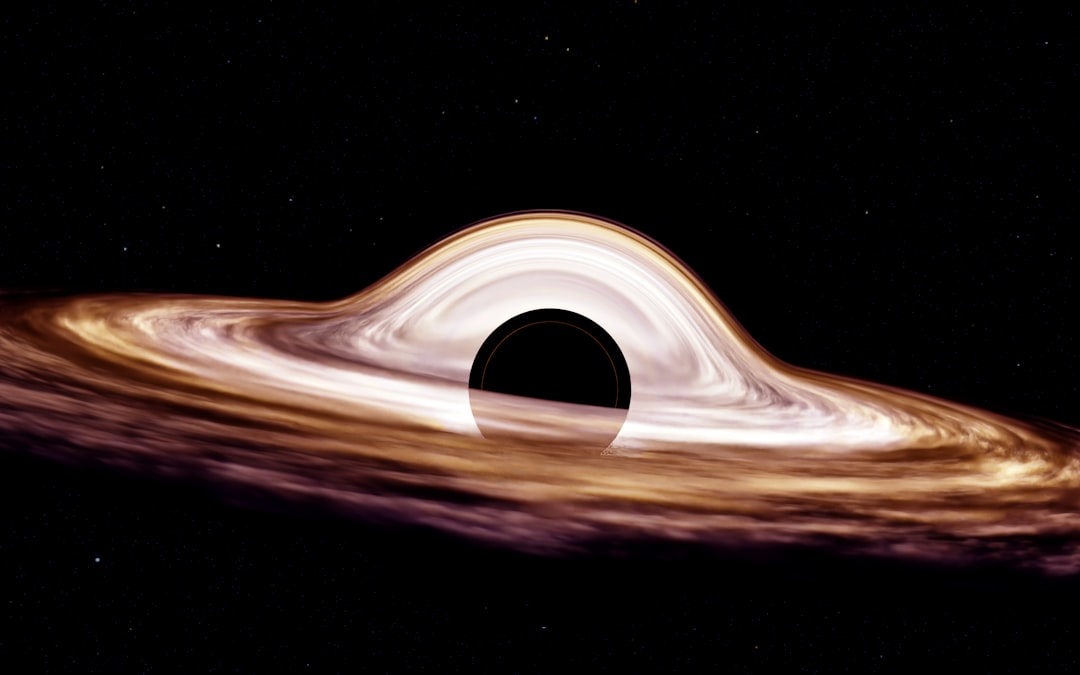
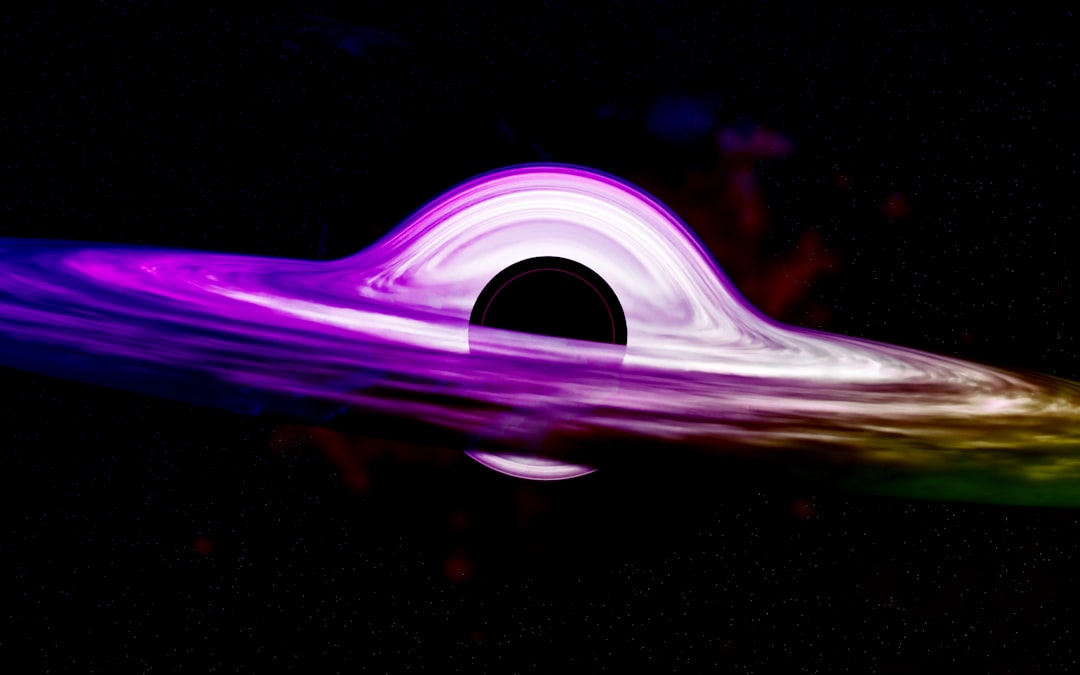
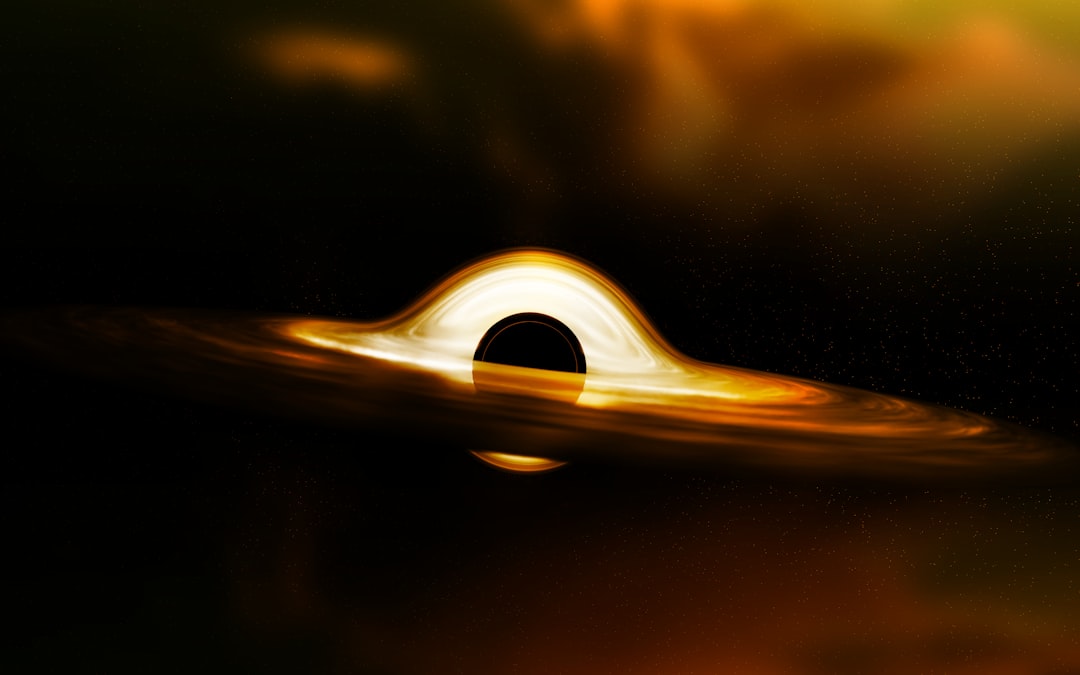
Contrary to popular misconception, black holes are not cosmic vacuum cleaners that indiscriminately devour everything in their vicinity. Instead, they are remarkably selective and efficient managers of matter and energy. As material from surrounding space spirals toward a black hole, it forms an accretion disk—a swirling maelstrom of superheated gas and dust that reaches temperatures of millions of degrees and velocities approaching the speed of light.
This extreme environment generates two fundamentally different types of outflows, each with distinct characteristics and cosmic consequences. Relativistic jets are tightly focused beams of plasma that shoot from the black hole's polar regions at speeds exceeding 90% of light speed. These jets, powered by the black hole's intense magnetic fields and rotational energy, can extend for millions of light-years across space, creating spectacular cosmic structures visible to radio telescopes. The European Southern Observatory has documented numerous examples of these jets shaping entire galaxy clusters.
In contrast, X-ray winds represent broader, slower outflows of ionized gas expelled from the accretion disk's surface. Driven by radiation pressure and magnetic forces, these winds carry significant amounts of mass and energy into the surrounding environment at velocities typically ranging from 10% to 30% of light speed. While less dramatic than jets, these winds play a crucial role in regulating star formation by heating and dispersing the gas clouds that would otherwise collapse to form new stars.
Unprecedented Observational Campaign Reveals the Seesaw Effect
The research team's three-year monitoring campaign of 4U 1630-472 represented a technological tour de force in multi-wavelength astronomy. By simultaneously observing the system in X-ray wavelengths (sensitive to hot, ionized winds) and radio wavelengths (ideal for detecting relativistic jets), the astronomers could track both types of outflows with exceptional precision.
What they discovered was remarkable: throughout the entire observation period, the black hole never produced strong jets and powerful winds at the same time. Instead, the system exhibited a clear pattern of alternation—when jet activity intensified, wind signatures vanished, and when winds strengthened, jet emissions disappeared. This anti-correlation between jets and winds remained consistent across multiple outburst cycles as the black hole accreted material from its companion star.
"We're seeing what could be described as an energetic tug-of-war inside the black hole's accretion flow. When the black hole fires off a high-speed plasma jet, the X-ray wind dies down, and when the wind starts up again, the jet vanishes. This tells us something fundamental about how black holes regulate their energy output and interact with their surroundings," explained Dr. Jiachen Jiang, Teaching Fellow at the University of Warwick and co-author of the study.
Crucially, the researchers found that despite this switching behavior, the total energy and mass outflow remained remarkably constant. This suggests that black holes maintain a consistent power output but channel it through different mechanisms depending on physical conditions in the accretion disk.
Magnetic Fields: The Hidden Conductor
One of the most significant implications of this research concerns the role of magnetic field configuration in determining outflow behavior. Traditional models of black hole accretion assumed that the mass accretion rate—how much material falls toward the black hole per unit time—primarily controls whether jets or winds dominate. However, the new observations challenge this assumption.
The team's data suggests that the switch between jets and winds may instead depend on changes in how magnetic fields are organized within the accretion disk. When magnetic field lines are tightly wound and concentrated near the black hole's rotation axis, they can launch powerful jets through a process known as the Blandford-Znajek mechanism. When the magnetic field configuration changes to a more chaotic or distributed state, radiation pressure and magnetic forces instead drive broader winds from the disk's surface.
This finding aligns with recent theoretical work in magnetohydrodynamic simulations of accretion disks, which have predicted that magnetic field topology plays a critical role in determining outflow properties. Research from institutions like the Harvard & Smithsonian Center for Astrophysics has been exploring these magnetic dynamics through sophisticated computer models.
Cosmic Implications: Black Holes as Galactic Architects
The discovery of this seesaw behavior has profound implications for understanding galaxy evolution across cosmic time. Supermassive black holes, which reside at the centers of most galaxies and can contain billions of solar masses, don't exist in isolation—they are intimately connected to their host galaxies through a phenomenon known as AGN feedback.
When supermassive black holes actively accrete matter, they become Active Galactic Nuclei (AGN), temporarily outshining all the stars in their host galaxies combined. The outflows they produce—whether jets or winds—inject enormous amounts of energy into the surrounding interstellar and intergalactic medium. This energy input has several critical effects:
- Star Formation Regulation: By heating gas clouds and driving them away from star-forming regions, black hole outflows prevent galaxies from converting all their gas into stars too quickly, helping explain why galaxies are less efficient at forming stars than simple models predict
- Galaxy Morphology: Powerful jets can create vast cavities in the hot gas surrounding galaxy clusters, redistributing matter on scales of millions of light-years and affecting the large-scale structure of the universe
- Chemical Enrichment: Outflows transport heavy elements synthesized in stars throughout galaxies and beyond, contributing to the chemical evolution of cosmic structures
- Black Hole Growth Limitation: By expelling matter that would otherwise be accreted, outflows may help explain the observed relationship between black hole mass and galaxy properties, suggesting a self-regulating feedback loop
The new understanding that black holes switch between jet and wind modes—rather than producing both simultaneously—adds crucial detail to models of how this feedback operates over time. Different outflow modes may affect their environments in distinct ways, with jets creating more focused, long-range effects and winds producing broader but shorter-range impacts.
From Stellar-Mass to Supermassive: Scaling Up the Discovery
While this study focused on 4U 1630-472, a stellar-mass black hole in a binary system, the physical principles likely apply across the entire black hole mass spectrum. Supermassive black holes at galaxy centers, despite being millions to billions of times more massive, operate according to the same fundamental physics governing accretion and outflow generation.
Stellar-mass black holes in binary systems offer unique advantages for studying these phenomena. They undergo regular outburst cycles on timescales of months to years—much faster than the millions of years over which supermassive black holes evolve. This allows astronomers to observe complete cycles of accretion and outflow behavior within practical observation periods. The insights gained from systems like 4U 1630-472 thus serve as cosmic laboratories for understanding processes that shape the universe's largest structures.
Recent observations from facilities like the European Southern Observatory's Very Large Telescope have begun detecting similar switching behavior in some supermassive black holes, suggesting that the seesaw effect may indeed be a universal feature of black hole accretion across all mass scales.
Future Directions and Unanswered Questions
This discovery opens numerous avenues for future investigation. Key questions that remain include:
- What specific physical mechanisms trigger the switch between jet and wind modes? Is it purely magnetic field reconfiguration, or do other factors like disk temperature, density, or ionization state play roles?
- How quickly do these transitions occur? High-cadence observations with next-generation instruments may reveal the detailed physics of mode switching
- Do all black holes exhibit this seesaw behavior, or does it depend on black hole spin, mass, or accretion rate?
- How does the switching timescale relate to black hole properties and accretion disk characteristics?
Upcoming observational facilities promise to shed light on these questions. The James Webb Space Telescope, with its unprecedented infrared sensitivity, can probe the inner regions of accretion disks around supermassive black holes. Future X-ray missions like ESA's Advanced Telescope for High Energy Astrophysics (ATHENA) will provide even more detailed spectroscopic data on black hole winds and their evolution.
"Our observations provide clear evidence that black hole binary systems switch between powerful jets and energetic winds—never producing both simultaneously—highlighting the complex interplay and competition between different forms of black hole outflows. This is just the beginning of understanding how black holes regulate their energy output," noted Dr. Zhang, emphasizing the broader significance of the findings.
Rewriting the Black Hole Narrative
This research fundamentally transforms our conception of black holes from simple consumers of matter to sophisticated cosmic regulators that actively manage energy and matter flow in the universe. Rather than passively accreting whatever falls their way, black holes exhibit complex, dynamic behavior that responds to changing physical conditions in their immediate environment.
The seesaw mechanism reveals that black holes maintain a delicate balance, channeling their power through different pathways while keeping total energy output relatively constant. This self-regulating behavior may be key to understanding the co-evolution of black holes and galaxies—one of the most important unsolved problems in modern astrophysics.
As observational techniques continue to advance and theoretical models become more sophisticated, we can expect further revelations about how these enigmatic objects shape the cosmos. The discovery that black holes switch between jets and winds represents a major step forward in decoding the complex physics governing these extreme environments, bringing us closer to a complete understanding of how black holes influence the universe from the smallest to the largest scales.
The cosmic seesaw has been revealed, and with it, a new chapter in black hole astrophysics has begun—one that promises to reshape our understanding of galaxy evolution, star formation, and the intricate feedback mechanisms that have sculpted the universe we observe today.