Black Hole Collisions Tell a Tale of Repeating Mergers
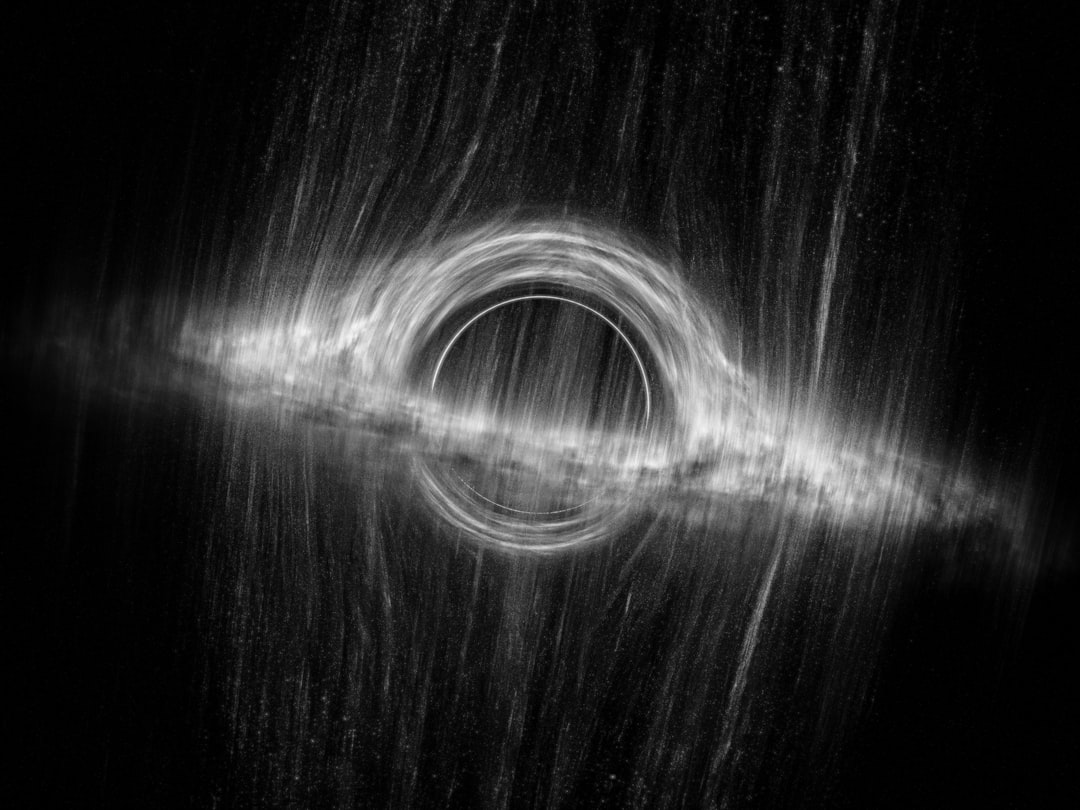
A black hole merger ranks among the Universe's most energetic, massive, and physically exotic events. During such a collision, two black holes spiral inexorably closer together, locked in a gravitational dance that intensifies over millions — sometimes billions — of years, until they finally collide and coalesce into a single, far more massive object. These cataclysmic events can release staggering amounts of energy, producing neutrinos, photons from superheated surrounding gases, and — most crucially for modern astronomers — gravitational waves: ripples in the very fabric of spacetime first predicted by Albert Einstein over a century ago and first directly detected in 2015. It is these gravitational wave signals that have opened an entirely new observational window onto the Universe, allowing scientists to decode the intimate details of black hole collisions across cosmic distances.
Recent gravitational wave detections have now catalogued hundreds of such mergers across the observable Universe. The majority almost certainly originated from black holes born when massive stars exhausted their nuclear fuel and died in catastrophic supernova explosions — the classic pathway through which so-called stellar-mass black holes are forged from the collapsed cores of giant stars. But a compelling new line of research suggests that the story of black hole birth and growth is far richer than this standard picture implies. Those "first-generation" stellar black holes can themselves merge, producing a more massive, "second-generation" black hole. And the process need not stop there — second-generation black holes can merge again, building ever-larger objects through a cosmic chain reaction known as hierarchical merging. This remarkable process is most likely unfolding in the densest, most gravitationally chaotic regions of galaxies.
A New Study Takes On the Question
A team of scientists — including Salvatore Vitale and Cailin Plunkett of the Massachusetts Institute of Technology (MIT), Thomas Callister of Williams College in Massachusetts, and Michael Zevin of the Adler Planetarium in Chicago — has been systematically analyzing gravitational wave signals to determine how frequently this hierarchical merging pathway actually operates in nature. Their findings paint an increasingly coherent and striking picture of black hole demographics across the cosmos.
"We're finding that, for some of these merging black holes, it's not their first rodeo. Overall in the Universe, black holes are merging all the time. The question of how often they are repeatedly merging was pretty uncertain. Now we're seeing a relatively consistent picture where there's a decent percentage of black holes that are coming from this repeated pathway." — Cailin Plunkett, MIT
This finding carries profound implications for our understanding of how black holes grow and evolve over cosmic time. Rather than forming exclusively from individual stellar deaths, a meaningful fraction of the black hole population may owe its existence — and its mass — to a dynamic, generational cycle of mergers stretching back billions of years.
How To Tell If It's a First Merger or Not
The key to unraveling the lineage of any given black hole lies in a single, elegant physical property: spin. Just as a spinning figure skater conserves angular momentum when drawing in their arms, astrophysical objects carry angular momentum through their formation and evolutionary history. Some black holes spin rapidly; others barely rotate at all. And crucially, the amount of spin a black hole carries encodes information about how it was born.
A first-generation black hole — one that formed directly from the gravitational collapse of a massive star's core in a supernova explosion — is expected to have little to no spin. This is because the dying progenitor star sheds enormous quantities of mass in the explosion itself, along with much of its rotational energy. The resulting black hole, robbed of its parent star's angular momentum, emerges with a very low spin parameter. This theoretical expectation is broadly consistent with what astronomers observe in systems where stellar-mass black holes appear to be genuine "first timers."
The situation changes dramatically when two black holes merge. The collision is an extraordinarily energetic event: enormous quantities of orbital angular momentum are transferred into the spin of the newly formed, combined object. According to Salvatore Vitale, the physics is unambiguous in its prediction:
"They would be spinning very fast, at about 70 percent their maximum possible spin." — Salvatore Vitale, MIT
This elevated spin rate — far beyond what a typical supernova-born black hole would display — acts as a kind of astrophysical fingerprint, betraying the object's true origin as the product of a prior merger. When astronomers observe a pair of black holes on the verge of collision and find that one member of the pair is spinning significantly faster than its partner, this spin asymmetry strongly suggests that the faster-spinning object is a second-generation black hole, born from the merger of two smaller predecessors. It is a remarkable notion: that we can, by studying gravitational waves alone, trace the genealogy of black holes across cosmic history.
The Wobble: A Telltale Sign
Beyond raw spin magnitude, the orientation of a black hole's spin relative to its orbital plane provides additional diagnostic power. As two black holes spiral inward toward merger, they trace out an orbital plane — imagine two dancers circling each other on a tilted stage. If the spins of both black holes are aligned perpendicular to this orbital plane, the inspiral proceeds relatively smoothly and predictably. But when the spins are misaligned — tilted at an angle to the orbital plane — the system undergoes a phenomenon known as precession, causing the orbital plane itself to wobble like a spinning top that is beginning to slow. This wobble leaves a distinctive imprint in the gravitational wave signal, encoding information about the masses and spin orientations of both objects. Detecting this precession is one of the most powerful tools available to researchers hunting for hierarchical mergers.
Where Does Hierarchical Merging Happen?
Not just anywhere in the cosmos. While stellar-mass black holes can form wherever sufficiently massive stars live and die — which includes star-forming regions throughout galaxies — hierarchical merging demands something more: an extraordinarily dense stellar environment where black holes are numerous enough and gravitationally confined enough to repeatedly encounter and capture one another. The most likely sites include:
- Globular clusters — ancient, densely packed spherical collections of hundreds of thousands to millions of stars, orbiting in the halos of larger galaxies
- Nuclear star clusters — the extremely dense stellar concentrations found at the centers of many galaxies, sometimes co-existing with supermassive black holes
- Active galactic nuclei (AGN) disks — the vast accretion disks of gas and stars swirling around supermassive black holes, which can gravitationally funnel black holes into repeated close encounters
- Young massive star clusters — compact, recently formed stellar nurseries where massive stars die quickly and their black hole remnants remain gravitationally bound together
As Cailin Plunkett colorfully describes the process:
"You might have a ton of stars whizzing around each other, and if some are massive and explode, they become black holes. The black holes continue to whizz around, and can capture each other and merge. This process can repeat potentially ad infinitum, by virtue of the fact that you have a ton of stars and black holes in this really dense environment." — Cailin Plunkett, MIT
In such environments, the gravitational interactions between objects are so frequent and complex that black holes can be repeatedly flung into collision courses, ratcheting up in mass generation after generation. This is fundamentally different from the comparatively isolated formation of stellar-mass black holes in the field — regions of a galaxy far from these dense stellar hubs.
Mining the Gravitational Wave Catalog
To search for evidence of this process, the research team turned to the LIGO-Virgo-KAGRA Gravitational Wave Transient Catalog (GWTC-4.0), the most comprehensive collection of gravitational wave detections ever assembled. This catalog captures signals recorded during the fourth observing run of the three-detector network — comprising LIGO (the Laser Interferometer Gravitational-Wave Observatory) in the United States, Virgo in Italy, and KAGRA in Japan. Together, these instruments represent the pinnacle of precision measurement technology, capable of detecting spacetime distortions thousands of times smaller than the diameter of a proton.
The team specifically searched the catalog for the gravitational wave signatures of precessing, misaligned-spin systems — the hallmark wobble patterns indicative of hierarchical mergers. By cross-referencing spin magnitudes, mass ratios, and orbital precession patterns across the full dataset, they were able to statistically identify a subpopulation of merging black holes whose properties are inconsistent with a purely first-generation origin.
For further context on how gravitational wave observatories operate and what they have discovered, the LIGO Scientific Collaboration and the European Space Agency's gravitational wave resource page provide excellent overviews. The future space-based detector LISA (Laser Interferometer Space Antenna), currently in development by ESA, promises to extend this science to even more distant and massive merging systems.
What the Collisions Reveal
The statistical analysis of the GWTC-4.0 dataset yielded a striking result: a meaningful fraction of detected mergers exhibited the orbital wobbling characteristic of first-generation and second-generation black hole pairings. Extrapolating from the observed sample to the broader cosmic population, the team estimates that roughly 14 percent of all merging black holes have been through at least one prior merger — they are, in the parlance of the field, repeat offenders in the cosmic collision business.
The mass distribution of the merging black holes provides additional insight. Black holes with masses of approximately 10 to 30 times the mass of the Sun appear consistent with standard stellar-mass black holes produced by supernova explosions. However, black holes in the range of 20 to 40 solar masses and above emerge as the most likely candidates for second-generation status — objects whose masses can only be plausibly explained if they were themselves assembled from the merger of smaller predecessors.
This mass-dependent pattern is not merely a statistical curiosity. It touches on one of the most intriguing puzzles in modern stellar evolution theory. Current models of how massive stars live and die predict the existence of what is known as the pair-instability mass gap: a range of black hole masses — roughly from about 45 to 130 solar masses — that should be essentially unpopulated by black holes formed directly from stellar collapse. The reason is that stars massive enough to form such black holes are thought to be torn apart completely by pair-instability supernova explosions, leaving no compact remnant behind. Yet gravitational wave observations have detected black holes squarely within or near this forbidden zone. As Cailin Plunkett explains:
"One of the reasons why the 40-and-above regime is interesting is, stellar evolution theory predicts you shouldn't be able to form black holes in that mass range at all from just a supernova. We think supernovae from really massive stars end up being so violent that they leave no black holes at all above roughly 45 solar masses. Yet, we have seen black holes that are that massive. And the question is: Where did they come from?" — Cailin Plunkett, MIT
Hierarchical merging offers a compelling answer. If two first-generation black holes of, say, 25 solar masses each were to merge, the resulting second-generation object could easily fall within or above this mass gap — created not by stellar collapse, but by collision. This mechanism may thus explain a population of black holes that would otherwise defy our best models of stellar physics. For a deeper exploration of the pair-instability mass gap and its implications, HubbleSite's coverage of intermediate-mass black holes provides valuable context.
Broader Implications for Black Hole Astrophysics
Beyond resolving specific puzzles about individual black hole masses, this research carries wide-ranging implications for our understanding of black hole population demographics and the large-scale structure of the Universe. The finding that approximately 14 percent of merging black holes are second-generation objects suggests that hierarchical merging is not a rare, exotic edge case but a statistically significant channel of black hole growth operating across the cosmos.
This has consequences for several interconnected fields of inquiry:
- The origin of intermediate-mass black holes (IMBHs) — objects ranging from hundreds to tens of thousands of solar masses, which may form through runaway hierarchical merging in dense clusters and could serve as "seeds" for the supermassive black holes found at the centers of most large galaxies
- The role of dense stellar environments in shaping galaxy evolution, as the black holes they produce contribute to the overall mass budget and gravitational dynamics of their host systems
- Gravitational wave source modeling — understanding the spin and mass distributions of merging black holes is essential for correctly interpreting current and future gravitational wave catalogs
- Tests of general relativity — highly spinning, precessing binary black hole systems provide some of the most stringent tests of Einstein's theory in the strong-field regime
Linking the black hole mass spectrum to features in the spin distribution is proving to be a powerful diagnostic tool — one that allows astronomers not merely to catalog black holes, but to reconstruct their evolutionary histories. Each gravitational wave signal, in this sense, is not just a detection; it is a chapter in a biography, telling the story of objects that may have been forged and re-forged across billions of years of cosmic history. As next-generation detectors like LISA and the proposed Einstein Telescope come online, the resolution of this biography will only improve, revealing the full, extraordinary complexity of black hole evolution across the Universe.
The mystery of where the most massive black holes come from — and how they grow — remains one of the central questions of modern astrophysics. But with each new gravitational wave detection, the answer comes a little more clearly into focus: the Universe builds its most massive black holes not just in a single catastrophic stellar death, but through a long, violent, and endlessly repeating cycle of collision and coalescence, written in the language of spinning, spiraling spacetime.