Could Astronauts Grow Rice on the Moon? A Breakthrough in Lunar Agriculture
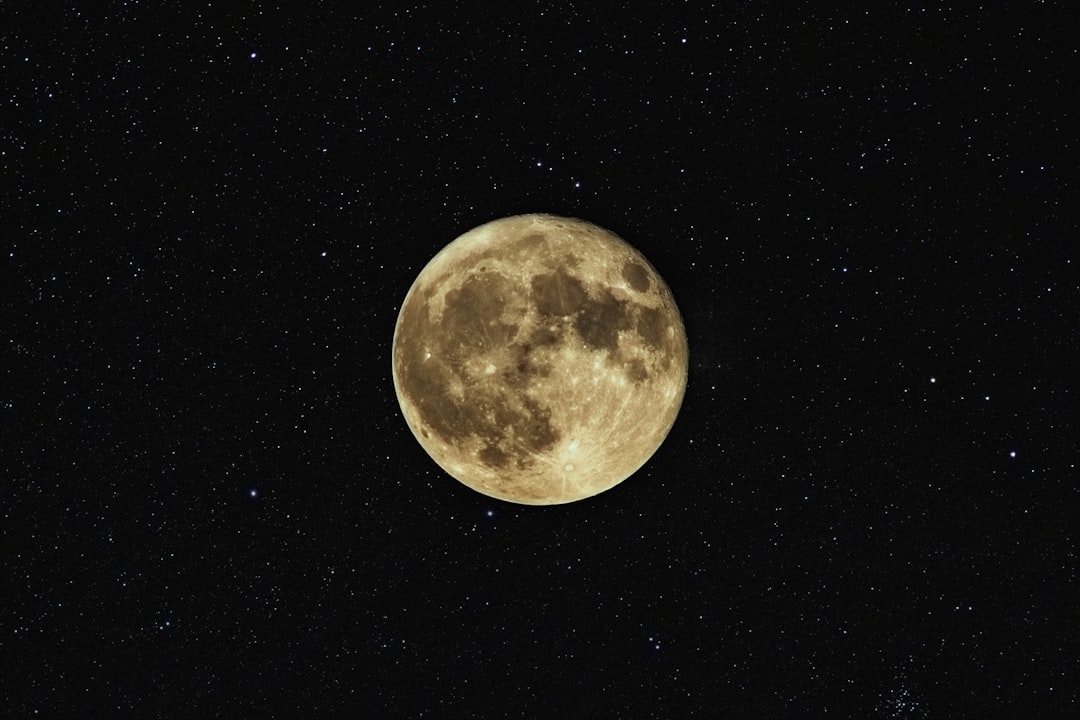
If humans are ever going to live on the Moon rather than just visit, they will need to grow their own food there — and that means solving a problem lunar soil was never built to handle. Regolith, the fine grey dust that blankets the lunar surface, is a geochemically hostile medium: it contains no organic matter, virtually no microbial life, and almost none of the nitrogen compounds that plants fundamentally depend upon to synthesize proteins, chlorophyll, and nucleic acids. Without nitrogen, no crop can complete its life cycle, regardless of how carefully every other growing condition is managed.
Complicating matters further, the Moon possesses no meaningful atmosphere. Any air a lunar farmer might use would have to come from inside a sealed, pressurised habitat, with its nitrogen either ferried up from Earth at enormous logistical cost or manufactured on-site using energy-intensive processes. Against that backdrop, a joint research team from Tohoku University and the Japan Aerospace Exploration Agency (JAXA) believes they have identified a genuinely elegant solution — one that uses nothing more than a modest amount of electricity and the air that future settlers will already be breathing.
The Nitrogen Problem in Space Agriculture
To appreciate why this research matters, it helps to understand the scale of the nitrogen challenge facing long-duration space missions. On Earth, the nitrogen cycle is a vast, invisible infrastructure sustained by soil bacteria, atmospheric chemistry, and millennia of biological activity. Nitrogen gas (N₂) makes up roughly 78% of our atmosphere, but in its molecular form it is chemically inert and useless to plants. It must first be "fixed" — converted into reactive nitrogen compounds such as ammonia (NH₃) or nitrate (NO₃⁻) — before it can be absorbed through roots and incorporated into plant tissue.
On Earth, this fixing is accomplished both naturally, by certain bacteria living in plant root nodules, and industrially, through the Haber-Bosch process, which combines atmospheric nitrogen and hydrogen under extreme heat and pressure to produce ammonia-based fertilisers. The Haber-Bosch process is responsible for feeding roughly half the world's population, but it is also one of the most energy-intensive and carbon-heavy industrial processes on the planet, consuming around 1–2% of global energy output and producing significant greenhouse gas emissions. Replicating anything like it on the lunar surface would be utterly impractical.
"Rather than shipping fertiliser across a quarter of a million miles of space, future lunar farmers could recycle the nitrogen already circulating around them into exactly the fertiliser their crops require."
This is precisely the gap that the Tohoku-JAXA team set out to bridge. Their approach bypasses the need for industrial infrastructure entirely, drawing instead on the principles of non-thermal plasma chemistry — a field that has been gaining traction in agricultural science for the past decade.
A Plasma Device That Turns Air Into Fertiliser
The researchers engineered a compact plasma device capable of extracting nitrogen directly from the kind of breathable air that would fill a lunar habitat's living and growing spaces. By passing electrical discharges through that air, the device generates highly reactive plasma — a state of matter in which electrons are stripped from gas molecules, creating an energetic soup of ions and radicals. These reactive species break apart the normally inert N₂ molecules and drive them through a rapid oxidation pathway, ultimately producing dinitrogen pentoxide (N₂O₅), a gaseous nitrogen oxide.
The elegance of the system lies in what happens next. When N₂O₅ is dissolved in water, it reacts spontaneously to form nitric acid (HNO₃), which in turn dissociates into nitrate ions (NO₃⁻) — the precise form of nitrogen that plant roots are evolved to absorb and utilize. The entire conversion proceeds with an efficiency approaching one hundred percent, and the device accomplishes all of this while consuming less than 100 watts of power, a figure well within the range of what a well-designed lunar base solar array could realistically supply. There are no fossil fuels involved, no high-pressure reaction vessels, and no need for hydrogen feedstock.
For context on how revolutionary this could be for space exploration, NASA's Lunar Surface Innovation Initiative identifies in-situ resource utilization — the ability to live off the land rather than depend on Earth resupply — as one of the central pillars of sustainable Moon and Mars exploration. A fertiliser system that runs on recycled habitat air and solar electricity fits squarely within that philosophy.
Growing Rice in Lunar Regolith: Remarkable Results
To move beyond theory, the team applied their nitrate-enriched water to a lunar regolith simulant — a carefully engineered material designed to replicate the physical and chemical properties of genuine lunar soil, including samples returned by the Apollo missions — and used it as the growth medium for Oryza sativa, common rice. The choice of rice is scientifically deliberate: it is one of the world's most important staple crops, it has a relatively short growth cycle, and it has already been the subject of space agriculture research programs in Japan and internationally.
The results exceeded expectations in multiple dimensions. Lunar regolith simulant is naturally highly alkaline, with a pH typically around 9.09 — well outside the range of 5.5 to 7.0 in which most crops thrive. The nitric acid formed during the dissolving of N₂O₅ brought the pH down to 6.76, landing almost precisely within the optimal window for rice cultivation. That single chemical shift triggered a cascade of secondary benefits:
- The more neutral pH released calcium, magnesium, and potassium ions that had been chemically sequestered within the regolith's mineral structure, making these essential macronutrients available to plant roots for the first time.
- It simultaneously suppressed aluminium ion activity — aluminium becomes increasingly soluble and phytotoxic in alkaline conditions, and its suppression protected the delicate developing root systems from chemical damage.
- Three months after sowing, rice seedlings grown in the treated regolith showed markedly stronger growth in both root development and above-ground biomass compared to control plants watered with plain water.
- By the fourth month, the treated plants reached the heading stage — the critical developmental milestone at which the rice plant begins forming its grain-bearing panicles, meaning actual food production was within reach.
These findings represent a significant step beyond earlier proof-of-concept plant growth experiments in lunar simulants, many of which demonstrated only that germination was possible, not that plants could progress through their full reproductive cycle.
An Unexpected Bonus: Foliar Spray and Plant Immunity
Perhaps the most surprising element of the study emerged from a separate line of experimentation. When the research team sprayed the N₂O₅ gas directly onto rice plant leaves — a technique known as foliar application — they observed a suite of physiological responses that went well beyond simple nitrogen nutrition.
The gas appeared to activate hormone signalling pathways associated with systemic acquired resistance and general plant immunity, responses that in terrestrial agriculture are typically triggered by pathogen attack or environmental stress. Plants that received the foliar treatment showed enhanced disease resistance markers — a property of enormous practical value in a closed lunar growing environment, where a single fungal or bacterial outbreak in a sealed habitat could devastate an entire food supply with no easy remedy.
Equally significant for space agriculture, the foliar treatment kept plant stems shorter and structurally sturdier. In low-gravity environments, plants frequently exhibit exaggerated elongation — a phenomenon driven by altered hormone gradients and the absence of the normal mechanical stresses that gravity imposes — producing tall, spindly growth that is inherently fragile and poorly suited to contained growing systems. The plasma-derived gas appeared to dampen this excessive stretching, potentially offering a chemical tool for managing crop architecture in space without the need for genetic modification or artificial mechanical stimulation.
Implications for Earth: A Greener Path to Fertiliser
Professor Toshiro Kaneko, who led the research at Tohoku University, is careful to frame the technology's significance beyond the lunar context. Because the plasma process runs entirely on electricity, it is inherently compatible with renewable energy sources such as solar and wind power. On Earth, that means it could offer a genuinely low-carbon alternative to the Haber-Bosch process for small- and medium-scale nitrogen fertiliser production — particularly in remote agricultural regions where conventional fertiliser supply chains are expensive, unreliable, or environmentally damaging.
The European Space Agency's research into space-derived technologies for terrestrial agriculture has long argued that the engineering constraints of space farming — minimal mass, minimal energy, closed-loop resource use — tend to produce solutions that are intrinsically more efficient and sustainable than their Earth-optimised counterparts. This plasma fertiliser system is a textbook example of that principle in action.
The broader scientific community is also watching developments in plasma agriculture with growing interest. Research groups in Europe, Asia, and North America have been investigating non-thermal plasma applications ranging from seed treatment and soil decontamination to post-harvest preservation. For a comprehensive overview of the field, the journal Frontiers in Plant Science has published numerous peer-reviewed studies exploring plasma's interactions with plant biology at the cellular level.
The Road Ahead: From Laboratory to Lunar Greenhouse
Significant engineering and biological challenges remain before a plasma-based nitrogen system could be deployed in an actual lunar habitat. Questions of long-term device reliability in the radiation-intense, vacuum-adjacent lunar environment, the precise gas concentrations required for safe foliar application without causing oxidative damage, and the integration of the system with broader closed-loop life support architectures all require further investigation. The experiments conducted thus far used regolith simulants rather than genuine lunar soil, and while simulants are designed to be chemically representative, real lunar regolith contains exotic components — including nanophase iron particles produced by micrometeorite bombardment and solar wind implantation — that may interact with the treatment in unpredictable ways.
Nevertheless, the conceptual proof is now in place. A device small enough to fit in a laboratory, drawing less power than a household appliance, can take the nitrogen from breathable air and transform it into a functional fertiliser capable of conditioning hostile lunar soil and sustaining a food crop through to the grain-forming stage. That is a genuinely remarkable result, and it adds meaningful momentum to the broader international effort — led by programs such as NASA's Artemis program — to establish a sustained human presence on the Moon by the 2030s.
"It is a reminder that solving the practical puzzles of living off-world so often ends up teaching us something useful about living on it." — A principle that has guided space technology transfer for decades, and one this research embodies beautifully.
A device designed to coax a harvest from grey lunar dust, using air that future settlers will have carried with them every step of the way, may yet find itself quietly at work in fields much closer to home — long before the first bowl of Moon-grown rice is ever served. In the long arc of human ingenuity, the Moon has always had a way of reflecting something essential back at us. This time, it may be reflecting a better way to feed ourselves.