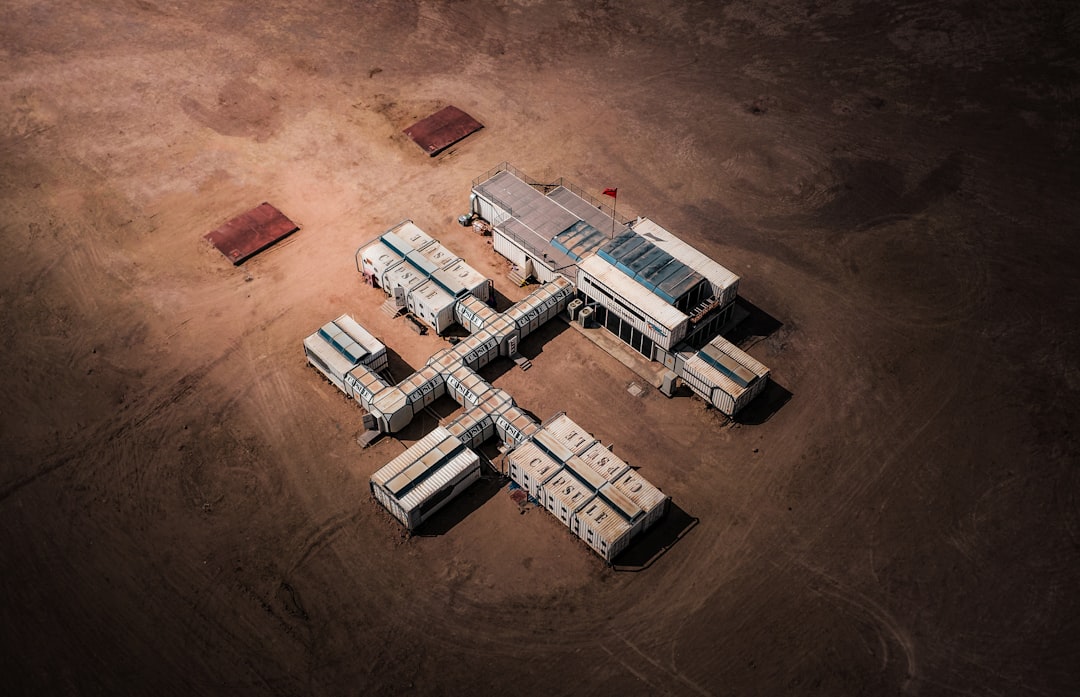
When humanity establishes its first permanent settlements on the Red Planet, colonists will face a surprisingly complex challenge that has nothing to do with radiation, dust storms, or growing potatoes in Martian soil. The question "What time is it?" becomes exponentially more complicated when you're standing on a world 225 million kilometers away from Earth, where the fundamental nature of time itself operates differently due to the relativistic effects predicted by Einstein's theory of general relativity.
A groundbreaking study published in The Astronomical Journal by researchers Neil Ashby and Bijunath R. Patla has tackled one of the most intricate problems facing future interplanetary civilization: how to create a synchronized timekeeping system that works across multiple worlds. Their research reveals that establishing Coordinated Mars Time presents challenges far more complex than simply accounting for Mars's longer day-night cycle.
On Earth, we take accurate timekeeping for granted. Your smartphone synchronizes with Coordinated Universal Time (UTC), which itself relies on International Atomic Time (TAI)—a weighted average of approximately 450 atomic clocks distributed across our planet. This system maintains accuracy to within billionths of a second. But extending this precision to Mars requires accounting for relativistic effects that make the very fabric of time flow at different rates on the two worlds.
The Martian Day: More Than Just Longer Hours
At first glance, adapting to Martian time seems straightforward. A Martian day, called a "sol," lasts 24 hours, 37 minutes, and 22 seconds—just slightly longer than Earth's 24-hour day. Early proposals, including the Darian calendar system, suggested simply extending Martian hours proportionally so that each sol contains exactly 24 Martian hours. This system divides the Martian year (equivalent to 1.88 Earth years) into 24 months, each containing 27 or 28 sols.
For a completely independent Martian colony with no need for Earth communication, this approach would work perfectly. Martian settlers could synchronize their activities to solar noon on Mars, just as humans have done throughout history on Earth. Agricultural schedules, work shifts, and daily routines could all align naturally with the Martian day-night cycle.
However, the reality of interplanetary civilization demands constant communication and coordination between Earth and Mars. Current Mars missions utilize Airy Mean Time (AMT), analogous to Greenwich Mean Time on Earth. This system establishes a prime meridian on Mars at the location of Airy-0, a small crater that serves as the Martian equivalent of Greenwich. Yet even this seemingly simple reference point presents challenges—the exact location of this meridian contains inherent uncertainties that complicate precise timekeeping.
Einstein's Shadow: Relativity Complicates Martian Timekeeping
The real complexity emerges when we consider the relativistic effects that govern how time flows differently across the solar system. According to Einstein's general relativity, gravity doesn't just attract objects—it literally warps spacetime itself, causing time to flow at different rates depending on gravitational field strength.
Mars's surface gravity is approximately 38% that of Earth's, measuring just 3.71 m/s² compared to Earth's 9.81 m/s². This difference means that atomic clocks on Mars tick faster than identical clocks on Earth by roughly 477 microseconds per day. While this might seem negligible, it accumulates rapidly. Over the course of a year, Martian clocks would gain approximately 174 milliseconds relative to Earth clocks—enough to cause significant errors in precision navigation and communication systems.
"The challenges of synchronizing time between Earth and Mars exceed even those we face with the Earth-Moon system," explains the research team. "Given current technological limitations and measurement uncertainties, we estimate a daily residual timing error of approximately 100 nanoseconds between synchronized Mars and Earth clocks."
But gravitational time dilation represents only one piece of this cosmic puzzle. The special relativistic effects caused by the relative motion between Earth and Mars add another layer of complexity. As both planets orbit the Sun at different speeds and distances, their relative velocity constantly changes. This variation introduces an additional timing offset of approximately 226 microseconds that fluctuates throughout the Martian year.
The Light-Speed Limit and Interplanetary Communication
Even if we could perfectly account for all relativistic effects, the finite speed of light imposes fundamental constraints on synchronized timekeeping. Radio signals traveling between Earth and Mars move at light speed—approximately 300,000 kilometers per second—but the distance between the planets varies dramatically as they orbit the Sun.
At their closest approach, Earth and Mars are separated by roughly 54.6 million kilometers, resulting in a light-travel time of about 3 minutes. At their farthest separation, this distance expands to approximately 401 million kilometers, increasing the signal delay to over 22 minutes. This variable light-travel time must be precisely calculated and compensated for in any Earth-Mars timekeeping system.
The NASA Deep Space Network already manages these challenges for current Mars missions, but a permanent settlement requires a more sophisticated solution. The research by Ashby and Patla demonstrates that achieving synchronization accuracy comparable to Earth's UTC system demands continuous monitoring and adjustment of multiple variables simultaneously.
Current Mission Approaches: Sol Counting and Mission Time
Today's Mars missions employ a pragmatic workaround to these timing challenges. Rather than attempting perfect synchronization with Earth time, mission controllers track time based on mission elapsed time—counting sols since the spacecraft's landing. This is why mission reports reference events like "Sol 25" or "Sol 1,000," indicating the number of Martian days since touchdown.
The Mars Perseverance rover, for example, maintains its own local time synchronized to Martian solar days while mission controllers on Earth translate between Mars time and Earth time as needed. This dual-time system works adequately for robotic missions with relatively simple communication requirements, but a thriving Martian colony with constant Earth communication would require something more sophisticated.
Building a Mars Atomic Time Standard
The researchers propose that a truly robust solution requires establishing Mars Atomic Time, analogous to Earth's TAI system. This would involve deploying multiple atomic clocks across Mars's surface, creating a network that could average out local variations and provide a stable time reference for the entire planet.
However, implementing this system presents unique challenges:
- Gravitational variations: Mars's topography includes dramatic elevation changes, from the 21-kilometer-high Olympus Mons volcano to the 7-kilometer-deep Hellas Basin. These altitude differences create measurable variations in gravitational time dilation across the planet's surface.
- Orbital mechanics: Mars's elliptical orbit around the Sun (more eccentric than Earth's) causes seasonal variations in orbital velocity, introducing additional relativistic effects that must be continuously calculated.
- Infrastructure requirements: Establishing and maintaining a network of precision atomic clocks on Mars demands significant technological infrastructure, power systems, and communication networks that don't yet exist.
- Calibration challenges: Regular synchronization with Earth's time standard requires accounting for the constantly varying light-travel time and relativistic effects, necessitating sophisticated computational systems.
Implications for Future Interplanetary Civilization
The timing synchronization challenge extends far beyond mere convenience. Precise timekeeping forms the foundation of modern technology, from GPS navigation systems to financial transactions and scientific experiments. A Martian GPS system, for instance, would require timing precision similar to Earth's GPS satellites, which already must account for relativistic effects to maintain accuracy.
The research also has profound implications for human physiology and psychology. Studies of Mars mission simulations have shown that humans can adapt to the slightly longer Martian day, but maintaining connections with Earth-based schedules requires careful management. Future Martian colonists might experience a unique form of "cosmic jet lag" as they navigate between Mars time and Earth time for business, family communications, and coordination with Earth-based operations.
Looking further ahead, as humanity potentially expands to other locations in the solar system—perhaps establishing bases on Jupiter's moons or Saturn's moon Titan—each location would require its own relativistically corrected time standard. The solar system might eventually operate on a hierarchical time system, with each world maintaining its local atomic time while sophisticated algorithms continuously translate between different planetary time zones.
The Path Forward: Technology and Standards
Despite the challenges, Ashby and Patla's research demonstrates that creating a synchronized Earth-Mars time system is achievable with current technology. The key lies in accepting that perfect synchronization remains impossible due to fundamental physical constraints, but that we can achieve synchronization "close enough" for practical purposes—with residual errors measured in nanoseconds rather than seconds or minutes.
Future developments in atomic clock technology, such as optical lattice clocks that offer even greater precision than current cesium-based atomic clocks, could further reduce synchronization uncertainties. Additionally, deploying relay satellites between Earth and Mars could help maintain more continuous communication links, improving the accuracy of time signal transmission.
As we stand on the threshold of becoming a multi-planetary species, solving the seemingly simple question of "What time is it?" reveals the profound complexity of extending human civilization beyond Earth. The answer requires nothing less than mastering Einstein's relativistic universe, building unprecedented technological infrastructure, and creating new standards for interplanetary coordination. When the first Martian colonists check their watches, they'll be witnessing the practical application of humanity's deepest understanding of spacetime itself—a testament to our species' ability to adapt to the cosmos while maintaining connections with our home world.