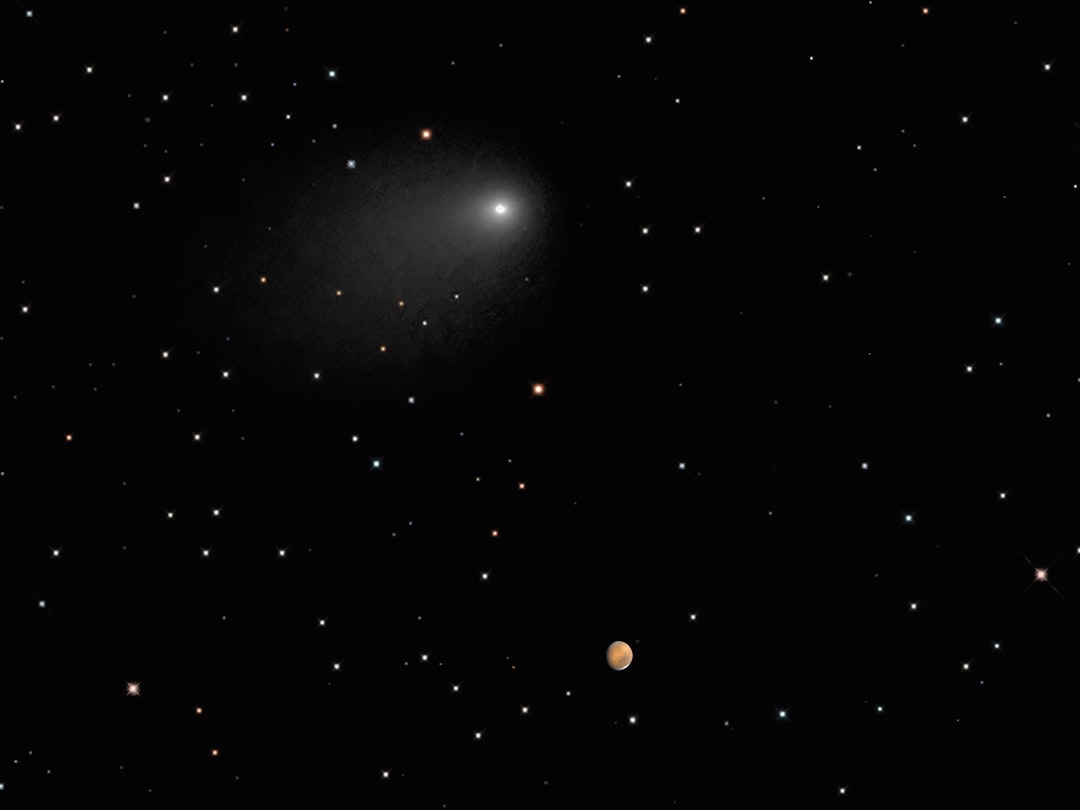
Deuterium in Comets Tell Interesting Tales: What an Alien Visitor Reveals About the Galaxy's Ancient Past
Comets have played a fascinating and storied role throughout human history. From antiquity, many cultures interpreted these luminous wanderers as omens or celestial spirits, portending triumph or disaster for kings, queens, and emperors alike. The Bayeux Tapestry, embroidered in the 11th century, famously depicts the people of England pointing in awe at the blazing apparition of Comet Halley during its appearance in 1066 — a celestial herald of the Norman Conquest. Over the past few centuries, however, astronomers have replaced superstition with science, studying these ancient travelers intently to understand their true nature and origins.
Today we know that comets are not spiritual messengers but rather dirty snowballs — ancient bodies composed of ice, rock, dust, and frozen gases. As they sweep into the warm inner Solar System, solar radiation causes their ices to sublimate directly from solid to gas, releasing vast clouds of material that form the characteristic glowing coma and spectacular tails that have captivated observers for millennia. Far from being mere spectacle, these outgassing events act as windows into the comet's chemical interior — a time capsule sealed billions of years ago.
Comets as Chemical Archives of the Solar System
It turns out that comets are among the most scientifically valuable objects in the Solar System. Each one harbors a treasury of chemical and isotopic clues locked within its ice and dust, recording the conditions of the protosolar nebula — the vast cloud of gas and dust from which our Sun and planets coalesced approximately 4.5 billion years ago. By analyzing the chemical composition of comets from our own Solar System, scientists have reconstructed the temperature gradients, elemental abundances, and even the potential for life-supporting chemistry that existed in our cosmic neighborhood at the dawn of the Solar System.
But if comets from our own Solar System can reveal such profound secrets about our local history, imagine what a comet from another planetary system entirely could tell us. The implications are staggering: a direct chemical sample from a completely alien stellar environment, potentially billions of years older than anything in our own cosmic backyard.
"This was a unique opportunity to study an ancient object from the distant Galaxy, probably pre-dating our Sun and Solar System. On the one hand, we get direct insight into that distant time and place, and on the other, we learn something about how unusual our own Solar System may be." — Martin Cordiner, astrochemist, NASA's Goddard Space Flight Center
Introducing an Alien Comet: 3I/ATLAS, the Interstellar Intruder
The scientific community was electrified in 2025 by the arrival of Comet 3I/ATLAS, an extraordinary interstellar visitor that swept through the inner Solar System, passing between the orbits of Earth and Mars at a closest approach of just 1.8 Astronomical Units (AU) from Earth. Its sharply hyperbolic trajectory — far too energetic to have originated from within our Solar System's gravitational grasp — immediately identified it as only the third confirmed interstellar object ever detected, following the pioneering discoveries of 'Oumuamua in 2017 and Comet 2I/Borisov in 2019.
Unlike its predecessors, 3I/ATLAS developed a remarkably thick, bright coma as solar radiation warmed its ancient ices, making it an ideal candidate for detailed spectroscopic study. A coordinated international observing campaign swung into action, deploying some of the world's most powerful telescopes to dissect the light pouring from its outgassing nucleus. Chief among these instruments was the James Webb Space Telescope (JWST), whose revolutionary Near-Infrared Spectrograph (NIRSpec) was uniquely suited to detect the faint chemical fingerprints buried within the comet's spectrum.
The Science of Deuterium: A Cosmic Thermometer
The most striking discovery from JWST's analysis was the extraordinary abundance of deuterium within 3I/ATLAS — at levels exceeding 30 times the deuterium-to-hydrogen ratio observed in comets native to our own Solar System. To appreciate why this is so scientifically explosive, it helps to understand what deuterium is and why astronomers prize it so highly.
Deuterium is a stable isotope of hydrogen, consisting of one proton and one neutron in its nucleus, compared to ordinary hydrogen's single proton. It is exceedingly rare in the universe — most of it was forged during the Big Bang nucleosynthesis, approximately 13.8 billion years ago, in the first few minutes of the universe's existence. Although trace amounts can be produced in certain stellar environments, the intense fusion reactions within stellar interiors rapidly destroy deuterium, converting it back into ordinary hydrogen or fusing it into helium. The key consequence is this: deuterium is profoundly sensitive to heat.
- Formation: Most cosmic deuterium was produced during Big Bang nucleosynthesis, about 13.8 billion years ago.
- Destruction: Stellar fusion reactions efficiently destroy deuterium, so it cannot survive extended exposure to high temperatures.
- Preservation: Deuterium is best preserved in extremely cold, pristine environments far from stars — such as the outer reaches of young planetary systems or the deep freeze of interstellar space.
- As a tracer: The ratio of deuterium to hydrogen (D/H ratio) in a comet's water ice is a direct indicator of the temperature conditions under which the body formed.
- Earth comparison: The D/H ratio in Earth's oceans differs slightly from that of Solar System comets, fueling ongoing debate about cometary contributions to Earth's water inventory.
When a newly forming planetary system is born from a collapsing molecular cloud, the coldest, outermost regions of the protoplanetary disk can preserve elevated concentrations of deuterium, because temperatures there never rise high enough to trigger the reprocessing reactions that would destroy it. Comets that coalesce in these frigid outer zones therefore "lock in" a high D/H ratio — a chemical fingerprint of their cold birthplace that persists essentially unchanged for billions of years, provided the comet remains in cold interstellar space and never ventures too close to a star. The D/H ratio thus serves as a remarkably precise cosmochemical thermometer, measuring the temperature of a comet's birthplace across time.
What 3I/ATLAS's Deuterium Tells Us About Its Ancient Origins
The extraordinarily high deuterium content of 3I/ATLAS speaks volumes about its birthplace and age. Its D/H ratio more than 30 times higher than Solar System comets indicates formation in an environment that was both exceptionally cold and extremely old — conditions consistent with the very early Milky Way, when the galaxy was young and star formation was proceeding at a furious pace across its disk.
Based on its incoming trajectory and the chemical evidence, astronomers have proposed that 3I/ATLAS most likely formed at least 10 billion years ago — more than twice the age of our own Solar System. At that epoch, the Milky Way's stellar population was being built up rapidly from the primordial hydrogen and helium of the Big Bang, with only the lightest sprinkling of heavier elements produced by the earliest generations of massive stars. The comet likely coalesced in the outer disk of an ancient planetary system orbiting a star that has long since exhausted its fuel and died. Some astronomers, analyzing the detailed kinematics of 3I/ATLAS's trajectory, have suggested its home system may have resided in either the thin disk or thick disk of the Milky Way — distinct structural components of our galaxy with different stellar population ages and chemical histories.
Following its ejection from its home system — perhaps by a gravitational encounter with a giant planet or a stellar flyby — 3I/ATLAS spent billions of years drifting through the cold, radiation-bathed void of interstellar space. This journey, while exposing its surface layers to cosmic ray bombardment, subjected its deep interior to virtually no thermal processing. Its high deuterium abundance is therefore essentially its "birth ratio", preserved in a cosmic deep freeze for over ten billion years until its brief, brilliant visit to our Solar System.
Carbon Isotopes: A Second Chemical Clock
Deuterium was not the only elemental detective at work in JWST's analysis of 3I/ATLAS. The NIRSpec instrument also measured the relative abundances of carbon isotopes within the comet's coma, providing a wholly independent confirmation of its ancient origins. Specifically, the data revealed only trace quantities of carbon-13 relative to the far more abundant lighter isotope carbon-12 — a ratio strikingly different from what we observe in Solar System comets and planetary bodies.
This carbon isotope ratio is a powerful probe of galactic chemical evolution. Over cosmic time, successive generations of stars are born, live their lives, and die — and in dying, they enrich the surrounding interstellar medium with heavier isotopes forged in their interiors. Carbon-13, produced by nucleosynthesis in stellar interiors and released into space when stars shed their outer layers or explode as supernovae, gradually accumulates in the galaxy's reservoir of gas and dust with each passing generation of stars. The result is a steady, progressive enrichment of the interstellar medium with carbon-13 over billions of years.
Our own Sun, which formed a relatively recent 4.5 billion years ago, incorporated interstellar material already enriched by billions of years' worth of prior stellar generations. Solar System comets therefore display higher carbon-13 abundances that reflect this enriched galactic environment. The markedly low carbon-13 in 3I/ATLAS, by contrast, is consistent with formation at a time when the galaxy's carbon-13 budget was still very sparse — deep in the galaxy's past, before the long chain of stellar births and deaths had time to substantially enrich the interstellar medium. This independent chemical clock aligns beautifully with the story told by deuterium: 3I/ATLAS is an object of extreme antiquity.
Prebiotic Chemistry: A Clue to Life's Cosmic Potential
JWST was not the only world-class telescope trained on this extraordinary visitor. ESO's Very Large Telescope (VLT), perched atop the Atacama Desert in Chile, independently analyzed 3I/ATLAS's coma and made a discovery of profound astrobiological significance: the detection of cyanide (CN), a compound containing both carbon and nitrogen. While cyanide is toxic to life as we know it in concentrated form, its presence in a cometary coma is scientifically exciting for a very different reason — it is a key prebiotic compound.
Prebiotic chemistry refers to the suite of chemical reactions and compounds that can, under the right conditions, give rise to the molecular building blocks of life: amino acids, nucleobases, and other complex organic molecules. Cyanide and its derivatives play a central role in several proposed pathways for the abiotic synthesis of amino acids and nucleotides — the chemical precursors to proteins and DNA respectively. Its detection in an ancient interstellar comet suggests that the raw chemical ingredients for life may not be unique to our Solar System, but could be distributed across the Milky Way and potentially the broader universe.
"For us as scientists, finding these rare isotopes is fascinating, but the bigger picture here is looking at the possibilities of prebiotic chemistry elsewhere in the galaxy. So far, we know of only one place in the vast cosmos where chemical ingredients led to life – our Solar System, our Earth. Analysis of these interstellar objects is a major step towards learning how common, or uncommon, the conditions for the evolution of life are in the Universe." — Stefanie Milam, NASA Goddard Space Flight Center
The discovery is all the more remarkable given 3I/ATLAS's extreme age. If prebiotic chemistry was already underway in planetary systems forming more than 10 billion years ago — long before our own Sun ignited — it raises the tantalizing possibility that life itself could have emerged elsewhere in the galaxy billions of years before it arose on Earth. These findings add compelling momentum to the emerging field of astrobiology and strengthen the scientific case for dedicated interstellar object detection programs.
The Broader Significance: What 3I/ATLAS Teaches Us About Our Own Solar System
One of the most intellectually surprising aspects of 3I/ATLAS's chemistry is what it reveals — by contrast — about the Solar System we call home. The vast differences in deuterium abundance and carbon isotope ratios between 3I/ATLAS and our own comets underscore how much the chemical environment of the Milky Way has evolved over the past 10 billion years. Our Solar System, with its relatively modest deuterium levels and higher carbon-13 content, is a product of a galaxy already substantially enriched by prior generations of stars. In a cosmic sense, we are latecomers — born into a universe already ancient, inheriting chemistry shaped by billions of years of stellar evolution.
This perspective also raises important questions about how typical or atypical our Solar System's chemical composition really is. Are the conditions that gave rise to Earth's particular brand of chemistry — and ultimately to life — common across the galaxy, or were we the beneficiaries of a particular window in galactic history? The study of interstellar objects like 3I/ATLAS offers a direct, empirical way to probe these questions, comparing our local chemistry against samples drawn from entirely different stellar environments and epochs.
As detection capabilities improve and dedicated sky surveys come online — including the forthcoming Vera C. Rubin Observatory, expected to dramatically increase the rate of interstellar object discoveries — scientists anticipate a growing census of these cosmic travelers. Each new visitor will add another data point in humanity's effort to map the chemical diversity of the galaxy and understand the conditions that make planetary systems, and perhaps life, possible. ESA's landmark Rosetta mission, which provided the first detailed chemical portrait of a Solar System comet, laid the groundwork for exactly this kind of comparative cometary science.
Key Findings at a Glance
- Interstellar origin confirmed: The hyperbolic trajectory of 3I/ATLAS unambiguously places its origin outside our Solar System.
- Extreme deuterium enrichment: D/H ratio more than 30× higher than Solar System comets, indicating formation in an exceptionally cold, ancient environment.
-
Frequently Asked Questions
Quick answers to common questions about this article
1 What exactly is a comet made of?
Comets are often described as 'dirty snowballs' — mixtures of water ice, frozen gases, rock, and dust that formed roughly 4.5 billion years ago. When a comet travels close to the Sun, its ices vaporize and release chemical compounds, creating a glowing atmosphere called a coma and streaming tails visible from Earth.2 Why do scientists study the chemistry inside comets?
Comets act like deep-freeze time capsules, preserving the original chemical fingerprint of the cloud of gas and dust that birthed our Solar System. By measuring their isotopes and molecular makeup, scientists reconstruct ancient temperature conditions, elemental abundances, and even the building blocks that may have contributed to life on early Earth.3 What is an interstellar comet and why is it so rare?
An interstellar comet originates from another star's planetary system rather than our own Solar System. Because it travels an enormous distance across interstellar space before entering our neighborhood, detecting one is extraordinarily rare. Such objects offer scientists a direct chemical sample from a completely alien stellar environment, something impossible to obtain any other way.4 How did ancient cultures interpret comets throughout history?
For thousands of years, civilizations worldwide viewed comets as powerful omens signaling major events like wars, deaths of rulers, or conquests. A famous example appears on the 11th-century Bayeux Tapestry, which depicts English onlookers reacting with alarm to Comet Halley's appearance in 1066, just before the Norman Conquest of England.5 What does deuterium in a comet actually tell astronomers?
Deuterium is a heavier form of hydrogen containing an extra neutron. Its ratio relative to ordinary hydrogen in cometary ice acts like a chemical barcode, revealing the temperature and conditions of the environment where the comet originally formed. Comparing this ratio across comets from different stellar systems helps scientists understand how unique or common our own Solar System really is.6 Could an interstellar comet be older than our Sun?
Yes, potentially. Our Sun formed approximately 4.5 billion years ago, but the Milky Way galaxy is roughly 13.6 billion years old, meaning stars and their comets existed long before our Solar System. An interstellar visitor could carry pristine chemistry from an entirely different era of galactic history, predating our own cosmic neighborhood by billions of years.Related Articles