In a groundbreaking demonstration of interplanetary collaboration, space agencies have achieved an unprecedented milestone in tracking celestial visitors from beyond our solar system. The interstellar comet 3I/ATLAS, discovered on July 1st, 2025, by astronomers at the Gemini South Observatory, has become the subject of an innovative tracking method that combines Earth-based observations with data from spacecraft orbiting Mars. This multi-perspective approach has improved trajectory predictions by a factor of ten, marking a significant advancement in both interstellar object research and planetary defense capabilities.
The European Space Agency's ExoMars Trace Gas Orbiter (TGO), currently studying the Martian atmosphere, played a pivotal role in this achievement. As 3I/ATLAS made its closest approach to Mars in October 2025—passing within approximately 29 million kilometers (18 million miles) of the Red Planet—both the TGO and Mars Express orbiters captured unprecedented views of the cosmic wanderer from a vantage point impossible to achieve from Earth. This represents the first time in astronomical history that data from spacecraft orbiting another planet have been used to triangulate the position and trajectory of an object passing through our solar system.
The implications of this achievement extend far beyond academic interest. As humanity develops more sophisticated methods for detecting and tracking potentially hazardous objects, the techniques refined through observing 3I/ATLAS provide a valuable blueprint for future planetary defense operations. The comet's safe passage—it will fly by Earth on December 19th at a comfortable distance of 270 million kilometers (170 million miles)—offers scientists a rare opportunity to test and validate their tracking methodologies without the pressure of an actual threat scenario.
Revolutionary Multi-Point Observation Techniques
The challenge of capturing 3I/ATLAS from Mars orbit presented extraordinary technical obstacles that pushed the boundaries of spacecraft imaging capabilities. The TGO's Colour and Stereo Surface Imaging System (CaSSIS) and similar instruments aboard Mars Express were originally engineered to photograph brightly illuminated Martian surface features from relatively close orbital distances. Redirecting these instruments to capture a small, distant comet approximately 30 million kilometers away required innovative adaptations and precise calculations.
The planetary defense team at ESA's Near-Earth Object Coordination Center (NEOCC) orchestrated this complex observation campaign. These specialists, who routinely calculate trajectories for asteroids and comets within our solar system, faced an unprecedented challenge: accounting for the TGO's rapid orbital motion around Mars, which reaches speeds of up to 14,000 kilometers per hour (8,700 mph), while simultaneously tracking a fast-moving interstellar object.
"This represents a paradigm shift in how we can observe and track objects passing through our solar system. By combining perspectives from multiple locations across the inner solar system, we've achieved a level of precision that was previously impossible with Earth-based observations alone," explained Dr. Marco Micheli, astronomer at ESA's NEOCC.
The triangulation process required seamless coordination between multiple ESA teams and international partners. Ground-based telescope data from facilities worldwide was integrated with the spacecraft observations, creating a three-dimensional map of 3I/ATLAS's trajectory with unprecedented accuracy. This tenfold improvement in trajectory prediction enables astronomers to point their instruments with greater precision, maximizing the scientific return from every observation opportunity.
Understanding Interstellar Visitors and Their Origins
3I/ATLAS holds the distinction of being only the third confirmed interstellar object ever detected passing through our solar system, following 1I/'Oumuamua in 2017 and 2I/Borisov in 2019. Each of these cosmic wanderers provides invaluable insights into the composition, formation, and distribution of objects in other stellar systems. Unlike asteroids and comets native to our solar system, interstellar objects carry pristine material from their home systems, offering a unique window into the diversity of planetary formation processes throughout the galaxy.
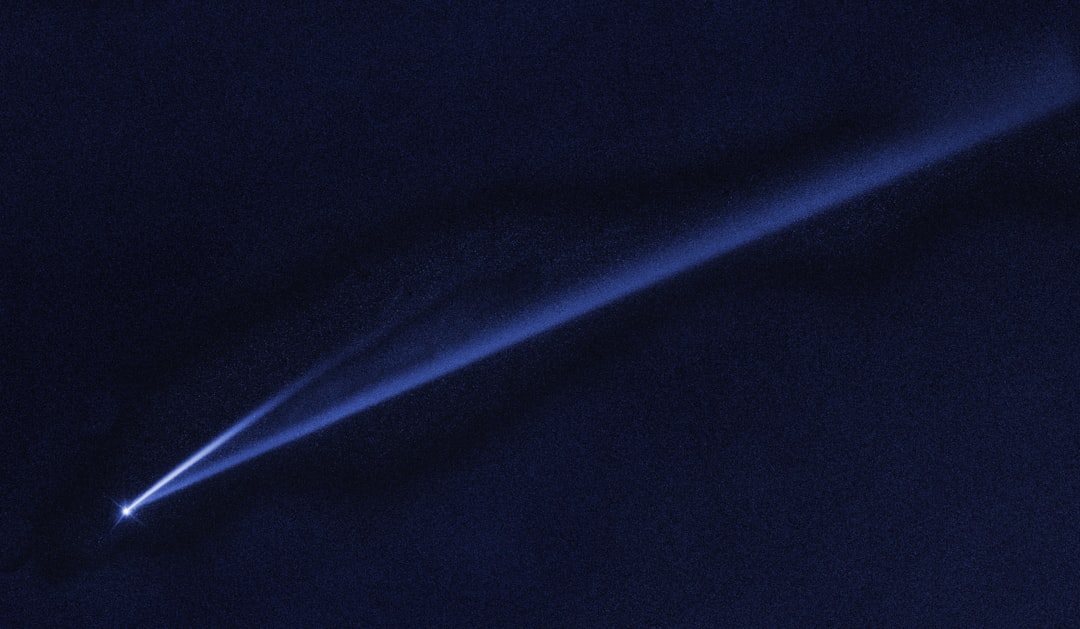
The comet's behavior has proven particularly intriguing to researchers. After emerging from its closest approach to the Sun on October 30th, 3I/ATLAS entered a more active state, displaying increased brightness, an unexpected blue coloration, and intensified outgassing. These characteristics suggest that the comet contains volatile materials that sublimate when heated by solar radiation, releasing gas and dust into space. The blue color is particularly noteworthy, as it may indicate specific chemical compositions that differ from typical solar system comets.
Currently traveling at speeds exceeding 250,000 kilometers per hour (155,350 mph), 3I/ATLAS is following a hyperbolic trajectory that will eventually carry it back into interstellar space. The improved trajectory calculations allow scientists to predict exactly when and where the comet will be visible, enabling coordinated observation campaigns using the world's most powerful telescopes and spacecraft.
Ongoing Observations and Future Data
The Jupiter Icy Moons Explorer (JUICE), currently en route to study Jupiter's largest moons Ganymede and Europa, has also turned its scientific instruments toward 3I/ATLAS. Although ESA plans to release this data in 2026, preliminary reports suggest that JUICE's observations will provide complementary information about the comet's composition and activity levels. The spacecraft's position along its trajectory to Jupiter offers yet another unique perspective on this interstellar visitor.
Advancing Planetary Defense Capabilities
While 3I/ATLAS poses no threat to Earth, its passage through the inner solar system serves as an invaluable rehearsal for planetary defense operations. The techniques developed and validated during this observation campaign directly enhance humanity's ability to detect, track, and characterize potentially hazardous objects that might threaten our planet in the future.
The success of this multi-spacecraft observation strategy demonstrates several critical capabilities:
- Triangulation accuracy: Combining observations from multiple locations dramatically improves trajectory predictions, reducing uncertainty in future position calculations
- Rapid response coordination: The ability to quickly mobilize multiple spacecraft and ground-based facilities demonstrates readiness for time-critical observation scenarios
- Instrument versatility: Successfully adapting instruments designed for planetary observation to track distant small objects proves the flexibility of existing space assets
- International cooperation: Seamless collaboration between ESA teams and international partners validates protocols for coordinated planetary defense efforts
- Data integration methods: Techniques for combining diverse data sources into unified trajectory solutions can be applied to future threat assessment scenarios
The NASA Planetary Defense Coordination Office and similar organizations worldwide continuously work to identify and characterize near-Earth objects. The methodologies refined through observing 3I/ATLAS contribute directly to these ongoing efforts, particularly for objects approaching from challenging angles or requiring rapid characterization.
Future Missions and Scientific Prospects
ESA's ambitious Comet Interceptor mission, scheduled for launch by 2029, will build upon the lessons learned from observing 3I/ATLAS. This innovative mission will position itself at the Sun-Earth Lagrange point L2, where it will wait for an opportunity to intercept either a newly discovered long-period comet or, ideally, another interstellar object. Unlike traditional comet missions that target known objects years in advance, Comet Interceptor's flexible approach allows it to respond to targets of opportunity, potentially providing humanity's first close-up study of an interstellar visitor.
The mission will deploy multiple spacecraft components to study its target from different angles simultaneously, gathering comprehensive data about the object's composition, structure, and activity. This multi-point observation strategy echoes the successful approach used to track 3I/ATLAS, but at much closer range and with dedicated scientific instruments.
Additionally, ESA is developing the Near-Earth Object Mission in the Infrared (NEOMIR), an infrared space telescope designed to monitor Earth's "blind spot"—the region of sky close to the Sun where ground-based telescopes cannot observe. Many potentially hazardous objects approach from this direction, making NEOMIR a critical component of comprehensive planetary defense infrastructure.
Scientific Questions and Cosmic Implications
The study of interstellar objects like 3I/ATLAS addresses fundamental questions about the universe and our place within it. These cosmic messengers carry information about:
- Planetary system formation: The composition and structure of interstellar objects reveal how planetary systems form and evolve in different stellar environments
- Material distribution: Understanding how water, organic compounds, and other materials are distributed throughout the galaxy informs theories about the origins of life
- Galactic evolution: The frequency and characteristics of interstellar objects provide clues about the dynamics and history of our galaxy
- Exoplanetary systems: Studying ejected material from other star systems offers indirect insights into the architecture and composition of distant planetary systems
"Every interstellar object we detect and study is like receiving a postcard from another stellar system. They tell us stories about worlds we may never visit directly, carrying samples of materials formed around distant stars billions of years ago," noted Dr. Karen Meech, astronomer at the University of Hawaii's Institute for Astronomy.
Looking Toward a New Era of Discovery
As 3I/ATLAS continues its journey back into interstellar space, the data gathered from this remarkable observation campaign will fuel scientific research for years to come. The improved trajectory predictions enable astronomers worldwide to maximize observation opportunities as the comet gradually fades from view. Telescopes across the globe and in space continue monitoring the object, gathering spectroscopic data, imaging its coma and tail structure, and measuring its evolving brightness and color.
The success of this international collaboration demonstrates that humanity possesses increasingly sophisticated tools and methodologies for studying the cosmos. From the James Webb Space Telescope's infrared capabilities to the coordinated efforts of planetary defense networks, our ability to detect, track, and characterize objects passing through our solar system continues to advance rapidly.
Perhaps most importantly, the observation campaign for 3I/ATLAS proves that spacecraft designed for other purposes can be rapidly repurposed to study unexpected targets of opportunity. This flexibility multiplies the effective capabilities of our space-based infrastructure, ensuring that when the next interstellar visitor arrives—whether it's a comet, asteroid, or something entirely unexpected—humanity will be ready to study it comprehensively.
The techniques pioneered in tracking 3I/ATLAS represent more than just a scientific achievement; they embody humanity's growing capability to understand and navigate the cosmic environment in which our planet exists. As we continue developing more sophisticated observation networks, planetary defense systems, and interception missions, each interstellar visitor provides an opportunity to test, refine, and validate our methods—preparing us for whatever the universe sends our way.