Did a Large Impact on the Moon Make its Rocks Magnetic?
We've been gazing at the Moon for millennia, yet our nearest celestial neighbor continues to surprise and confound us. Despite sending dozens of orbiters, landers, and even human explorers to its surface, the Moon still harbors deep scientific mysteries. Among the most persistent puzzles is one that sits at the intersection of geology, physics, and planetary science: why are some lunar rocks magnetic, when the Moon itself has no magnetosphere? New research published in Science Advances may finally offer a compelling answer — and it involves one of the most violent events in the Solar System's early history.
The Mystery of Lunar Magnetism
Magnetic fields in rocky planets are typically explained by a mechanism known as a geodynamo — a self-sustaining process in which the rotation and convective churning of a molten metallic core generates powerful magnetic fields. Earth's magnetosphere, for example, is produced by the movement of its iron-nickel liquid outer core, and this field is strong enough to deflect harmful solar wind particles and orient compass needles across the planet's surface.
The Moon, however, is a fundamentally different body. It is far smaller than Earth, with an estimated core radius of only about 350 kilometers — roughly 20% of the Moon's total radius. While scientists believe the Moon likely possessed a modest internal dynamo in its ancient past, its smaller size means that its interior cooled relatively quickly, shutting down any core-driven magnetic activity billions of years ago. Today, the Moon has no global magnetosphere to speak of.
And yet, the evidence for ancient lunar magnetism is undeniable. Lunar samples returned by the Apollo missions, as well as data gathered by orbiting spacecraft, consistently reveal that certain surface rocks carry a remnant magnetism — a fossilized imprint of a magnetic field that must have existed when those rocks were formed or thermally altered. This phenomenon is particularly pronounced on the lunar far side, where magnetic anomalies cluster in ways that have long defied easy explanation.
"Spacecraft magnetometry and paleomagnetic measurements of lunar samples provide evidence that the Moon had a magnetic field billions of years ago. Because this field was likely stronger than that predicted by scaling laws for core convection dynamos, a longstanding hypothesis is that an ancient dynamo was amplified by plasma from basin-forming impacts." — Narrett et al., Science Advances, 2025
Apollo Samples and the Evidence for Ancient Magnetization
The story of lunar magnetism begins with the first rocks ever returned from another world. Sample 10003, collected during the Apollo 11 mission in July 1969, is approximately 3.9 billion years old. As one of humanity's first lunar samples, it played a foundational role in establishing the Moon's age — and it also revealed early signs of ancient magnetization. In subsequent decades, samples from Apollo 12, 14, 15, 16, and 17 all provided additional paleomagnetic data, collectively painting a picture of a Moon that once possessed a global magnetic field significantly stronger than what its dynamo alone could have produced.
Orbiting spacecraft have added further texture to this picture. Missions equipped with sensitive magnetometers, including NASA's Lunar Prospector and Japan's Kaguya (SELENE) spacecraft, have mapped magnetic anomalies across the lunar surface with remarkable precision. These maps reveal that the magnetic signature is not uniform — it is patchy, concentrated, and notably stronger on the far side of the Moon. This spatial pattern has been one of the key clues pointing scientists toward an impact-related explanation.
A New Theory: Impact Plasma and Magnetic Amplification
The new study, titled "Impact plasma amplification of the ancient lunar dynamo," is led by Isaac Narrett, a graduate student in the MIT Department of Earth, Atmospheric and Planetary Sciences (EAPS). His team's research proposes a sophisticated mechanism that reconciles two previously competing hypotheses — the dynamo theory and the impact theory — into a unified, testable model.
Using dozens of advanced impact simulations and magnetohydrodynamic (MHD) models, the researchers modeled what happens when a large asteroid or protoplanet strikes the Moon. Their findings reveal a dramatic chain of events:
- A massive impact generates an enormous cloud of ionized particles, or plasma, that rapidly expands across the lunar surface.
- This plasma cloud preferentially concentrates on the side of the Moon opposite the impact site — a point known as the antipode.
- The plasma interacts with and momentarily amplifies the Moon's existing, weak magnetic field — which the researchers estimate was approximately 50 times weaker than Earth's present-day field.
- Simultaneously, the impact sends powerful seismic body waves — pressure waves — traveling through the Moon's interior, which also focus at the antipode.
- This combination of amplified magnetic field and shockwave disrupts the electron configurations in rocks at the antipode, effectively "resetting" their magnetic orientation to align with the momentary field.
- The entire process, from impact to magnetic imprinting, lasts only approximately 40 minutes.
The result is a localized but powerful magnetization of surface rocks — exactly the kind of concentrated, far-side magnetic anomaly that orbiting spacecraft have detected. The mechanism is elegant in its physics: it does not require the Moon to have had an unrealistically powerful dynamo, nor does it require an impact alone to generate magnetism from scratch. Instead, it shows that a modest dynamo and a catastrophic impact could work in concert to produce something far more dramatic than either could achieve independently.
Mare Imbrium: The Smoking Gun?
The geographic pattern of lunar magnetism points toward one specific impact event as a likely culprit. A region of highly magnetized rocks has been identified on the Moon's far side, near the south pole — a location that is nearly diametrically opposite Mare Imbrium, one of the largest and most prominent impact basins in the entire Solar System.
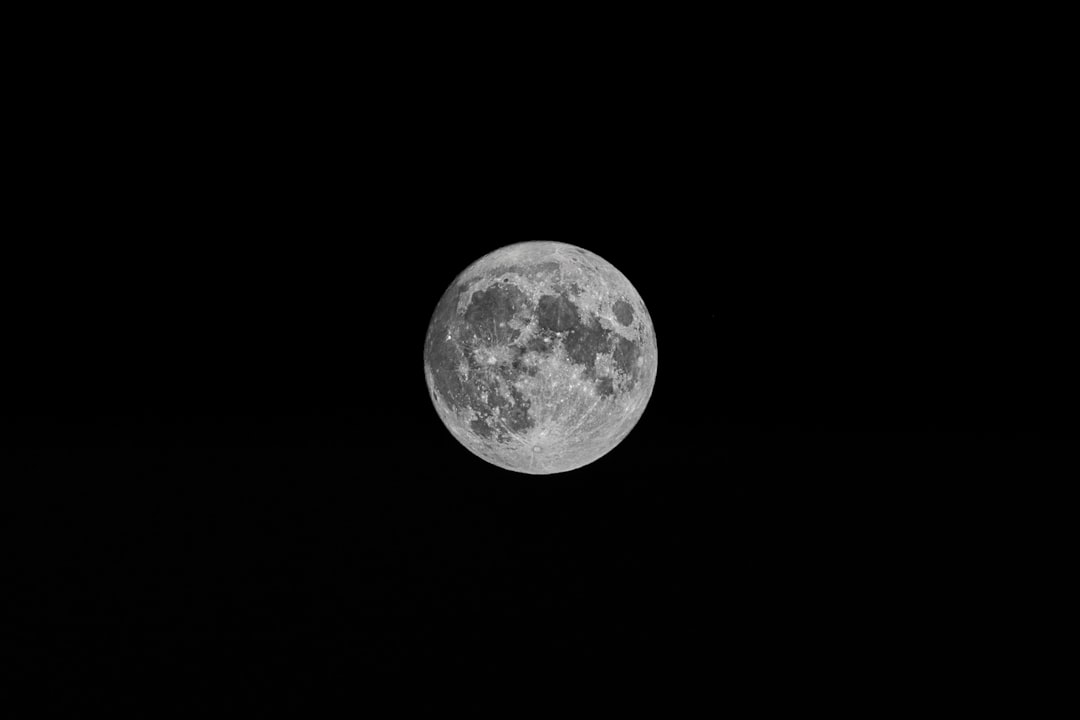
Mare Imbrium — Latin for "Sea of Rains" — is a vast, dark basaltic plain roughly 1,100 kilometers in diameter, visible to the naked eye as one of the dark patches on the Moon's near side. Scientists believe it was created approximately 3.9 billion years ago when a protoplanetary body of substantial size slammed into the lunar surface during a period of intense bombardment known as the Late Heavy Bombardment. The timing of this impact coincides closely with the magnetization ages of many lunar samples, strengthening the connection.
According to the new model, the Mare Imbrium impactor would have generated precisely the kind of plasma cloud and pressure wave needed to magnetize rocks at its antipode — the far-side region where the strongest magnetic anomalies are observed today. This geographic correlation is one of the most compelling lines of evidence supporting the team's hypothesis.
"There are large parts of lunar magnetism that are still unexplained. But the majority of the strong magnetic fields that are measured by orbiting spacecraft can be explained by this process — especially on the far side of the moon." — Isaac Narrett, Lead Author
The Physics of Shock Remnant Magnetism
To understand how rocks become magnetized in this scenario, it helps to understand the concept of Shock Remnant Magnetization (SRM). In ordinary circumstances, the magnetic domains within a rock — tiny regions where atomic magnetic moments align — are locked in place by the rock's crystal structure. However, when a powerful shockwave passes through a rock, it can temporarily disrupt these domains, freeing the electrons within to briefly realign with any ambient magnetic field present at that moment.
Co-author Benjamin Weiss, a professor in MIT's Department of Earth, Atmospheric, and Planetary Sciences and a leading expert in planetary paleomagnetism, offered a vivid analogy to explain this process:
"It's as if you throw a 52-card deck in the air, in a magnetic field, and each card has a compass needle. When the cards settle back to the ground, they do so in a new orientation. That's essentially the magnetization process." — Benjamin Weiss, MIT
In this framework, the Moon's surface rocks near the antipode of a major impact were briefly "shuffled" by the passing shockwave and then "settled" into a new magnetic orientation aligned with the momentarily amplified field. That orientation has been preserved in the rock's crystal structure for nearly four billion years — a remarkable testament to the enduring nature of mineral memory.
Resolving a Decades-Long Debate
For decades, planetary scientists have been divided on the origin of lunar magnetic anomalies. Some argued that the Moon's ancient dynamo alone was responsible, while others pointed to impacts as the primary driver. Each camp faced significant objections: the dynamo-only hypothesis struggled to explain why the Moon's small core could have generated such a strong field, while the impact-only hypothesis could not adequately account for the global nature of some magnetization patterns.
The new research from MIT elegantly bridges this divide by demonstrating that both mechanisms are necessary and complementary. Co-author Rona Oran, also from MIT's Department of Earth, Atmospheric, and Planetary Sciences, articulated this synthesis:
"For several decades, there's been sort of a conundrum over the moon's magnetism — is it from impacts or is it from a dynamo? And here we're saying, it's a little bit of both. And it's a testable hypothesis, which is nice." — Rona Oran, MIT
The emphasis on testability is scientifically significant. A hypothesis that makes specific, verifiable predictions is far more valuable than one that merely fits existing data. The team's model predicts that the strongest magnetic anomalies should cluster at the antipodes of specific large impact basins — a prediction that can be checked against existing orbital data and, crucially, against samples returned from those regions in future missions.
Broader Implications for Planetary Science
The implications of this research extend well beyond the Moon. Many rocky bodies in the Solar System — including asteroids, Mars, and Mercury — show evidence of ancient magnetism that is difficult to explain by dynamo activity alone. The impact plasma amplification mechanism demonstrated in this study could potentially apply to any small body that had a weak magnetic field and experienced large impacts during its early history.
Understanding how magnetic fields form and are preserved in rocky bodies is also crucial for understanding the broader story of planetary habitability. Magnetic fields play a critical role in shielding planetary atmospheres from solar wind erosion — a process that may have contributed to the loss of Mars's early atmosphere. Tracing the history of magnetic fields across the Solar System helps scientists reconstruct the conditions under which life might or might not have been able to arise on other worlds.
Additionally, this research contributes to our understanding of the Late Heavy Bombardment — a period roughly 3.8 to 4.1 billion years ago during which the inner Solar System experienced an intense spike in asteroid and comet impacts. The Moon's heavily cratered far side preserves a record of this era, and its magnetic anomalies may serve as a kind of fossil archive of the most energetic events of that violent epoch.
Future Missions and the Path to Verification
We are currently living through a remarkable renaissance of lunar exploration. National space agencies and private companies alike are sending an increasing number of missions to the Moon, motivated by both scientific curiosity and the prospect of future human habitation. This surge in activity creates an unprecedented opportunity to test the impact plasma amplification hypothesis directly.
The research team specifically highlights several upcoming missions that could provide key evidence:
- The Endurance-A rover, planned as part of the NASA Commercial Lunar Payload Services (CLPS) initiative, is designed to traverse and sample the South Pole–Aitken (SPA) basin region — precisely the antipodal zone of major impact basins where the model predicts the strongest shock remnant magnetism.
- China's Chang'e-6 mission, which successfully returned samples from the lunar far side in 2024, has already delivered material from the SPA basin — the first far-side samples ever returned to Earth. Paleomagnetic analysis of these samples could provide direct evidence for or against the team's model.
- Future dedicated magnetometer network missions could map the fine-scale structure of lunar magnetic anomalies with far greater resolution than any orbiting spacecraft has achieved, allowing scientists to identify the precise boundaries and intensities of impact-related magnetic signatures.
As the authors state in their conclusion: "Current and future lunar sample return and magnetometer missions, like the Endurance rover and the Chang'e-6 lander, can explore and sample the Imbrium and Serenitatis basin antipodes (SPA region) and search for evidence of SRM (Shock Remnant Magnetism) from ancient lunar dipole antipodal amplification."
Conclusion: A Moon Still Full of Surprises
More than half a century after Apollo astronauts first walked on the lunar surface and returned its rocks to Earth, the Moon continues to challenge our assumptions and reward careful investigation. The work of Narrett, Weiss, Oran, and their colleagues at MIT represents a significant step forward in our understanding of one of planetary science's most enduring puzzles — demonstrating that the Moon's mysterious magnetism is not the product of a single cause, but of a spectacular collision between cosmic-scale forces: the dying embers of an ancient dynamo and the catastrophic fury of a world-altering impact.
In answering one question, as the best science always does, this research opens up a rich landscape of new ones — about the nature of the Late Heavy Bombardment, the history of small planetary dynamos, and the remarkable capacity of rocks to remember, across billions of years, the most violent moments of their past. The Moon, it seems, is still telling its story. We are only just beginning to learn how to listen.
Research Reference: Narrett et al. (2025). "Impact plasma amplification of the ancient lunar dynamo." Science Advances. DOI: 10.1126/sciadv.adu2209