Distant Quasars Provide Crucial Link In Understanding Earliest Supermassive Black Holes
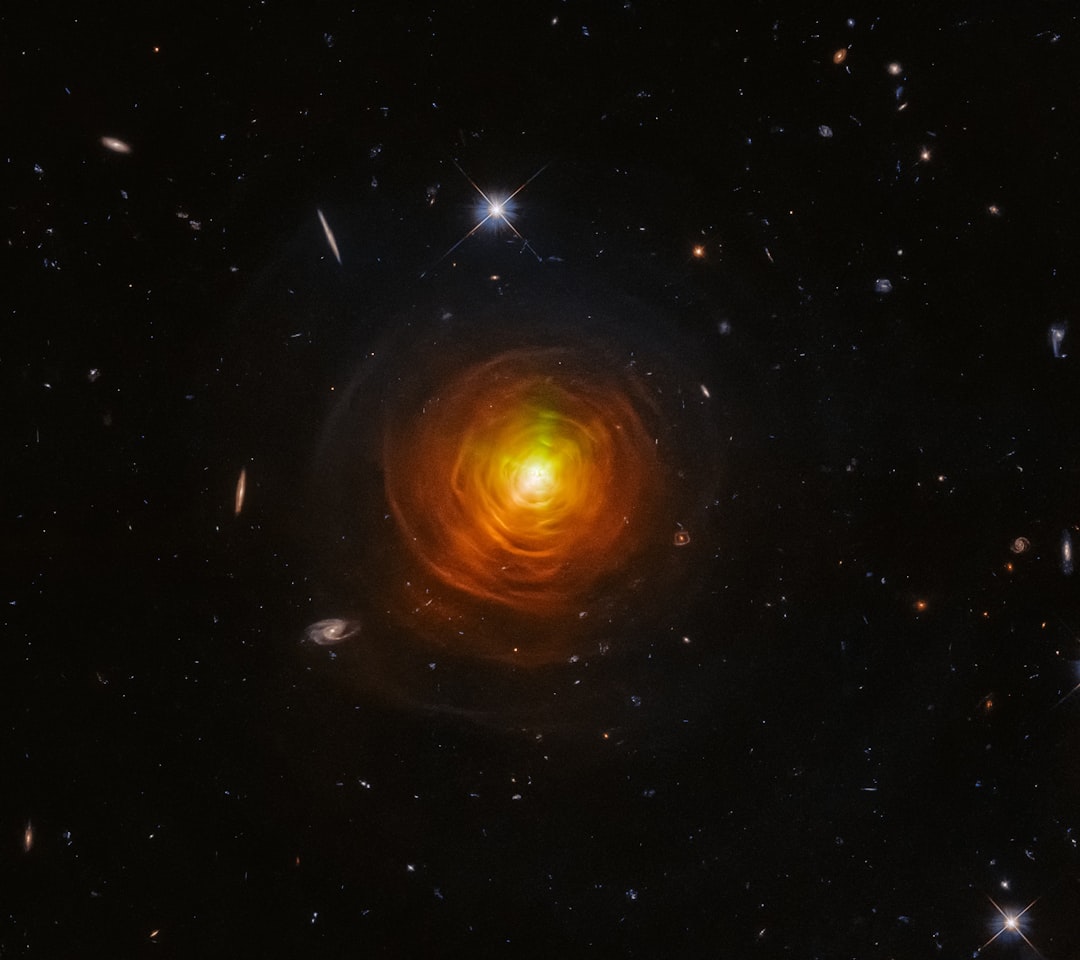
Among the rarest and most luminous objects in the observable universe, high-redshift quasars — those that blazed into existence before the cosmos had celebrated its first billion years — are offering astrophysicists unprecedented clues to one of science's most enduring mysteries: how did supermassive black holes form and grow so rapidly in the universe's infancy? A sweeping new survey by the European Space Agency's Euclid Space Telescope is bringing scientists closer to an answer, unearthing 31 newly discovered quasars, including two of the most distant ever observed.
Supermassive Black Holes: The Engine at Every Galaxy's Heart
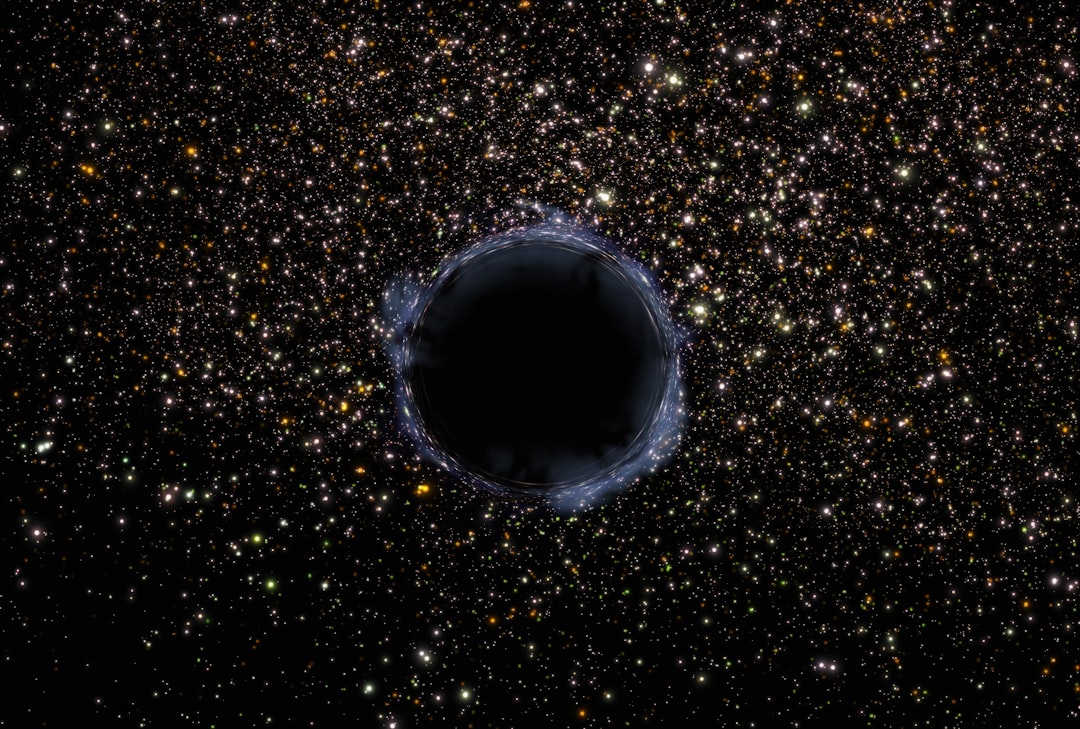
To understand why these ancient quasars matter, one must first appreciate the extraordinary objects that power them. Every large galaxy in the universe, including our own Milky Way, harbors a supermassive black hole at its center — objects ranging from a million to several billion times the mass of our Sun.
"Every large galaxy, like the Milky Way, has a supermassive black hole of a million, even up to a few billion times the mass of the Sun. These massive central black holes grow by having material fall into them, which heats up and glows and outshines all the stars in the galaxy — and that's what we see as a quasar." — Daniel Mortlock, Astrophysicist, Imperial College London
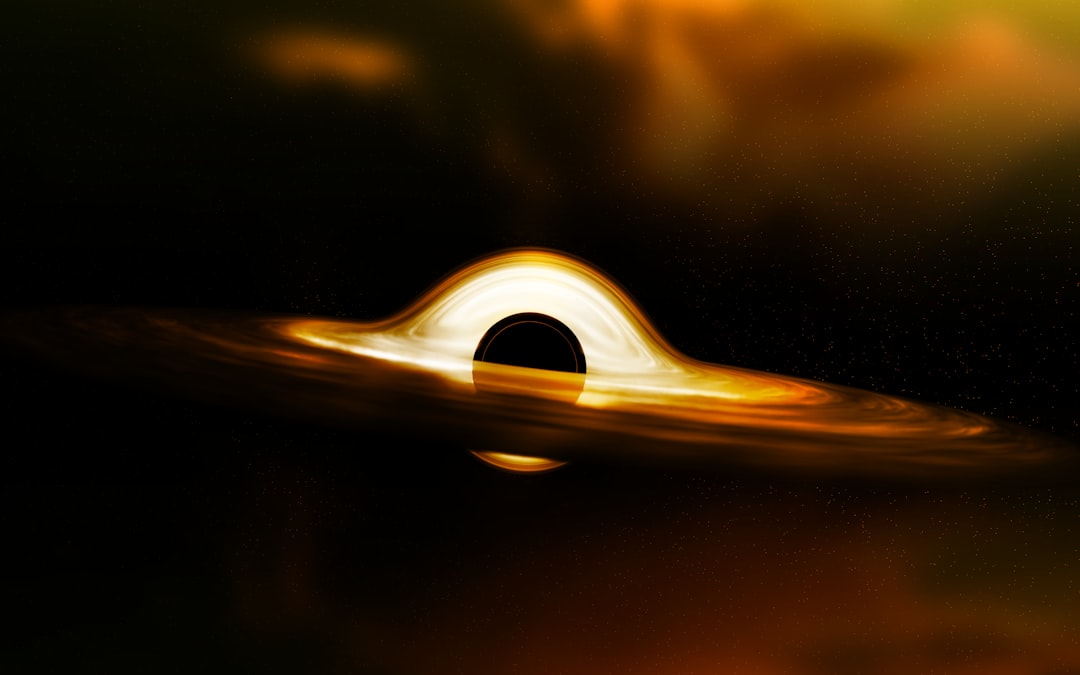
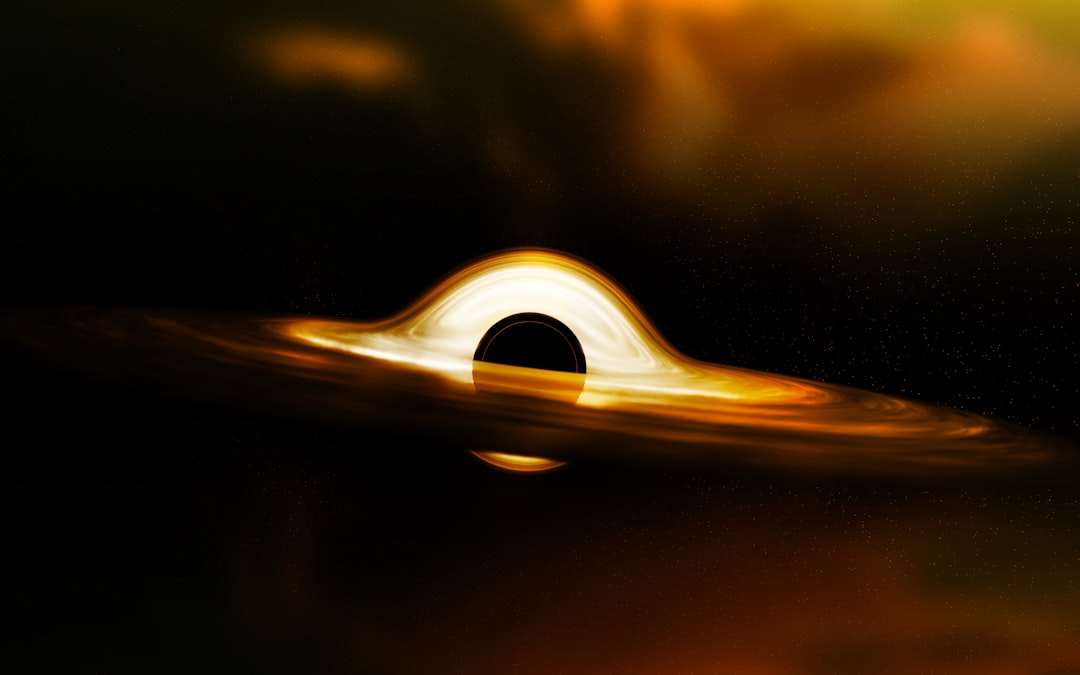
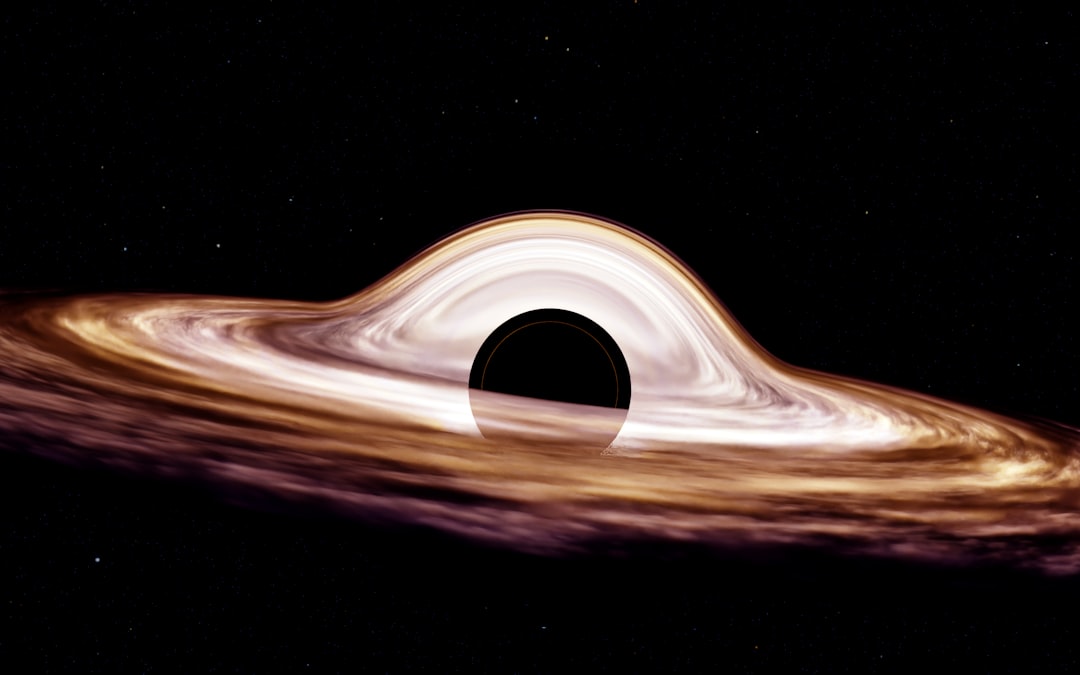
Daniel Mortlock, an astrophysicist at Imperial College London and a leading expert in high-redshift quasars, explains that these black holes grow through a process of accretion — the gradual consumption of surrounding gas, dust, and stellar material. When vast quantities of this infalling matter form a swirling structure known as an accretion disk, the results are staggering. Friction and gravitational compression heat the disk to temperatures of thousands to millions of degrees Kelvin, causing it to radiate with an intensity that can outshine every single star in an entire galaxy combined.
What makes this especially remarkable is scale. The accretion disk powering a quasar — a structure no larger in diameter than our own solar system — produces more light than the hundreds of billions of stars that surround it. It is perhaps the most extreme power-to-size ratio in all of nature.
A New Discovery From the Euclid Space Telescope
In a paper recently published in Astronomy & Astrophysics, an international team of researchers reports the detection of 31 new quasars identified during the first year and a half of Euclid's wide-angle sky survey. These objects were selected from an area covering approximately 3,000 square degrees of sky — a testament to Euclid's extraordinary capacity for wide-field observation.
To confirm and characterize these newly identified quasars, the team conducted spectroscopic follow-up observations using three of the world's most powerful ground-based observatories: the Keck Observatory in Hawaii, the Magellan Telescopes in Chile, and the Large Binocular Telescope (LBT) in Arizona. Spectroscopy allows scientists to decompose a quasar's light into its constituent wavelengths, precisely measuring its redshift — the cosmic stretching of light that serves as a proxy for distance and lookback time.
Among the 31 discoveries, one object stands apart from all others. EUCL J172902.75+641018.1 has been identified as the highest-redshift quasar ever detected, existing at a cosmological epoch when the universe was only approximately 662 million years old — less than five percent of its current age of 13.8 billion years. Finding an object of such immense mass and luminosity at such an early cosmic moment is not merely impressive; it is scientifically perplexing.
From Radio Sources to Cosmic Beacons: A Brief History of Quasars
The story of how humanity came to understand quasars is itself a fascinating chapter in scientific history. Their discovery traces back to the 1950s, when radio astronomers at Cambridge University catalogued peculiar, point-like sources of intense radio emission that did not correspond to any known stars or nebulae. The objects appeared stellar in nature through optical telescopes, yet their radio output was orders of magnitude more powerful than any known star. They were dubbed quasi-stellar radio sources — a term that was eventually contracted to quasars.
The conceptual breakthrough came through the work of the late, brilliant Donald Lynden-Bell, a former director of Cambridge University's renowned Institute of Astronomy. Lynden-Bell was the first to propose that quasars were powered by supermassive black holes consuming surrounding matter at prodigious rates. He further argued — in a prediction that has been confirmed by subsequent decades of research — that most large galaxies, including the Milky Way, likely host a dormant or "dead" quasar at their nucleus: a once-ravenous black hole that has simply exhausted its immediate fuel supply. The Royal Society has recognized Lynden-Bell's foundational contributions to this field.
Today, astronomers have catalogued more than one million known quasars, all residing at extragalactic distances. Modern understanding places quasars at the most extreme end of the spectrum of Active Galactic Nuclei (AGN) — a broad class of energetically active galactic cores that includes Seyfert galaxies, blazars, and radio galaxies, all believed to be driven by accretion onto central supermassive black holes. NASA's overview of AGN provides further detail on this fascinating family of objects.
Detecting Ancient Light: The Infrared Window on the Early Universe
One of the most elegant aspects of high-redshift quasar astronomy is the way in which the universe's own expansion becomes a detection tool. Quasars naturally emit the bulk of their radiation in the ultraviolet and optical portions of the electromagnetic spectrum. However, as this light travels across billions of light-years of expanding space, its wavelengths are stretched — redshifted — to longer and longer wavelengths.
"Quasar emission is primarily in the ultraviolet and the optical. But the expansion of the universe has redshifted the quasars' light from the ultraviolet all the way through the optical, and so we observe them in the infrared." — Daniel Mortlock
This means that for the most distant quasars, astronomers must look not with optical cameras but with sensitive infrared detectors. The key observational signature becomes an object that is conspicuously bright in the infrared but entirely invisible — or "dropped out" — at shorter optical wavelengths. This technique, known as the Lyman-break method, exploits the fact that hydrogen gas in and around early galaxies absorbs virtually all light at wavelengths shorter than 912 Ångströms, creating a sharp spectral cutoff that shifts into observable infrared bands at high redshifts. Euclid's wide-field infrared imaging capability makes it uniquely suited to identifying these cosmic needles in the haystack of billions of background sources.
The Central Mystery: How Did They Grow So Fast?
At the heart of the excitement surrounding these discoveries lies a profound and as-yet-unsolved astrophysical puzzle. Standard models of black hole growth through accretion impose a natural speed limit — the Eddington limit — which describes the maximum rate at which a black hole can accrete matter before the radiation pressure from infalling gas pushes surrounding material away. Under this constraint, even if a stellar-mass black hole formed within the very first stars of the universe and accreted at the maximum possible rate without interruption, it would struggle to reach a billion solar masses within the first 700 million years of cosmic time.
Yet observations keep finding precisely these billion-solar-mass behemoths at such early epochs. The existence of EUCL J172902.75+641018.1 and its contemporaries forces theorists to consider several alternative formation pathways, including:
- Direct collapse black holes (DCBHs): The direct gravitational collapse of massive primordial gas clouds, bypassing the stellar phase entirely, to form "seed" black holes of up to 100,000 solar masses.
- Super-Eddington accretion: Periods of accretion at rates that temporarily exceed the Eddington limit, possibly facilitated by specific geometric configurations of infalling gas.
- Runaway stellar mergers: Dense clusters of early stars undergoing rapid mergers to form extraordinarily massive stellar progenitors that then collapse into large seed black holes.
- Primordial black holes: Black holes formed in the extreme conditions of the very early universe, before the first stars ever ignited, potentially providing a substantial head start in mass.
"We're pushing back to earlier times than ever before, but we're still finding these billion solar mass black holes with even less time to grow them than the examples we had previously." — Daniel Mortlock
Each successive discovery of a more distant, more massive early quasar tightens the constraints on which of these scenarios — or perhaps some combination of them — can account for what we observe. The field is not merely filling in details; it is grappling with a fundamental gap in our understanding of cosmic structure formation.
The Physics of Jets: Magnetism, Turbulence, and Curved Spacetime
Beyond the accretion disk itself, many quasars exhibit another dramatic feature: powerful relativistic jets — collimated beams of plasma and radiation that can extend for millions of light-years, perpendicular to the plane of the accretion disk. These jets represent some of the most energetic phenomena in the universe, capable of significantly influencing the evolution of their host galaxies by heating and expelling surrounding gas — a process known as AGN feedback.
The precise mechanism by which jets are launched and collimated remains an active area of research. The prevailing consensus, as Mortlock notes, implicates magnetic fields as the critical additional ingredient. Theoretical models, particularly those based on the Blandford-Znajek mechanism, suggest that the rotational energy of a spinning black hole can be extracted electromagnetically by magnetic field lines threading the event horizon, channeling energy into the jets. However, the full picture involves a complex interplay of forces:
- Magnetohydrodynamics (MHD): The behavior of electrically conducting plasma in the presence of intense magnetic fields.
- General relativistic effects: The warping of spacetime in the extreme gravitational environment near a black hole, which directly influences plasma flow and field geometry.
- Turbulence: Chaotic fluid instabilities within the accretion disk that drive angular momentum transport and energy dissipation.
As Mortlock candidly acknowledges, solving the resulting equations — which must simultaneously account for magnetism, hydrodynamics, turbulence, and curved spacetime — pushes current computational physics to its very limits. The most advanced general relativistic magnetohydrodynamic (GRMHD) simulations can model small regions of accretion flows in extraordinary detail, but capturing the full multi-scale physics from the event horizon to megaparsec-scale jets remains beyond present capabilities.
Euclid's Broader Role in Cosmic Cartography
The ESA Euclid mission, launched in July 2023, was designed primarily to probe the nature of dark energy and dark matter by mapping the large-scale structure of the universe across billions of light-years. Yet its extraordinary wide-field infrared imaging capability makes it a remarkably powerful instrument for serendipitous high-redshift quasar discovery — a scientific windfall that its designers anticipated but which is now yielding concrete, groundbreaking results.
Euclid's ability to survey thousands of square degrees of sky to substantial depth in a single mission campaign, combined with the spectroscopic follow-up capacity of the world's largest ground-based telescopes, represents a new paradigm in quasar hunting. Where previous surveys might identify a handful of extreme high-redshift quasars over years of dedicated effort, Euclid promises to deliver statistically meaningful samples — dozens to potentially hundreds of objects — that will allow astrophysicists to characterize the quasar luminosity function at early cosmic times and trace the co-evolution of supermassive black holes and their host galaxies with unprecedented precision.
Implications for Galaxy Formation and Cosmic Evolution
The significance of these discoveries extends well beyond the quasars themselves. The intimate relationship between supermassive black holes and their host galaxies — evidenced by tight correlations between black hole mass and galaxy properties such as the mass of the stellar bulge — suggests that black hole growth and galaxy formation are deeply intertwined processes, each influencing the other across cosmic time.
Understanding how and when the earliest supermassive black holes formed is therefore inseparable from understanding how the first massive galaxies assembled, how the universe was reionized by the first sources of ultraviolet radiation, and how the cosmic web of filaments and voids took on its present architecture. Every high-redshift quasar discovery is, in this sense, a data point in a much larger story about the universe's formative years — a story that missions like Euclid, the James Webb Space Telescope, and the forthcoming Vera C. Rubin Observatory are only beginning to tell in full.
Quasars may no longer command the same popular fascination they once did when they were newly discovered enigmas, but their scientific importance has never been greater. Each new detection at the cosmic frontier chips away at one of the most fundamental unanswered questions in all of astrophysics — and the answers, when they come, promise to reshape our understanding of how the universe built itself from the darkness of its earliest moments into the luminous, structured cosmos we inhabit today.