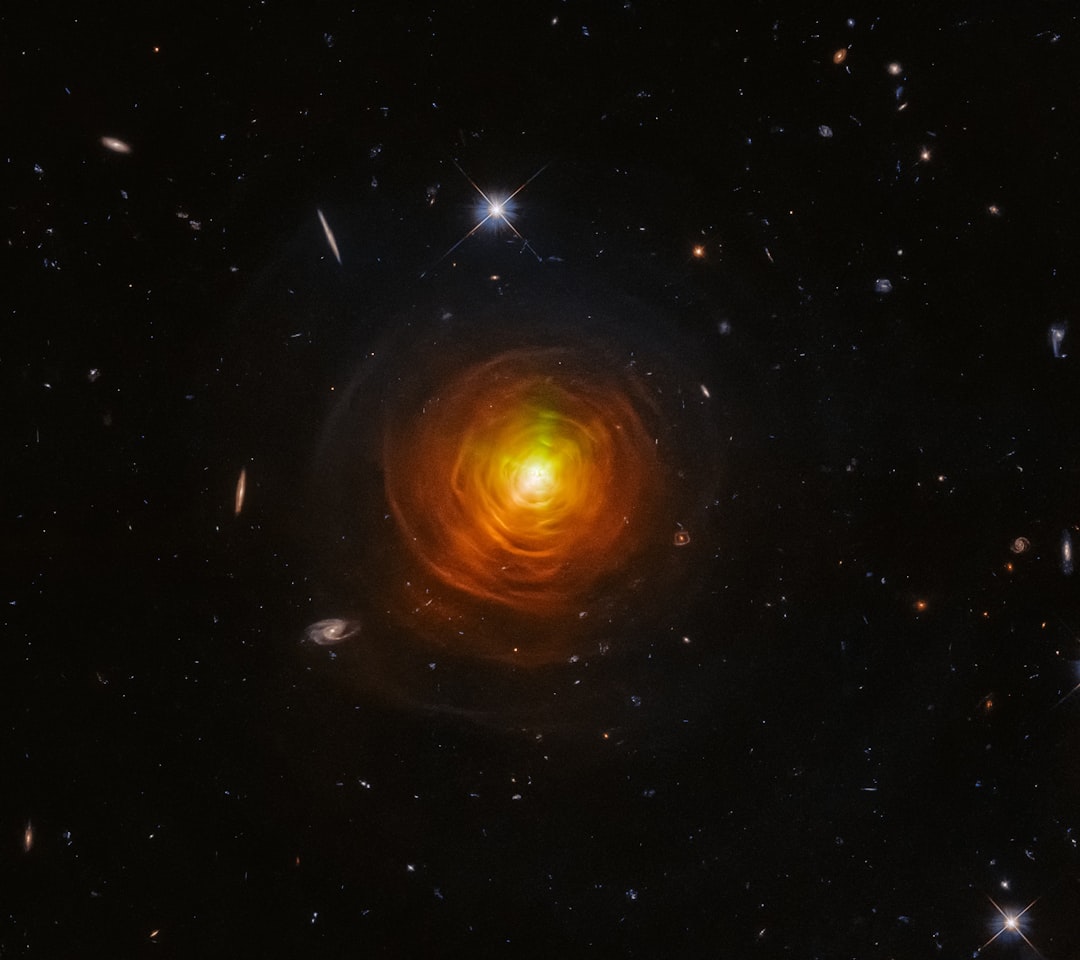
In a groundbreaking revelation that challenges our understanding of cosmic evolution, astronomers have uncovered compelling evidence that supermassive black holes wield influence far beyond their host galaxies, actively suppressing star formation across millions of light-years of intergalactic space. This discovery, based on observations from the James Webb Space Telescope (JWST), reveals that the most luminous objects in the early universe—quasars—act as cosmic gatekeepers, fundamentally altering the star-forming potential of entire galactic neighborhoods during the universe's infancy.
The research, published in The Astrophysical Journal Letters and led by Dr. Yongda Zhu, a postdoctoral researcher at the University of Arizona's Department of Astronomy and Steward Observatory, provides the first direct observational evidence of this phenomenon occurring during the Epoch of Reionization—a critical period approximately 900 million years after the Big Bang when the universe underwent dramatic transformation. This finding fundamentally reshapes our understanding of how galaxies evolve, suggesting that cosmic development is far more interconnected than previously thought.
While scientists have long recognized that black hole feedback mechanisms can throttle star formation within a galaxy's own boundaries by heating star-forming gas through energy injection, this new research extends the reach of these cosmic behemoths dramatically. The implications are profound: rather than evolving in isolation, galaxies in the early universe developed under the shadow of their most energetic neighbors, with supermassive black holes acting as environmental architects on truly cosmic scales.
Unveiling the Cosmic Predator: Quasar J0100+2802
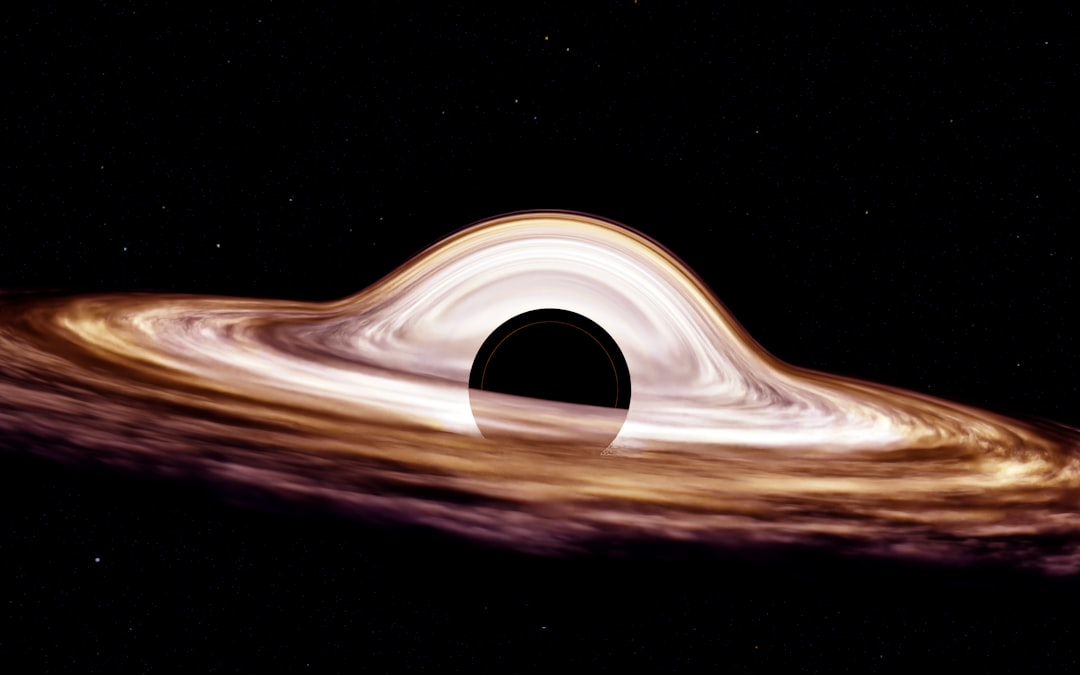
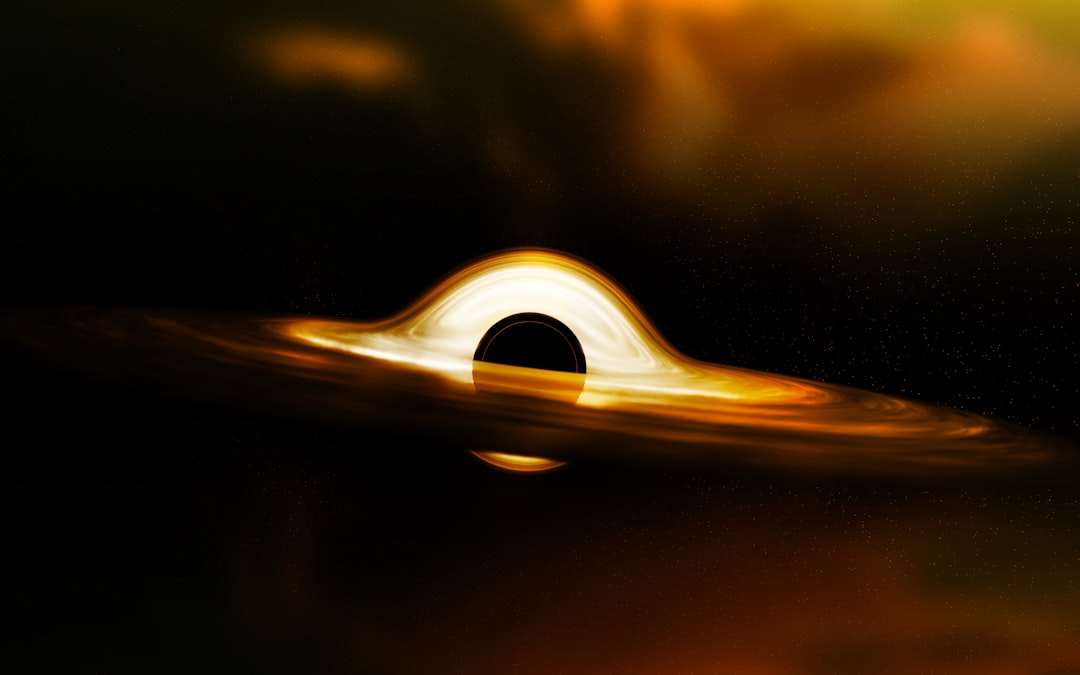
At the heart of this investigation lies SDSS J0100+2802, one of the most extraordinary objects ever discovered in the distant universe. This hyperluminous quasar, powered by a supermassive black hole containing approximately 12 billion solar masses—nearly three times the mass of the black hole at our own Milky Way's center—shines with an intensity that dwarfs entire galaxies. In fact, this cosmic lighthouse emits ultraviolet radiation 40,000 times more luminous than all 200-400 billion stars in our galaxy combined.
The quasar's extraordinary brightness isn't generated by the black hole itself, but rather by the accretion disk of superheated material spiraling into it at relativistic speeds. As matter accelerates toward the event horizon, friction and gravitational compression heat the disk to millions of degrees, creating what astronomers describe as nature's most efficient energy converter. This process transforms a significant fraction of the infalling matter's rest mass directly into radiation—primarily in the ultraviolet spectrum—making quasars visible across billions of light-years of cosmic space.
"An active supermassive black hole is like a hungry predator dominating the ecosystem. Simply put, it swallows up matter and influences how stars in nearby galaxies grow," explained Dr. Zhu, highlighting the far-reaching ecological impact these objects have on their cosmic neighborhoods.
The Science Behind Stellar Suppression
The mechanism by which quasars suppress star formation in neighboring galaxies represents a fascinating interplay between radiation physics and molecular chemistry. Star formation requires cold, dense clouds of molecular hydrogen (H₂) to gravitationally collapse under their own weight. However, when intense ultraviolet radiation from a nearby quasar floods the intergalactic medium, it triggers a cascade of destructive processes that fundamentally alter the conditions necessary for stellar birth.
The research team's methodology focused on analyzing doubly-ionized oxygen emission lines, specifically [O III] λ5008, one of the brightest spectral signatures emanating from star-forming regions. This particular emission line serves as an excellent tracer of recent star formation because it originates from hot, young stars whose powerful ultraviolet radiation ionizes surrounding oxygen atoms. By comparing the strength of this emission line with the ultraviolet continuum emission from the stellar populations themselves, astronomers can distinguish between existing stars and ongoing star formation.
What Zhu and his colleagues discovered was striking: while the UV continuum remained relatively constant across galaxies at varying distances from the quasar, the [O III] emission showed a marked decrease in galaxies closer to J0100+2802. This gradient provided direct evidence that the quasar's radiation was actively suppressing recent star formation while leaving the existing stellar population intact—a smoking gun for radiative feedback operating on intergalactic scales.
Understanding the Photodissociation Process
The physical mechanism driving this suppression involves what astrophysicists call H₂ photodissociation—the breaking apart of molecular hydrogen bonds by energetic photons. When ultraviolet radiation from the quasar penetrates the interstellar medium of neighboring galaxies, individual photons carry sufficient energy to split H₂ molecules into atomic hydrogen. This process is catastrophic for star formation because molecular hydrogen is the primary fuel for stellar birth. Without adequate molecular hydrogen, gas clouds cannot achieve the densities necessary to trigger gravitational collapse, effectively sterilizing potential star-forming regions.
Additionally, the intense radiation field can completely ionize hydrogen atoms, stripping away their electrons and creating a hot, ionized plasma. This ionized gas possesses significantly higher thermal pressure than cold molecular clouds, actively resisting gravitational compression. The combined effects create an environment fundamentally hostile to star formation, even in galaxies millions of light-years distant from the quasar itself.
Revolutionary Observations from the James Webb Space Telescope
The breakthrough came through JWST's unprecedented infrared capabilities, which allowed astronomers to peer through cosmic dust and observe the universe during the Epoch of Reionization with clarity never before possible. Using the telescope's NIRCam (Near Infrared Camera) instrument, researchers conducted wide-field imaging that revealed the galactic environment surrounding J0100+2802 in exquisite detail.
The observations initially presented a puzzle that seemed almost too strange to be real. Previous JWST surveys had revealed that brilliant quasars in the early universe appeared surprisingly isolated, with fewer companion galaxies than expected based on our understanding of cosmic structure formation. According to the prevailing hierarchical galaxy formation model, massive galaxies should reside in dense environments surrounded by numerous smaller galaxies—yet the early quasar hosts seemed to defy this pattern.
"We were puzzled. Was the expensive JWST broken?" Zhu recalled with humor. "Then we realized the galaxies might actually be there, but difficult to detect because their very recent star formation was suppressed."
This insight proved correct. The companion galaxies existed, but their suppressed star formation made them appear much fainter in the emission lines typically used to identify distant galaxies. By carefully analyzing both the continuum emission from existing stars and the emission lines from ionized gas, the research team could distinguish between the stellar population already present and the lack of ongoing star formation—revealing the quasar's far-reaching influence.
Key Scientific Findings and Implications
The research yields several critical insights that reshape our understanding of galaxy evolution in the early universe:
- Intergalactic-Scale Influence: Quasar radiation demonstrably affects star formation in galaxies at least one million light-years away, establishing that galaxy evolution operates as a collective process rather than in isolation. This distance scale is comparable to the separation between the Milky Way and Andromeda galaxies, suggesting that even in our local universe, such interactions may have played important historical roles.
- Rapid Environmental Transformation: The suppression occurs quickly enough to alter the interstellar medium conditions without immediately affecting the existing UV-bright stellar populations. This suggests that the radiative feedback operates on timescales of millions rather than billions of years, making it a dynamic process that can rapidly reshape galactic neighborhoods during the universe's youth.
- Explaining Galactic Demographics: The findings provide a natural explanation for why early quasars appear isolated in surveys. The companion galaxies exist but remain hidden in conventional observations due to their suppressed emission lines, resolving an apparent contradiction in our understanding of cosmic structure formation.
- Reionization Era Dynamics: During the Epoch of Reionization, when the first stars and galaxies were ionizing the neutral hydrogen that filled the universe, quasars played a dual role—both contributing to reionization through their intense radiation and simultaneously suppressing the formation of new stars that would have furthered the process in neighboring galaxies.
- Black Hole-Galaxy Co-evolution: The research provides direct evidence for feedback mechanisms that may help explain the observed correlations between supermassive black hole masses and properties of their host galaxies, suggesting that black holes actively regulate their cosmic environments from very early times.
Broader Astrophysical Context
These findings connect to several fundamental questions in modern astrophysics. The relationship between supermassive black holes and their host galaxies has puzzled astronomers for decades, with observations revealing tight correlations between black hole mass and galactic properties such as stellar velocity dispersion and bulge mass. This suggests an intimate evolutionary connection, yet the physical mechanisms linking objects differing in scale by factors of millions remained unclear.
The newly discovered radiative feedback provides one piece of this puzzle, demonstrating that supermassive black holes can directly influence their galactic environments through radiation pressure and photodissociation, not just through the mechanical feedback of relativistic jets that has dominated theoretical models. This radiation-dominated feedback may be particularly important during the quasar phase, when black holes grow most rapidly and shine most brilliantly.
Future Research Directions and Unanswered Questions
While these results represent a significant breakthrough, they're based on detailed observations of a single quasar system. The scientific method demands replication across multiple objects to establish general principles. Fortunately, JWST's capabilities make such follow-up observations feasible. The research team has outlined plans for systematic surveys using wide-field NIRCam imaging combined with NIRSpec spectroscopic follow-up to study additional quasar systems from the Epoch of Reionization.
Several critical questions remain unanswered and represent fertile ground for future investigation:
Distance Dependencies: How does the strength of radiative feedback vary with distance from the quasar? Is there a sharp cutoff beyond which galaxies escape the suppression, or does the effect gradually diminish? Understanding this distance relationship will help constrain the physical processes at work and predict the overall impact on cosmic star formation rates.
Quasar Lifetime Effects: Quasars represent a relatively brief phase in a galaxy's evolution, typically lasting tens of millions to hundreds of millions of years. What happens to the suppressed galaxies after the quasar fades? Do they experience a burst of compensatory star formation, or does the suppression have lasting effects on their evolutionary trajectories?
Environmental Variations: Does the effectiveness of radiative feedback depend on the density of the surrounding intergalactic medium or the properties of the affected galaxies themselves? Galaxies with different masses, gas contents, or morphologies may respond differently to the same radiation field.
Historical Impact on the Milky Way: Our own galaxy likely harbored an active quasar phase in its distant past, given that Sagittarius A*, the Milky Way's central black hole, contains approximately 4 million solar masses. Did this activity suppress star formation in the proto-Magellanic Clouds or other nearby dwarf galaxies? Unfortunately, the evidence may be lost to time, as billions of years of subsequent evolution have erased the signatures of such ancient interactions.
Implications for Cosmic Evolution Models
The discovery necessitates revisions to theoretical models of galaxy formation and evolution. Current cosmological simulations, which attempt to reproduce the observed universe starting from initial conditions shortly after the Big Bang, include various feedback mechanisms to prevent galaxies from forming too many stars too quickly—a problem that plagued early models. These simulations incorporate supernova feedback, stellar winds, and AGN (Active Galactic Nuclei) feedback to regulate star formation.
However, most AGN feedback implementations in simulations focus on mechanical feedback from jets or winds rather than the radiative feedback demonstrated in this research. The new observations suggest that radiative feedback deserves greater emphasis in models, particularly for the early universe when quasars were more common and their effects more pronounced. Incorporating this physics may help resolve remaining discrepancies between simulations and observations, such as the abundance of satellite galaxies around massive hosts and the properties of the intergalactic medium.
Furthermore, the research highlights the importance of environmental effects in galaxy evolution. The traditional picture of galaxies as isolated "island universes" evolving independently has given way to a more nuanced understanding where environment plays a crucial role. This work extends that understanding to the earliest cosmic epochs, demonstrating that even in the young universe, galaxies influenced one another's development in profound ways.
The Cosmic Ecosystem Perspective
Dr. Zhu's analogy of supermassive black holes as "cosmic predators dominating the ecosystem" proves remarkably apt. Just as apex predators in terrestrial ecosystems regulate prey populations and influence vegetation patterns through trophic cascades, supermassive black holes in their quasar phase regulate star formation across vast cosmic volumes, shaping the demographics and properties of galactic populations.
This ecosystem perspective offers a powerful framework for understanding cosmic evolution. Rather than viewing galaxies as independent entities, we can think of them as members of interconnected communities where the most massive and energetic objects exert disproportionate influence on their neighbors. This view aligns with observations across multiple scales, from galaxy clusters where the central massive galaxy affects the entire cluster environment, to cosmic voids where the absence of such massive objects allows different evolutionary pathways.
"Understanding how galaxies influenced one another in the early universe helps us better understand how our own galaxy came to be," Zhu emphasized. "Now we realize that supermassive black holes may have played a much larger role in galaxy evolution than we once thought—acting as cosmic predators, influencing the growth of stars in nearby galaxies during the early universe."
Technical Achievements and Observational Advances
Beyond the scientific results themselves, this research showcases the transformative capabilities of the James Webb Space Telescope. The ability to detect and characterize faint emission lines from galaxies at redshift z = 6.3—corresponding to a lookback time of over 12.7 billion years—represents a technical tour de force. JWST's large primary mirror, advanced infrared detectors, and position at the second Lagrange point (L2), where it maintains a stable thermal environment far from Earth's heat, combine to provide sensitivity and resolution unattainable by previous facilities.
The research methodology employed sophisticated spectroscopic techniques to disentangle the various components contributing to galaxy spectra. By carefully measuring both continuum emission and specific emission lines, the team could separate the signatures of existing stellar populations from those of ongoing star formation and ionized gas. This level of detailed analysis, applied to objects billions of light-years distant, exemplifies modern observational astronomy's remarkable capabilities.
Conclusion: Rewriting the Story of Cosmic Dawn
This groundbreaking research fundamentally alters our narrative of how the universe evolved from the relatively simple conditions of the Cosmic Dark Ages—the period before the first stars formed—to the rich tapestry of galaxies we observe today. The discovery that quasars suppress star formation across intergalactic distances adds a crucial chapter to this story, revealing that the brightest beacons of the early universe simultaneously illuminated and sterilized their cosmic neighborhoods.
As