Earth's Atmosphere Took Three Deep Breaths of Oxygen Before the Oceans Caught Up
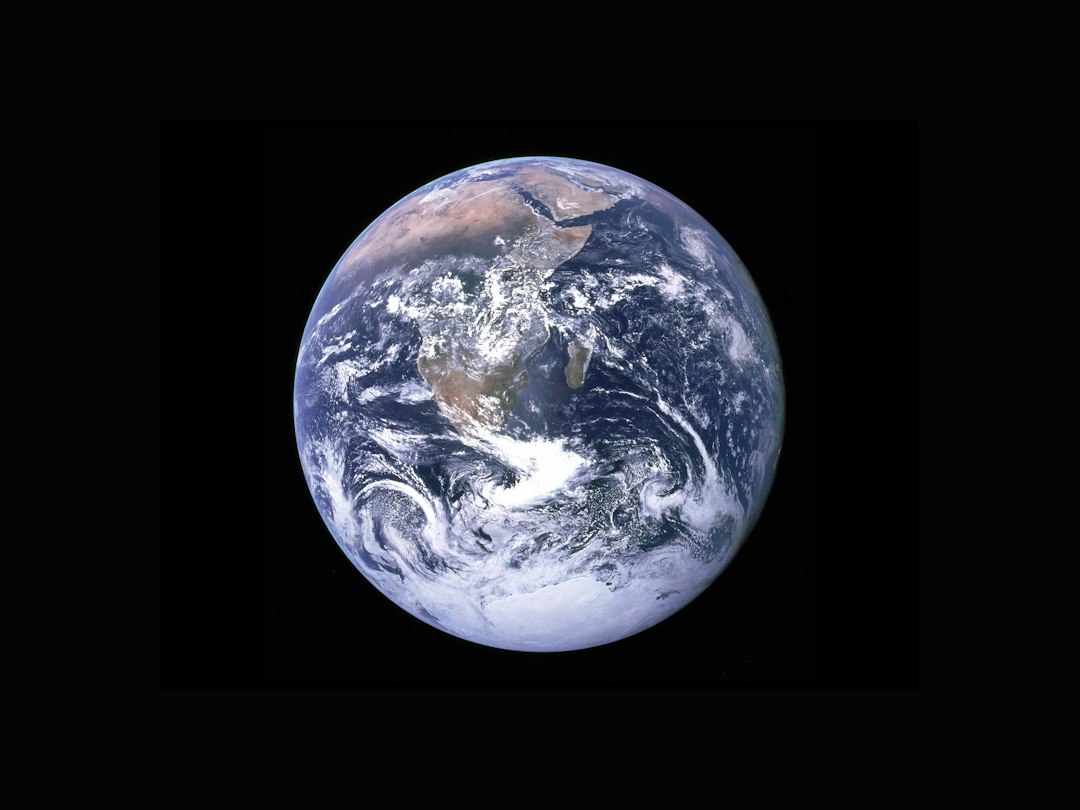
Earth formed approximately 4.5 billion years ago, coalescing from a swirling disk of gas and dust around the young Sun. The planet that emerged from that primordial chaos bore almost no resemblance to the world we inhabit today. Its atmosphere was a toxic cocktail of methane, ammonia, carbon dioxide, and water vapor — utterly hostile to the complex life forms that would eventually evolve. Yet, buried within ancient rocks and chemical signatures preserved across billions of years, lies the astonishing story of how our planet transformed itself, breath by slow geological breath, into the oxygen-rich haven for life we now call home.
Life appeared somewhere between approximately 4.28 and 3.8 billion years ago — the precise timing remains a subject of vigorous scientific debate, with some of the oldest putative microbial fossils found in Western Australia's Pilbara Craton and the Nuvvuagittuq Belt in Quebec. An oxygen-rich atmosphere, however, is a far more recent development in geological terms, and understanding how it came to be is central to understanding both the Earth's past and its future. New research published in the journal The Innovation now offers a revised and more precise timeline of this transformation, revealing that Earth's atmosphere was oxygenated in three distinct, stepped stages — and that the deep ocean lagged significantly behind the atmosphere at every turn.
Earth as a Single, Breathing System
One of the most important conceptual shifts in modern Earth science is recognizing our planet not as a collection of separate spheres — the atmosphere, the hydrosphere, the biosphere, the geosphere — but as a single, deeply interconnected system. Changes in one component inevitably ripple through all others. This understanding, sometimes described through the lens of Earth System Science, is essential to interpreting the planet's oxygenation history. The atmosphere, the oceans, and life itself are not independent actors; they are co-evolving partners in a drama that has unfolded over geological epochs.
Approximately 2.4 billion years ago, a group of photosynthetic microorganisms known as cyanobacteria emerged and fundamentally altered the trajectory of life on Earth. These remarkable single-celled organisms developed the biochemical machinery to split water molecules using sunlight — a process known as oxygenic photosynthesis. The reaction, which can be summarized as 6CO₂ + 6H₂O → C₆H₁₂O₆ + 6O₂, did two profound things simultaneously: it generated chemical energy for the cyanobacteria themselves, and it released free molecular oxygen as a byproduct into the surrounding water and, ultimately, into the atmosphere.
For much of early Earth history, this released oxygen was immediately consumed — absorbed by dissolved iron in the oceans, oxidizing it into iron oxides that settled on the seafloor in characteristic layers known as Banded Iron Formations (BIFs). These ancient rocks, found on every continent, serve as one of geology's most striking visual records of early ocean chemistry. Only once these chemical oxygen sinks were largely exhausted could free oxygen begin to accumulate in the atmosphere. When it did, the consequences were world-altering.
"Earth's surface oxygenation was a protracted, multi-step process. It is widely accepted that atmospheric O₂ rose through three major steps, each closely linked to key evolutionary innovations." — Haiyang Wang and Chao Li, Chengdu University of Technology
The Great Oxygenation Event and Its Consequences
The first and most dramatic of these steps is known as the Great Oxygenation Event (GOE), which occurred approximately 2.4 to 2.1 billion years ago. For organisms that had evolved in an anoxic world, the sudden rise of atmospheric oxygen was catastrophic — a mass extinction event triggered not by an asteroid or a supervolcano, but by the metabolic byproduct of microbial life. This episode is sometimes called the "Oxygen Catastrophe" or the "Oxygen Holocaust" in recognition of the mass die-off of anaerobic life that it caused.
Yet from destruction emerged extraordinary opportunity. Rising oxygen levels eventually led to the formation of a stratospheric ozone layer, which shields the surface from lethal ultraviolet radiation and made it possible for life to colonize shallow coastal environments and eventually dry land. The oxygenation of the atmosphere also enabled aerobic respiration — a far more energetically efficient metabolic strategy than anaerobic alternatives — which paved the way for the evolution of complex, multicellular life, including, ultimately, ourselves. NASA's Astrobiology program considers the GOE one of the most pivotal moments in the history of life in the universe.
New Research Revises the Timeline
The new study, titled "Stagewise oxygenation of the Earth's atmosphere and oceans," was authored by Haiyang Wang and Chao Li, geochemists at the Chengdu University of Technology. Published in the journal The Innovation, the work synthesizes geochemical, sedimentological, and palaeobiological evidence to reconstruct the coupled and dynamic history of atmosphere-ocean oxygenation, reassessing its timing, mechanisms, and ecological consequences with greater precision than previously achieved.
A key methodological advance driving this new understanding is the use of sulfate triple-oxygen isotopes, specifically the measurement of Δ′¹⁷O (delta prime oxygen-17) in ancient sulfate minerals. This proxy works because of a subtle but measurable property of atmospheric oxygen: its isotopic composition carries a characteristic deficit of the isotope oxygen-17. When sulfate (SO₄²⁻) forms in the presence of atmospheric oxygen, it records this isotopic signature. By analyzing sulfate preserved in ancient rocks, scientists can directly track the rise of atmospheric O₂ — not just the ocean's redox state — placing precise dates on each major step in atmospheric oxygenation.
This represents a significant improvement over previous methods. Because the atmosphere itself does not preserve ancient chemical records directly — unlike ocean sediments or ice cores — scientists had historically relied on ocean redox proxies, such as the distribution of iron, molybdenum, uranium, and other trace metals in sedimentary rocks, to infer atmospheric conditions. The sulfate isotope system offers a more direct window into the atmosphere's past. Geochemical proxy development has been one of the most dynamic frontiers in Earth science over the past two decades.
Revised Dates for the Three Oxygenation Steps
Applying these new proxies, Wang and Li found that while the Great Oxygenation Event remains anchored at approximately 2.4–2.1 billion years ago, the timing of the subsequent two steps requires significant revision:
- The Second Oxygenation Step — previously called the Neoproterozoic Oxygenation Event and dated to 800–540 million years ago — is now revised to approximately 1.3–1.0 billion years ago, pushing it back by hundreds of millions of years.
- The Third Oxygenation Step — the Paleozoic Oxygenation Event — is revised from 440–410 million years ago to approximately 420–360 million years ago, coinciding more precisely with the explosive diversification of land plants and the colonization of terrestrial environments.
- The previously accepted dates for the Neoproterozoic and Paleozoic events do not disappear from the geological record — instead, they are reinterpreted as recording the delayed oxygenation of the deep ocean, lagging behind the atmosphere by approximately 200 million years and 30 million years, respectively.
This finding fundamentally reframes how scientists interpret the ocean redox record. What had long been read as evidence of simultaneous atmosphere-ocean oxygenation is now understood as a staggered, two-phase process, with the deep ocean representing the last, most recalcitrant reservoir to fully oxygenate. In the case of the Neoproterozoic event, the deep ocean lagged by a staggering 600 million years behind the original atmospheric oxygenation signal — a timescale that dwarfs the entire history of complex animal life on Earth.
The Ocean-Atmosphere Feedback Loop
Central to the study's findings is the complex, sometimes counterintuitive relationship between ocean and atmospheric oxygen on different timescales. On billion-year timescales, the two systems generally rise together, driven by the relentless productivity of photosynthetic life. But on shorter, million-year timescales, the coupling can break down and even reverse, a phenomenon the researchers describe as "negative coupling."
The mechanism responsible for this short-term divergence is elegant and somewhat paradoxical: when a pulse of oxygen enters the ocean — perhaps driven by an increase in photosynthetic productivity — it triggers the oxidation of organic carbon and sulfide previously locked away in anoxic sediments. The organic carbon is converted to carbon dioxide (CO₂), and the sulfide is oxidized to sulfate. If the quantities of these reduced materials in the ocean are large enough, the oxygen consumed in oxidizing them can actually deplete atmospheric oxygen, temporarily reversing the upward trend.
This creates a situation where what appears in the geological record as a signal of rising oxygen is, on closer inspection, a transient consumption event. The ocean acts as both a reservoir and a buffer — sometimes augmenting atmospheric oxygenation, sometimes dampening it. The U.S. Geological Survey and other institutions have long studied these biogeochemical feedbacks as keys to understanding Earth's long-term climate and habitability.
"Throughout the 2-billion-year oxygenation transition, atmospheric and oceanic oxygen levels were episodically decoupled on shorter timescales, superimposed on a long-term trajectory toward global oxidation." — Wang and Li, 2026, The Innovation
A Four-Phase Portrait of Earth's Oxygenation
The research paints a detailed four-phase portrait of how Earth's redox state evolved through time and space:
- Before 2.4 billion years ago (Archean Eon): Both the atmosphere and oceans were largely anoxic. Oxygen was restricted to localized, shallow-water "oxygen oases" — pockets of oxygenated water around dense mats of cyanobacteria in coastal environments. The vast deep ocean remained entirely devoid of free oxygen.
- 2.4 to 1.0 billion years ago (Proterozoic): Following the GOE, atmospheric O₂ remained at low but non-zero levels — perhaps 1–10% of present atmospheric levels. Oxygenated waters were confined to the ocean surface, and the deep ocean, often described in this era as "Canfield Ocean" conditions, was dominated by toxic hydrogen sulfide rather than oxygen.
- 1.0 to 0.41 billion years ago (Late Proterozoic to Early Paleozoic): Atmospheric O₂ increased but fluctuated, while oxygenated waters progressively penetrated to greater ocean depths. This interval encompasses the explosive diversification of animal life during the Cambrian Explosion (~538 million years ago), arguably made possible by rising oxygen levels that supported larger, more metabolically demanding body plans.
- Since approximately 0.41 billion years ago (Mid-Paleozoic to Present): Atmospheric O₂ approached near-modern levels as land plants — with their enormous photosynthetic capacity — spread across the continents. Deep oceans became pervasively oxygenated, though mid-depth waters developed Oxygen Minimum Zones (OMZs) that persist to this day, expanding or contracting in response to changes in organic matter export and ocean circulation.
Evolutionary Innovations as Oxygenation Drivers
One of the most compelling aspects of this work is how it links each oxygenation step to a specific evolutionary innovation. The emergence of cyanobacteria drove the GOE. The evolution of eukaryotic algae — with their larger cell sizes and more complex chloroplasts — likely contributed to the second oxygenation step by dramatically increasing the ocean's photosynthetic efficiency. The third and final step correlates strongly with the colonization of land by vascular plants, which not only pumped oxygen into the atmosphere through photosynthesis but also drove the chemical weathering of silicate rocks, drawing down CO₂ and reshaping continental chemistry.
This tight coupling between biology and geochemistry underscores why the oxygenation of Earth cannot be understood in purely geological terms. Life was not merely a passenger on a changing planet — it was, in profound ways, the driver of that change. The European Space Agency's research into the origins of life similarly emphasizes this co-evolutionary perspective as essential for understanding planetary habitability beyond Earth.
Limitations and Open Questions
The researchers are admirably candid about the limitations of their work. The sulfate triple-oxygen isotope record is geologically coarse — it provides broad constraints rather than finely resolved snapshots. Prior to approximately one billion years ago, the precision of the record decreases considerably, leaving some aspects of the GOE's aftermath still open to interpretation. It is entirely possible that additional, as-yet-undetected oxygenation steps occurred during poorly preserved intervals of the geological record.
Furthermore, the spatial heterogeneity of ocean oxygenation was extreme — different ocean basins, different depths, and even different regions of the same basin could have had dramatically different oxygen levels at the same point in geological time. This complexity makes global reconstructions inherently challenging. NOAA's Ocean Exploration program continues to study modern analogues of ancient anoxic ocean conditions, such as the Black Sea and certain enclosed basins, which provide living laboratories for understanding how stratified, oxygen-depleted oceans function.
Implications for Planetary Habitability
Perhaps the most far-reaching implication of this work lies not in its relevance to Earth's past, but to the search for life elsewhere in the universe. If atmospheric oxygenation on Earth was a protracted, multi-step, nonlinear process driven by the co-evolution of life and planetary chemistry, then scientists searching for signs of life on exoplanets must be prepared for similarly complex histories. A planet that lacks detectable atmospheric oxygen in a snapshot observation should not be dismissed as uninhabitable; it may simply be at an earlier stage