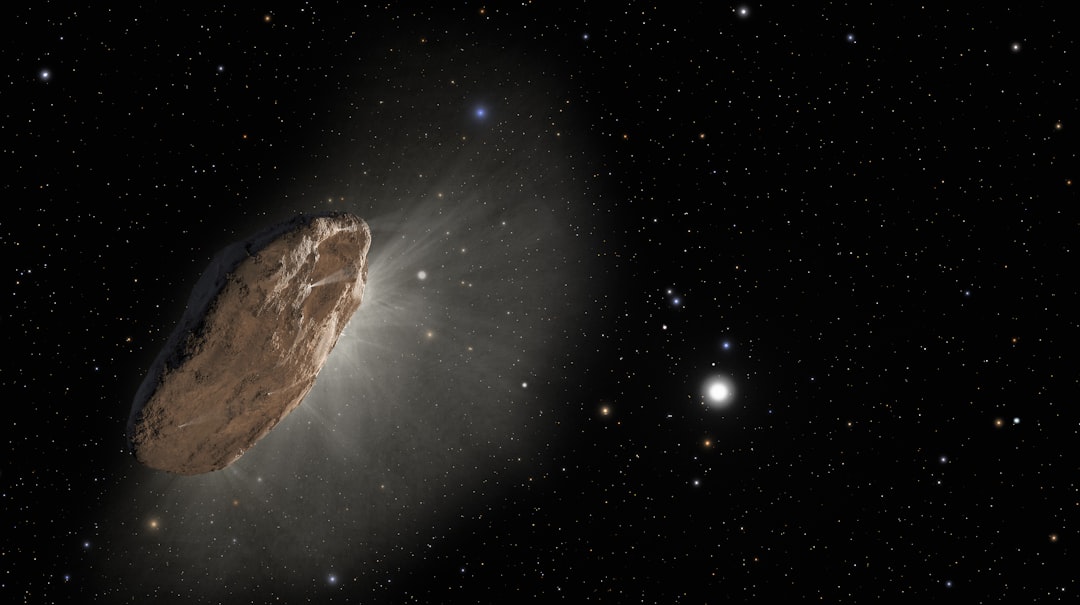
The number 40,000 might not sound particularly dramatic at first glance, but it represents a monumental achievement in humanity's growing catalogue of near-Earth asteroids (NEAs)—rocky remnants from the Solar System's violent birth approximately 4.6 billion years ago that cross paths with our planet's orbit. We've come a long way since 1898, when astronomers discovered the first of these cosmic wanderers, an asteroid called 433 Eros, using photographic plates at the Urania Observatory in Berlin. This milestone represents not just a number, but a comprehensive planetary defense system that has evolved from chance discoveries to systematic sky surveys capable of detecting potential threats decades before they could pose any danger.
The Evolution of Asteroid Detection: From Chance to Certainty
For most of the twentieth century, discoveries came slowly and serendipitously, with astronomers spotting perhaps a handful of new asteroids each year using traditional telescopes and photographic methods. The process was painstaking: astronomers would photograph the same region of sky hours apart, then manually compare images to identify objects that had moved against the background of fixed stars. This labor-intensive method meant that only the brightest and largest asteroids were typically detected, leaving countless smaller objects undiscovered.
Then dedicated survey telescopes arrived in the 1990s and 2000s, purpose-built to scan the sky methodically and automatically. Programs like NASA's Near-Earth Object Observations Program transformed asteroid hunting from an occasional pursuit into a systematic science. The LINEAR (Lincoln Near-Earth Asteroid Research) project, the Catalina Sky Survey, and Pan-STARRS (Panoramic Survey Telescope and Rapid Response System) began discovering asteroids at an unprecedented rate. The count reached 1,000 at the turn of the century, climbed to 15,000 by 2016, and hit 30,000 in 2022. This November, the 40,000 milestone was crossed, with roughly 10,000 of those discoveries made in just the past three years alone—a testament to increasingly sophisticated detection technologies and computational methods.
Next-Generation Sky Surveys: Accelerating Discovery
The acceleration shows no signs of slowing yet. New facilities like Chile's Vera C. Rubin Observatory, which opened this year after years of construction, will discover tens of thousands more asteroids despite not being exclusively dedicated to asteroid hunting. The observatory's 8.4-meter primary mirror and 3.2-gigapixel camera—the largest digital camera ever built for astronomy—will photograph the entire visible sky every few nights, creating an unprecedented time-lapse movie of the cosmos. This capability will reveal not just asteroids, but also supernovae, variable stars, and other transient phenomena.
Meanwhile, the European Space Agency's Flyeye telescopes use wide, almost insect-like views of the sky to catch objects that slip past current surveys. The name comes from the telescope's unique optical design, which splits a single image into multiple sub-images, similar to how a fly's compound eye works. This innovative approach allows the telescope to monitor larger swaths of sky simultaneously, increasing the probability of detecting fast-moving objects that might otherwise be missed during the brief window when they're visible from Earth.
Understanding Near-Earth Asteroid Classifications
Near-Earth asteroids are defined by proximity rather than size. Any space rock whose orbit brings it within about 45 million kilometers (roughly 28 million miles, or 0.3 astronomical units) of Earth's orbit earns the designation, whether it's a few meters across or several kilometers wide. This classification system helps astronomers prioritize which objects require the most intensive follow-up observations and trajectory calculations.
Each new discovery triggers a cascade of calculations, with astronomers using available observations to predict the object's path years, decades, even centuries ahead. Software systems developed by organizations like NASA's Center for Near-Earth Object Studies assess whether any chance exists, however remote, of an Earth impact within the next century. These calculations rely on precise measurements of an asteroid's position at multiple points in time, allowing scientists to determine its orbital parameters with increasing accuracy as more observations accumulate.
Risk Assessment: Separating Real Threats from False Alarms
Almost 2,000 known near-Earth asteroids have non-zero impact probabilities over the next hundred years. Before panic sets in, it's crucial to understand that most are tiny and pose negligible danger, with impact probabilities typically well below one percent—often far less than 0.01%. The Torino Scale and Palermo Technical Impact Hazard Scale help scientists and the public understand the actual risk level of any given asteroid, taking into account both the probability of impact and the potential consequences.
"The discovery of 40,000 near-Earth asteroids represents humanity's commitment to planetary defense. Each discovery makes us safer, not by revealing new threats, but by allowing us to track and understand objects that have always been there, silently orbiting the Sun."
More reassuringly, the largest asteroids—those exceeding one kilometer in diameter that could cause global catastrophe similar to the event that contributed to the dinosaurs' extinction 66 million years ago—are also the easiest to spot due to their brightness and size. Scientists believe the vast majority, approximately 95% or more, have already been found and catalogued. None of these planet-killer asteroids pose any threat to Earth for at least the next several centuries.
The Mid-Sized Asteroid Challenge
Today's focus has shifted to mid-sized asteroids between 100 and 300 meters wide. Much harder to detect due to their smaller size and lower reflectivity, they would cause serious regional damage if they struck our planet—potentially devastating an area the size of a large metropolitan region or causing catastrophic tsunamis if they impacted an ocean. The 2013 Chelyabinsk meteor, which was only about 20 meters across, injured over 1,500 people when it exploded in the atmosphere over Russia, releasing energy equivalent to approximately 500 kilotons of TNT—demonstrating the potential danger even relatively small objects can pose.
Current models suggest we've discovered only about 30 percent of these mid-sized objects, leaving significant work ahead. The challenge lies not just in detecting them, but in detecting them early enough to mount an effective deflection mission if one proves to be on a collision course with Earth. This requires continuous sky surveys, rapid follow-up observations, and international cooperation to share data and coordinate response efforts.
From Detection to Deflection: Active Planetary Defense
Fortunately, none of the 40,000 known asteroids pose any foreseeable threat to Earth in the coming centuries. However, the European Space Agency isn't simply watching and waiting. The agency's Hera mission is currently traveling to the asteroid Dimorphos to study the aftermath of NASA's deliberate impact test in September 2022, when the DART (Double Asteroid Redirection Test) spacecraft intentionally collided with the small moonlet orbiting the larger asteroid Didymos.
The DART mission successfully demonstrated that a kinetic impactor—essentially a high-speed spacecraft deliberately crashed into an asteroid—could alter the object's trajectory. The impact changed Dimorphos's orbital period around Didymos by approximately 33 minutes, far exceeding the mission's minimum success threshold of 73 seconds. Now, Hera will conduct detailed investigations of the impact crater, measure how much mass was ejected, and analyze the asteroid's internal structure—helping transform asteroid deflection from concept to reliable planetary defense technique.
Key Achievements in Near-Earth Asteroid Science
- Comprehensive Cataloguing: The discovery of 40,000 near-Earth asteroids represents approximately 95% of all objects larger than one kilometer, effectively eliminating the threat of an unexpected planet-killer impact
- Advanced Detection Systems: Modern automated survey telescopes can now detect objects as small as 100 meters across at distances of tens of millions of kilometers, providing decades of warning time
- Proven Deflection Technology: The DART mission's successful demonstration of kinetic impact deflection provides humanity with a tested method for altering an asteroid's trajectory if needed
- International Cooperation: Organizations including NASA, ESA, JAXA, and others now share data through the International Asteroid Warning Network, ensuring global coordination of detection and response efforts
- Rapid Response Capabilities: New asteroids are now characterized within days or weeks of discovery, with orbital calculations precise enough to predict their positions decades into the future
The Future of Planetary Defense
What began with the discovery of Eros in 1898 has become a global effort to catalogue near-Earth asteroid hazards and develop the tools to deflect them. Each new discovery strengthens our ability to keep Earth safe, not through luck or chance, but through systematic observation, precise calculation, and proven deflection technologies. The next generation of surveys, including the Vera C. Rubin Observatory's Legacy Survey of Space and Time, will likely push the catalogue toward 100,000 objects within the next decade.
Perhaps most importantly, this achievement represents a fundamental shift in humanity's relationship with cosmic hazards. For the first time in Earth's 4.5-billion-year history, a species has developed the technological capability to detect and potentially prevent a catastrophic asteroid impact. The 40,000 known near-Earth asteroids aren't a cause for concern—they're a testament to our growing ability to understand and navigate the cosmic neighborhood we call home, ensuring that Earth's story continues for generations to come.