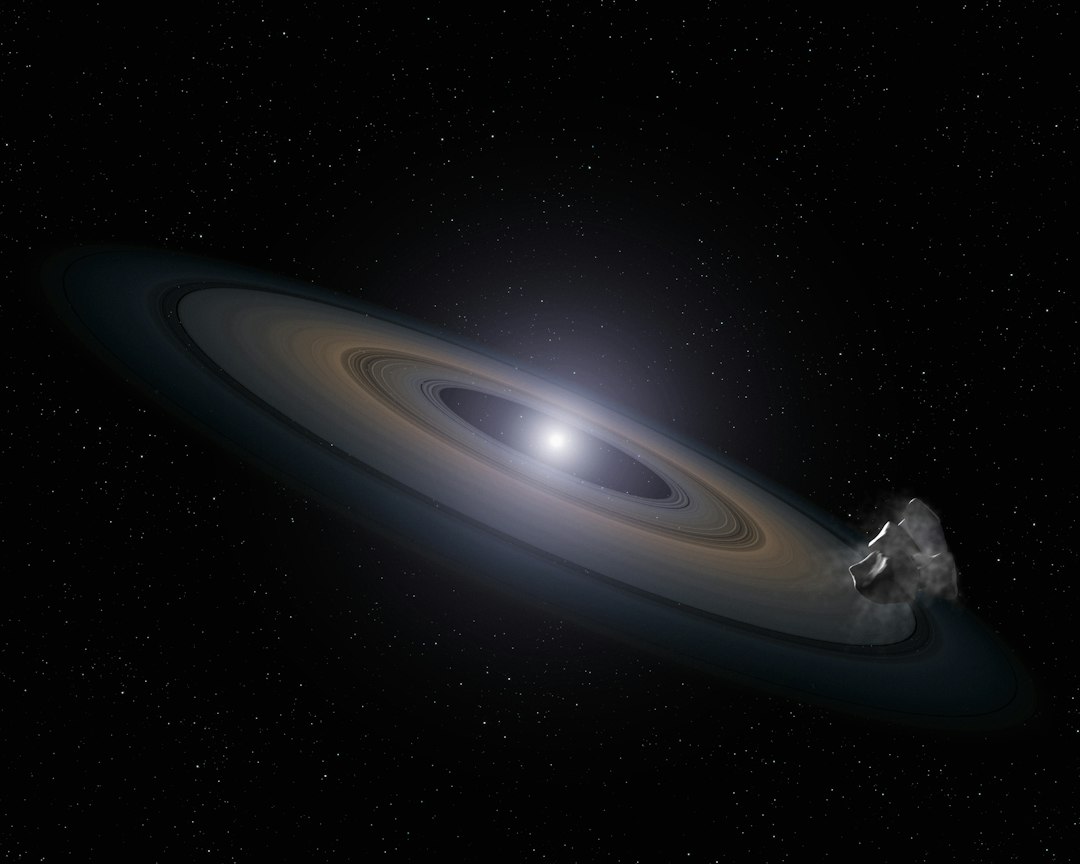
ESA's Hera Mission Targets Binary Asteroid Pair: Humanity's First Detailed Post-Impact Asteroid Survey
In one of the most anticipated planetary defense milestones of the decade, the European Space Agency's (ESA) Hera spacecraft is closing in on its quarry — the Didymos-Dimorphos binary asteroid system — at a blistering 12 kilometers per second relative to Earth. This rendezvous represents far more than a routine scientific flyby; it is the critical second chapter of humanity's first-ever deliberate test of asteroid deflection technology, and the results could one day help determine the fate of our planet.
Hera's arrival at the binary pair will deliver our first close-up, high-resolution views of Dimorphos since NASA's Double Asteroid Redirection Test (DART) mission slammed into the moonlet at roughly 6.6 kilometers per second in September 2022. That historic kinetic impact forever changed the asteroid's orbit — and now Hera is tasked with revealing exactly how it changed, and why.
"Hera is not just a follow-up mission — it is the forensic investigator that will allow us to fully understand what DART actually did, and whether kinetic impactors can be reliably used as a planetary defense tool." — ESA Hera Mission Team
From Launch to the Asteroid Belt: Hera's Journey
Launched atop a SpaceX Falcon 9 rocket from Cape Canaveral on October 7th, 2024, Hera is ESA's first dedicated Space Safety Programme-class mission — a flagship endeavor designed to advance both planetary science and Earth's defensive capabilities against near-Earth objects (NEOs). The spacecraft's journey has taken it on an elliptical transfer orbit spanning just over two years, incorporating a significant gravitational assist.
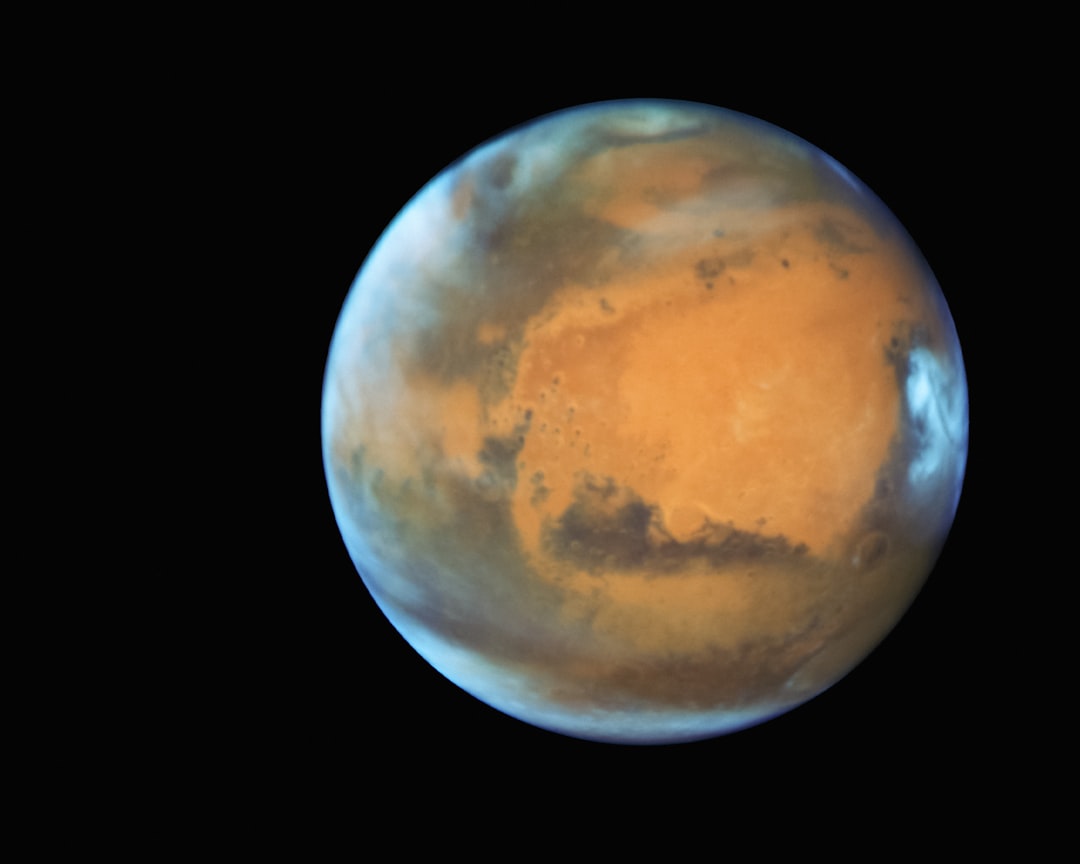
En route to its destination, Hera made a dramatic detour in March 2025, executing a Mars flyby that served dual purposes: a gravity assist to refine its trajectory toward the Didymos system, and a rare scientific opportunity. During the flyby, Hera's optical cameras captured striking new images of Deimos, Mars's smaller, outermost moon — providing fresh data on that enigmatic body's surface composition and morphology. Even now, as Hera closes in on its final destination, the Didymos-Dimorphos pair appears as little more than a few pixels in the spacecraft's navigation cameras, though that view is rapidly sharpening. The spacecraft first successfully imaged Didymos in July 2026, marking a pivotal operational milestone and sending a ripple of excitement through ESA's mission control teams.
Meet the Targets: 65803 Didymos and Its Moonlet, Dimorphos
65803 Didymos was first discovered by the Kitt Peak Spacewatch survey on April 11th, 1996. The primary body measures approximately 780 meters in diameter and completes a full orbit around the Sun once every 2.1 years, placing it firmly in the category of Apollo-class near-Earth asteroids. One of its most remarkable physical characteristics is its rapid rotation — Didymos completes a full spin once every 2.2 hours, which is near the theoretical spin limit for a rubble pile body held together only by self-gravity and weak cohesive forces. Spin any faster, and loose surface material would begin to fly off into space.
This rapid rotation is thought to be intimately connected to the origin of its moonlet. In a process known as the YORP effect — whereby asymmetric re-radiation of solar energy creates a subtle but persistent torque on an asteroid — Didymos may have gradually spun up over millions of years until surface material shed from its equatorial region coalesced to form Dimorphos. This small moonlet, just 151 meters across, was not discovered until 2003, when radar observations revealed its presence. The Didymos system is thus not merely a convenient target — it is a natural laboratory for understanding how asteroid binary pairs form and evolve.
- Didymos diameter: ~780 meters
- Dimorphos diameter: ~151 meters
- Didymos orbital period around Sun: 2.1 years
- Didymos rotation period: 2.2 hours (near spin-up limit)
- Pre-DART orbital period of Dimorphos around Didymos: 11 hours 55 minutes
- Post-DART orbital change: approximately 32 minutes shorter
- Current distance from Sun during rendezvous: ~1.5 Astronomical Units
Both bodies are classified as S-type (silicaceous) asteroids — dark, silicon-rich bodies that reflect relatively little sunlight. The rendezvous occurs at approximately 1.5 Astronomical Units (AU) from the Sun, meaning Hera receives only about 44% of the solar energy available at Earth's distance. Despite this dimmer environment, the spacecraft's two 5-meter-long solar panels generate sufficient power to operate all onboard scientific instruments continuously.
DART's Legacy: A Rubble Pile Reshaped
When DART approached Dimorphos in September 2022, it revealed a rocky, irregular world that scientists immediately compared to other well-studied small bodies. Like 101955 Bennu — visited by NASA's OSIRIS-REx mission — and 162173 Ryugu, explored by JAXA's Hayabusa2 mission, Dimorphos appeared to be a classic rubble pile asteroid: a loose aggregation of boulders and gravel held together primarily by self-gravity and inter-particle cohesion, rather than solid bedrock. These structures exist in a delicate gravitational balance, and DART's impact tested that balance in the most direct way imaginable.
The results exceeded expectations. DART's kinetic impact did not merely nudge Dimorphos — it triggered what planetary scientists call a momentum enhancement effect. The impactor itself delivered a certain momentum to the asteroid, but the massive plume of ejecta — billions of kilograms of pulverized rock and dust expelled from the impact site — carried additional momentum in the opposite direction, amplifying the deflection well beyond what the spacecraft's mass alone could achieve. The net result: Dimorphos's orbital period around Didymos shortened by approximately 32 minutes, a change far larger than the minimum threshold of 73 seconds that would have been considered a mission success.
In the weeks following impact, both ground-based observatories and the Hubble Space Telescope detected a dramatic debris tail streaming from the binary system — a glittering river of displaced material stretching hundreds of thousands of kilometers into space, reminiscent of a comet's tail. This debris field provided early evidence of just how dramatically the impact had disturbed the moonlet's surface.
What Hera Will Discover: The Forensic Investigation
While DART told us that kinetic impactors work, Hera is designed to tell us precisely why and how — and to what degree. To make planetary defense a reliable, repeatable science rather than a one-time demonstration, mission scientists need to characterize Dimorphos's internal structure, surface composition, mass, and the precise morphology of the impact crater left by DART. Hera's suite of scientific instruments is purpose-built for exactly this forensic task.
The spacecraft carries the Asteroid Framing Camera (AFC) for high-resolution optical imaging, a thermal infrared imager to map surface temperature distributions (a proxy for surface roughness and thermal inertia), and a LIDAR (Light Detection and Ranging) system for precise topographic mapping. Together, these instruments will build the most detailed portrait yet of a small solar system body — and the first portrait of one that has been intentionally modified by human engineering.
The CubeSat Scouts: Juventas and Milani
One of Hera's most innovative features is the deployment of two briefcase-sized CubeSat spacecraft — miniaturized probes that will operate semi-autonomously in the immediate vicinity of the asteroid system. These diminutive explorers, named Juventas and Milani, represent a bold experiment in small spacecraft technology operating in a challenging, low-gravity environment.
- Milani, built by Tyvak International in Turin, Italy, is equipped with a dust and spectral analysis instrument package. It will characterize the dust environment surrounding both asteroids — important for understanding ongoing surface processes — and will conduct spectroscopic analysis of the surface composition of Didymos and Dimorphos, helping scientists determine what minerals are present and how the DART impact may have exposed fresh subsurface material.
- Juventas, built by GomSpace Luxembourg, carries a low-frequency radar instrument (GRASS) capable of probing beneath the surface of Dimorphos to map its internal structure. Understanding whether Dimorphos is uniformly porous throughout, or has a denser core or layered interior, is critical for modeling how future asteroid deflection missions should be designed. Juventas may even attempt a controlled landing on Dimorphos's surface — a feat that would make it one of the smallest spacecraft ever to soft-land on a solar system body.
Operating in the microgravity environment of such small bodies presents extraordinary navigational challenges. The gravitational pull of Dimorphos is so vanishingly weak that even the subtle pressure of solar radiation can perturb a spacecraft's trajectory, and any prospective surface explorer — robotic or human — would need to tether themselves carefully to avoid drifting off into space.
The Human Perspective: What It Would Be Like to Stand on Dimorphos
ESA has released evocative visualizations imagining what an astronaut standing on the boulder-strewn surface of either asteroid would experience — and the perspective is genuinely alien. The sky above would appear to spin, with Didymos looming as a massive, slowly rotating boulder field filling a significant portion of the heavens from Dimorphos's vantage point. The gravitational acceleration at the surface of Dimorphos is estimated at roughly 1/1000th of Earth's gravity or less — so feeble that a person who tripped would fall in agonizing slow motion, taking many minutes or even hours to drift back down to the ground. A gentle leap could send an explorer on a trajectory that would take days to resolve.
This extraordinarily weak gravity also means that Dimorphos's surface boulders are perpetually on the edge of gravitational escape. The DART impact likely launched enormous quantities of surface material into temporary orbits around the system, with some eventually escaping to become interplanetary dust. Hera's instruments will help map which regions were most disturbed and reconstruct the sequence of events following impact.
Why This Matters: Planetary Defense in the Real World
The Didymos-Dimorphos system was selected as DART and Hera's target not because it poses any threat to Earth — it does not — but because its size, orbital properties, and binary nature made it an ideal proving ground. Dimorphos, at 151 meters across, falls squarely within the size range of asteroids capable of devastating regional or continental areas on Earth if one were ever on an impact trajectory. Objects of this scale are numerous in the near-Earth population, many still uncharacterized.
By understanding precisely how much momentum was transferred to Dimorphos, what role ejecta played in amplifying the deflection, and how the asteroid's internal structure influenced the outcome, scientists will be able to construct far more accurate predictive models for future deflection campaigns. The data Hera returns will be foundational for any serious planetary defense strategy developed in the coming decades. ESA's Hera mission page provides continuously updated mission information and scientific objectives for those wishing to follow the mission in detail.
The Future of the Mission
Hera's nominal mission operations are expected to conclude in 2027, by which point the spacecraft will have conducted an exhaustive survey of both asteroids and deployed its two CubeSat companions. However, ESA mission planners are already considering an extended mission phase in which Hera would serve as a technology demonstrator for autonomous spacecraft navigation — testing onboard artificial intelligence systems capable of making real-time navigation and science decisions without waiting for instructions from Earth. In deep space, where communication delays can stretch to many minutes or longer, such autonomy is not a luxury but a necessity for future exploration missions.
Whatever happens after 2027, the data that Hera returns will reverberate through planetary science and planetary defense planning for generations. We stand at a unique moment in history — a species that has not only detected an asteroid impact threat but has demonstrated it can actively alter the trajectory of a natural world. Hera will tell us how well we truly did, and how ready we are to do it again, should the cosmos ever demand it.
It is going to be a thrilling and profoundly meaningful look at these alien worlds — and though we cannot yet stand on their surfaces ourselves, we will see them as never before through Hera's eyes.