Galaxy Evolution Can Be Shaped by the Powerful Jets of Supermassive Black Holes
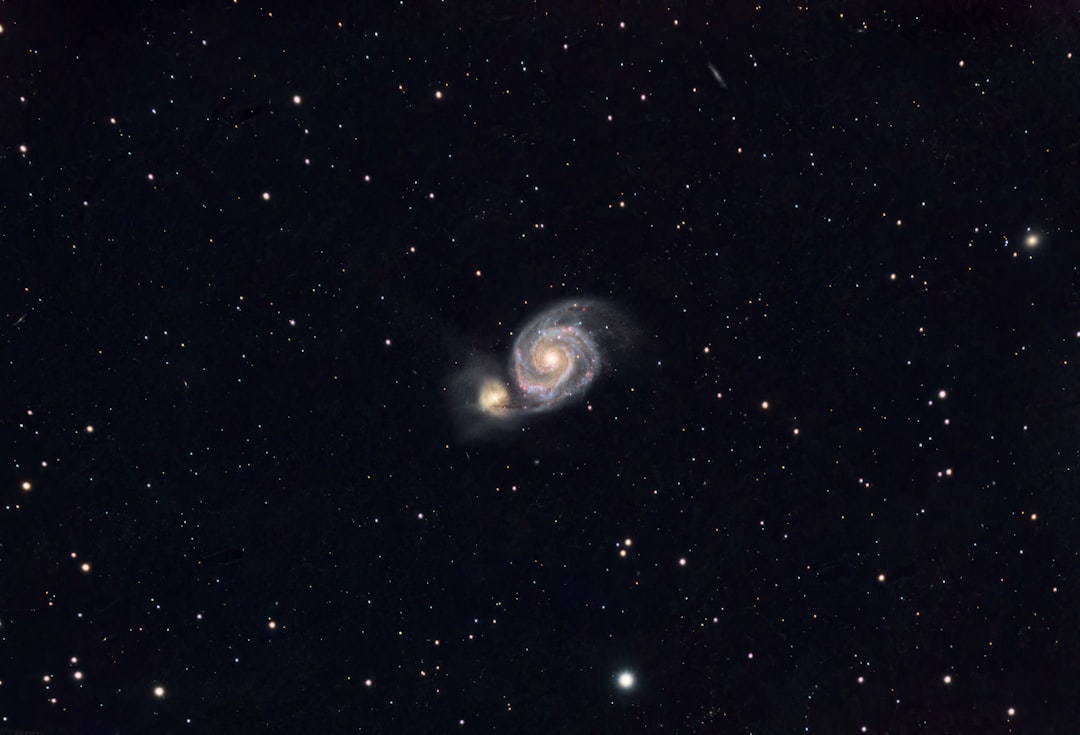
In recent decades, astronomers have accumulated compelling evidence that supermassive black holes — the colossal gravitational behemoths lurking at the centers of most large galaxies — play a surprisingly decisive role in shaping the very galaxies that host them. These cosmic titans, some billions of times more massive than our own Sun, are not passive residents. They actively sculpt their environments in profoundly contradictory ways: consuming vast reservoirs of gas that might otherwise have given birth to new stars, while simultaneously launching powerful jets of energy that can ignite star formation in distant regions of the galaxy. Understanding this complex, bidirectional relationship is one of the most compelling frontiers in modern astrophysics.
A recent study led by a team of astronomers at Arizona State University (ASU) and the Raman Research Institute (RRI) in India has shed important new light on this dynamic. The research focused on the large, diffuse envelopes of gas that appear to surround many galaxies, including our own Milky Way. Known as the circumgalactic medium (CGM), these vast halos of gas and plasma extend far beyond the visible boundaries of a galaxy — stretching out 10 to 20 times the diameter of the galaxy's luminous disk — and they play a foundational role in regulating a galaxy's long-term growth and evolution.
What Is the Circumgalactic Medium?
The circumgalactic medium is one of the most important, yet least understood, components of a galaxy's architecture. It is a so-called baryon reservoir — a massive supply of ordinary, visible matter composed primarily of hydrogen and helium gas, along with trace amounts of heavier elements forged in previous generations of stars. This reservoir is not static. Gas flows inward from the CGM into the galaxy itself, feeding regions where gravity pulls material together to form dense molecular clouds — the stellar nurseries where new stars are born.
Conversely, energetic processes within the galaxy — from supernova explosions to the violent activity of a central black hole — can drive material back outward into the CGM, enriching it with heavy elements and disrupting the steady inflow of fresh star-forming fuel. This cycle of inflow and outflow, regulated by both stellar and black hole activity, is what astronomers call galactic feedback, and it is considered one of the primary drivers of galaxy evolution over cosmic time.
- The CGM can extend hundreds of thousands to millions of light-years from a galaxy's center.
- It contains a significant fraction — possibly more than half — of a galaxy's total baryonic mass.
- Gas temperatures within the CGM range from cold molecular filaments (~10 K) to hot, diffuse plasma (~106 K).
- Detecting CGM gas requires highly sensitive ultraviolet, X-ray, and radio observations.
- The Milky Way's own CGM has been studied using absorption lines from distant quasars seen through it.
A Multi-Instrument Approach: DESI and LOFAR
To probe how black hole jets interact with this vast gaseous reservoir, team members Sanchateeta Borthakur (ASU) and Namrata Roy (RRI) combined observational data from two powerful, complementary astronomical facilities. The first was the Dark Energy Spectroscopic Instrument (DESI), an advanced multi-fiber spectroscopic survey mounted on the 4-meter Nicholas U. Mayall Telescope at Kitt Peak National Observatory in Arizona. DESI is capable of collecting spectra from tens of millions of galaxies, making it an extraordinarily powerful tool for statistical studies of galaxy populations.
The second facility was the LOFAR Two-meter Sky Survey (LoTSS), an ongoing deep radio survey conducted with the Low-Frequency Array (LOFAR), a pan-European radio telescope network headquartered in the Netherlands. LOFAR is exquisitely sensitive to the low-frequency radio emissions produced by relativistic jets streaming from active black holes, making it ideal for identifying and characterizing galaxies with powerful jet activity.
By cross-matching hundreds of galaxies observed in both surveys, the team was able to study the spectroscopic signatures of gas along and around the axes of radio jets simultaneously. Specifically, they searched for the distinctive emission of ionized hydrogen, detected through its characteristic H-alpha emission line — a bright red spectral signature produced when electrons recombine with protons in hot, excited gas. The presence and spatial distribution of H-alpha emission served as a direct tracer of where the jets were interacting with and energizing the surrounding CGM.
Black Holes and Their Jets: Engines of Cosmic Change
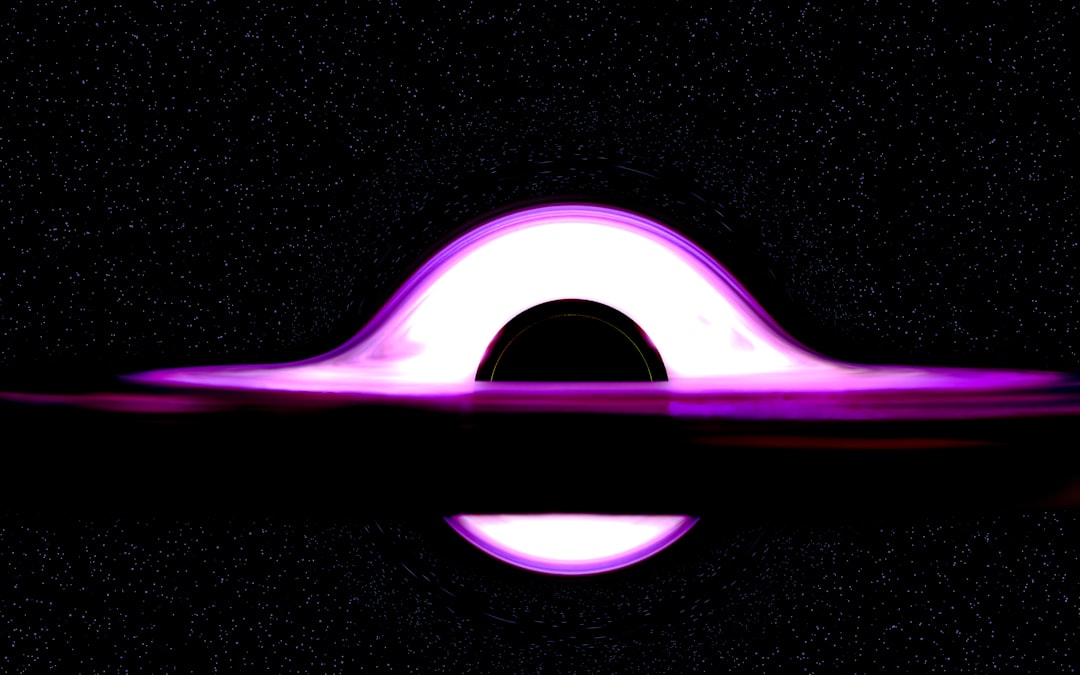
Galaxies hosting actively feeding supermassive black holes and their associated jets are collectively referred to as active galactic nuclei (AGN). These are among the most energetic persistent phenomena in the known universe. At the heart of an AGN lies an accretion disk — a swirling disk of superheated material spiraling inward toward the black hole. As this infalling material is compressed and heated to extreme temperatures, a portion of the gravitational energy is converted into radiation and, in many cases, into tightly focused, bipolar outflows known as relativistic jets.
"What excites me most is the scale of the connection. A black hole is incredibly small compared to a galaxy, but its impact can reach hundreds of thousands of light-years, far into the galaxy's outer reaches. The jet carries the energy outward, and the gas lights up along its path." — Namrata Roy, Raman Research Institute
These jets are extraordinary structures. Launched perpendicular to the accretion disk and collimated by powerful magnetic fields anchored in the disk and the black hole's ergosphere, they travel at velocities approaching the speed of light. They emit radiation across the entire electromagnetic spectrum — from radio waves to gamma rays — and can extend hundreds of thousands to millions of light-years from their source. The iconic jet of galaxy M87, famously imaged by the Hubble Space Telescope, extends approximately 5,000 light-years and emits brilliant blue synchrotron radiation as relativistic electrons spiral around magnetic field lines.
The physical mechanisms by which these jets influence their surroundings are multifaceted. As a jet plows through the interstellar and circumgalactic medium, it drives powerful shock waves — sudden, dramatic compressions of gas that rapidly heat and ionize the material they sweep through. These shocks can both trigger and suppress star formation, depending on local conditions. Where shocked gas cools rapidly and collapses under gravity, new stellar nurseries may form. Where the jet energy is deposited too violently, the gas may be dispersed or heated beyond the threshold for gravitational collapse, effectively quenching star formation.
What the New Study Found
The results of the ASU-RRI study were striking in their clarity. When the team stacked the spectroscopic data for hundreds of radio-jet galaxies and examined the spatial distribution of H-alpha emission, they found a clear and statistically robust enhancement of ionized hydrogen along the axes of the radio jets. This jet-aligned H-alpha signal was strongest at two key locations: near the base of the jets where they first encounter the denser interstellar medium of the host galaxy, and farther out where the jets plunge into and interact with the more diffuse CGM.
This result provides direct observational evidence that AGN jets are energetically coupling to the CGM on enormous scales — injecting heat, driving turbulence, and ionizing gas across regions that can span hundreds of thousands of light-years. The team interpreted these signals as evidence of jet-driven shock fronts and photoionization from the intense radiation fields produced by the jet itself, both of which can light up the surrounding gas in H-alpha emission.
"The surprising question is: How can something so small energetically impact something so enormous?" — Namrata Roy, Raman Research Institute
The answer, in part, lies in the extraordinary efficiency with which a black hole's accretion process converts mass into energy. Even a small fraction of the energy released during accretion, channeled into a collimated jet, can carry enough power to influence gas reservoirs millions of times larger than the black hole itself. This is the essence of AGN feedback — a concept that has become central to modern models of galaxy formation and evolution.
Star Formation: Ignition or Quenching?
One of the most intriguing aspects of jet-CGM interactions is the dual nature of their effects on star formation. On one hand, the compression and heating of gas by jet-driven shocks can push cold gas clouds past the Jeans instability threshold — the critical density at which gravity overcomes thermal pressure and the gas begins to collapse to form stars. This process, known as jet-induced star formation or positive feedback, can produce elongated chains or ribbons of young stars aligned with the jet direction, a phenomenon observed in several well-studied AGN systems.
On the other hand, if a jet deposits energy too rapidly into the surrounding gas, or if the central black hole consumes the local gas supply faster than it can be replenished from the CGM, the galaxy may be robbed of the raw materials needed to sustain ongoing star formation. Over millions to billions of years, this negative feedback can transform a vibrant, star-forming spiral galaxy into a passive, red-and-dead elliptical galaxy dominated by aging stellar populations. The observed bimodality of galaxies — the clear separation between blue, star-forming galaxies and red, quiescent ones in the universe — is thought to be, at least in part, a direct consequence of this AGN-driven quenching mechanism.
Understanding which of these outcomes dominates — and under what conditions — is one of the central unsolved problems in galaxy evolution. The new work by Borthakur, Roy, and their colleagues provides a crucial empirical anchor for theoretical models attempting to describe these processes.
Broader Implications and Future Research
This study represents a significant step forward in characterizing the large-scale influence of AGN jets on the circumgalactic medium, but it also opens a wealth of new questions. Future work will benefit from even more comprehensive datasets, as DESI continues its five-year survey of tens of millions of galaxies, and as next-generation radio facilities — including the Square Kilometre Array (SKA) — come online with dramatically improved sensitivity and resolution. These instruments will allow astronomers to resolve jet-CGM interactions in far greater detail and across a much wider range of galaxy types, redshifts, and jet powers.
Complementary advances in cosmological hydrodynamic simulations — such as the IllustrisTNG and EAGLE projects — have already incorporated AGN feedback as an essential ingredient for reproducing the observed properties of the galaxy population. The observational results from studies like this one provide critical tests and calibration points for these simulations, helping to determine whether the models are capturing the physics of jet-CGM coupling realistically.
Ultimately, by mapping the influence of black hole jets on the vast gaseous halos that surround galaxies, astronomers are piecing together one of the most remarkable stories in cosmic history: how the smallest, densest objects in the universe came to govern the fate of structures billions of times larger than themselves. As NASA's ongoing black hole research programs and international collaborations continue to expand our observational toolkit, the picture of black hole-galaxy co-evolution is coming into ever-sharper focus.
Key Takeaways
- Supermassive black holes at the centers of galaxies can launch powerful relativistic jets that interact with gas far beyond the visible galaxy.
- The circumgalactic medium (CGM) — a vast halo of gas surrounding galaxies — is a critical reservoir for star-forming material and is directly influenced by AGN jet activity.
- A new study using DESI and LOFAR data has identified strong, jet-aligned H-alpha emission in hundreds of radio-jet galaxies, providing direct evidence of jet-CGM coupling.
- AGN jets can both trigger star formation (via shock-induced compression) and quench it (via gas heating and dispersal), depending on local conditions.
- Future observations with the Square Kilometre Array and continued DESI data will further refine our understanding of how black hole jets shape galaxy evolution across cosmic time.