In the vast cosmic theater, supermassive black holes occasionally put on spectacular displays of power that rival the most dramatic volcanic eruptions on Earth—except these "cosmic volcanoes" can blast jets of magnetized plasma across distances spanning nearly a million light-years. Recent groundbreaking observations have revealed one of the most striking examples of this phenomenon, offering scientists an unprecedented window into understanding how these colossal engines at the hearts of galaxies periodically ignite and fade over hundreds of millions of years.
A team of astrophysicists led by Shobha Kumari, a PhD researcher at Midnapore City College in India, has identified a giant radio galaxy designated J1007+3540 that exhibits clear evidence of episodic jet activity—a celestial powerhouse that has turned on and off multiple times throughout cosmic history. Their findings, published in The Monthly Notices of the Royal Astronomical Society, provide crucial insights into the complex interplay between supermassive black holes, their relativistic jets, and the surrounding intergalactic environment.
The Dual Nature of Supermassive Black Holes
At the centers of most large galaxies lurk supermassive black holes containing millions to billions of times the mass of our Sun. These gravitational behemoths exist in dramatically different states of activity. During quiescent periods, they consume only minimal amounts of surrounding matter, emitting faint radiation barely detectable across cosmic distances. However, when conditions align to funnel substantial material toward these black holes, they transform into active galactic nuclei (AGN)—some of the most luminous and energetic objects in the universe.
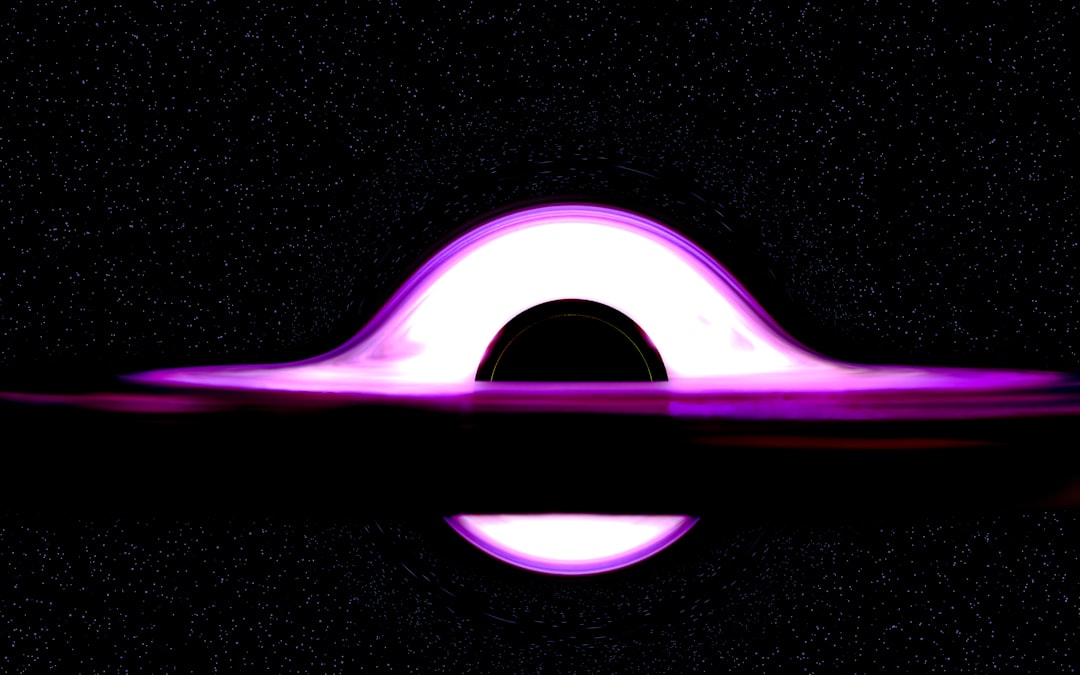
As matter spirals toward an active supermassive black hole, it forms a swirling accretion disk where gravitational energy converts into tremendous heat. This superheated material radiates intensely across the electromagnetic spectrum, producing optical and ultraviolet light from the disk itself. Above the disk, a corona of exceptionally hot plasma can form, generating powerful X-ray emissions detectable by space-based observatories like NASA's Chandra X-ray Observatory.
But perhaps the most spectacular manifestation of AGN activity comes in the form of relativistic jets—narrow beams of magnetized plasma ejected in opposite directions perpendicular to the accretion disk. These jets, traveling at velocities approaching the speed of light, can extend for millions of light-years into intergalactic space. Astronomers often call them "radio jets" because their synchrotron radiation is most readily observed at radio wavelengths, though they emit energy across the entire electromagnetic spectrum.
The Mystery of Intermittent Jet Activity
One of the most perplexing questions in modern astrophysics concerns why these powerful jets periodically switch on and off. Various theories have been proposed to explain this episodic behavior. Changes in the accretion rate—the amount of material flowing toward the black hole—seem like an obvious culprit, as jets require substantial fuel to maintain their extraordinary energy output. However, the situation is likely far more complex, potentially involving the configuration of magnetic fields threading through the accretion disk and the spin rate of the black hole itself.
The angular momentum of the black hole's rotation may play a crucial role in launching and sustaining jets through mechanisms described by the Blandford-Znajek process, where magnetic field lines anchored in the event horizon extract rotational energy. When these delicate conditions change—perhaps due to variations in fuel supply, magnetic field reconfigurations, or interactions with the surrounding environment—the jets may sputter and die, only to reignite when favorable conditions return.
A Cosmic Volcano Captured in Action
The new research focuses on J1007+3540, a giant radio galaxy embedded within a galaxy cluster, providing researchers with an exceptional natural laboratory for studying jet-environment interactions. Using multiwavelength observations spanning radio, optical, and other frequencies, Kumari and her colleagues have assembled a comprehensive picture of this system's violent history.
"It's like watching a cosmic volcano erupt again after ages of calm – except this one is big enough to carve out structures stretching nearly a million light-years across space. This dramatic layering of young jets inside older, exhausted lobes is the signature of an episodic AGN – a galaxy whose central engine keeps turning on and off over cosmic timescales," explained lead author Shobha Kumari.
The observations reveal compelling evidence of recurrent jet activity in the form of distinct structural features. A bright inner jet shows signs of recent activation, while surrounding it lies a cocoon of older, diffuse plasma—the faded remnants of previous eruptions. The researchers identified a one-sided, extended tail-like structure with a clear morphological break, indicating different episodes of activity separated by vast timescales.
Decoding the Radiative Ages of Cosmic Structures
By analyzing the spectral properties of the radio emissions, the research team calculated the "radiative ages" of different components of J1007+3540's jet structure. The inner lobes, representing the most recent phase of activity, show an estimated age of approximately 140 million years. In contrast, the outer northern lobe appears significantly older, with a radiative age between 240 and 260 million years.
This stark age difference provides compelling evidence that the outer structures represent relics from an earlier cycle of jet activity, while the inner regions result from a more recent reactivation of the central engine. The time gap between these episodes—roughly 100 million years—offers important clues about the timescales governing the duty cycles of supermassive black holes.
The outer northern lobe exhibits a "distorted backflow signature" directed toward the southeast, revealing how the surrounding environment shapes the evolution of these cosmic jets. As co-author Dr. Sabyasachi Pal noted: "J1007+3540 is one of the clearest and most spectacular examples of episodic AGN with jet-cluster interaction, where the surrounding hot gas bends, compresses, and distorts the jets."
The Role of the Intracluster Medium
J1007+3540 doesn't exist in isolation—it resides within a galaxy cluster, immersed in the intracluster medium (ICM), a vast ocean of superheated plasma filling the space between galaxies. This ICM, heated to temperatures of tens of millions of degrees by previous AGN activity and cluster mergers, exerts tremendous influence on the morphology and evolution of radio jets.
When the relativistic jets from J1007+3540 encounter this dense surrounding medium, they experience significant resistance. The plasma is deflected and redirected, creating the backflowing structures observed in the data. This jet-ICM interaction compresses the jet lobes, bends their trajectories, and may even trigger re-acceleration processes that energize older plasma, causing it to brighten unexpectedly.
The research team's analysis reveals several key signatures of this ongoing struggle between jet and environment:
- Morphological asymmetries: The jets show pronounced differences in structure between their northern and southern components, reflecting varying interactions with the ICM
- Jet bending: Clear deflections from straight-line propagation indicate pressure from the surrounding medium
- Backflow plasma: Material redirected away from the jet axis creates extended diffuse structures
- Spectral gradients: Systematic changes in radio spectrum across the source reveal the aging and re-energization of plasma
- Compressed lobes: The jet termination regions show evidence of confinement by external pressure
The Host Galaxy's Hidden Activity
The galaxy harboring this episodic AGN is itself an intriguing object. Observations indicate it is an evolved elliptical galaxy with significant dust extinction that obscures its central regions. Despite this obscuration, evidence suggests an active though hidden central engine continues to feed the renewed jet activity.
The researchers propose that the conditions driving this episodic behavior may be linked to merger-driven fueling or a rejuvenated accretion episode. When galaxies within a cluster interact or merge, they can funnel fresh supplies of gas toward the central supermassive black hole, potentially triggering new cycles of jet activity. This scenario is consistent with the observed characteristics of J1007+3540 and its environment.
Implications for Understanding Galactic Evolution
The discovery of J1007+3540's episodic nature carries profound implications for our understanding of how galaxies grow and evolve over cosmic time. Rather than developing through smooth, gradual processes, this system illustrates the violent and chaotic nature of galactic evolution, particularly within the crowded environments of galaxy clusters.
The periodic injection of enormous amounts of energy through jet activity influences the surrounding intergalactic medium, heating gas that might otherwise cool and form new stars. This "AGN feedback" process is thought to play a crucial role in regulating star formation across cosmic history, helping to explain why the most massive galaxies appear to have ceased forming new stars billions of years ago.
Furthermore, understanding the duty cycles of AGN jets—how long they remain active, how long they stay dormant, and what triggers their reactivation—is essential for constructing accurate models of galaxy evolution. The 140-million-year active period and roughly 100-million-year quiescent period observed in J1007+3540 provide valuable benchmarks for these models.
Future Directions and Research Opportunities
While this study represents a significant advance in understanding episodic AGN behavior, the researchers emphasize that much work remains. The complex interplay between jets, black holes, accretion processes, and environmental factors requires comprehensive observations across multiple wavelengths and advanced theoretical modeling.
The team calls for future deep, multiwavelength studies incorporating X-ray observations to probe the hot ICM and corona, optical spectroscopy to study the host galaxy's stellar populations and gas dynamics, and multi-frequency radio observations to map the detailed spectral evolution of the jet plasma. Facilities like the Square Kilometre Array, currently under construction, will provide unprecedented sensitivity and resolution for studying systems like J1007+3540.
Additionally, sophisticated numerical simulations incorporating magnetohydrodynamics, general relativity, and plasma physics will be essential for interpreting observations and understanding the physical processes governing jet launching, propagation, and interaction with the environment. These simulations must account for the complex three-dimensional geometry, magnetic field configurations, and time-varying conditions that characterize real AGN systems.
A Window Into Cosmic Violence
J1007+3540 stands as a testament to the extraordinary violence and beauty of cosmic processes operating on scales almost incomprehensible to human experience. This "cosmic volcano," with its periodic eruptions spanning hundreds of millions of years and carving structures across a million light-years of space, reminds us that the universe is far from a static, peaceful place.
As our observational capabilities continue to advance and our theoretical understanding deepens, systems like J1007+3540 will continue to yield insights into the fundamental processes governing the evolution of galaxies, the behavior of matter under extreme conditions, and the intricate feedback mechanisms that have shaped the universe we observe today. Each new discovery brings us closer to answering the profound questions about how structure and complexity emerged from the primordial cosmos, and how the interplay between black holes, jets, and their environments continues to sculpt the universe across billions of years of cosmic time.