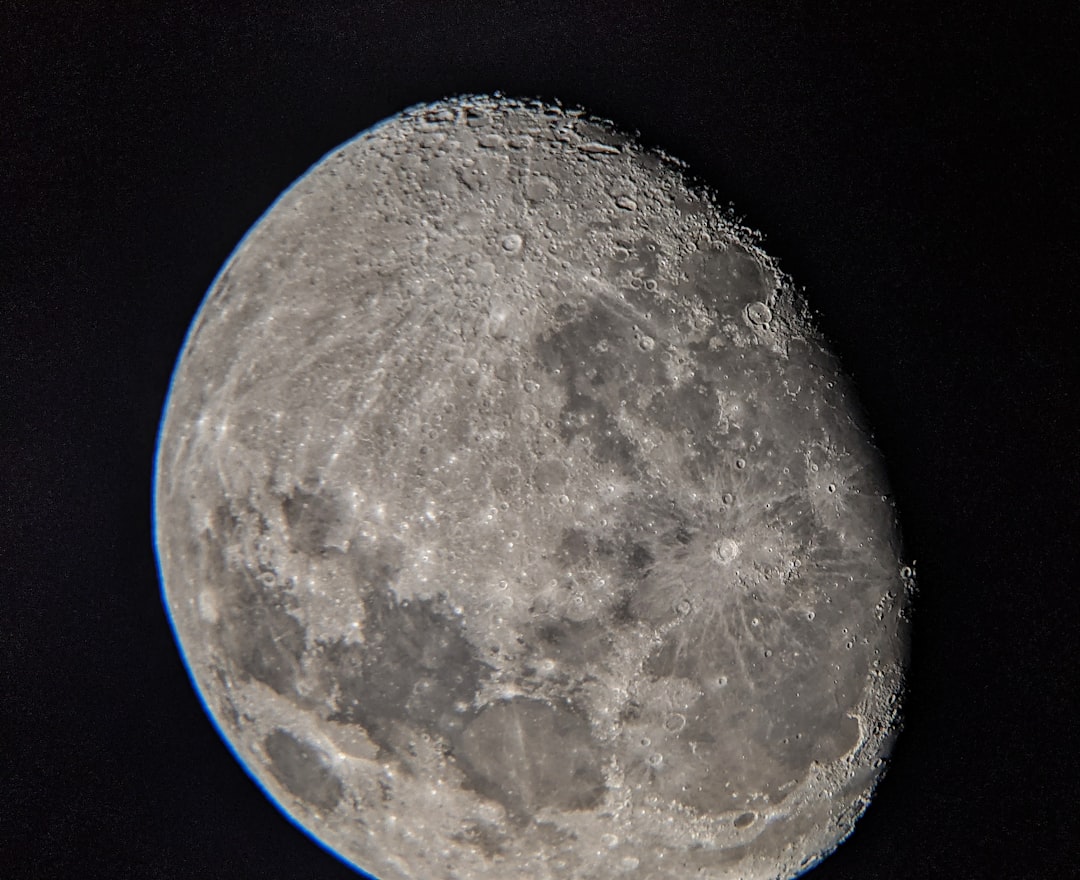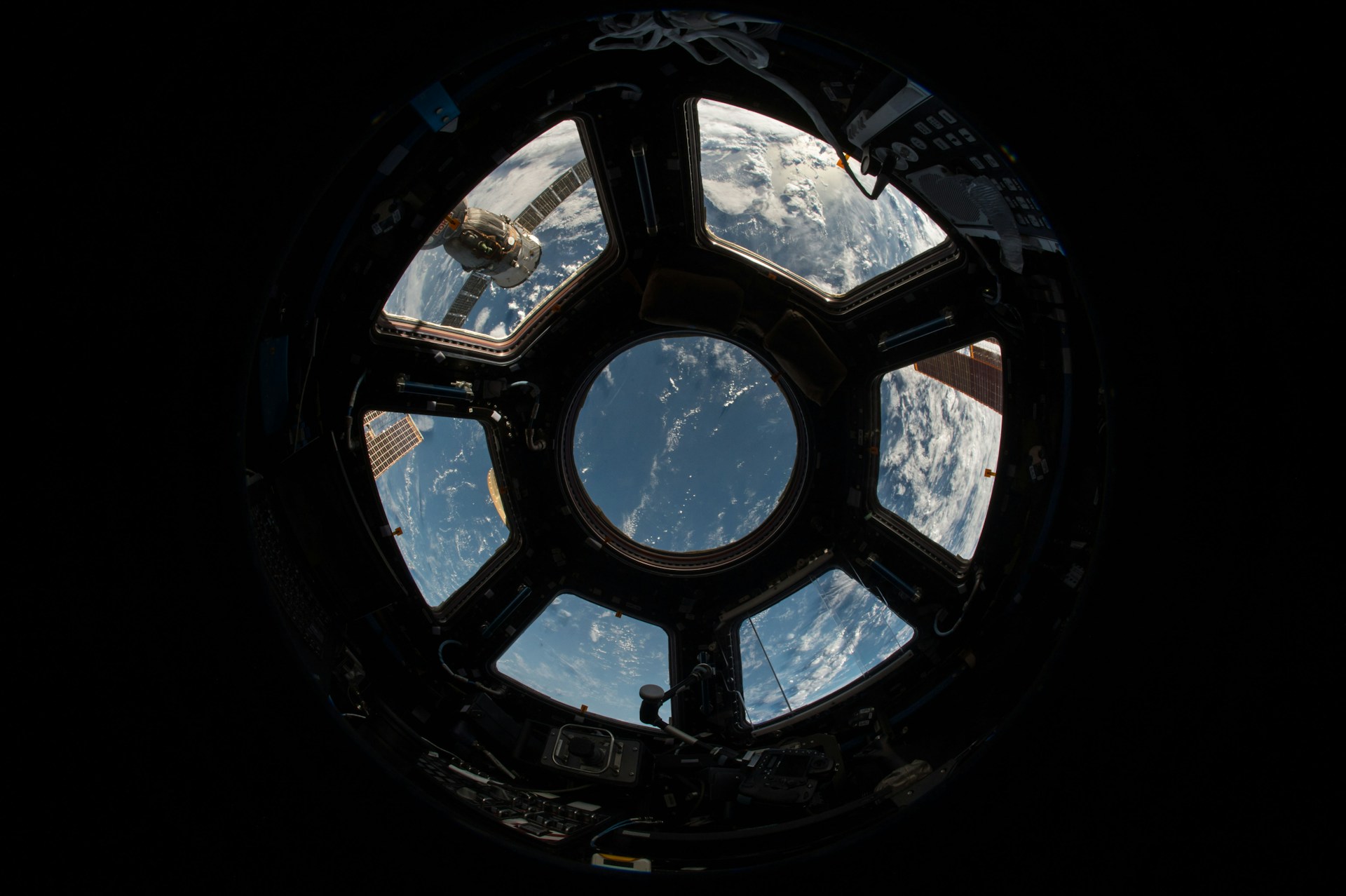
As humanity prepares to return to the Moon with the goal of establishing a more permanent presence, a critical challenge has emerged: how to accurately keep track of time between the differing gravity wells of Earth and the Moon. In a recent paper pre-print on arXiv, Pascale Defraigne at the Royal Observatory of Belgium and her co-authors discuss potential frameworks for tackling this issue, ultimately advocating for the adoption of the new Lunar Coordinate Time (TCL) proposed by the International Astronomical Union (IAU).
The need for a standardized timekeeping system on the Moon has become increasingly pressing as the United States, China, and the European Union work on programs to provide Position, Navigation, and Timing (PNT) services to support their respective crewed lunar missions. These services aim to offer meter-level accuracy for positioning network nodes on the lunar surface, necessitating nanosecond-level precision in their synchronized clocks. However, achieving this level of precision is complicated by the effects of time dilation, a phenomenon predicted by Einstein's theory of general relativity.
The Complexities of Timekeeping in Different Gravity Wells
According to general relativity, the oscillations of atoms, which form the basis for our definition of a second, are slowed down by the presence of mass. This means that time appears to move more slowly for objects in large gravity wells. On Earth, this effect is already accounted for in systems like GPS, where satellites in geosynchronous orbit experience time differently than users on the planet's surface. The Moon presents a similar challenge, with clocks on the lunar surface drifting approximately 56 µsec per day compared to a baseline clock in orbit.
"The distinction between time on Earth and the Moon becomes critical as we start considering how to keep track of time between two separate gravity wells of varying strengths. A standardized timekeeping framework is essential for accurate navigation and communication on the lunar surface." - Pascale Defraigne, Royal Observatory of Belgium
The IAU's Proposed Solution: Lunar Coordinate Time
In 2024, the IAU introduced the LUnar Celestial Reference System (LCRS) and its associated coordinate time, TCL, to address the timekeeping challenges on the Moon. While having a standard is crucial, implementing it can be tricky when it comes to time-keeping. The authors of the paper discuss several potential approaches:
1. Scaled Time Framework
One option is to create a "scaled time" framework similar to Earth's "terrestrial time" (TT), which scales the planet's coordinate time with a factor to offset the known drift of a clock at sea level. However, this solution would be difficult to implement on the Moon due to the absence of a universally accepted "sea level" and the impact of small variations in heights on clock drift.
2. Barycentric Dynamic Time Equivalent
Another approach is to implement a system equivalent to Barycentric Dynamic Time, which scales to a framework describing the entire solar system's coordinate time. This elegant solution eliminates long-term drift from a time framework already scaled to a standardized point on a world. However, it may introduce additional complexity for lunar applications.
3. Direct Use of TCL with Steering
The third option is to use TCL directly and incorporate a "steering" component that periodically resets individual clocks to a value set by a master clock. While allowing for some drift, this approach prevents clocks from becoming completely misaligned, causing navigational or communication errors. It also has the advantage of being altitude-agnostic, as the steering amount can vary for each clock.
Implementing the Optimal Timekeeping Solution
The authors argue that the direct use of TCL with steering is the best option, as it minimizes complexity while ensuring practicality for users on the Moon. They point out that clock steering is already a common practice on Earth, meaning the technology and understanding required for implementation are well-established.
"The IAU's simple solution of using Lunar Coordinate Time with a steering component appears to be the most practical approach for timekeeping on the Moon. It strikes a balance between accuracy and ease of implementation, making it an attractive option for the various agencies working on lunar navigation and communication systems." - Pascale Defraigne, Royal Observatory of Belgium
As humanity prepares for a new era of lunar exploration and habitation, the adoption of a standardized timekeeping framework will be crucial. The IAU's proposed Lunar Coordinate Time, with its steering component, offers a promising solution that addresses the challenges posed by the Moon's unique gravity well. However, successful implementation will require collaboration and agreement among the various space agencies involved in lunar missions.
The establishment of a reliable and accurate timekeeping system on the Moon will not only support navigation and communication but also enable unprecedented scientific opportunities. From conducting long-term experiments to exploring the fundamental nature of gravity and time, a standardized lunar time will lay the foundation for a new chapter in human space exploration.
As we look to the future, it is clear that the adoption of Lunar Coordinate Time will play a vital role in our efforts to establish a sustainable presence on the Moon. By working together to implement this innovative timekeeping solution, we can ensure that our lunar endeavors are built upon a solid foundation of scientific accuracy and collaboration.