Lucky 13! Starship Deploys Starlink Satellites and Achieves Softest-Ever Splashdown
SpaceX's Starship — the most powerful rocket ever built — achieved a landmark milestone during its 13th integrated flight test, successfully deploying operational next-generation Starlink V3 satellites for the first time and completing what engineers called the softest splashdown in the vehicle's history. The mission addressed critical technical snags that arose during the previous test and pushed the boundaries of reusable launch vehicle technology even further.
Liftoff and the Challenge of Max-Q
The 407-foot-tall (124-meter), two-stage rocket thundered off its Starbase launch pad in South Texas at 5:51 p.m. CT (22:51 UTC), with all 33 Raptor engines igniting simultaneously on the Super Heavy booster. The combined thrust generated at liftoff is approximately 16.7 million pounds-force (74.3 meganewtons) — nearly double that of NASA's Space Launch System and roughly twice the thrust of the Saturn V that carried astronauts to the Moon.
During the ascent, the vehicle set a new record for maximum dynamic pressure, commonly known as Max-Q. This is the moment during a rocket's climb when the product of atmospheric density and vehicle velocity reaches its peak, placing the greatest aerodynamic stress on the vehicle's structure. Surpassing previous Max-Q records is a testament to the structural integrity and propulsion efficiency of the evolving Starship design. Understanding and managing Max-Q data is critical for future crewed missions, where vehicle safety margins must be precisely characterized.
Stage Separation and Super Heavy Booster Splashdown
Minutes after liftoff, the Ship upper stage separated cleanly from the Super Heavy booster to continue along its planned flight trajectory. The booster then performed a boostback burn, reorienting itself before relighting its engines for a controlled descent. SpaceX launch commentator Dan Huot noted that not all engines fired as planned during the booster's descent burn, resulting in a splashdown in the Gulf of Mexico that was, as Huot colorfully put it, "a bit spicier than expected" — though still within safe parameters.
This outcome underscores an essential philosophy in SpaceX's iterative development approach: every flight, even one with minor anomalies, generates invaluable engineering data. The engine ignition reliability of the Raptor engine cluster remains an active area of refinement. Notably, SpaceX had already replaced six booster engines prior to this flight after an aborted launch attempt the previous week, during which four Raptor engines failed to start at the moment of ignition, triggering an automatic abort.
The "Pez Dispenser": Deploying Next-Generation Starlink V3 Satellites
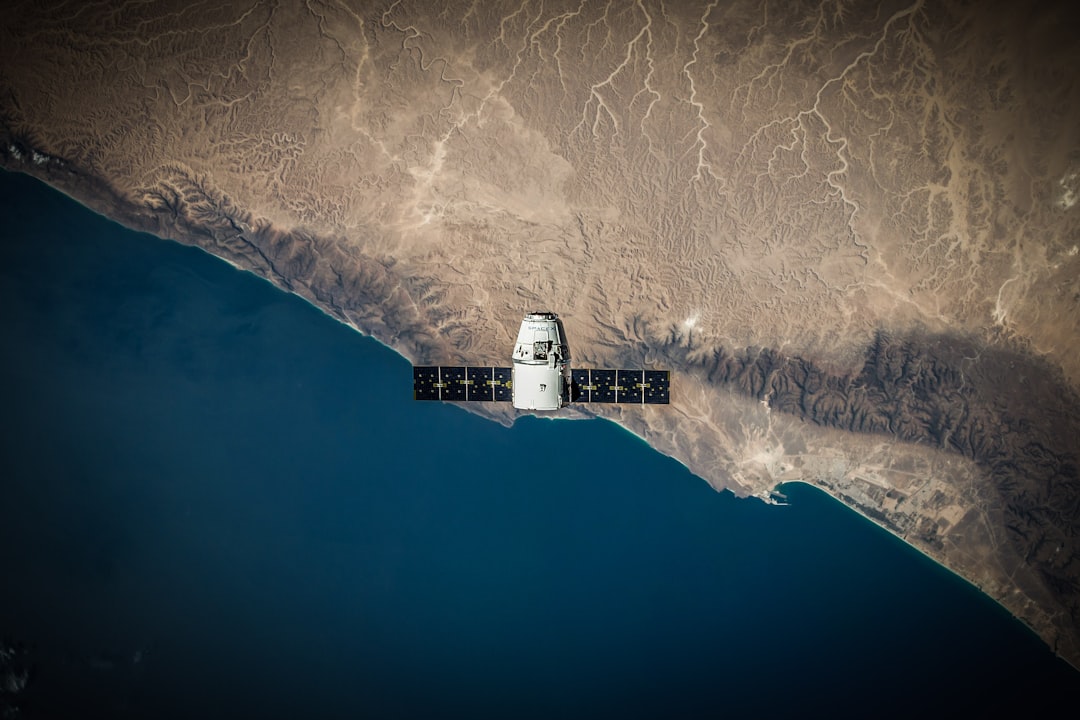
Perhaps the most operationally significant milestone of the 13th flight test was the first-ever deployment of 20 operational Starlink V3 satellites from Starship's payload bay. The deployment system — affectionately nicknamed the "Pez Dispenser" by the SpaceX team, a nod to the classic candy dispenser toy — released the satellites in a sequential manner, leveraging Starship's enormous payload volume to carry multiple spacecraft simultaneously.
Over a roughly 20-minute window, SpaceX engineers conducted a comprehensive battery of systems checks, including the deployment of each satellite's solar arrays and critical communication tests using inter-satellite laser link technology. SpaceX engineer Kate Tice reported an unambiguous success:
"Not only were we able to make contact with all 20, but we also made comms over lasers with all of them as well. So, that is awesome."
These laser communication links — technically known as optical inter-satellite links (OISLs) — are a defining feature of the advanced Starlink constellation. By routing data between satellites at the speed of light through the vacuum of space (where light travels roughly 40% faster than through fiber-optic cables on the ground), these links dramatically reduce latency and increase throughput across the network, particularly for users in remote or underserved regions of the globe.
Why Starlink V3 Represents a Generational Leap
The Starlink V3 satellite architecture represents a substantial leap beyond the current V2 generation that forms the backbone of today's operational constellation. Key improvements include:
- Download speeds of up to 1 terabit per second (Tbps) — a dramatic increase over V2 satellites, which offer speeds closer to hundreds of gigabits per second.
- Enhanced direct-to-device (D2D) connectivity, enabling standard smartphones and IoT devices to connect directly to satellites without specialized hardware.
- Larger form factor made possible by Starship's cavernous payload fairing, allowing for more powerful onboard antennas and power systems.
- Advanced propulsion systems for more precise orbital maneuvering and collision avoidance.
- Improved inter-satellite laser links enabling a true space-based internet backbone.
Crucially, the 20 satellites deployed during this flight test were not intended to remain in orbit. Following the engineering evaluation, all 20 re-entered Earth's atmosphere and burned up completely — a deliberate choice that avoids contributing to orbital debris while still yielding an enormous volume of real-world operational data. This data will be used to refine manufacturing, software, and deployment procedures for future batches of V3 satellites destined to join the permanent constellation. For more on the Starlink constellation and its technology, visit the official SpaceX Starlink page.
Ship's Reentry: A Plasma Fireworks Show
After satellite deployment was complete, the Ship upper stage executed a single-engine relight of one of its six Raptor vacuum engines in the cold vacuum of space — a critical maneuver to test the vehicle's ability to perform in-space propulsive burns that will be necessary for lunar and interplanetary missions. The engine relight also adjusted Ship's trajectory for a controlled reentry and splashdown.
As Ship plunged back into Earth's atmosphere over the Indian Ocean, it experienced the intense aerothermal heating characteristic of hypersonic reentry. The vehicle's heat shield — consisting of thousands of ceramic hexagonal tiles — was subjected to scorching temperatures that ionized the surrounding air into brilliant flashes of plasma. These incandescent plasma trails, captured on live video transmitted back to Earth in real time via the Starlink network itself, provided engineers with invaluable thermal protection data.
Understanding heat shield performance is one of the most critical engineering challenges in developing Starship for missions to the Moon and Mars. NASA's Artemis program, which has contracted SpaceX to use a Starship variant as the Human Landing System (HLS) for future lunar surface missions, depends on the vehicle's ability to survive multiple reentries reliably.
The Softest Splashdown in Starship History
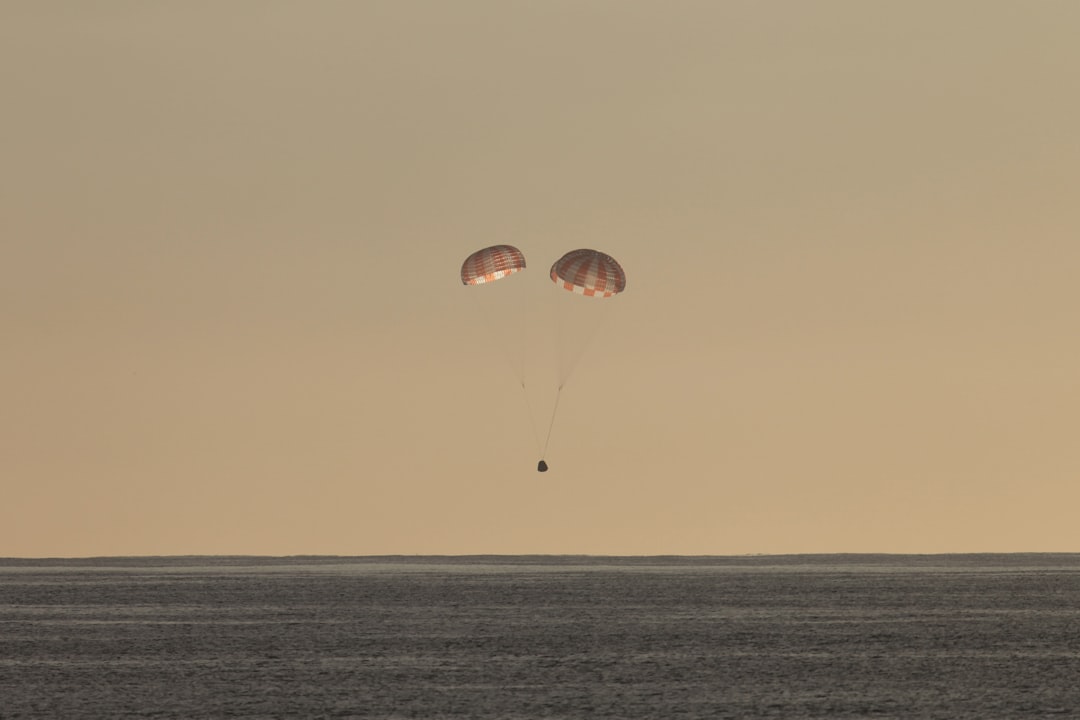
The climax of the flight came as Ship settled gently onto the surface of the Indian Ocean in what the engineering team immediately recognized as a historic moment. Rather than impacting the water at high velocity or tumbling uncontrollably, the vehicle descended in a controlled, near-vertical attitude and came to rest intact and upright, briefly spouting flames from residual propellant as it floated on the surface.
"That is a first. That is the softest splashdown we have ever had with a Starship there in the Indian Ocean. This is a dream scenario for the team that's trying to get this heatshield data." — SpaceX commentator Dan Huot
The intact recovery of Ship is significant beyond a symbolic achievement. It means that the heat shield tiles, structural components, and onboard instrumentation can potentially be recovered and physically examined — something far more informative than telemetry data alone. As SpaceX progresses toward full reusability of both the booster and the Ship upper stage, achieving consistent controlled splashdowns is a mandatory stepping stone. Recovering the upper stage from the ocean — and eventually catching it mid-air with the "Mechazilla" tower arm system at Starbase — is central to SpaceX's vision of rapid vehicle turnaround.
Context: The Starship V3 Development Program
This 13th flight marked only the second test of the Starship V3 configuration, which incorporates significant upgrades over the V2 rocket used in earlier tests. The Starship V3 design features improvements to engine performance, propellant loading efficiency, and structural reinforcements informed by data gathered during earlier flights. The previous V3 test, conducted in May 2025, followed a similar flight profile and was rated a success, but SpaceX identified and addressed engine performance issues on both the Super Heavy booster and the Ship upper stage in the weeks that followed.
The path to this flight was not without obstacles. SpaceX's first launch attempt for Flight 13 ended in an automatic abort at the moment of ignition after four Raptor engines failed to achieve the commanded start sequence. Engineers subsequently identified six booster engines that raised performance concerns and replaced them before the successful second attempt. Such methodical troubleshooting is emblematic of the test-to-failure, iterate-rapidly development philosophy that has defined the Starship program since its inception.
What This Means for the Future
The successful 13th flight test carries profound implications across multiple dimensions of spaceflight:
- Commercial satellite deployment: Starship's ability to carry and deploy dozens of large next-generation satellites per flight will accelerate the buildout of the V3 Starlink constellation, potentially reshaping global internet access and telecommunications infrastructure.
- Lunar exploration: NASA and SpaceX are working toward using a Starship HLS variant to land astronauts on the Moon as part of the Artemis program, making consistent Ship performance data essential.
- Mars ambitions: SpaceX's long-term goal of establishing a self-sustaining human presence on Mars depends entirely on Starship's full reusability and reliability across hundreds of missions.
- Point-to-point Earth transport: A fully reusable Starship could one day transport passengers between any two points on Earth in under an hour, though this application remains further in the future.
- Cost reduction in space access: Each successful reuse demonstration moves the industry closer to dramatically lower launch costs, a prerequisite for making space exploration and development economically sustainable.
For the broader scientific community, Starship's growing maturity as a launch platform also opens the door to entirely new categories of large-aperture space telescopes, deep space probes, and in-space infrastructure that were previously impossible given the payload constraints of existing rockets. Space agencies worldwide are closely monitoring Starship's development as it redefines what is architecturally possible in mission design.
Conclusion
Starship Flight 13 was, by any meaningful measure, a triumph. From its record-setting Max-Q performance at liftoff and the historic first deployment of operational Starlink V3 satellites, to the spellbinding plasma reentry and the softest splashdown the program has ever recorded, the mission delivered on nearly every front. With each successive flight, SpaceX chips away at the technical and operational challenges that separate ambition from reality — and the 13th flight of Starship suggests that the most transformative chapter in the history of human spaceflight may be drawing closer than ever before.