Hubble Discovers the First "Missing" Black Hole in Omega Centauri's Famous Star Cluster
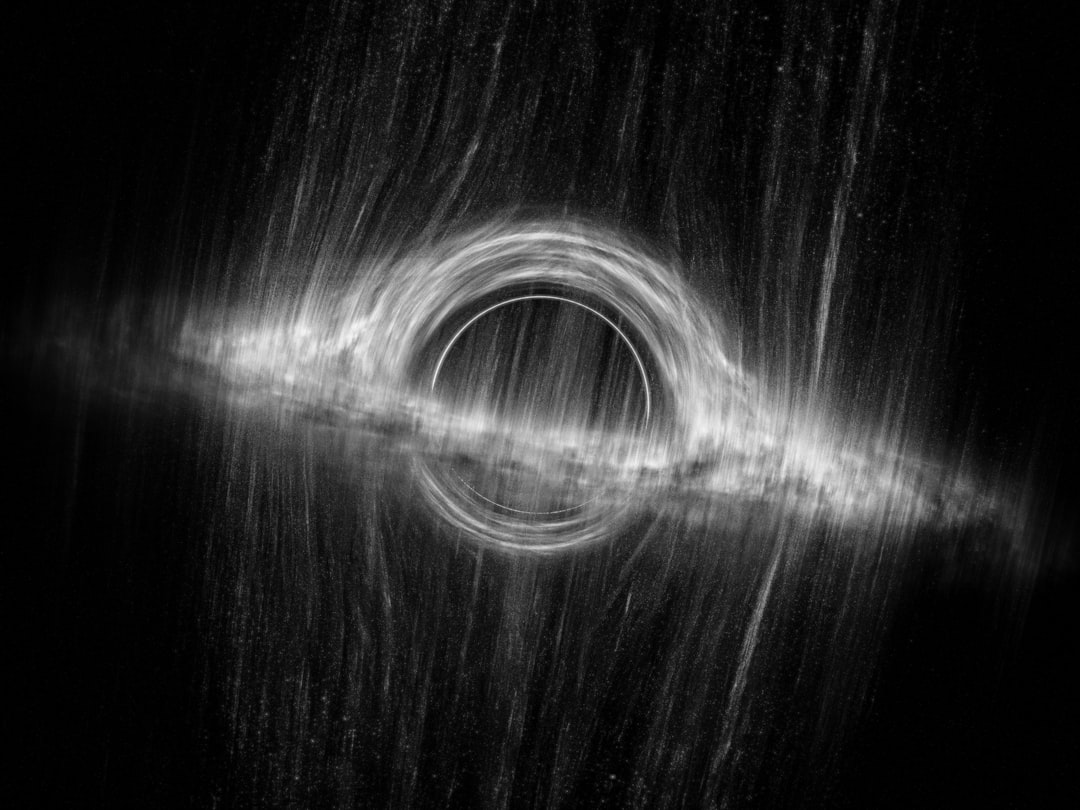
Using over two decades of archival data from NASA's Hubble Space Telescope (HST) and cutting-edge observations from the James Webb Space Telescope (JWST), astronomers have achieved a landmark discovery: the first confirmed stellar-mass black hole within the legendary Omega Centauri globular cluster. For decades, this ancient stellar congregation mystified astronomers by showing a conspicuous absence of the stellar-mass black holes that models predicted should be present in abundance. This discovery not only resolves a long-standing astrophysical puzzle but also opens a new window into our understanding of black hole formation, binary system dynamics, and the origins of gravitational waves.
Omega Centauri: A Cosmic Metropolis
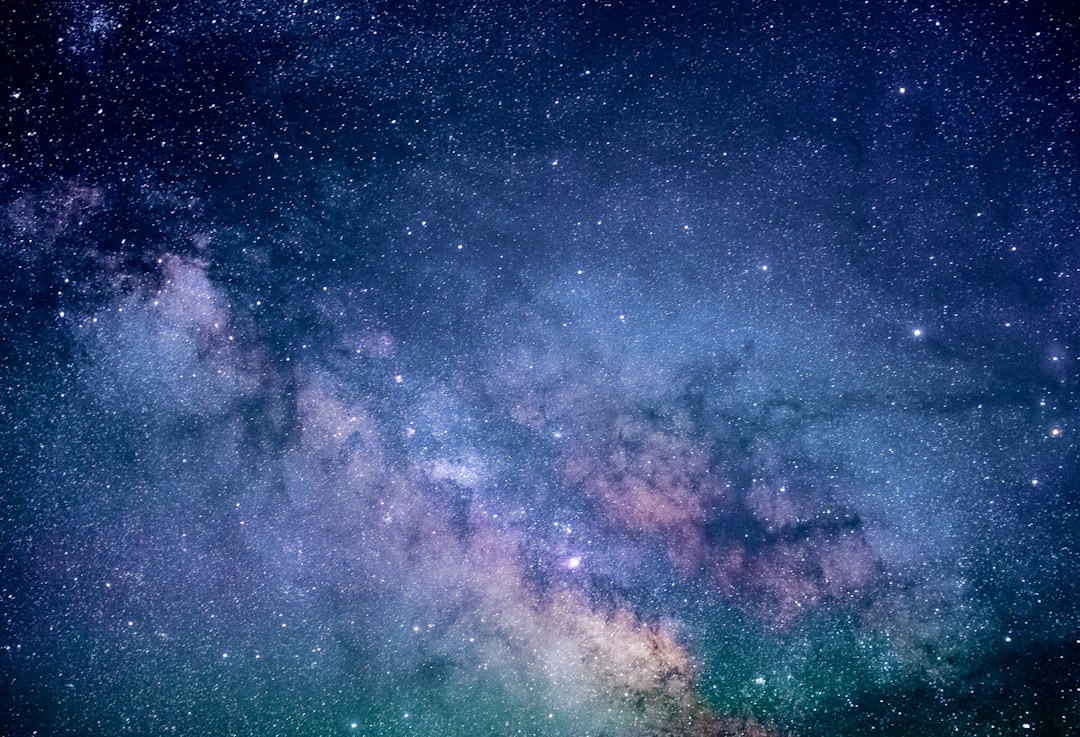
Omega Centauri (NGC 5139) is no ordinary star cluster. Located approximately 18,000 light-years from Earth in the southern constellation Centaurus, it is the largest and most massive globular cluster in the Milky Way galaxy. Spanning a diameter of roughly 150 light-years, it contains an extraordinary 10 million stars, densely packed into a gravitationally bound sphere that has persisted for billions of years.
Globular clusters like Omega Centauri are among the oldest structures in the universe, serving as cosmic time capsules. Their stars are thought to have formed simultaneously from the same primordial cloud of gas, making them invaluable laboratories for studying stellar evolution, black hole physics, and galactic dynamics. In 2024, Hubble observations provided compelling evidence for an intermediate-mass black hole (IMBH) lurking at Omega Centauri's center — a discovery that further elevated the cluster's scientific importance. Yet, despite theoretical models predicting a population of roughly 10,000 stellar-mass black holes within the cluster, none had ever been directly detected. This glaring absence earned them the moniker of "missing" black holes.
The Challenge of Finding Black Holes
Detecting black holes is inherently one of the most challenging tasks in observational astronomy. By their very nature, black holes neither emit, absorb in a detectable direct manner, nor radiate electromagnetic radiation — they are, in the truest sense, invisible. Traditionally, astronomers have relied on two primary indirect detection strategies:
- Radial velocity measurements: Monitoring the Doppler shifts in the light spectra of nearby stars to detect gravitational tugs caused by an unseen massive companion.
- Accretion signatures: Looking for intense radio and X-ray emissions produced when gas and dust fall onto a black hole's event horizon, heating to extreme temperatures in the process.
However, in the dense, crowded environment of a globular cluster, both methods face significant limitations. Stars are packed so tightly that individual spectroscopic measurements are difficult to disentangle, and many stellar-mass black holes simply do not accrete enough material to produce detectable high-energy emissions. A third, increasingly powerful approach — astrometry — has emerged as a game-changer for exactly these environments.
A New Approach: Astrometric Precision
The Utah-led research team employed astrometric measurements, a technique that tracks the extraordinarily tiny positional shifts of stars across the sky over time. Unlike radial velocity measurements, which detect motion along the line of sight, astrometry captures motion in the plane of the sky — providing a complementary and highly precise view of stellar orbits. By combining over 20 years of archival Hubble data spanning from 2002 to 2023 with more recent observations from Webb's Near-Infrared Camera (NIRCam), the team achieved a level of positional precision measured to a fraction of a single pixel on the detectors of these space-based observatories.
"With Hubble and Webb data, we were able to see the motion of the visible main-sequence star that is part of this binary, which is about 18,000 light-years away in the dense environment of Omega Centauri. The precision of these measurements is incredible, down to a fraction of a pixel on Hubble and Webb's detectors. It would not have been possible to find this black hole without these two space telescopes." — Matthew Whitaker, postdoctoral researcher, University of Utah and lead author of the study.
By painstakingly charting the path of a visible main-sequence star across more than two decades, the team identified unmistakable gravitational perturbations consistent with an unseen, massive companion. The precision required for this task is staggering — equivalent to detecting the apparent width of a human hair from several kilometers away.
Introducing oMEGACat BH-2: The First "Found" Black Hole
The invisible massive object, now formally designated oMEGACat BH-2, represents the first stellar-mass black hole ever confirmed within Omega Centauri, and it carries several remarkable and scientifically provocative characteristics.
Interestingly, when a separate team of astronomers had previously examined this same binary system, they concluded that the companion was likely a neutron star — the dense remnant left behind by a supernova that does not quite meet the mass threshold for black hole formation. The new, expanded dataset dramatically changed that conclusion. By leveraging the full temporal baseline of Hubble's archival observations and the superior infrared sensitivity of Webb's NIRCam, the Utah team was able to place far tighter constraints on the mass of the unseen companion.
"While we already knew that the star was 0.78 solar masses, we can now calculate the black hole's mass, which is 4.46 solar masses and therefore too heavy to be a neutron star. However, its mass is much lower than would be expected in a metal-poor environment like Omega Centauri. This is surprising and exciting. We now know that a metal-poor star is able to form a black hole like this, and we need to figure out how that happens." — Anil Seth, Professor of Physics & Astronomy, University of Utah.
The mass of 4.46 solar masses firmly places oMEGACat BH-2 in the stellar-mass black hole category — too massive to be a neutron star, whose upper mass limit is generally thought to be around 2 to 3 solar masses. Yet it also falls significantly below the typical mass range expected for black holes forming in metal-poor environments like Omega Centauri. In such environments, where stars contain relatively few elements heavier than hydrogen and helium, stellar winds are generally weaker. This means massive stars lose less mass before they die, and the resulting black holes are typically expected to be more massive — not less. The anomalously low mass of oMEGACat BH-2 challenges existing models and demands new theoretical explanations.
A Record-Breaking Orbital Period and Its Implications
Among oMEGACat BH-2's most remarkable properties is its extraordinarily long orbital period. The team determined that the visible companion star completes one full orbit around the black hole every 94 years, making this the longest-period black hole binary system ever discovered. For context, most known black hole binary systems have orbital periods measured in days, hours, or even minutes, as the intense gravity of the black hole draws its companion into a tight, rapidly cycling orbit.
This unusually wide separation between the black hole and its stellar companion carries significant implications for the system's origin. A binary system formed together from the same stellar nursery would, over time, have been drawn into a much tighter orbit. Instead, the wide, slow orbit strongly suggests a dynamical capture scenario: the black hole likely gravitationally ensnared an unrelated passing star during one of the countless stellar encounters that occur in Omega Centauri's densely populated core. This type of dynamical binary formation is a key predicted process in globular clusters, and oMEGACat BH-2 now provides direct observational evidence that it occurs.
Despite its current stability, the system's longevity is limited. The researchers calculated that gravitational perturbations from frequent close encounters with neighboring stars will ultimately destabilize the binary, and oMEGACat BH-2 will be disrupted in less than one billion years. While this sounds like an eternity by human standards, it represents less than one-twelfth of Omega Centauri's estimated age of approximately 12 billion years, underscoring just how dynamic and violently transient these systems can be.
Implications for Gravitational Wave Science
Beyond the immediate excitement of the discovery itself, the detection of oMEGACat BH-2 has profound implications for one of modern astronomy's most transformative fields: gravitational wave astronomy. Since the groundbreaking first detection of gravitational waves by LIGO (Laser Interferometer Gravitational-Wave Observatory) in 2015, scientists have catalogued dozens of black hole merger events. Yet a fundamental question has persisted: where do these merging black hole binaries come from?
Dense stellar environments like globular clusters are considered among the most productive factories for creating the types of binary systems that ultimately merge and produce gravitational waves. When black holes dynamically form binaries through gravitational interactions, they can eventually spiral inward and collide, releasing tremendous bursts of spacetime ripples detectable across billions of light-years. Understanding the initial population of black holes in clusters like Omega Centauri — their masses, orbital configurations, and formation histories — is therefore essential for interpreting gravitational wave signals and refining the models used by facilities such as ESA's planned LISA mission.
"It's important to understand black hole populations in globular clusters because there's uncertainty about their physics and formation. More specifically, understanding the process of forming black holes and then dynamically forming binaries is vital, because it affects our ability to interpret and understand gravitational wave events. Environments like Omega Centauri are the primary places where we think binaries are merging and creating these waves." — Anil Seth, University of Utah.
The Road Ahead: Roman, Hubble, and Webb
The discovery of oMEGACat BH-2 is widely viewed by the research team as an opening chapter rather than a conclusion. Thousands of stellar-mass black holes are still thought to reside undiscovered within Omega Centauri's stellar labyrinth, and the team plans to continue leveraging the combined power of Hubble and Webb to extend their astrometric search across broader regions of the cluster.
A particularly exciting addition to this observational arsenal will be the Nancy Grace Roman Space Telescope, currently scheduled for launch on August 30th, 2026. Roman will carry a wide-field infrared camera capable of imaging large swaths of sky — including the galactic bulge and galactic center — with the same angular resolution as Hubble but covering an area roughly 100 times larger in a single observation. This combination of sharpness and wide-field coverage will make Roman an extraordinarily powerful tool for astrometric surveys of dense stellar populations, dramatically accelerating the hunt for hidden black holes throughout the Milky Way.
Key highlights of this discovery and its broader significance include:
- First confirmed stellar-mass black hole in Omega Centauri, the Milky Way's largest globular cluster.
- Black hole mass of 4.46 solar masses — lighter than expected for a metal-poor environment, challenging existing stellar evolution models.
- Orbital period of 94 years — the longest known for any black hole binary system.
- Evidence supports dynamical capture as the formation mechanism for the binary system.
- System predicted to survive for less than one billion years before disruption by stellar encounters.
- Discovery provides direct observational data to help model the gravitational wave sources detected by LIGO and future observatories.
- Future surveys with the Nancy Grace Roman Space Telescope expected to vastly expand the search for "missing" black holes.
With each new detection, astronomers inch closer to solving one of the most enduring mysteries embedded within Omega Centauri's ancient starlight. The universe's invisible architects — its black holes — are slowly, painstakingly, being brought into the light. For further exploration of this discovery and related research, readers are encouraged to visit NASA's Hubble Space Telescope page and the ESA/Hubble Science Hub.