MIT Research Could Lead to Refueling Depots on Mars
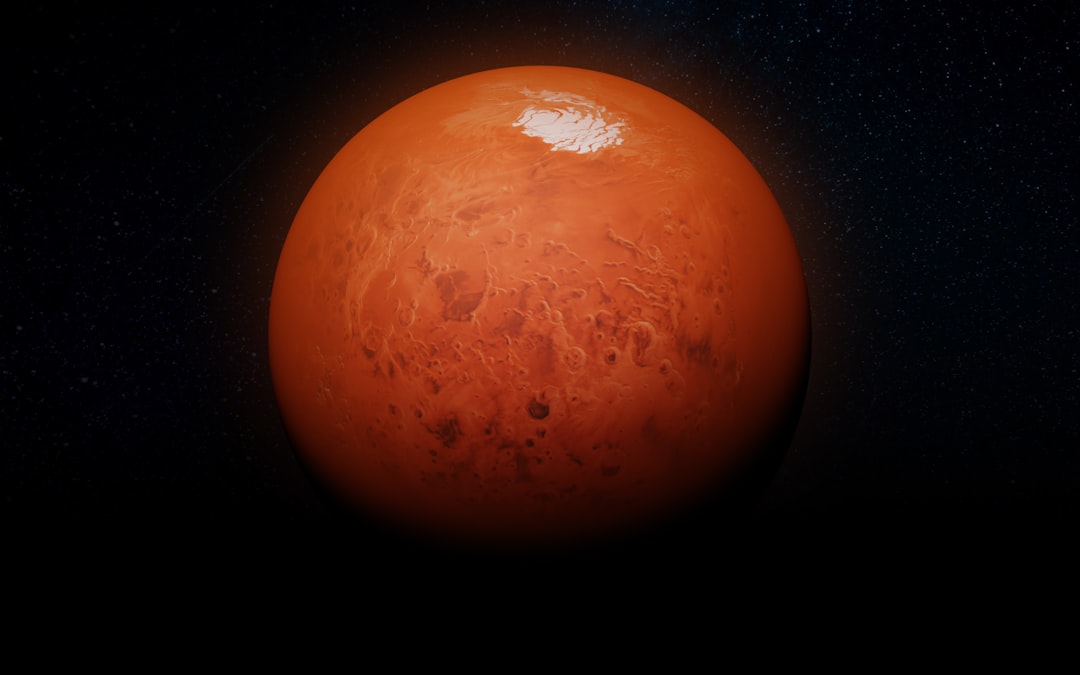
Among the most formidable engineering challenges humanity faces in its ambition to send astronauts to Mars is not simply getting there — it is getting them back. NASA, along with international partners and private entities, is targeting crewed Mars missions in the coming decades, with China announcing similar aspirations. Yet before any human boots touch Martian soil, a cascade of critical technological milestones must be reached: advanced propulsion systems, robust life support, radiation shielding, and — perhaps most fundamentally — a reliable source of propellant for the return journey home.
One of the most promising strategies to address the propellant problem is In-Situ Resource Utilization (ISRU) — the concept of harvesting and converting local planetary resources into usable materials rather than launching everything from Earth. Given the enormous cost and complexity of transporting propellant across the 140 million miles separating Earth and Mars at closest approach, the ability to manufacture rocket fuel directly on the Martian surface could be the decisive factor in making crewed missions not only possible, but sustainable.
Turning Mars' Atmosphere Into Rocket Fuel
At the Massachusetts Institute of Technology (MIT), groundbreaking work is underway that could turn this vision into reality. PhD candidate Lanie McKinney and colleagues within MIT's Aerospace Plasma Group are developing technology capable of converting the Martian atmosphere directly into usable propellant and life support gases — a process that could one day power the engines that bring astronauts home from Mars.
Mars' atmosphere is composed of approximately 95% carbon dioxide (CO₂), with trace amounts of nitrogen, argon, and other gases. While this thin, frigid atmosphere — averaging just 0.6% of Earth's atmospheric pressure at the surface — might seem inhospitable and useless, it represents an extraordinary feedstock for chemical conversion. McKinney's technology leverages cold plasma to dissociate carbon dioxide molecules into oxygen (O₂) and carbon monoxide (CO). Both products are enormously valuable: oxygen can support astronaut life support systems and serve as an oxidizer in rocket propellant, while carbon monoxide can itself be used as a fuel component in certain propulsion architectures.
"We can actually perform the conversion step really well. But what happens in a plasma is we convert it, and then we get a mixture that needs to be separated. We are not entirely sure what we will see." — Lanie McKinney, MIT PhD Candidate
This approach builds on a rich legacy of ISRU research. NASA's MOXIE (Mars Oxygen In-Situ Resource Utilization Experiment), which flew aboard the Perseverance rover, successfully demonstrated small-scale oxygen production on Mars using a solid oxide electrolysis method. McKinney's plasma-based approach offers a potentially compelling alternative pathway, one that may offer distinct advantages in efficiency or scalability under Martian conditions.
The NRP-DBD Reactor: A Small Device With Giant Implications
Under the mentorship of Carmen Guerra-Garcia, the Esther and Harold E. Edgerton Associate Professor at MIT, McKinney has designed and built a compact plasma reactor at the heart of this research. The device is known as a Nanosecond Repetitively Pulsed Dielectric Barrier Discharge (NRP-DBD) reactor — a sophisticated instrument that uses precisely timed, high-voltage electrical pulses to ionize gas and drive chemical reactions that would otherwise require extreme temperatures or pressures.
Plasma reactors like the NRP-DBD work by energizing electrons within a gas to the point where they can break molecular bonds — in this case, the strong double bonds within CO₂ molecules — without necessarily heating the bulk gas to extreme temperatures. This so-called non-equilibrium or cold plasma state allows for highly selective chemistry with relatively low energy input compared to thermal methods, a critical advantage when energy resources on Mars will be strictly limited.
McKinney's current research takes the technology a critical step further by integrating the plasma reactor with an oxygen-selective membrane. This membrane is designed to rapidly extract oxygen from the reaction mixture immediately after dissociation, before it can recombine with carbon monoxide to reform CO₂ — a process known as back-reaction or recombination, which reduces overall conversion efficiency. The coupling of plasma excitation with membrane separation represents a sophisticated systems-level engineering challenge, as little is known about how membrane materials will behave when exposed to the highly reactive environment inside a plasma discharge.
- Feedstock: Carbon dioxide (CO₂) sourced directly from the Martian atmosphere
- Conversion method: Nanosecond Repetitively Pulsed Dielectric Barrier Discharge (NRP-DBD) cold plasma
- Primary outputs: Oxygen (O₂) for life support and propulsion; Carbon monoxide (CO) as a potential fuel component
- Key challenge: Rapid oxygen extraction via selective membrane to prevent back-reaction recombination
- Application: ISRU propellant production and life support on Mars
A Culture of Innovation: The MIT Space Resources Workshop
McKinney's plasma research does not exist in isolation. It is part of a broader, collaborative culture of space innovation cultivated at MIT through the Space Resources Workshop — a student-founded and student-led group dedicated to developing proof-of-concept systems for ISRU on the Moon and Mars. The workshop serves as an incubator for ideas that bridge fundamental science and practical engineering, and has become a gateway for students to engage with real-world NASA challenges.
Through this workshop, McKinney has participated in several NASA-sponsored competitions. For her first, she and teammates were tasked with designing a fully self-sustaining Mars mission capable of operating for ten years — an exercise that demanded integration of life support, energy generation, food production, waste recycling, and propellant manufacturing into a coherent, closed-loop architecture.
Most recently, McKinney co-led MIT's team in NASA's LunaRecycle Challenge, competing under the inventive name CERBERUZ — Composites for Extraterrestrial Recycling By Engineering the Reuse and Upcycling of Zotek. The team's innovative system grinds mixed waste materials into fine powder, which can then be reprocessed via injection molding and 3D-printing to fabricate spare parts and structural components. This closed-loop waste management approach is critical for long-duration missions where resupply from Earth is impossible or impractical. Their ingenuity earned them first prize in Phase 2 of the competition, along with a $775,000 award — a testament to the real-world viability of their solution.
Building Habitats From the Ground Up — Literally
McKinney's interdisciplinary curiosity extends beyond atmospheric chemistry. Through MIT's Space Architecture course, she joined a team of engineers and architects to confront another existential challenge of lunar and Martian habitation: radiation shielding. Unlike Earth, the Moon and Mars lack substantial magnetic fields or thick atmospheres to deflect harmful cosmic rays and solar energetic particles. Long-term exposure to this radiation poses serious health risks to astronauts, including elevated cancer risk and neurological damage.
McKinney's team proposed producing bricks from lunar regolith — the loose soil and rock fragments that blanket the Moon's surface — that could be stacked without mortar or binding agents to construct radiation-protective habitats. This approach aligns with broader efforts by ESA and other agencies exploring 3D-printing technologies that use local resources to construct structures off-world, reducing the need to launch construction materials from Earth at staggering cost.
The science underpinning such habitat construction continues to advance. NASA's Moon to Mars architecture explicitly identifies ISRU-based construction as a strategic priority, recognizing that sustainable human presence beyond Earth depends on the ability to build, maintain, and expand infrastructure using materials found on-site.
Why Propellant Production Is Non-Negotiable
To fully appreciate the stakes of McKinney's research, consider the mathematics of interplanetary travel. A crewed Mars mission using conventional chemical propulsion requires enormous quantities of propellant — both for the journey from Earth to Mars and, critically, for the return trip. Launching all of this propellant from Earth's surface is extraordinarily expensive and technically constraining, as every kilogram added to the spacecraft increases the fuel required to lift it, creating a compounding penalty known as the tyranny of the rocket equation.
Producing propellant on Mars using local resources fundamentally breaks this constraint. A Mars-produced propellant architecture — sometimes described as the concept of "gas stations on Mars" — could dramatically reduce the mass that must be launched from Earth, potentially enabling missions that would otherwise be economically or physically infeasible.
"If we don't build gas stations on Mars, it will be very difficult to get humans back to Earth. We're going to need some way to produce the propellant on site. What comes next is building up a permanent presence so that we can do amazing science and be really effective at exploration." — Lanie McKinney, MIT
Candidate propellants for a Mars-ISRU architecture include liquid oxygen and liquid methane (LOX/CH₄) — the same combination used by SpaceX's Raptor engines aboard Starship — or carbon monoxide and oxygen, both of which can be derived from atmospheric CO₂ dissociation. The NASA Jet Propulsion Laboratory and other institutions continue to study which propellant combinations offer the optimal balance of energy density, producibility, and storability under Martian conditions.
The Power of Collaboration: A Multi-Disciplinary Imperative
Perhaps the most resonant lesson McKinney draws from her diverse research experiences is the indispensable role of cross-disciplinary collaboration. The problems of deep space exploration do not respect the boundaries between academic fields. Solving them demands chemists who understand plasma physics, engineers who can think like architects, and scientists willing to work alongside policy makers and commercial partners.
"The kinds of innovative solutions that can be discovered when you work on a team that brings together different expertise and experiences was one of the project's major takeaways. I feel like I have learned so much from being a part of these different teams. I love to explore and go on adventures. And space is the ultimate thing you could explore." — Lanie McKinney
This philosophy mirrors the broader organizational reality of modern space exploration. Missions to the Moon and Mars will require not only the ingenuity of individual researchers like McKinney, but deep cooperation between national space agencies, commercial launch providers, research universities, and international partners. The Artemis Accords, signed by dozens of nations, represent one framework for the kind of international collaboration that sustainable off-world presence will demand.
As humanity stands at the threshold of becoming a multi-planetary species, research like that being conducted in MIT's Aerospace Plasma Group offers a glimpse of the scientific and engineering foundations upon which that future will be built — one plasma reaction, one oxygen molecule, one refueling depot at a time.
Key Takeaways
- MIT PhD candidate Lanie McKinney is developing a cold plasma reactor (NRP-DBD) to convert Martian CO₂ into oxygen and carbon monoxide for propellant and life support.
- The technology is being advanced through MIT's Aerospace Plasma Group under the mentorship of Professor Carmen Guerra-Garcia.
- McKinney's work integrates a plasma reactor with an oxygen-selective membrane to improve separation efficiency and prevent gas recombination.
- Her team won $775,000 in NASA's LunaRecycle Challenge for a waste-to-parts recycling system applicable to deep space missions.
- ISRU-based propellant production is widely considered essential for making crewed Mars missions economically and physically viable.
- Solutions for long-term space habitation require multi-disciplinary, international, and public-private collaboration.
For more information on NASA's In-Situ Resource Utilization programs, visit NASA's MOXIE page. For further reading on Mars exploration architectures, explore NASA's Moon to Mars overview and research from the Jet Propulsion Laboratory.