Researchers Measure the Environment Where the First Supermassive Black Holes Formed
When the James Webb Space Telescope (JWST) pointed its powerful instruments toward the early Universe, scientists were met with a startling revelation. At high redshift (z) values — corresponding to less than one billion years after the Big Bang — astronomers witnessed an unexpected abundance of galaxies hosting what appeared to be the "seeds" of supermassive black holes (SMBHs). These cosmic giants, some estimated to contain masses equivalent to hundreds of millions to billions of solar masses, had seemingly materialized impossibly fast, fundamentally challenging our understanding of how the Universe's most extreme objects come to exist.
The conventional explanation for black hole growth — in which individual stars collapse at the end of their lives to form stellar-mass black holes that gradually merge and accrete matter over billions of years — simply cannot account for the sheer scale and early appearance of these monsters. The timeline doesn't add up. Something else must have been at work in the infant Universe, operating on a far more dramatic scale.
A Bold New Pathway: Direct Collapse Black Holes
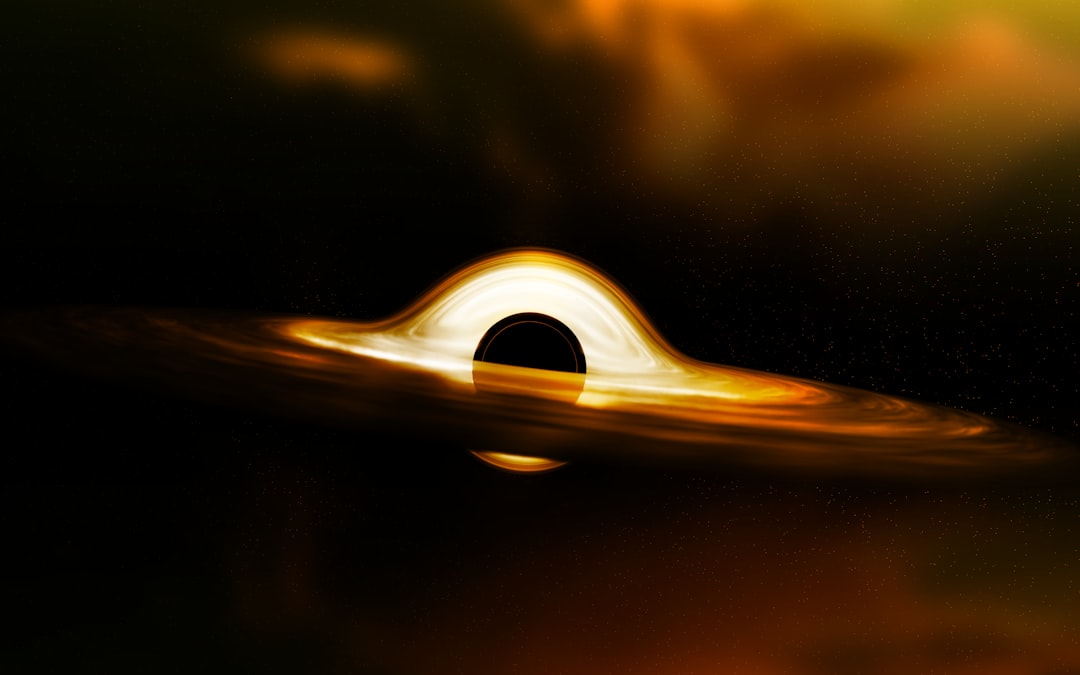
This cosmic mystery has led astronomers to seriously consider an alternative mechanism: the Direct Collapse Black Hole (DCBH) scenario. Rather than the slow, bottom-up assembly of smaller black holes, this pathway proposes that enormous, pristine clouds of cold gas — largely free of heavy elements — could have coalesced rapidly at the centers of early galaxies and collapsed directly into massive black holes, bypassing the stellar phase entirely. The result would be a "heavy seed" black hole, potentially starting life with a mass of 10,000 to 100,000 solar masses, providing the head start needed to grow into the SMBHs we observe at very high redshifts.
Yet, critical questions have persisted: Where exactly did DCBHs form? What specific environmental conditions were necessary to trigger direct collapse? And how do these environments connect to the luminous quasars and active galactic nuclei (AGN) we observe in the early Universe? Now, a new international study takes a major step toward answering these questions.
"Our results provide a theoretical framework to test the conditions that favor heavy seed formation and to assess the role of direct collapse as a pathway to the SMBH population observed at very high redshift."
— Alessandro Trinca et al., Monthly Notices of the Royal Astronomical Society
The Research Team and Their Approach
The study was led by Alessandro Trinca, a Postdoctoral Research Associate at the University of Edinburgh's Institute for Astronomy and Royal Observatory. He was joined by an international coalition of researchers from the Como Lake Center for Astrophysics, the INAF Osservatorio Astronomico di Roma, the INAF Osservatorio di Astrofisica e Scienza dello Spazio di Bologna, the Institute of Science and Technology Austria (ISTA), the Institut d'Astrophysique de Paris, the Sapienza School for Advanced Studies, and multiple partner universities across Europe. Their findings appear in the prestigious journal Monthly Notices of the Royal Astronomical Society (MNRAS).
The team's methodology was both ambitious and elegantly constructed, weaving together cutting-edge computational simulations with observational data from JWST — including the recently identified enigmatic objects known as "Little Red Dots" (LRDs), extremely compact, red-hued sources detected by JWST that may represent an early population of heavily obscured AGN or DCBH descendants.

Dark Matter Merger Trees and Cosmic Overdensities
Central to the team's work is the concept of Dark Matter (DM) merger trees. Within the widely accepted Lambda Cold Dark Matter (ΛCDM) cosmological model, the large-scale structure of the Universe is thought to have been sculpted by the gravitational influence of invisible dark matter. Dark matter halos — vast, gravitationally bound clumps of this unseen material — are theorized to have grown hierarchically, forming through the progressive merger of smaller clumps over cosmic time. This "bottom-up" growth model mirrors earlier theories of SMBH formation, which suggested they assembled through the mergers of smaller stellar-mass and intermediate-mass black holes.
To investigate the role of these structures in DCBH formation, the team combined high-resolution N-body simulations of dark matter merger trees with a semi-analytic model of black hole formation and galaxy co-evolution. This dual approach allowed them to model both the large-scale gravitational scaffolding of the Universe and the complex baryonic (ordinary, "visible" matter) processes occurring within individual galaxies simultaneously.
The halo merger history was simulated using cosmological zoom-in software based on the GIZMO particle-based code, a state-of-the-art hydrodynamics platform capable of resolving the intricate dynamics of merging dark matter structures at high resolution. This was complemented by detailed simulations of the baryonic component — including gas, dust, and stars — across all progenitor halos using the Cosmic Archaeology Tool (CAT), a powerful semi-analytic model specifically designed to interpret the physical properties of high-redshift sources and rigorously test different black hole evolution scenarios against observational data.
"This allowed us to trace the abundance, spatial distribution, and environmental conditions of haloes capable of forming DCBHs over cosmic time, exploring how these trends depend on the specific physical requirements for heavy seed formation... Building on this, we focused on predicting the observational features of the population of DCBH descendants expected to reside near high-redshift quasars at z ~7 [12.9 billion years ago]."
— Trinca et al.
Key Findings: When and Where Did the First Black Hole Seeds Form?
The simulation results paint a vivid and unprecedented picture of the earliest epoch of black hole formation. Among the most significant findings:
- Earliest formation epoch: Massive black hole seeds could have formed via direct collapse as early as 13.64 billion years ago — less than 500 million years after the Big Bang — making them among the very first complex structures in the cosmos.
- A finite window of opportunity: The DCBH formation window appears to have closed between approximately 13.5 and 13.4 billion years ago, when the progressive metal enrichment of the intergalactic medium (IGM) — driven by the earliest Population III stars exploding as supernovae — effectively shut down the conditions necessary for direct collapse.
- The role of overdense environments: DCBHs formed preferentially in cosmic overdensities: regions of space unusually packed with gas, dust, and stellar mass, which provided the necessary gravitational and thermodynamic conditions for runaway gas collapse.
- Dark matter merger activity: Regions experiencing frequent dark matter halo mergers provided a dynamic environment that could drive large quantities of gas toward the center of a galaxy rapidly, facilitating the conditions for direct collapse before stellar feedback could fragment and cool the gas cloud.
- Companion AGN as tracers: The model predicts a population of DCBH descendants residing in close proximity to luminous high-redshift quasars, which could be identified as companion AGN candidates in upcoming JWST surveys.
The Critical Role of Population III Stars
One of the most elegant aspects of this study is how it integrates the life cycle of the Universe's very first stars — the Population III (Pop III) stars — into the DCBH narrative. These primordial giants, thought to have been hundreds of times more massive than the Sun and composed almost entirely of hydrogen and helium, lived fast and died violently in powerful supernovae. In doing so, they seeded the pristine IGM with the first heavy elements (metals), such as carbon, oxygen, and iron.
While this chemical enrichment was essential for the eventual formation of planets and life as we know it, it had a paradoxical effect on DCBH formation: by introducing metals into the gas clouds, it enabled the gas to cool more efficiently and fragment into smaller clumps — preventing the monolithic, direct collapse required to form a DCBH. The team's simulations capture this cosmic irony in precise quantitative detail, pinpointing the epoch at which Pop III supernovae effectively closed the door on widespread DCBH formation.
Implications for Future JWST Observations
Beyond their intrinsic scientific value, these results carry significant practical implications for the design of future observational surveys. The James Webb Space Telescope is uniquely positioned to search for the predicted population of companion AGN near high-redshift quasars — systems that, according to this model, would represent the observable fingerprints of the DCBH formation process.
The number of detectable systems predicted by the team's simulations will serve as a concrete benchmark for upcoming observational campaigns. A statistically significant detection of quasar-companion AGN pairs at redshifts of z ~ 7 and beyond would provide powerful, independent evidence that early massive black hole formation preferentially occurred in highly clustered, overdense environments — exactly as the DCBH scenario predicts. Conversely, a lack of such detections would demand a fundamental revision of our theoretical frameworks.
This work also has profound implications for our understanding of galaxy co-evolution. If SMBHs formed rapidly through direct collapse in overdense regions, those same regions would have been the sites of accelerated galaxy formation and star formation — potentially explaining the unexpected abundance and maturity of massive galaxies that JWST has revealed in the early Universe, a puzzle that has kept cosmologists busy since the telescope's first deep-field images were released. More information about JWST's ongoing discoveries can be found at the ESA Webb Space Telescope portal.
Looking Ahead
The research by Trinca and colleagues represents a significant stride forward in one of modern astrophysics' most pressing puzzles: how did the Universe's most massive objects assemble so quickly after the Big Bang? By linking dark matter dynamics, cosmic overdensities, the life and death of Population III stars, and the observable properties of high-redshift quasar environments into a single, self-consistent framework, this study lays essential groundwork for the next generation of cosmological inquiry.
As JWST continues to peer ever deeper into cosmic history — and as next-generation facilities such as the Square Kilometre Array (SKA) and the Extremely Large Telescope (ELT) come online in the coming decade — the theoretical predictions outlined in this study will face their ultimate test against the observable Universe. Whether the cosmos confirms the DCBH pathway as the dominant route to supermassive black hole formation, or whether nature has yet more surprises in store, remains one of the most thrilling open questions in all of science.