Most Of The Moon's Water Likely Remains Chemically Bound In Its Deep Interior
For decades, the dominant scientific narrative about our nearest celestial neighbor was one of profound aridity. After exhaustive analysis of lunar rocks returned by the Apollo missions, the canonical view held that the Moon was essentially anhydrous — a bone-dry world with extraordinarily little water to speak of. That long-held assumption began to crumble dramatically in 2009, when a cascade of new data from NASA's Lunar Crater Observation and Sensing Satellite (LCROSS) delivered compelling evidence of water ice lurking in the Moon's permanently shaded polar regions (PSRs) — ancient, lightless craters near the lunar poles where temperatures plunge to some of the coldest recorded in the entire solar system.
That discovery ignited the imaginations of future would-be lunar colonists and commercial space entrepreneurs alike, who quickly recognized that accessible surface water ice could serve as a critical in-situ resource — potentially providing drinking water, breathable oxygen, and even rocket propellant for future human outposts. It remains the focus of intense commercial and governmental interest to this day.
Yet for planetary scientists, a deeper and arguably more scientifically profound mystery has quietly persisted in parallel: does the Moon harbor a significant abundance of water locked within its lunar interior? A growing body of evidence now strongly suggests the answer is yes. But this is no rushing subterranean river. Instead, this water exists in an altogether more subtle and chemically intimate form — bound within the crystalline structure of minerals deep inside the Moon's rocky mantle and crust.
"It was always a bit weird that the Apollo samples appeared to be so dry." — Professor Neil Bowles, University of Oxford
Rethinking What "Wet" Really Means on the Moon
To understand why this matters, it helps to appreciate the remarkable violence of the Moon's birth. 4.5 billion years ago, in the chaotic early history of our solar system, a Mars-sized protoplanet — referred to by scientists as Theia — is believed to have collided catastrophically with the young Earth in what is known as the Giant Impact Hypothesis. The resulting debris — a superheated cloud of vaporized rock and material — eventually coalesced under gravity to form the Moon we see today. This cataclysmic origin story led many scientists to assume that any water present in the proto-Earth system would have been completely driven off by the immense heat of the impact event, explaining the apparent dryness of the Apollo samples.
But the picture has grown considerably more complex. Lab-based investigations of returned Apollo lunar samples, conducted using high-precision, low-detection-limit analytical instruments, have for the first time provided reliable measurements of the absolute abundance of water in the lunar interior. Crucially, this water is present mostly as structurally and mineralogically bound hydroxide (OH) — not as free liquid water, but as hydroxyl ions chemically integrated into the lattice of mineral crystals, according to authors of a landmark 2010 paper published in the journal Earth, Moon and Planets.
The discovery that turned heads most dramatically was that of apatite — identified as the only hydrous mineral phase of any real significance found in lunar samples. Apatite belongs to a family of phosphate minerals, and its distinctive crystal grain structure, typically spanning just a few hundred microns across, makes it remarkably effective at trapping and retaining water molecules within its framework even under extreme geological conditions.
"Apatite is a type of mineral where its crystal grain structure is good for holding onto water. And this apatite shows that the Moon had water and it's still present in the interior, basically bound to minerals." — Professor Neil Bowles, University of Oxford
Professor Neil Bowles, a planetary scientist at the University of Oxford's Department of Physics and a leading figure in lunar science, finds this mineralogical evidence both compelling and puzzling in equal measure. The presence of apatite and bound hydroxyl groups tells scientists that water was not entirely expelled from the Moon-forming system during the giant impact — some fraction of it survived, was incorporated into the nascent Moon's interior, and has remained chemically sequestered there for billions of years.
Why Lunar Interior Water Is Scientifically Transformative
Understanding the Moon's internal water budget is far more than an academic exercise. It carries profound implications for our understanding of:
- The initial water budget of the Earth-Moon system at the time of its formation 4.5 billion years ago
- How water and other volatile compounds survive — or fail to survive — planetary-scale impact events
- The delivery mechanisms by which water was distributed throughout the inner solar system, potentially including to early Earth
- The geological and volcanic history of the Moon, including how water content may have influenced ancient lunar magmatism
- Broader questions about the habitability potential of rocky worlds formed through similar giant impact processes elsewhere in the galaxy
The distribution of this primordial water — whether it resides predominantly in the deep mantle, the crust, or was gradually outgassed and redistributed toward the polar regions over billions of years — remains an open and actively debated question. Some researchers propose that ancient lunar volcanism may have released water vapor from the interior, which then migrated toward the cold polar traps where it froze and accumulated as the ice deposits LCROSS detected. If true, the water ice at the poles and the chemically bound water in the interior may be intimately connected chapters in the same long story.
NASA's Lunar Trailblazer: A Mission Cut Short
Recognizing the scientific urgency of mapping lunar water in all its forms, NASA's Lunar Trailblazer mission was designed to be a dedicated lunar water detective. Launched in February 2025 as a small but scientifically ambitious orbiter, Lunar Trailblazer was planned for a two-year nominal mission with the explicit goals of detecting, mapping, and characterizing the form, abundance, and spatial distribution of water across the entire lunar landscape — from the sun-baked equatorial regions to the perpetually frozen polar craters.
Tragically, the mission met an untimely end before it could deliver its scientific promise. A human-induced technical failure — specifically, a misconfiguration of the spacecraft following separation from its launch vehicle — rendered the orbiter uncontrollable, bringing the mission to a premature close. It was a significant loss for the planetary science community, which had invested years of work and considerable resources into the project.
Among Lunar Trailblazer's two science instruments was the Lunar Thermal Mapper (LTM), a sophisticated thermal infrared instrument developed by the University of Oxford and funded by the UK Space Agency. Professor Bowles served as the LTM's instrument scientist, making the mission's loss a particularly personal as well as professional blow. The LTM was designed to measure the thermal properties of the lunar surface with exceptional precision, helping scientists distinguish between different forms of water — such as surface ice, hydrated minerals, and adsorbed water molecules — based on their distinct thermal signatures.
Hope Preserved: A Spare Instrument Awaits Its Moment
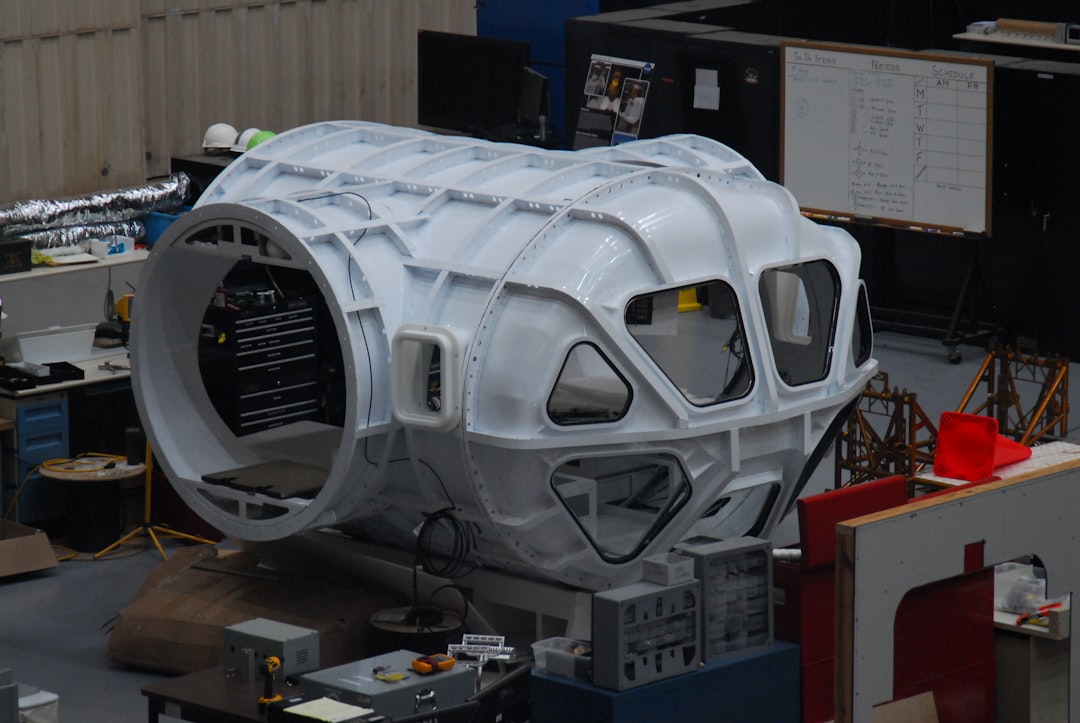
Despite the setback, Professor Bowles has not abandoned the quest. Sitting quietly in a laboratory in Oxford's basement is a spare Lunar Thermal Mapper instrument — a flight-ready backup built during the original mission's development. Rather than gathering dust, this instrument represents a tangible opportunity to continue the science that Lunar Trailblazer was unable to complete.
"We're hoping that the spare Lunar Thermal Mapper will go on a future NASA mission called UCIS — the Ultra-Compact Imaging Spectrometer for the Moon." — Professor Neil Bowles, University of Oxford
The UCIS (Ultra-Compact Imaging Spectrometer for the Moon) mission concept represents a potential second chance to answer the fundamental questions that have driven lunar water research for over a decade. By combining the LTM's thermal mapping capabilities with a powerful imaging spectrometer, such a mission could provide the most detailed and comprehensive survey of lunar water ever attempted — mapping not just where water exists, but in what chemical state, at what depth, and in what quantities.
The Bigger Picture: Earth, Moon, and the Solar System's Water Story
Bowles is eager to emphasize that the scientific stakes extend well beyond the Moon itself. The Earth-Moon system is, in many respects, a unique and scientifically privileged natural laboratory. The ratio of the Moon's mass to that of its parent planet is exceptionally large compared to other planet-satellite systems in our solar system, making it a singular case study in planetary formation and the fate of water during cataclysmic impacts.
"We need all the evidence we can get to understand how you end up with the Moon as we see it today, but also how the Moon has influenced Earth. Because the Earth and Moon are a system in space together, very unusual in our solar system in terms of the size of the Earth and our satellite." — Professor Neil Bowles
Understanding how water was partitioned between the Earth and the Moon during and after the giant impact — and how much of it survived — speaks directly to questions about why Earth became a water-rich, habitable world while other rocky planets in our solar system did not. It also illuminates the broader question of how water — the essential ingredient for life as we know it — moves around planetary systems, delivered by comets, asteroids, and the turbulent processes of planetary formation itself.
"Extracting water from the polar regions would tell us how it was brought there, where it was brought from, and would preserve a record of that delivery process in the solar system. That would then tell us a great deal of information about how water is moved around inside the solar system and eventually ends up heading towards Earth." — Professor Neil Bowles
As humanity prepares to return humans to the lunar surface under NASA's Artemis program and parallel efforts by other space agencies, the scientific questions surrounding lunar water have never been more relevant — or more urgent. Whether the water ice in the polar craters was delivered by ancient comets or asteroids, outgassed from the lunar interior over geological timescales, or some combination of both, the Moon is increasingly recognized not as a dry and lifeless relic, but as an archive of the solar system's volatile history — one that science is only just beginning to read.
For researchers like Bowles, the Moon's quietly bound interior water is more than a geochemical curiosity. It is a message in a bottle, written in the language of minerals, waiting patiently across 4.5 billion years for scientists to finally decode it. The hope, he says, is that a future mission will give them the tools to do exactly that.
Key Takeaways
- The Moon's interior contains chemically bound water in the form of hydroxide (OH) locked within mineral crystal structures, particularly in the phosphate mineral apatite
- This water survived the giant impact that formed the Moon approximately 4.5 billion years ago
- NASA's Lunar Trailblazer mission, designed to map lunar water, was lost in early 2025 due to a technical misconfiguration after launch
- A spare Lunar Thermal Mapper instrument developed at the University of Oxford may fly on a future NASA mission called UCIS
- Understanding lunar water is critical to reconstructing the water history of the entire Earth-Moon system and the broader inner solar system
- The distribution of polar water ice and deep interior water may be geologically linked through ancient lunar volcanism and outgassing
Sources: Professor Neil Bowles, University of Oxford; University of Oxford press release; Earth, Moon and Planets (2010); NASA Lunar Trailblazer mission documentation; UK Space Agency.