Listening for the Universe's Faintest Whispers: A Billion Supernovae at Once
How do you listen for something quieter than almost anything else in nature — a signal built from ghostly particles that pass straight through solid rock without so much as slowing down? A thousand metres beneath Gifu Prefecture in Japan, an international team working at the Super-Kamiokande observatory believes they may have caught the very first hint of exactly that: the faint, collective echo of every stellar explosion that has ever occurred across the entire history of the cosmos.
The potential detection centres on one of the most elusive signals in all of modern physics — the Diffuse Supernova Neutrino Background, or DSNB. Sometimes poetically referred to as the relic supernova neutrino background, this cosmic hum represents the accumulated neutrino output of billions of stellar deaths stretching back nearly to the dawn of time itself. Catching it would hand astronomers an entirely new lens through which to view the universe's long and violent stellar history.
The Ghost Particle: Understanding Neutrinos
Neutrinos are among the most fascinating and frustrating particles in nature. They carry no electric charge, travel at speeds approaching that of light, and interact with ordinary matter so weakly that trillions of them stream through your body every single second without leaving any trace. For decades after their theoretical prediction by Wolfgang Pauli in 1930 and their experimental confirmation by Frederick Reines and Clyde Cowan in 1956, physicists assumed neutrinos were completely massless. We now know they possess a tiny but non-zero mass — a discovery that itself earned the 2015 Nobel Prize in Physics, awarded to Takaaki Kajita (of Super-Kamiokande) and Arthur McDonald.
Their near-imperceptibility is precisely what makes neutrinos such extraordinary cosmic messengers. Unlike light, which can be absorbed, scattered, or deflected by intervening gas and dust, neutrinos travel in virtually straight lines across the universe, carrying information directly from the violent hearts of stellar explosions. The challenge, of course, is persuading them to reveal that information upon arrival.
"Neutrinos are the universe's most intimate messengers — present at the very core of every stellar collapse, and yet almost impossible to intercept. Detecting their diffuse background would be like hearing the combined whisper of every star that has ever died."
Supernovae: Cosmic Neutrino Factories
Every second, somewhere across the observable universe, a handful of massive stars — those at least eight to ten times more massive than our own Sun — reach the end of their thermonuclear lives. When the iron core of such a star can no longer sustain nuclear fusion, it collapses catastrophically in less than a second, forming either a neutron star or, in the most extreme cases, a black hole. The resulting explosion, a core-collapse supernova, releases energy on a scale almost beyond comprehension.
Remarkably, the vast majority of that energy — roughly 99 percent — is not released as light or as the kinetic energy of the explosion, but as an enormous burst of neutrinos. A single core-collapse supernova produces approximately 1058 neutrinos in a matter of seconds. This was dramatically confirmed in 1987, when detectors around the world — including the predecessor to Super-Kamiokande, the Kamiokande-II experiment — detected a burst of 24 neutrinos from Supernova 1987A in the Large Magellanic Cloud, the closest observed supernova in nearly four centuries.
Over the 13.8-billion-year history of the universe, the neutrinos from countless such explosions have propagated outward, spread out, and mixed together into a faint, steady, and isotropic background. This is the Diffuse Supernova Neutrino Background — a ghostly cosmic archive encoded in particle form, waiting to be read. Key characteristics of the DSNB include:
- An expected energy range of approximately 10 to 30 MeV (megaelectronvolts) for electron antineutrinos
- A flux determined by the cosmic star formation rate and the fraction of stellar collapses that produce neutrino-rich environments
- Sensitivity to the ratio of black hole to neutron star formation — a quantity still poorly constrained by other observations
- Information about neutrino properties themselves, including possible oscillations during their long cosmic journey
- A unique tracer of stellar death across the full history of cosmic time, complementary to gravitational wave and electromagnetic observations
Super-Kamiokande: An Extraordinary Instrument
Detecting the DSNB requires an instrument of extraordinary sensitivity, operated with almost superhuman patience. The Super-Kamiokande detector, located in the Mozumi Mine beneath Mount Ikeno, is precisely that. At its heart lies a cylindrical stainless-steel tank containing 50,000 tonnes of ultrapure water — water so chemically pure that it is itself mildly radioactive from the dissolved gases removed during purification. This vast volume is monitored by approximately 13,000 photomultiplier tubes, each one a sensitive light detector capable of registering the faint flash produced when a neutrino interaction occurs within the water.
The depth of the laboratory — more than a kilometre of rock overhead — is not incidental. It acts as a natural shield, attenuating the constant bombardment of cosmic rays that would otherwise create an overwhelming background of false signals. Even so, distinguishing genuine neutrino events from the residual noise of radioactive decays, atmospheric neutrinos, and detector artefacts requires painstaking statistical analysis applied to years of accumulated data.
A particularly significant upgrade came with the addition of gadolinium to the water in 2020, under the project designation SK-Gd. Gadolinium has an exceptionally high affinity for capturing neutrons — the secondary particles produced alongside positrons in the inverse beta decay reaction by which electron antineutrinos are detected. When a neutron is captured by a gadolinium nucleus, it releases a distinctive cascade of gamma rays, providing a powerful way to confirm that a genuine neutrino interaction has occurred and to dramatically suppress background noise. This upgrade was itself a decades-long ambition, first proposed by physicist John Beacom and colleagues in the early 2000s.
A Tantalising Signal Buried in Five Thousand Days of Data
The new result draws on approximately 5,000 days of accumulated data collected across two distinct operational phases of the Super-Kamiokande experiment. Buried within this mountain of information, the research team identified a small but statistically consistent excess of neutrino-like events concentrated in a specific energy window — precisely the range where the DSNB signal is theoretically expected to appear, and distinct from the competing backgrounds of atmospheric neutrinos at higher energies and reactor and solar neutrinos at lower ones.
The excess reaches a statistical confidence level of 99.5 percent, equivalent to roughly 2.9 sigma in the language of particle physics. This is an impressive and meaningful result, but it falls short of the five-sigma threshold — a confidence level of 99.99994 percent — that the physics community conventionally requires before a discovery can be formally announced. The team is therefore careful to describe their finding as a strong indication or evidence rather than a confirmed detection.
Hiroyuki Sekiya, spokesperson for the Super-Kamiokande experiment, described the moment as "a long-cherished goal reached since the very beginning of the project, decades in the making."
Yosuke Ashida, one of the lead researchers involved in the analysis, noted that the collaboration is already plotting its next steps, with plans to combine ongoing data from Super-Kamiokande with its next-generation successor to build a stronger statistical case.
The Road to Confirmation: Hyper-Kamiokande and Beyond
The instrument that may finally push this tantalising whisper across the threshold of confirmed discovery is Hyper-Kamiokande, currently under construction and expected to begin operations in the late 2020s. Hyper-Kamiokande will contain a water volume of approximately 260,000 tonnes — more than five times larger than its predecessor — instrumented with new high-efficiency photomultiplier tubes offering superior light collection. Combined with continued gadolinium enhancement, it is expected to detect DSNB neutrinos at a rate sufficient to confirm or refute the current signal within just a few years of operation.
Beyond Japan, other next-generation experiments are also poised to contribute. The Deep Underground Neutrino Experiment (DUNE) at the Sanford Underground Research Facility in South Dakota will use a liquid argon detection medium particularly sensitive to electron neutrinos (as opposed to the antineutrinos favoured by water Cherenkov detectors), providing a complementary measurement. The JUNO (Jiangmen Underground Neutrino Observatory) experiment in China, a 20,000-tonne liquid scintillator detector, similarly targets the DSNB and is expected to reach competitive sensitivity in the same timeframe.
Why It Matters: A New Window on Cosmic History
The scientific stakes of a confirmed DSNB detection extend well beyond the satisfaction of finding a long-predicted signal. The DSNB carries within it a unique record of stellar death across cosmic time, and extracting that record would yield insights across multiple fields of astrophysics:
- Star formation history: The intensity and spectrum of the DSNB reflects the rate at which massive stars formed and died throughout the universe's history, providing an independent cross-check on estimates derived from galaxy surveys and infrared observations.
- The black hole formation fraction: Some stellar collapses are thought to produce black holes directly, with a reduced neutrino signal compared to canonical neutron star formation. The shape of the DSNB energy spectrum is sensitive to this fraction, which remains poorly understood.
- Neutrino mass and oscillations: As DSNB neutrinos travel across billions of light-years, they undergo flavour oscillations, cycling between electron, muon, and tau varieties. Precise measurements of the DSNB could help constrain the neutrino mass hierarchy — one of the outstanding open questions in fundamental physics.
- Chemical enrichment of the cosmos: Core-collapse supernovae are the primary factories for many of the heavy elements that make up rocky planets and living organisms. Tracing the history of stellar death is therefore also tracing the slow construction of the chemical complexity we depend upon.
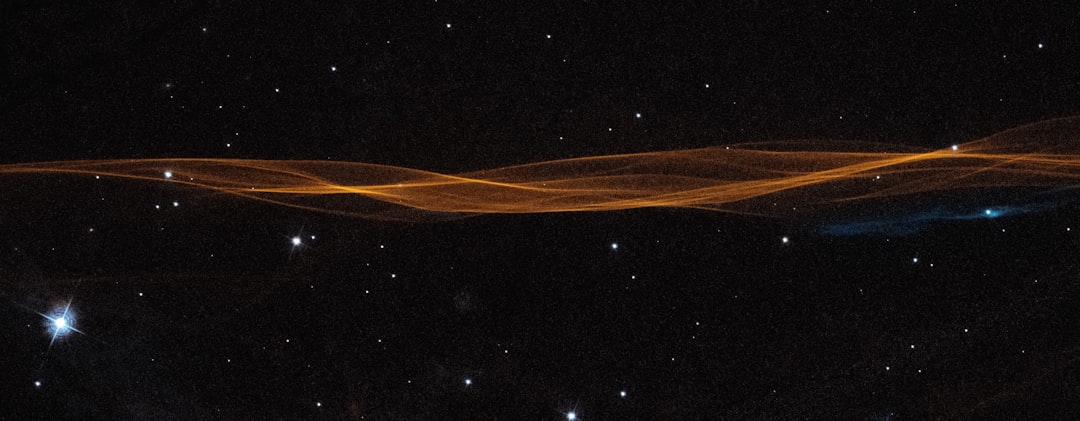
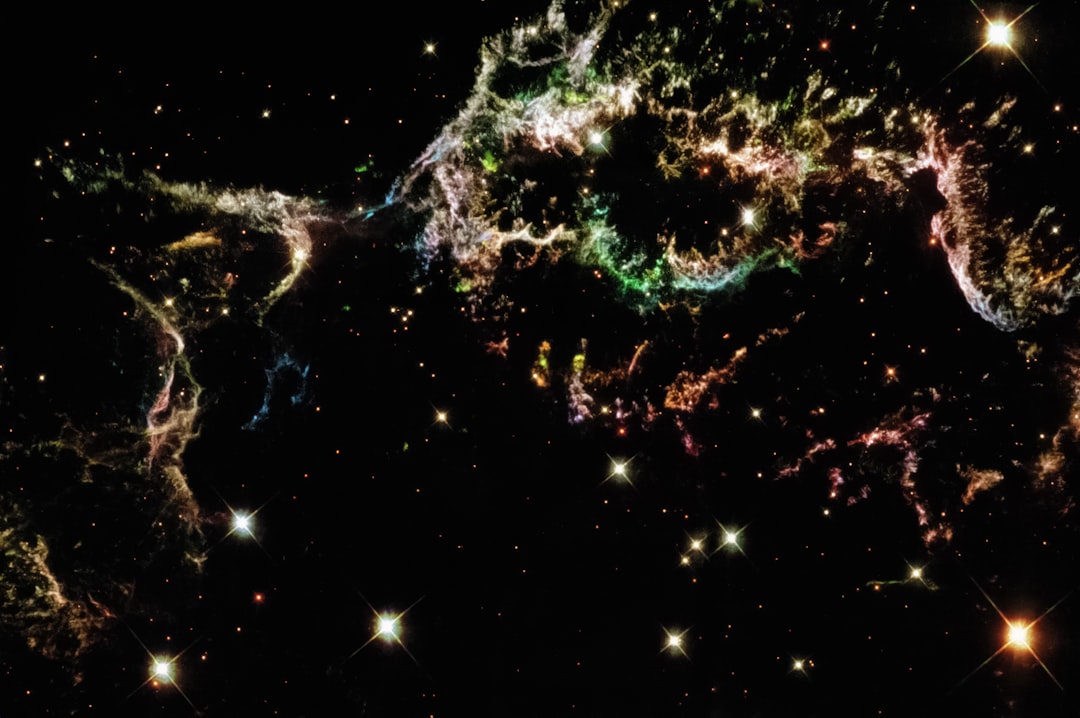
For context, the Chandra X-ray Observatory and the Hubble Space Telescope have provided stunning visual records of supernova remnants like the Crab Nebula — the glowing debris of a star that exploded in 1054 CE, observed by Chinese and Arab astronomers at the time. But the neutrino background would offer something fundamentally different: not images of individual explosions, but a statistical census of stellar death stretching back billions of years, encoded in particles that have been travelling since before our solar system existed.
A Whisper Growing Louder
For now, deep beneath the mountains of Japan, scientists continue to strain their instruments toward one of the quietest signals in all of nature. The current result — a 99.5 percent confidence excess that falls just short of the gold standard for discovery — is both a testament to the extraordinary capabilities of the Super-Kamiokande collaboration and a compelling preview of what the next generation of experiments may soon confirm.
The Diffuse Supernova Neutrino Background has been a theoretical prediction since the 1970s. If the signal now being seen at Super-Kamiokande holds up under the scrutiny of more data and more powerful detectors, its confirmation will represent one of the most profound observational achievements in the history of neutrino astronomy — the moment humanity first directly perceived the accumulated sum of every stellar death in the observable universe. It would be, in the most literal sense, hearing the universe breathe.