In a significant milestone for compact space exploration technology, NASA's Star-Planet Activity Research CubeSat (SPARCS) has successfully captured its inaugural ultraviolet observations of a distant stellar system, marking a pivotal moment in our quest to understand planetary habitability beyond our solar system. The diminutive yet sophisticated observatory, which launched into Earth orbit on January 11th, 2026, has now proven its capability to peer into the ultraviolet realm where stellar activity reveals crucial information about the environments surrounding potentially habitable worlds.
This achievement represents more than just a technical validation—it opens a new chapter in our investigation of the galaxy's most abundant stars. Developed through a collaboration between NASA and researchers at Arizona State University's School of Earth and Space Exploration (SESE), SPARCS is specifically engineered to monitor the flare activity and stellar behavior of low-mass stars, including M-type red dwarfs and K-type orange dwarfs. These stellar types, which collectively dominate our galaxy's stellar population, host billions of exoplanets that could potentially harbor life—if their stellar environments prove hospitable.
The mission's first light images, captured on February 6th, 2026, demonstrate that this 6U CubeSat—measuring just 20 by 10 by 30 centimeters—can deliver the precise ultraviolet measurements necessary to assess how stellar radiation impacts planetary atmospheres. This capability is crucial because ultraviolet radiation plays a decisive role in determining whether planets orbiting these common stars can maintain the atmospheric chemistry necessary for life as we know it.
The Science Behind SPARCS: Why Ultraviolet Observations Matter
Understanding planetary habitability requires far more than simply identifying worlds in the so-called "Goldwater zone" where liquid water could exist on a planet's surface. The stellar radiation environment, particularly in the ultraviolet spectrum, profoundly influences whether a planet can retain its atmosphere and maintain stable surface conditions over geological timescales. This is where SPARCS makes its unique contribution to exoplanet science.
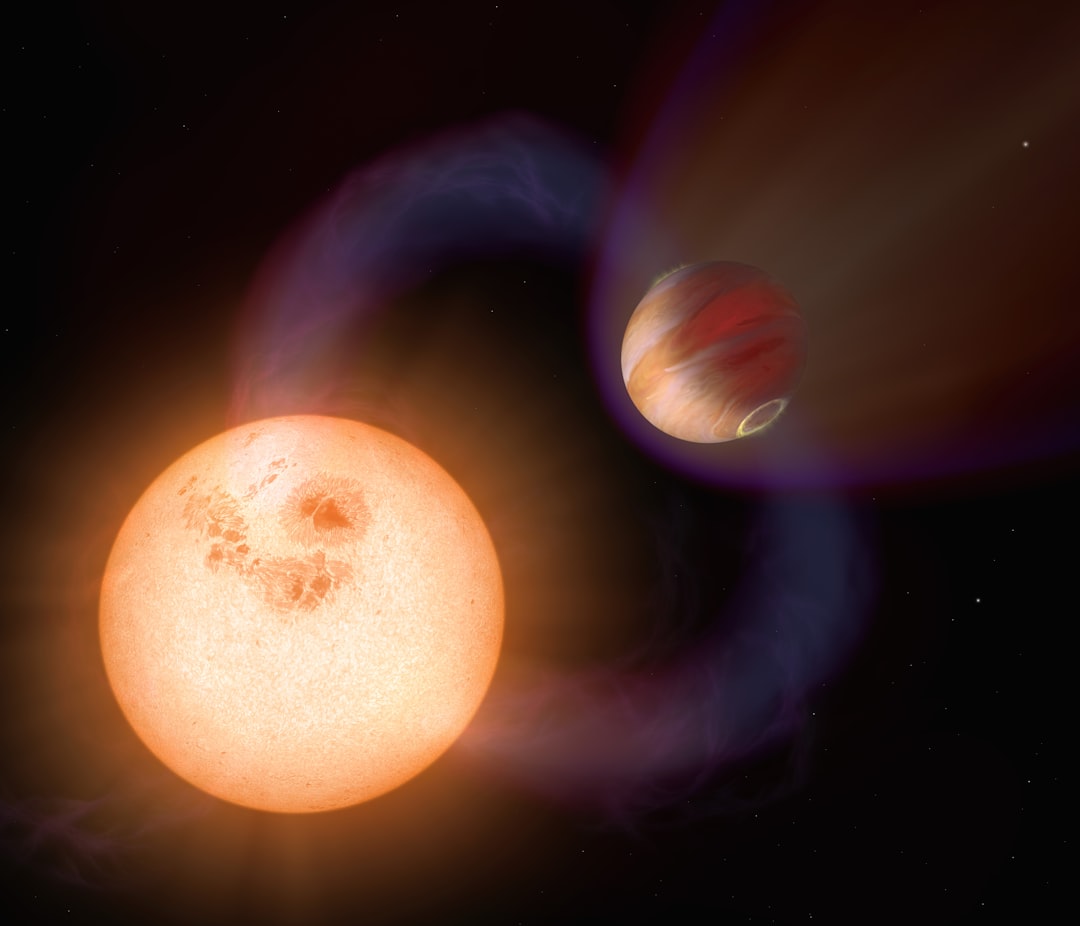
Low-mass stars, particularly M-type red dwarfs which constitute approximately 75% of all main-sequence stars in our Milky Way galaxy, present a paradox for astrobiologists. While their abundance and longevity make them attractive targets in the search for habitable worlds, these stars are notoriously active, producing powerful flares and emitting intense ultraviolet radiation that could strip away planetary atmospheres. K-type orange dwarfs, representing 11-12% of galactic stars, offer a middle ground—potentially more stable than red dwarfs while still being common enough to host numerous potentially habitable planets.
According to current estimates, approximately 50 billion exoplanets orbit within the habitable zones of these low-mass stars across our galaxy. The NASA Exoplanet Archive continues to catalog these worlds, but understanding their true habitability requires detailed knowledge of their host stars' ultraviolet output and variability—precisely what SPARCS is designed to measure.
Revolutionary Technology in a Compact Package
SPARCS represents a remarkable achievement in miniaturized space technology, packing sophisticated observational capabilities into a spacecraft that would fit comfortably in a large backpack. The 6U CubeSat configuration—consisting of six standard 10-centimeter cubic units arranged in a 2x3 formation—demonstrates how modern engineering enables cutting-edge science without the massive budgets traditionally associated with space telescopes.
The mission's technical innovation extends far beyond its compact size. At the heart of SPARCS lies SPARCam, a revolutionary camera system developed at NASA's Jet Propulsion Laboratory that employs detector-integrated filters—a breakthrough technology that eliminates the need for separate filter elements. These filters are deposited directly onto ultraviolet-sensitive "delta-doped" silicon detectors, the same fundamental technology found in smartphone cameras but optimized for detecting high-energy UV photons.
"I am so excited that we are on the brink of learning about exoplanets' host stars and the effect of their activities on the planets' potential habitability," said Shouleh Nikzad, SPARCam's lead developer and chief technologist at JPL's Microdevices Laboratory. "We took silicon-based detectors and created a high-sensitivity UV imager. Then we integrated filters into the detector to reject unwanted light. That is a huge leap forward to doing big science in small packages."
This integrated approach makes SPARCS one of the most sensitive ultraviolet space telescopes ever deployed relative to its size. The detector technology allows simultaneous observations in both near-ultraviolet (NUV) and far-ultraviolet (FUV) wavelengths, providing a comprehensive picture of stellar activity that would be impossible to obtain from ground-based observatories due to Earth's atmosphere absorbing most UV radiation.
First Light: Observing HD 71262 and Beyond
The mission's inaugural scientific observations targeted HD 71262, a K-type orange dwarf star located approximately 650 light-years from Earth in the constellation Sculptor. This carefully selected target allowed the SPARCS team to validate the telescope's dual-wavelength capability and demonstrate its ability to distinguish between near- and far-ultraviolet emissions from stellar sources.
The resulting images revealed fascinating differences between the two ultraviolet bands. In the far-ultraviolet observation, HD 71262 appears in relative isolation, its high-energy emissions dominating the field of view. The near-ultraviolet image, however, captured additional background stars, demonstrating SPARCS's ability to detect fainter UV sources and providing confidence in the instrument's sensitivity and dynamic range.
As Evgenya Shkolnik, SPARCS Principal Investigator and professor of astrophysics at SESE, explained in a NASA press release: "Seeing SPARCS' first ultraviolet images from orbit is incredibly exciting. They tell us the spacecraft, the telescope, and the detectors are performing as tested on the ground, and we are ready to begin the science we built this mission to do."
These first light images serve a critical validation function in any space mission. They confirm that the complex systems designed and tested on Earth continue to function correctly in the harsh environment of space, where temperature extremes, radiation, and vacuum conditions can affect instrument performance in unexpected ways. With this milestone achieved, SPARCS can now transition to its primary science mission: systematically monitoring low-mass stars to characterize their ultraviolet variability and flare behavior.
Artificial Intelligence Meets Astrophysics
Perhaps one of SPARCS's most forward-looking features is its machine learning-enabled observation system. The spacecraft carries an onboard computer equipped with artificial intelligence algorithms capable of processing data in real-time and autonomously adjusting observation parameters based on what it detects. This capability is particularly valuable for monitoring stellar flares, which can develop rapidly and unpredictably.
Traditional space telescopes typically follow pre-programmed observation schedules, potentially missing transient events or failing to optimize their observations as conditions change. SPARCS, by contrast, can recognize when a star begins to flare and automatically adjust its observation strategy to capture the event's full evolution. This autonomous decision-making capability maximizes the scientific return from the mission's limited observation time and provides a preview of how future space observatories will operate.
The integration of machine learning into space-based observations represents a growing trend in astronomy, with missions like the James Webb Space Telescope also incorporating intelligent data processing systems to enhance their scientific productivity.
Implications for the Search for Habitable Worlds
The data SPARCS will collect over its mission lifetime holds profound implications for our understanding of planetary habitability throughout the galaxy. By characterizing the ultraviolet radiation environments around low-mass stars, the mission will help astronomers determine which of the billions of exoplanets orbiting these stars might actually be capable of supporting life.
Ultraviolet radiation affects planetary atmospheres in complex ways. Moderate UV exposure can drive photochemical reactions that produce biosignature gases like ozone, potentially making life-bearing planets easier to detect. However, excessive UV radiation—particularly during powerful stellar flares—can photodissociate water vapor in planetary atmospheres, leading to hydrogen loss and potentially rendering worlds permanently uninhabitable. SPARCS will help establish which stars strike the right balance, maintaining habitable conditions for the planets in their systems.
The mission's findings will directly inform target selection for future observatories designed to search for signs of life beyond Earth. Upcoming missions like the Habitable Worlds Observatory (HWO), currently in NASA's planning stages, and the UltraViolet EXplorer (UVEX) will build upon SPARCS's pioneering observations to conduct more detailed investigations of the most promising planetary systems.
"The SPARCS mission brings all of these pieces together—focused science, cutting-edge detectors, and intelligent onboard processing—to deepen our understanding of the stars that most planets in the galaxy call home," noted David Ardila, SPARCS instrument scientist at JPL. "By watching these stars in ultraviolet light in a way we've never done before, we're not just studying flares. These observations will sharpen our picture of stellar environments and help future missions interpret the habitability of distant worlds."
Key Scientific Objectives and Expected Outcomes
As SPARCS transitions into full science operations, the mission will pursue several interconnected research goals:
- Stellar Flare Characterization: SPARCS will monitor dozens of low-mass stars to catalog their flare frequency, intensity, and ultraviolet spectral characteristics. This data will reveal how often planets orbiting these stars experience potentially atmosphere-stripping radiation events.
- UV Variability Patterns: Beyond dramatic flares, the mission will track more subtle variations in stellar ultraviolet output, helping astronomers understand the baseline radiation environment that exoplanets experience over time.
- Star-Planet Interaction Studies: For systems where planetary transits are observable, SPARCS may detect changes in stellar UV output correlated with planetary positions, revealing potential magnetic interactions between stars and their close-orbiting planets.
- Technology Demonstration: The mission serves as a proving ground for advanced detector technology and autonomous observation strategies that will inform the design of future, larger ultraviolet space observatories.
- Habitability Assessment Framework: By correlating stellar UV characteristics with other known properties of exoplanetary systems, SPARCS will help establish criteria for identifying the most promising targets for biosignature searches.
The Future of CubeSat Science Missions
SPARCS exemplifies the growing sophistication of CubeSat missions, which have evolved from primarily educational projects to capable scientific instruments addressing fundamental questions in astrophysics. The mission's success demonstrates that meaningful space science no longer requires massive, billion-dollar observatories—though such facilities certainly remain valuable for many applications.
The relatively low cost of CubeSat missions enables more frequent launches, faster development cycles, and greater willingness to take technological risks. This approach allows the scientific community to test innovative concepts and technologies that might be considered too risky for larger, more expensive missions. When these technologies prove successful, as SPARCS's detector-integrated filters have, they can be scaled up for incorporation into future flagship missions.
The European Space Agency and other international space organizations have similarly embraced small satellite platforms for scientific research, recognizing that a fleet of specialized small missions can complement traditional large observatories to create a more comprehensive understanding of the cosmos.
Looking Ahead: SPARCS and the Next Generation of UV Astronomy
As SPARCS begins its primary science mission, the astronomical community eagerly anticipates the insights it will provide into the nature of low-mass stars and their planetary systems. The mission's observations will contribute to a growing body of evidence about where life might exist beyond Earth, helping to focus humanity's search for cosmic companions on the most promising stellar neighborhoods.
The technologies pioneered by SPARCS—from its advanced UV detectors to its machine learning-enabled observation systems—represent building blocks for future missions that will push the boundaries of our understanding even further. The Habitable Worlds Observatory, planned for launch in the 2040s, will leverage lessons learned from SPARCS and similar missions to conduct direct imaging of potentially habitable exoplanets and search for biosignatures in their atmospheres.
In the nearer term, the UVEX mission, scheduled for launch in 2030, will conduct an all-sky survey in ultraviolet wavelengths, complementing SPARCS's focused observations of individual stellar systems. Together, these missions will create an unprecedented understanding of the ultraviolet universe and its implications for the prevalence of habitable worlds throughout our galaxy.
The successful first light observations from SPARCS mark not just the beginning of one mission's scientific operations, but a new era in our ability to assess the habitability of the countless worlds orbiting the galaxy's most common stars. As this small but mighty telescope continues its work, it brings us one step closer to answering humanity's most profound question: Are we alone in the universe?