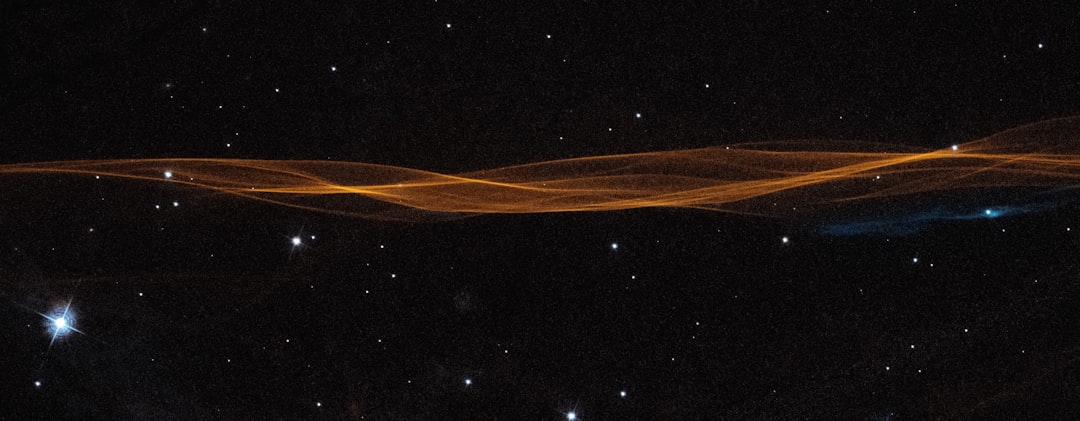
More than four centuries ago, a celestial event of extraordinary brilliance captured the attention of astronomers across Europe. In October 1604, the renowned German mathematician and astronomer Johannes Kepler observed what appeared to be a new star blazing in the constellation Ophiuchus—so luminous it remained visible even in broad daylight. This phenomenon, which Kepler meticulously documented in his groundbreaking work De Stella Nova, would fundamentally challenge the long-held Aristotelian belief that the celestial sphere was immutable and eternal. Today, we know this spectacular event as Kepler's Supernova, and thanks to NASA's Chandra X-ray Observatory, we now have an unprecedented time-lapse video spanning 25 years that reveals the dynamic evolution of this cosmic explosion's remnants.
The newly released visualization represents a quarter-century of continuous observation, utilizing data collected between 2000 and 2025 by one of humanity's most sophisticated space-based instruments. This remarkable achievement offers astronomers an unparalleled window into the violent aftermath of stellar death, capturing the explosive debris as it races through interstellar space at velocities approaching a significant fraction of light speed. The research, spearheaded by Jessye Gassel, a graduate student at George Mason University in Virginia, was presented at the 247th meeting of the American Astronomical Society in Phoenix, marking a significant milestone in our understanding of supernova dynamics.
The Historical Significance of Kepler's Stellar Discovery
When Kepler first recorded his observations in 1604, the astronomical community was still largely bound by ancient Greek cosmological models that posited the heavens as perfect and unchanging. The appearance of this brilliant "new star" represented a direct challenge to this worldview, joining only a handful of documented stellar events that suggested the cosmos was far more dynamic than previously imagined. Kepler's supernova was actually the last supernova visible to the naked eye in our Milky Way galaxy, making it an event of exceptional historical importance.
Located approximately 17,000 light-years from Earth, this supernova belongs to the category known as Type Ia supernovae—among the most powerful and scientifically valuable explosions in the universe. These cosmic detonations occur when a white dwarf star, the dense remnant core of a Sun-like star, accumulates material from a companion star in a binary system until it exceeds the critical Chandrasekhar limit of approximately 1.4 solar masses. At this threshold, the white dwarf becomes gravitationally unstable and undergoes catastrophic thermonuclear fusion, releasing energy equivalent to billions of suns in a matter of seconds.
Chandra's Revolutionary X-Ray Vision
The Chandra X-ray Observatory, launched in 1999 aboard the Space Shuttle Columbia, has revolutionized our ability to study high-energy phenomena in the universe. Unlike optical telescopes that capture visible light, Chandra's advanced X-ray optics detect radiation emitted by matter heated to temperatures of millions of degrees Celsius—conditions commonly found in supernova remnants, black hole accretion disks, and galaxy clusters.
Supernova remnants glow brilliantly in X-rays because the explosion's shockwave heats the expelled stellar material and surrounding interstellar gas to extreme temperatures. As this superheated plasma expands outward at tremendous velocities, it creates a complex, evolving structure that changes measurably over time. Chandra's exceptional spatial resolution and sensitivity allow astronomers to track these changes with unprecedented precision, essentially creating a cosmic motion picture of stellar destruction.
"The plot of Kepler's story is just now beginning to unfold. It's remarkable that we can watch as these remains from this shattered star crash into material already thrown out into space," said Jessye Gassel, emphasizing the dynamic nature of these cosmic phenomena.
Unveiling the Supernova's Asymmetric Expansion
One of the most striking revelations from the new time-lapse video is the highly asymmetric expansion of Kepler's supernova remnant. Different regions of the debris field are traveling at dramatically different velocities, with the fastest material racing outward at approximately 2% the speed of light—an astounding 22.2 billion kilometers per hour (13.8 billion miles per hour). In stark contrast, slower-moving sections at the opposite end of the remnant are expanding at roughly 0.5% light speed, or about 6.4 billion kilometers per hour (4 billion miles per hour).
This velocity asymmetry provides crucial insights into the circumstellar environment—the region of space immediately surrounding the progenitor star system before the explosion. The dramatic difference in expansion speeds indicates that the supernova blast wave is encountering material of varying density in different directions. Where the remnant expands more slowly, it's plowing into denser concentrations of gas and dust, which resist the outward motion more effectively. Conversely, the rapidly expanding regions face less resistance, suggesting they're moving through relatively empty space.
Decoding the Blast Wave Structure
Another fascinating aspect revealed by the extended observations concerns the blast wave structure—the leading edge of the supernova explosion that first encounters material in the surrounding environment. By carefully measuring the width and velocity of these shock fronts, researchers can reconstruct the conditions that existed in the immediate aftermath of the explosion, before the remnant's expansion significantly altered its surroundings.
The blast wave acts like a cosmic archaeological record, preserving information about the explosion mechanism, the progenitor star system's characteristics, and the pre-existing distribution of matter in the vicinity. These measurements are particularly valuable for understanding Type Ia supernovae, which serve as "standard candles" in cosmology—objects of known intrinsic brightness that astronomers use to measure cosmic distances and study the expansion of the universe.
The Cosmic Importance of Supernova Remnants
Beyond their spectacular appearance and historical significance, supernova remnants play a fundamental role in cosmic chemical evolution. Stars like our Sun are born from clouds of gas and dust that contain elements forged in previous generations of stars. When massive stars explode as supernovae, they disperse these heavy elements—including carbon, oxygen, iron, and many others—throughout the galaxy, enriching the interstellar medium from which new stars and planetary systems will eventually form.
As Brian Williams, the principal investigator of the new Chandra observations, explained in the project's press release: "Supernova explosions and the elements they hurl into space are the lifeblood of new stars and planets. Understanding exactly how they behave is crucial to knowing our cosmic history." This statement underscores a profound truth: we are literally made of stardust, composed of atoms that were synthesized in the nuclear furnaces of ancient stars and scattered across the cosmos by supernova explosions.
Advanced Observational Techniques and Data Analysis
Creating this unprecedented time-lapse video required sophisticated data processing and analysis techniques. The research team combined observations from multiple Chandra viewing sessions spanning 25 years, carefully calibrating the data to account for the spacecraft's orbital motion, detector sensitivity changes over time, and various instrumental effects. Each observation captured the X-ray emission from different regions of the remnant, revealing how the brightness, temperature, and morphology evolved over the years.
The team employed spectroscopic analysis to determine the composition and physical conditions of the expanding debris. By examining the specific X-ray wavelengths emitted by different elements, astronomers can identify which materials are present and measure their temperatures, densities, and velocities. This information helps constrain theoretical models of supernova explosion mechanisms and tests our understanding of nuclear physics under extreme conditions.
Implications for Future Astronomical Research
The success of this long-term monitoring program demonstrates the immense value of sustained astronomical observations. While individual snapshots provide valuable information, tracking changes over decades reveals dynamic processes that would otherwise remain hidden. As Chandra continues its mission—now in its 26th year of operation—astronomers anticipate even longer baseline observations that will further refine our understanding of supernova evolution.
Future studies will benefit from complementary observations using other advanced instruments, including the James Webb Space Telescope, which can observe infrared emission from cooler dust and molecules in the remnant, and the upcoming ESA Athena X-ray Observatory, planned for launch in the 2030s. These multi-wavelength observations will provide a more complete picture of the physical processes at work in supernova remnants.
Key Findings from the 25-Year Study
- Velocity Asymmetry: The remnant exhibits expansion velocities ranging from 0.5% to 2% the speed of light, indicating highly variable circumstellar density distributions that provide clues about the pre-explosion environment
- Blast Wave Evolution: Detailed measurements of the shock front width and propagation speed reveal information about the explosion mechanism and initial conditions immediately following the supernova detonation
- Environmental Interaction: The varying expansion rates in different directions demonstrate how supernova remnants interact with and are shaped by their surrounding interstellar medium
- Temporal Changes: Observable morphological changes over 25 years allow astronomers to directly witness the dynamic evolution of the remnant structure in near real-time on cosmic scales
- Chemical Enrichment: The observations help trace how heavy elements synthesized in the explosion are dispersed throughout the galaxy, contributing to the chemical evolution of future stellar generations
The Broader Context of Galactic Supernova Studies
Kepler's Supernova represents one of only eight confirmed supernovae observed in the Milky Way over the past two millennia. Other famous examples include the Crab Nebula (observed in 1054 CE by Chinese astronomers), Tycho's Supernova (1572), and Cassiopeia A (estimated around 1680, though not recorded at the time). Each of these remnants provides unique insights into stellar evolution and death, with their relative proximity allowing detailed study impossible for more distant extragalactic supernovae.
The rarity of galactic supernovae observable from Earth—averaging only a few per century—makes each historical event precious for astronomical research. Kepler's Supernova, with its well-documented discovery date and extensive modern observations, serves as a crucial calibration point for understanding Type Ia supernova physics and their role in cosmic evolution.
As we continue to monitor this 420-year-old explosion, we're reminded that the universe operates on timescales both vast and accessible. The combination of historical records from Kepler's era and cutting-edge X-ray astronomy creates a bridge across centuries, allowing us to witness cosmic events that unfold over human lifetimes. This remarkable video from NASA and the Chandra team represents not just a technical achievement, but a testament to humanity's enduring curiosity about the cosmos and our place within it.