In a groundbreaking demonstration of additive manufacturing technology in orbital environments, NASA has successfully deployed a 3D-printed titanium antenna aboard a commercial satellite, marking a significant milestone in the evolution of spacecraft hardware production. The spring-loaded antenna mechanism, which unfurled in Low-Earth Orbit on February 3rd, 2026, represents a paradigm shift in how space agencies and commercial operators might design, manufacture, and deploy critical communications infrastructure for future missions. This achievement, conducted aboard Proteus Space's Mercury One spacecraft, demonstrates that complex mechanical systems can be fabricated as single, integrated components rather than assembled from dozens of individual parts—a capability that could prove invaluable for deep space exploration missions where self-sufficiency is paramount.
The successful deployment validates years of research into space-based manufacturing techniques and opens new possibilities for reducing mission costs, launch mass, and development timelines. Traditional satellite antenna systems require extensive assembly, testing, and integration processes that can take months or even years. By contrast, this 3D-printed mechanism consolidates multiple mechanical functions into a unified structure, potentially revolutionizing how spacecraft components are conceived and produced. As humanity prepares for extended missions to the Moon, Mars, and beyond, the ability to rapidly manufacture and deploy custom hardware becomes not just advantageous but essential for mission success.
Revolutionary Design Integration: From Multiple Parts to Single Component
The JPL Additive Compliant Canister (JACC), developed by engineers at NASA's Jet Propulsion Laboratory, represents a masterclass in design optimization through additive manufacturing. Traditional deployable antenna mechanisms typically require separate hinges, panels, compression springs, and torsion springs—each manufactured individually, then carefully assembled and tested. The JACC design ingeniously integrates all these functional elements into a single titanium component, reducing the part count by approximately 66% compared to conventional architectures.
This consolidation delivers multiple advantages beyond simple part reduction. The integrated design eliminates potential failure points at mechanical interfaces, reduces assembly time and associated labor costs, and minimizes the cumulative mass of fasteners, brackets, and other connecting hardware. The entire assembly weighs just 498 grams (approximately 1 pound) and occupies a remarkably compact volume of 10 centimeters in diameter. In its stowed configuration, the spring mechanism compresses to a mere 3 centimeters in height before expanding to its full 15-centimeter deployed length—a 5:1 expansion ratio that demonstrates exceptional space efficiency.
"Additive manufacturing enables us to create structures that would be impossible or prohibitively expensive using traditional fabrication methods. We're not just making existing designs differently; we're fundamentally rethinking what's possible in spacecraft architecture," explained a JPL engineer familiar with the project.
Orbital Deployment: Validating Performance in the Space Environment
The moment of truth arrived as Mercury One passed over the Pacific Ocean in its Low-Earth Orbit trajectory. Onboard cameras captured high-definition footage of the spring-loaded antenna mechanism deploying precisely as designed, popping free from its protective canister and extending to its full operational configuration. This visual confirmation provided engineers with invaluable data about the mechanism's performance in the actual space environment, including the effects of microgravity, thermal cycling, and the vacuum of space on the deployment dynamics.
Mercury One itself represents an innovation in satellite development, being the first spacecraft designed using artificial intelligence algorithms to optimize its configuration and systems integration. Launched aboard SpaceX's Transporter-15 rideshare mission on November 28th, 2025, from Vandenberg Space Force Base in California, the satellite serves as a testbed for multiple advanced technologies. The rapid development timeline—from initial concept to flight certification in approximately nine months—demonstrates how modern design tools and manufacturing techniques can dramatically accelerate space hardware development.
Technical Specifications and Performance Metrics
The titanium construction of the JACC antenna provides an optimal balance of strength, weight, and thermal stability. Titanium alloys are prized in aerospace applications for their exceptional strength-to-weight ratio, resistance to extreme temperatures, and compatibility with the space environment. The 3D printing process, likely utilizing selective laser melting or similar powder bed fusion techniques, allows for complex internal geometries that would be impossible to machine conventionally, including variable-density structures that optimize strength where needed while minimizing mass elsewhere.
- Total Mass: 498 grams, representing a significant reduction compared to traditionally manufactured equivalents that might weigh 30-40% more
- Stowed Height: 3 centimeters, enabling efficient packaging within the satellite's limited volume envelope
- Deployed Height: 15 centimeters, providing adequate antenna aperture for communications functions
- Diameter: 10 centimeters, sized appropriately for small satellite platforms and cubesat-class spacecraft
- Part Count Reduction: Approximately 66% fewer components compared to conventional deployable antenna mechanisms
Companion Technology: The SUM Earth Science Reflector
Accompanying the JACC on the Mercury One mission is the Solid Underconstrained Multi-Frequency Deployable Antenna for Earth Science (SUM), a sophisticated high-frequency reflector designed to operate at frequencies up to 240 gigahertz. This extraordinary frequency range positions the SUM reflector for advanced Earth observation applications, including atmospheric composition monitoring, precipitation measurement, and climate research. High-frequency millimeter-wave and sub-millimeter-wave observations provide unique capabilities for penetrating clouds, measuring water vapor distribution, and detecting trace atmospheric constituents that are invisible to lower-frequency sensors.
Together, the JACC and SUM payloads constitute the Prototype Actuated Nonlinear Deployables Offering Repeatable Accuracy Stowed on a Box (PANDORASBox)—an acronym that reflects both the compact nature of these mechanisms and the multitude of possibilities they unlock for future missions. Both systems were invented, designed, and tested at JPL, demonstrating the laboratory's continued leadership in developing innovative space technologies. The relatively modest development budget and rapid one-year production timeline for these payloads stand in stark contrast to traditional space hardware development programs, which often require multiple years and significantly larger financial investments.
Implications for Deep Space Exploration and Lunar Infrastructure
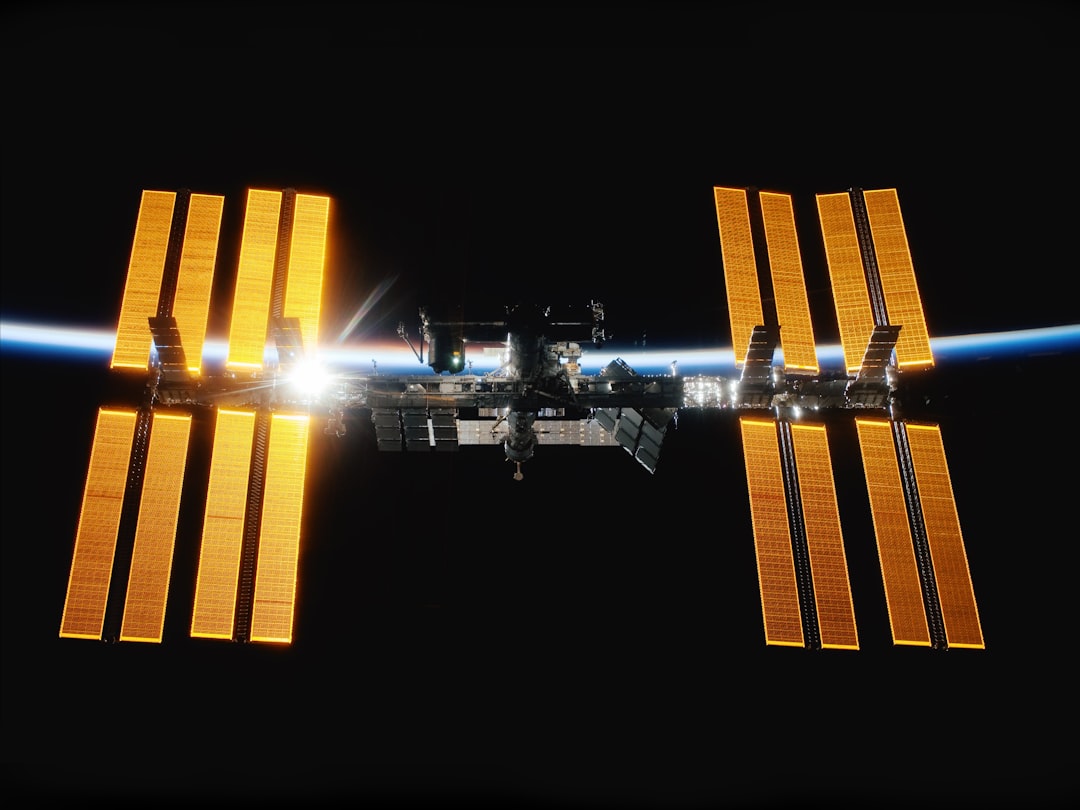
While the current demonstration occurred in Low-Earth Orbit, the true strategic value of this technology becomes apparent when considering future exploration initiatives beyond Earth's immediate vicinity. NASA's Artemis Program, which aims to establish a sustained human presence on the Moon by the end of this decade, will require extensive communications infrastructure, habitat modules, and scientific instruments. The ability to rapidly manufacture custom components using 3D printing technology already tested aboard the International Space Station could prove crucial for mission success.
Consider the challenges of establishing a lunar base in the Moon's south polar region, where NASA plans to construct permanent habitats. Resupply missions from Earth are expensive, time-consuming, and subject to launch windows and orbital mechanics constraints. If astronauts can manufacture replacement parts, tools, and even structural components on-demand using local or imported raw materials, mission sustainability increases dramatically. The JACC demonstration validates the mechanical reliability of 3D-printed mechanisms in space, addressing one of the key concerns about using additive manufacturing for critical spacecraft systems.
Reducing Mission Risk Through On-Demand Manufacturing
For missions to Mars or the outer solar system, where communication delays measure in minutes or hours and physical resupply is essentially impossible, in-situ manufacturing capability transitions from advantageous to mission-critical. The ability to produce antennas, structural components, tools, and repair parts on-demand could mean the difference between mission success and catastrophic failure. The JACC's successful deployment demonstrates that complex mechanical systems with multiple integrated functions can be reliably produced through additive manufacturing, validating the concept for future deep space applications.
"Every kilogram we launch from Earth costs thousands of dollars and occupies precious volume in our payload fairings. If we can manufacture what we need where we need it, using compact raw materials or even resources extracted from planetary surfaces, we fundamentally change the economics and logistics of space exploration," noted a senior NASA mission planner.
Accelerated Development Paradigm: From Concept to Orbit in Record Time
Perhaps equally significant as the technical achievements is the compressed development timeline demonstrated by both the PANDORASBox payloads and the Mercury One spacecraft itself. Traditional space hardware development follows a methodical, risk-averse approach that can extend project timelines to five, ten, or even fifteen years from initial concept to launch. The JACC and SUM payloads were conceived, designed, manufactured, tested, and delivered for flight in approximately one year—a timeline that would have been considered impossible just a decade ago.
Mercury One's journey from drawing board to flight certification in roughly nine months represents an even more dramatic acceleration of the development process. This rapid iteration capability, enabled by modern design tools, artificial intelligence optimization, and streamlined testing protocols, suggests a new paradigm for space hardware development. Rather than spending years perfecting designs before committing to hardware, engineers can rapidly prototype, test, and iterate, learning from actual flight performance and incorporating improvements into subsequent versions.
This approach aligns well with the emerging commercial space sector's emphasis on rapid development, frequent launches, and iterative improvement. Companies like SpaceX have demonstrated the value of this philosophy in launch vehicle development, and the Mercury One mission suggests it can be successfully applied to satellite and payload development as well. For NASA and other space agencies, partnering with commercial entities pursuing rapid development approaches while contributing proven technologies like the JACC could accelerate progress toward ambitious exploration goals.
Future Applications and Technology Evolution
The successful JACC deployment opens numerous avenues for future applications of 3D-printed deployable structures in space. Beyond communications antennas, similar design principles could be applied to solar array deployment mechanisms, instrument booms, thermal radiators, and even structural elements of space habitats. The ability to create complex, integrated mechanisms as single components could revolutionize spacecraft architecture across multiple domains.
Looking forward, researchers are exploring even more ambitious applications of space-based additive manufacturing. Concepts under investigation include printing large structures directly in orbit using robotic systems, manufacturing replacement parts aboard spacecraft during multi-year missions, and even utilizing in-situ resource utilization to convert lunar regolith or Martian soil into printable materials. The European Space Agency has investigated concepts for 3D printing lunar habitats using local materials, while NASA continues advancing multiple additive manufacturing technologies through its Space Technology Mission Directorate.
As the technology matures and flight heritage accumulates, we can expect to see 3D-printed components become increasingly common across spacecraft of all sizes and mission profiles. The JACC demonstration represents an important validation point along this evolutionary path, proving that additively manufactured mechanisms can perform reliably in the demanding space environment. For the next generation of explorers venturing beyond Earth, the ability to manufacture what they need, when they need it, may prove as revolutionary as the rockets that carry them there.