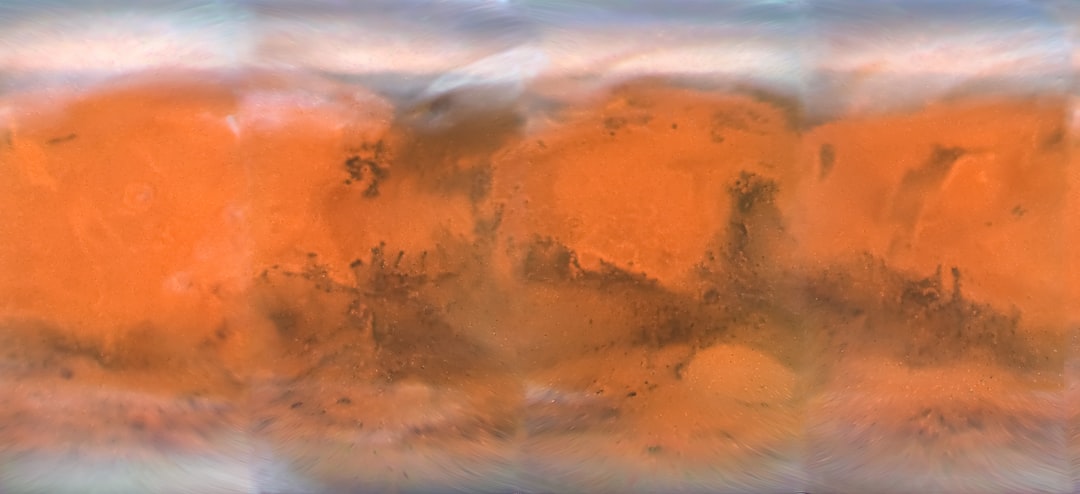
The ancient surfaces of our Solar System's rocky worlds bear witness to billions of years of cosmic bombardment, their cratered faces serving as geological archives of violent celestial collisions. While these impacts have long been associated with catastrophic extinction events—most famously the Chicxulub asteroid strike that ended the reign of the dinosaurs 66 million years ago—groundbreaking new research suggests these cosmic collisions might also serve as vehicles for spreading life between worlds. A remarkable study published in PNAS Nexus reveals that certain hardy microorganisms could not only survive the extreme violence of an asteroid impact but potentially hitchhike on debris fragments during the perilous journey from Mars to Earth.
This research, led by Lily Zhao, a graduate student at Johns Hopkins University, provides the first experimental evidence that extremophiles can withstand the extraordinary pressures generated during impact-induced planetary ejection. The findings lend credence to the ancient hypothesis of panspermia—the idea that life could spread throughout the cosmos via natural space transport—while simultaneously raising critical concerns about planetary protection protocols for future space missions.
The Ancient Hypothesis of Cosmic Life Distribution
The concept of panspermia traces its intellectual lineage back to the ancient Greek philosopher Anaxagoras in the 5th century BCE, who proposed that the seeds of life pervade the universe. While this idea remained largely philosophical speculation for millennia, modern astrobiology has gradually accumulated evidence suggesting that life's chemical building blocks are indeed widespread throughout the cosmos. NASA's Stardust mission discovered amino acids in comet samples, while meteorites like the Murchison meteorite have yielded complex organic compounds, demonstrating that the raw materials for life are far more common than previously imagined.
The discovery of extremophiles—organisms thriving in conditions once thought incompatible with life—has further bolstered the plausibility of panspermia. These remarkable microorganisms inhabit environments ranging from deep-sea hydrothermal vents to Antarctic ice sheets, from highly acidic pools to the radiation-soaked interiors of nuclear reactors. Their extraordinary resilience suggests that life, once established, might be far more tenacious and transportable than conventional wisdom suggested.
Engineering Extreme Conditions: The Experimental Approach
To test whether microorganisms could survive the violent ejection from a planetary surface, Zhao and her colleagues selected Deinococcus radiodurans, a bacterium renowned as Earth's most radiation-resistant organism. This polyextremophile—so named because it can withstand multiple extreme conditions simultaneously—has earned its place as a model organism in extremophile research. D. radiodurans can survive radiation doses thousands of times higher than would kill a human, endure complete dehydration, withstand exposure to vacuum, and tolerate highly acidic environments.
The research team developed an innovative experimental apparatus called a pressure-shear plate impact experiment. This sophisticated setup uses a high-velocity projectile equipped with a wedge and flyer plate to impact two steel plates sandwiching samples of D. radiodurans. The design ensures uniform distribution of pressure and shear forces across the entire sample, accurately mimicking the conditions microorganisms would experience during an actual asteroid impact. Advanced diagnostic techniques, including laser interferometry and transverse displacement interferometry, allowed the researchers to precisely measure and track the evolving stress conditions experienced by the organisms in real-time.
"We expected it to be dead at that first pressure. We started shooting it faster and faster. We kept trying to kill it, but it was really hard to kill," said Lily Zhao, describing the team's astonishment at the bacterium's resilience.
Remarkable Survival Under Crushing Pressure
The experimental results exceeded even the researchers' optimistic expectations. To put the pressures involved in perspective, one GigaPascal (GPa) equals approximately 10,000 times normal Earth surface atmospheric pressure—equivalent to the pressure found at the deepest parts of the ocean, multiplied many times over. The team subjected D. radiodurans samples to progressively increasing pressures, documenting survival rates at each level:
- 1.4 GPa: Approximately 95% of the bacterial population survived, showing minimal stress indicators and maintaining normal cellular morphology
- 1.6 GPa: Survival rate remained remarkably high at 94%, demonstrating the organism's robust pressure tolerance
- 1.9 GPa: Even at nearly twice the initial pressure, 86% of the sample population survived the impact
- 2.4 GPa: At this extreme pressure—24,000 times Earth's surface pressure—60% of the organisms still survived, though with observable cellular damage
- 3.0 GPa: Some organisms survived even this extraordinary pressure, though the laboratory equipment itself began to fail at these extreme conditions
Molecular Evidence of Stress and Recovery
The research team didn't stop at merely counting survivors. They conducted comprehensive transcriptional analysis by extracting and sequencing RNA from the impacted samples, providing molecular-level insights into how the organisms responded to extreme pressure. This analysis revealed that as pressure increased, D. radiodurans exhibited clear indicators of biological stress, activating specific genes associated with damage repair and stress response pathways.
Using Transmission Electron Microscopy (TEM), the researchers examined the cellular architecture of impacted bacteria at nanometer resolution. Samples subjected to 1.4 GPa showed cellular structures nearly identical to non-impacted control samples, with intact cell walls, membranes, and internal organelles. However, bacteria exposed to 2.4 GPa displayed visible structural damage, including compromised cell walls and disrupted internal architecture. Remarkably, even these damaged cells retained viability and the capacity for repair, demonstrating the organism's extraordinary regenerative capabilities.
The molecular analysis conducted by the Johns Hopkins Applied Physics Laboratory team revealed that D. radiodurans activates a sophisticated suite of DNA repair mechanisms in response to pressure-induced damage. This bacterium possesses multiple copies of its genome and can reconstruct shattered DNA from fragments—a capability that proves crucial for survival under extreme conditions.
Implications for Interplanetary Life Transfer
The research findings have profound implications for our understanding of how life might spread throughout the Solar System and beyond. K.T. Ramesh, senior author and expert in extreme materials science, emphasized the paradigm-shifting nature of these results:
"Life might actually survive being ejected from one planet and moving to another. This is a really big deal that changes the way you think about the question of how life begins and how life began on Earth."
Asteroid impacts on Mars can generate pressures up to 5 GPa or higher, depending on impact velocity, angle, and target material properties. The fact that D. radiodurans survived pressures up to 3 GPa—and that the experimental apparatus failed before all organisms were killed—suggests that viable microorganisms could indeed be incorporated into impact ejecta. Once embedded in rock fragments, these organisms would face additional challenges during their interplanetary journey, including extreme temperature fluctuations, intense cosmic radiation, and prolonged vacuum exposure. However, previous research has demonstrated that D. radiodurans and similar extremophiles can survive these conditions, especially when protected within rock matrices.
Studies conducted aboard the International Space Station have already shown that certain microorganisms can survive extended exposure to the space environment. The EXPOSE experiments conducted by the European Space Agency demonstrated that bacterial spores, lichens, and other organisms could survive years of direct space exposure when shielded by even thin layers of protective material.
The Martian Connection and Planetary Protection
The research carries particular relevance for Mars, where numerous meteorites of Martian origin have been discovered on Earth. These SNC meteorites (named after the Shergotty, Nakhla, and Chassigny meteorites) were definitively traced to Mars through analysis of trapped atmospheric gases matching the Martian atmosphere measured by NASA's Viking landers. Scientists estimate that approximately 1,000 kilograms of Martian material reaches Earth annually through this natural transfer process.
If microbial life exists or ever existed on Mars, this research suggests a plausible mechanism for Martian organisms to reach Earth—or vice versa. As Zhao noted with characteristic humor, "Maybe we're Martians!" While said somewhat tongue-in-cheek, this statement reflects a genuine scientific possibility that Earth's biosphere might have Martian origins, or that both planets might have exchanged biological material throughout Solar System history.
Critical Concerns for Space Mission Planning
The findings carry sobering implications for planetary protection protocols—the international guidelines designed to prevent biological contamination of other worlds by Earth organisms. Current sterilization procedures for spacecraft and instruments are designed to reduce microbial contamination to acceptable levels, but this research suggests that some extremophiles might survive conditions previously considered lethal.
The research team explicitly addressed these concerns, with Ramesh stating: "We might need to be very careful about which planets we visit." The potential for Earth organisms to survive the journey to Mars—whether through deliberate space missions or accidental contamination—raises the stakes for missions to potentially habitable environments, particularly Mars's subsurface aquifers or the ice-covered oceans of moons like Europa and Enceladus.
The Committee on Space Research (COSPAR) continuously updates planetary protection guidelines based on new scientific findings. This research will likely influence future revisions, potentially requiring more stringent sterilization procedures for missions to Mars and other potentially habitable worlds. The upcoming Mars Sample Return mission, a joint NASA-ESA endeavor, faces particular scrutiny regarding contamination prevention in both directions—protecting Mars from Earth organisms and protecting Earth from any potential Martian biology.
Future Research Directions and Broader Significance
The Johns Hopkins research team acknowledges that their work represents just the beginning of understanding life's limits under extreme impact conditions. Future studies will need to examine a broader range of organisms, including other extremophiles, bacterial spores, and potentially even simple multicellular organisms. Researchers also need to investigate the combined effects of impact pressure, radiation exposure, temperature extremes, and vacuum conditions that would occur during actual interplanetary transfer.
The study's authors conclude that their findings "have important implications for our understanding of the extreme limits of life, planetary protection, the design of space missions, and the possibility of the dispersal of life throughout solar systems." This research bridges multiple scientific disciplines, from impact physics and materials science to microbiology and astrobiology, demonstrating the inherently interdisciplinary nature of understanding life's cosmic potential.
As humanity expands its presence in the Solar System through increasingly ambitious missions to Mars, the Moon, and beyond, understanding the resilience of life under extreme conditions becomes not merely an academic question but a practical necessity. Whether we're safeguarding pristine alien environments from terrestrial contamination or searching for evidence of past or present life beyond Earth, the remarkable resilience of organisms like Deinococcus radiodurans reminds us that life, once established, may be far more tenacious and widespread than we ever imagined. The ancient hypothesis of panspermia, once relegated to philosophical speculation, now stands on increasingly solid experimental ground, suggesting that the story of life might be written not just on individual worlds, but across the entire cosmos.