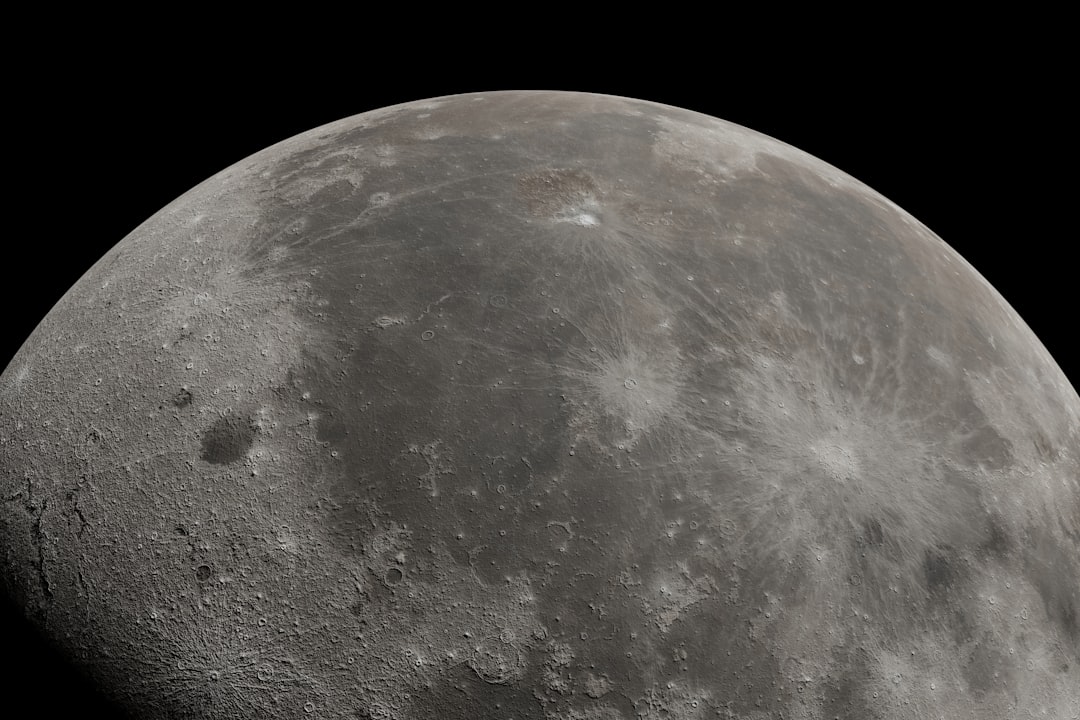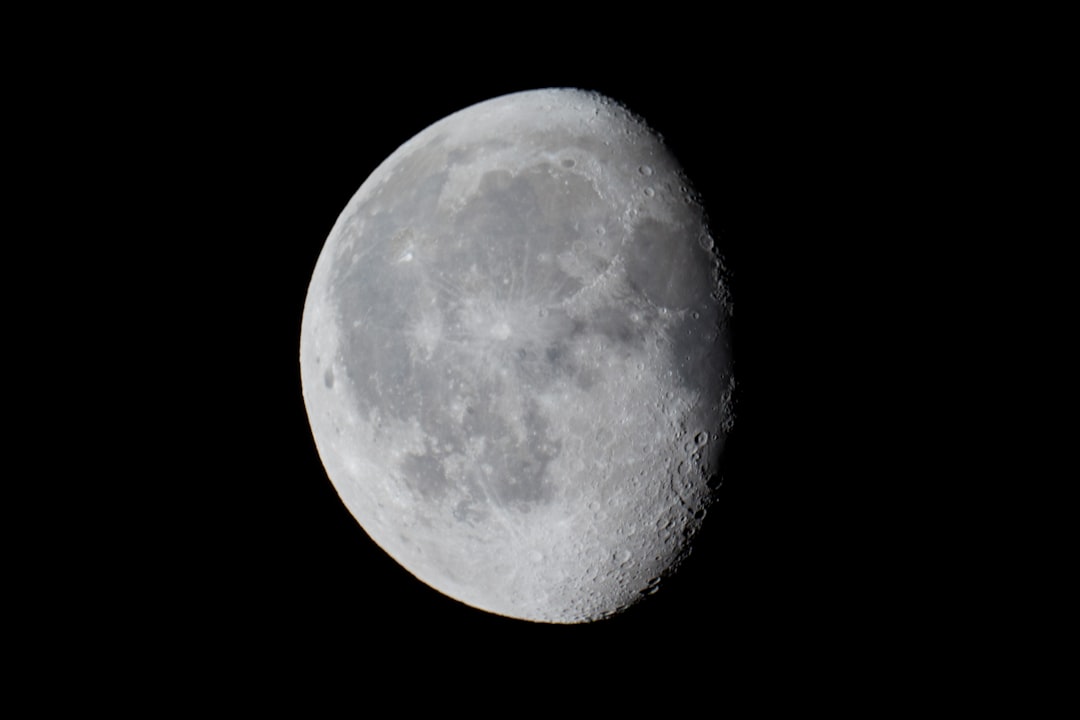
In a significant strategic pivot that reflects both technical realities and geopolitical pressures, NASA has fundamentally restructured its Artemis lunar exploration program, announcing today that the agency will delay its first crewed Moon landing to 2028 while simultaneously accelerating the overall mission cadence. The announcement, delivered at a press conference held at NASA's Kennedy Space Center, represents one of the most substantial revisions to America's lunar ambitions since the program's inception, with Administrator Jared Isaacman emphasizing that the changes are necessary to ensure both astronaut safety and strategic competitiveness in an increasingly crowded race back to the lunar surface.
The restructured architecture means that Artemis III, originally planned as humanity's triumphant return to the Moon in 2027, will instead serve as a crucial orbital testing mission in Low Earth Orbit (LEO). This mission will now mirror the historic Apollo 9 flight of March 1969, which validated the Lunar Module's systems through extensive docking and operational tests without leaving Earth orbit. The actual lunar landing has been pushed to Artemis IV, currently scheduled for 2028, allowing NASA to methodically validate all systems before committing astronauts to the quarter-million-mile journey to the Moon.
According to the official agency statement, this reconfiguration enables NASA to establish a sustainable cadence of one lunar surface mission annually beginning in 2028, a tempo not seen since the Apollo era's peak operational years. The decision reflects hard lessons learned from decades of space shuttle operations and International Space Station construction—that ambitious timelines must be tempered by rigorous testing protocols and realistic assessments of technological readiness.
Technical Challenges Driving the Strategic Shift
The primary catalyst for this schedule adjustment stems from ongoing developmental challenges with SpaceX's Starship Human Landing System (HLS), the vehicle selected in 2021 to transport astronauts from lunar orbit to the surface. Despite SpaceX's remarkable track record of innovation, the Starship program has encountered significant technical obstacles that have made the original 2027 timeline increasingly untenable. The company has experienced five losses among eleven prototype vehicles during testing, with persistent issues including fuel system leaks, engine performance anomalies, and structural integrity concerns during high-stress flight regimes.
Perhaps most critically, the in-orbit refueling demonstration—an absolutely essential capability for lunar missions—remains unproven and is currently scheduled for later this year. The Starship architecture requires this unprecedented feat of orbital operations because no single launch can carry sufficient propellant to reach the Moon and return. Current Block 2 prototypes have achieved payload capacities of only 35 metric tons to LEO, far short of the 100-150 metric ton capability promised for the fully operational system.
The mathematical reality is sobering: with Starship's fuel capacity approaching 1,500 metric tons, even a half-fueled HLS mission would require between five and eight tanker launches to a propellant depot in orbit—assuming each tanker reaches maximum payload capacity. This complex orbital ballet of multiple launches, precise rendezvous operations, and cryogenic fuel transfers represents technology that has never been demonstrated at the required scale. The upgraded Block 3 Starship variant, which SpaceX hopes will resolve these payload limitations, isn't scheduled for its first test flight until April 2026, leaving minimal margin for the extensive testing NASA requires before committing to crewed operations.
Blue Origin's Emergence as a Competitive Alternative
While SpaceX grapples with Starship's technical maturation, Blue Origin has made impressive strides with its New Glenn orbital launch vehicle, successfully reaching orbit on both of its first two flights—a remarkable achievement that has captured NASA's attention. The first New Glenn mission placed its Blue Ring pathfinder payload into Medium Earth Orbit, while the second successfully deployed NASA's ESCAPADE (Escape and Plasma Acceleration and Dynamics Explorers) mission to the Earth-Sun L2 Lagrange Point, demonstrating the precision and reliability that lunar missions demand.
This performance has vindicated NASA's decision, made under former acting-Administrator Sean Duffy, to reopen the Human Landing System competition approximately six months ago. Blue Origin's Blue Moon lunar lander, paired with the proven New Glenn launch system, now represents a credible alternative path to the lunar surface. The Artemis III mission's restructuring as an orbital test flight creates an opportunity to evaluate both the SpaceX and Blue Origin systems in a lower-risk environment, with the crewed Orion spacecraft conducting rendezvous and docking operations with either landing system.
"NASA must standardize its approach, increase flight rate safely, and execute on the President's national space policy. With credible competition from our greatest geopolitical adversary increasing by the day, we need to move faster, eliminate delays, and achieve our objectives. Standardizing vehicle configuration, increasing flight rate and progressing through objectives in a logical, phased approach, is how we achieved the near-impossible in 1969 and it is how we will do it again."
— Jared Isaacman, NASA Administrator
The Strategic Standardization of Launch Architecture
Beyond the HLS selection, NASA has made an equally consequential decision to maintain the Space Launch System (SLS) Block 1 configuration across all Artemis missions rather than upgrading to the more capable Block 1B variant after Artemis III as originally planned. This standardization strategy directly mirrors the approach that enabled Apollo's rapid mission cadence between 1968 and 1972, when eight missions (Apollo 8 through 14) launched using essentially identical Saturn V configurations.
The Block 1 architecture utilizes the Interim Cryogenic Propulsion Stage (ICPS) as its upper stage, providing the critical propulsion that sends Orion toward the Moon after the solid rocket boosters and core stage complete their duties. The previously planned Block 1B upgrade would have introduced the more powerful Exploration Upper Stage (EUS), featuring four RL10 engines burning liquid hydrogen and liquid oxygen. While the EUS offers greater performance, its development would introduce new variables and potential failure modes that could disrupt the mission tempo NASA seeks to establish.
As NASA Associate Administrator Amit Kshatriya explained, this decision reflects hard-won wisdom from the Apollo program: "We are looking back to the wisdom of the folks that designed Apollo. The entire sequence of Artemis flights needs to represent a step-by-step build-up of capability, with each step bringing us closer to our ability to perform the landing missions." By maintaining configuration consistency, NASA can achieve the annual launch cadence that former Associate Administrator Bill Gerstenmaier recommended as far back as 2016.
Comprehensive Testing Objectives for Artemis III
The reconceived Artemis III mission will serve as far more than a simple shakedown cruise. NASA has outlined an ambitious test program that will validate every critical system required for lunar operations:
- Integrated Life Support Systems: Verification that the combined Orion-HLS environmental control systems can sustain crew health during extended docked operations, including atmosphere management, water recycling, and waste processing
- Communications Architecture: End-to-end testing of the deep space network connectivity, inter-vehicle communications protocols, and emergency backup systems that will be essential during lunar operations
- Propulsion System Integration: Validation of the complex propulsion handoffs between Orion's service module and the HLS, including thruster firings, attitude control coordination, and fuel management protocols
- Extravehicular Activity (xEVA) Spacesuit Trials: The new generation of spacesuits designed for lunar surface operations will undergo their first crewed evaluation, testing mobility, thermal management, and life support performance in the space environment
- Docking and Undocking Procedures: Multiple rendezvous operations will validate the automated and manual control systems that must function flawlessly during lunar orbit operations
These tests represent the logical progression that Apollo demonstrated—the Apollo 9 mission's thorough validation of the Lunar Module in Earth orbit provided the confidence necessary for Apollo 10's lunar orbit rehearsal and Apollo 11's historic landing just four months later.
The Geopolitical Dimension: China's Accelerating Lunar Program
Administrator Isaacman's reference to competition from "our greatest geopolitical adversary" leaves little doubt that China's rapidly advancing lunar program has influenced NASA's strategic calculations. China has made extraordinary progress across multiple fronts, with their Long March 10 super-heavy launch vehicle and Mengzhou crew spacecraft recently passing critical launch tests—less than two weeks before NASA's announcement.
China's lunar architecture, targeting a 2030 crewed landing, employs a dual-launch strategy similar to NASA's approach: the Mengzhou spacecraft and Lanyue lunar lander will launch separately on two Long March 10 rockets, rendezvous in lunar orbit, and conduct surface operations in the Moon's resource-rich southern polar region. This mission serves as the foundation for China's ambitious International Lunar Research Station (ILRS), a permanent lunar base that represents a direct challenge to American leadership in space exploration.
The competitive pressure extends beyond symbolic achievements. China's methodical approach has yielded impressive results: successful robotic sample returns, precision landings in challenging terrain, and the deployment of rovers that have operated far beyond their design lifetimes. Their Chang'e lunar exploration program has demonstrated technological sophistication that many Western analysts initially underestimated, and their timeline for crewed missions appears increasingly credible.
Organizational Challenges and Workforce Restructuring
NASA's announcement also addressed the agency's controversial "workforce directive" aimed at "rebuilding core competencies in the civil servant workforce"—language that merits careful examination given recent turbulence within the organization. The agency has endured a 25% budget reduction for fiscal year 2026, resulting in the loss of over 4,000 employees through buyouts and attrition. This workforce reduction has placed more than 40 missions at risk, including long-running programs like Mars Odyssey, MAVEN, and OSIRIS-APEX.
The same budget constraints led to proposals for canceling the SLS, Orion spacecraft, and Lunar Gateway—the very infrastructure components essential to Artemis's long-term sustainability. Also targeted was the Demonstration Rocket for Agile Cislunar Operations (DRACO), a joint NASA-DARPA initiative developing nuclear thermal propulsion technology that could revolutionize deep space travel.
These decisions emerged during the tenure of former acting-Administrator Sean Duffy, whose relationship with Isaacman became publicly strained following the leak of the "Project Athena" document in November 2025. This 62-page strategy paper (reportedly excerpted from a longer 100+ page original) outlined Isaacman's vision for NASA's future, though controversy erupted over whether the document advocated for center closures and program cancellations. Ars Technica's Eric Berger suggested at the time that Duffy himself may have leaked the document to deflect criticism of unpopular decisions.
Isaacman subsequently clarified on social media that his original plan "never favored any one vendor, never recommended closing centers, or directed the cancellation of programs before objectives were achieved. The plan valued human exploration as much as scientific discovery." Whether the current workforce directive represents a genuine effort to restore NASA's technical capabilities or serves as a continuation of efficiency-focused reforms remains a subject of intense debate within the aerospace community.
Current Status: Artemis II Faces Additional Technical Hurdles
Even as NASA reconfigures its long-term Artemis strategy, the immediate focus remains on Artemis II, the first crewed mission that will send astronauts around the Moon without landing. This mission has experienced yet another delay, now pushed to April due to a helium flow anomaly discovered in the Interim Cryogenic Propulsion Stage during recent wet dress rehearsal testing.
After engineers identified the issue, the fully stacked rocket was rolled back into the Vehicle Assembly Building at Kennedy Space Center, where technicians are methodically addressing multiple technical items:
- Replacement of batteries in the flight termination system, which serves as the critical safety mechanism that can destroy the vehicle if it veers off course
- Comprehensive end-to-end testing to satisfy range safety requirements imposed by the Eastern Range
- Detailed inspection and resolution of the helium system anomaly that triggered the delay
- Validation of all integrated systems following the extended period in the Vehicle Assembly Building's controlled environment
These delays, while frustrating, reflect NASA's unwavering commitment to crew safety—a principle established during the Apollo era and reinforced by the tragedies of Challenger and Columbia. The agency's willingness to accept schedule slips rather than compromise safety standards distinguishes government space programs from commercial ventures operating under different risk tolerances.
The Broader Context: Balancing Ambition with Pragmatism
NASA's restructured Artemis timeline reflects a mature understanding that sustainable space exploration requires patient, methodical development rather than politically driven deadline pressure. The original Moon-to-Mars architecture was first proposed over two decades ago, and the intervening years have seen repeated delays caused by insufficient funding, shifting presidential priorities, and organizational restructuring. Each administration has left its mark on the program, sometimes advancing it and sometimes disrupting hard-won momentum.
The current approach—standardizing vehicle configurations, increasing flight rates through consistency, and progressing through logical capability buildups—represents sound engineering practice validated by Apollo's success. That program achieved its ambitious goals not through reckless haste but through rigorous testing, incremental validation, and the willingness to pause when technical realities demanded it.
Interestingly, this strategic recalibration occurs amid broader shifts in space industry priorities. SpaceX founder Elon Musk recently announced that his company would pivot from Mars-focused development to concentrate on lunar capabilities, aligning commercial and governmental objectives in unprecedented ways. Whether this coordination reflects genuine strategic alignment or pragmatic response to market realities remains an open question, but it undeniably strengthens America's near-term lunar prospects.
Looking Forward: A Sustainable Path to the Moon
As NASA works through these programmatic adjustments, the fundamental question remains: Can the United States establish a sustainable, long-term presence on the Moon that extends beyond flags-and-footprints symbolism? The answer depends on maintaining several critical elements:
- Stable Funding: Consistent budget support across multiple administrations, avoiding the feast-or-famine cycles that have plagued NASA for decades
- Technical Maturity: Allowing sufficient time for new systems like Starship HLS and Blue Moon to achieve operational reliability through extensive testing
- International Cooperation: Leveraging partnerships with ESA, JAXA, CSA, and other space agencies to distribute costs and share expertise
- Commercial Innovation: Harnessing private sector efficiency while maintaining government oversight and safety standards
- Workforce Stability: Retaining and developing the specialized expertise required for human spaceflight operations
The revised Artemis architecture, with its emphasis on standardization and incremental capability growth, provides a framework for achieving these objectives. By accepting a one-year delay in the lunar landing while establishing annual mission cadence thereafter, NASA positions itself for sustained operations rather than isolated spectacular achievements.
The coming months will prove critical as Artem