The prospect of humanity returning to the Moon has reignited discussions about challenges that have lurked in scientific literature for decades. Among the most insidious threats facing future lunar explorers is one that might seem mundane on Earth but becomes potentially lethal in the harsh environment of our celestial neighbor: electrostatic discharge. Recent research published in Advances in Space Research by Dr. Bill Farrell from the Space Science Institute and Dr. Mike Zimmerman from Johns Hopkins University reveals that this electrical menace could impose an unexpected constraint on lunar exploration—a strict speed limit for rovers traversing the Moon's most scientifically valuable regions.
While astronauts during the Apollo missions bounced across the lunar surface with relative abandon, their rovers never ventured into the Moon's Permanently Shadowed Regions (PSRs)—ancient craters where sunlight has not penetrated for billions of years. These dark territories, which harbor precious water ice and hold clues to the Solar System's early history, present a unique electrical hazard. According to the new research, rovers operating in these perpetually dark areas could accumulate charges reaching an astonishing 1 Megavolt—enough to create devastating arc flashes that could fry an astronaut's life support system or cripple a rover's navigation systems in an instant.
This isn't merely theoretical concern. The phenomenon of tribocharging—the build-up of electrical charge through friction—has been recognized as a significant challenge since at least 2005, when early studies highlighted the dangers of electrostatic discharge to astronauts on airless bodies. Now, as NASA's Artemis program prepares to establish a sustained human presence on the Moon, addressing this electrical threat has become an urgent engineering priority.
The Physics Behind Lunar Electrostatic Charging
To understand why the Moon presents such a formidable electrical hazard, we must first examine the unique environmental conditions that exist on airless bodies. Unlike Earth, where our atmosphere provides a conductive medium that dissipates static charges relatively quickly, the Moon's surface exists in a near-perfect vacuum. The lunar regolith—the layer of fine dust and rocky debris covering the surface—is composed primarily of silicate minerals that have been pulverized by billions of years of micrometeorite impacts.
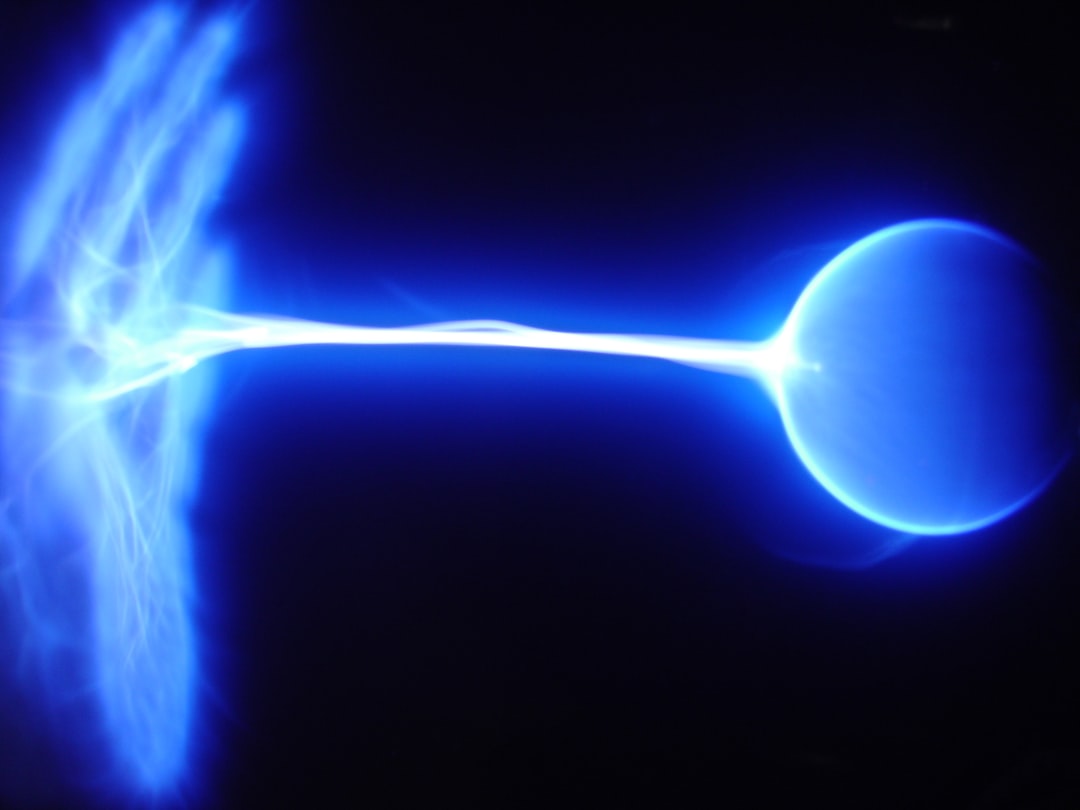
When a rover's wheels roll across this powder-fine material, they engage in constant friction with countless regolith particles. This mechanical interaction strips electrons from the dust particles, causing them to accumulate on the rover's wheels in a process known as triboelectric charging. On Earth, similar friction occurs when you shuffle across a carpet in winter, but the charge dissipates quickly through the humid air. On the Moon, there's nowhere for these electrons to go.
Under normal circumstances on the sunlit lunar surface, a natural defense mechanism comes into play. The photoelectric effect—the same phenomenon that earned Albert Einstein his Nobel Prize—causes electrons to be ejected from surfaces when struck by ultraviolet photons from the Sun. This photoemission process continuously strips away the accumulating negative charge, preventing dangerous build-ups. Research conducted by NASA's Goddard Space Flight Center has extensively documented this protective mechanism.
The Unique Danger of Permanently Shadowed Regions
The Moon's PSRs represent some of the most scientifically compelling destinations for future exploration. Located primarily near the lunar poles, these regions exist in perpetual darkness due to the Moon's minimal axial tilt of just 1.5 degrees. Some of these craters have remained in shadow for over two billion years, creating cold traps where temperatures plunge to as low as -240°C (-400°F)—among the coldest locations in the entire Solar System.
These frigid conditions have allowed water ice to accumulate and persist, making PSRs potential goldmines for future lunar bases. Water represents the most valuable resource in space exploration: it can sustain human life, generate breathable oxygen through electrolysis, and be split into hydrogen and oxygen to create rocket propellant. Data from NASA's Lunar Reconnaissance Orbiter and India's Chandrayaan-1 mission have confirmed substantial water ice deposits in these shadowed regions.
However, the very darkness that preserves this ice also eliminates the photoelectric protection that prevents charge accumulation. According to Farrell and Zimmerman's calculations, a rover operating in these regions could accumulate charge at an alarming rate. The researchers' models indicate that without mitigation strategies, wheel voltages could reach 1 Megavolt within relatively short operational periods—creating what amounts to a mobile lightning hazard.
"The triboelectric charging in Permanently Shadowed Regions represents one of the most underappreciated hazards facing lunar exploration," explains Dr. Farrell. "We're talking about voltages high enough to create arc flashes that could instantly disable critical systems or pose lethal risks to astronauts."
Engineering Solutions to the Charging Challenge
The research team has proposed several innovative mitigation strategies, each with distinct advantages and trade-offs. These approaches range from tactical operational procedures to fundamental design modifications for next-generation lunar rovers.
Strategic Route Planning
One of the simplest mitigation techniques involves careful mission planning. By entering PSRs from the sun-facing side of crater walls, rovers can maximize their exposure to photoemission effects before plunging into complete darkness. This approach allows the natural photoelectric discharge to work as long as possible, reducing the initial charge state before entering the most hazardous zones. However, this strategy only delays the inevitable charge accumulation rather than preventing it.
Electrical Bonding Architecture
A counterintuitive but potentially effective design modification involves electrically bonding the rover's wheels directly to its chassis. While this might seem to invite disaster by connecting high-voltage wheels to sensitive electronics, the strategy actually increases the total surface area available for charge distribution. By spreading the accumulated charge across the entire rover body, the voltage at any single point decreases, and more surface area becomes available for any residual photoemission effects from reflected or scattered light.
This approach mirrors techniques used in terrestrial applications, where grounding and bonding prevent localized charge accumulation. Engineers at NASA's Jet Propulsion Laboratory have been investigating optimal bonding configurations that balance charge distribution with electrical isolation of critical systems.
Advanced Material Selection
The choice of wheel materials represents another critical design parameter. Different materials have varying positions in the triboelectric series—a ranking that determines whether a material tends to gain or lose electrons when in contact with other substances. By selecting wheel materials that charge positively relative to lunar regolith (which tends to be negatively charged), engineers can minimize or even reverse the charge accumulation process.
Researchers are investigating materials such as certain polymers and treated metals that might exhibit favorable triboelectric properties. However, these materials must also withstand the Moon's extreme temperature variations, abrasive dust, and intense ultraviolet radiation—a challenging combination of requirements.
Artificial Photoemission Systems
Perhaps the most innovative proposal involves installing ultraviolet lamps on the rover to create an artificial photoemission effect. These lamps would shine on the wheels and other charge-accumulating surfaces, providing the UV photons necessary to liberate electrons even in complete darkness. While this solution requires additional electrical power and adds system complexity, it offers the advantage of active, controllable charge management.
The concept draws inspiration from industrial applications where UV light is used for static charge control in manufacturing environments. Adapting this technology for the lunar environment requires developing robust, low-power UV sources that can operate reliably in extreme conditions.
The Speed Limit Solution: Safety at a Crawl
Among all the proposed mitigation strategies, one stands out for its simplicity and effectiveness—though it comes with a significant operational penalty. The research indicates that by limiting rover speed to approximately 0.2 centimeters per second (about 0.08 inches per second) in PSRs, charge accumulation can be kept below dangerous thresholds. At this glacial pace, natural charge dissipation mechanisms have sufficient time to prevent hazardous voltage build-ups.
To put this speed in perspective, a rover traveling at 0.2 cm/s would cover just 7.2 meters (23.6 feet) per hour—making a one-kilometer journey require nearly six days of continuous operation. This stands in stark contrast to the Apollo Lunar Roving Vehicle, which achieved speeds up to 18 kilometers per hour (11 mph) across the sunlit lunar surface, allowing astronauts to cover significant distances during their limited surface time.
For crewed missions, such extreme speed restrictions would severely limit exploration capabilities and scientific productivity. Even for robotic missions, the slow pace would constrain operational flexibility and increase mission costs. However, as the research team emphasizes, safety must take precedence, particularly during the early phases of PSR exploration when our understanding of these environments remains incomplete.
Implications for Future Lunar Exploration Programs
The electrostatic charging challenge has significant implications for several upcoming lunar missions. NASA's VIPER (Volatiles Investigating Polar Exploration Rover), scheduled to explore the Moon's south polar region, will be among the first missions to confront this challenge directly. VIPER's mission specifically targets PSRs to map water ice distribution, making it a crucial test case for charge mitigation strategies.
The research also impacts planning for the Artemis program's long-term goals of establishing a sustainable lunar presence. The Lunar Gateway space station and surface habitats will require regular rover operations in PSRs for water ice mining and scientific research. Developing reliable charge mitigation systems isn't optional—it's essential for mission success and crew safety.
International partners in lunar exploration, including the European Space Agency, China's Chang'e program, and commercial entities like SpaceX and Blue Origin, must also address these challenges as they develop their own lunar surface systems. The tribocharging problem represents a universal constraint that transcends national boundaries and organizational affiliations.
Lessons from Decades of Research
The fact that electrostatic discharge hazards have been recognized for nearly two decades underscores both the complexity of lunar engineering challenges and the importance of sustained research investment. Early warnings about these dangers, dating back to 2005 and earlier, provided the foundation for today's more sophisticated understanding. This long research timeline has allowed scientists and engineers to develop multiple mitigation approaches rather than facing these challenges unprepared.
The tribocharging research also demonstrates the value of studying fundamental physical processes in extreme environments. What begins as an abstract concern about electron behavior in vacuum conditions becomes a concrete operational constraint affecting mission design, crew safety, and exploration capabilities. This progression from basic science to practical application exemplifies the interconnected nature of space exploration challenges.
The Path Forward: Innovation and Adaptation
As humanity prepares to return to the Moon with unprecedented ambitions, the electrostatic charging challenge serves as a reminder that space exploration requires constant innovation and adaptation. The solutions being developed today—from advanced materials to artificial photoemission systems—will likely evolve significantly as we gain operational experience in PSRs.
Future research directions include developing real-time charge monitoring systems that can alert operators to dangerous accumulations, investigating the use of conductive tethers or ground planes to provide charge dissipation paths, and exploring whether localized plasma generation could create conductive channels for charge relief. Each approach requires careful analysis of benefits, risks, and implementation challenges.
The ultimate solution may involve a combination of multiple strategies: optimized materials, electrical bonding, UV illumination systems, and operational procedures working together to manage this invisible but potentially lethal hazard. As Dr. Zimmerman notes, "We're not looking for a single silver bullet, but rather a comprehensive approach that provides multiple layers of protection against electrostatic discharge."
While the prospect of rovers crawling at centimeters per second through some of the Moon's most scientifically valuable terrain may disappoint those expecting rapid, dramatic exploration, it reflects the reality that space exploration demands patience, careful planning, and respect for the unique challenges posed by alien environments. As our understanding deepens and our technologies mature, faster and safer operations will become possible—but only by first acknowledging and addressing the fundamental physics that govern the lunar environment.
The journey to unlock the secrets hidden in the Moon's permanently shadowed regions will be measured not just in kilometers traveled, but in the ingenuity required to overcome obstacles that, like the darkness itself, remain invisible until we venture into them.