Our Sun's Undiscovered Stellar Nemesis Is Still Out There, Says Physicist
Among the most compelling — and chilling — hypotheses in modern astrophysics is the idea that our Sun has a secret companion: a dim, distant stellar twin silently shepherding waves of deadly comets toward the inner solar system on a clockwork schedule of destruction. Richard Muller, a distinguished professor emeritus of physics at the University of California, Berkeley, has championed this idea for decades, and despite the skepticism of some colleagues, he maintains that the evidence for a solar companion — a hypothetical red dwarf star known as Nemesis — remains both compelling and unrefuted.
The Oort Cloud: A Cosmic Reservoir of Danger
To understand the Nemesis hypothesis, one must first appreciate the sheer scale and mystery of the Oort Cloud. This vast, roughly spherical shell of icy bodies is thought to extend from roughly 2,000 astronomical units (AU) to as far as 1.6 light-years from the Sun — nearly halfway to the nearest stellar system, Proxima Centauri. Containing an estimated trillion or more cometary nuclei left over from the formation of our solar system approximately 4.5 billion years ago, the Oort Cloud is effectively a frozen archive of primordial solar system material.
Long-period comets — those with orbital periods exceeding 200 years — are widely believed to originate from this distant reservoir. When gravitational forces nudge these icy bodies out of their stable orbits, they fall inward on trajectories that can bring them screaming through the inner solar system, occasionally on a collision course with Earth. The consequences of such an impact at sufficient scale could be extinction-level.
According to Astrophysicist Sean Raymond, Director of France's Bordeaux Astrophysical Laboratory, the Oort Cloud itself was assembled from multiple sources:
- Planetesimals that originated within our Sun's own planet-forming protoplanetary disk
- Planetesimals gravitationally captured from other stars in our Sun's birth cluster
- Interstellar objects captured during close stellar encounters or through gravitational scattering by giant planets like Jupiter
This complex, multi-origin nature makes the Oort Cloud one of the most scientifically fascinating — and observationally elusive — structures in the solar system. No spacecraft has ever directly observed it, and NASA considers it one of the great remaining mysteries of solar system science.
The Nemesis Hypothesis: A Stellar Trigger for Mass Extinctions
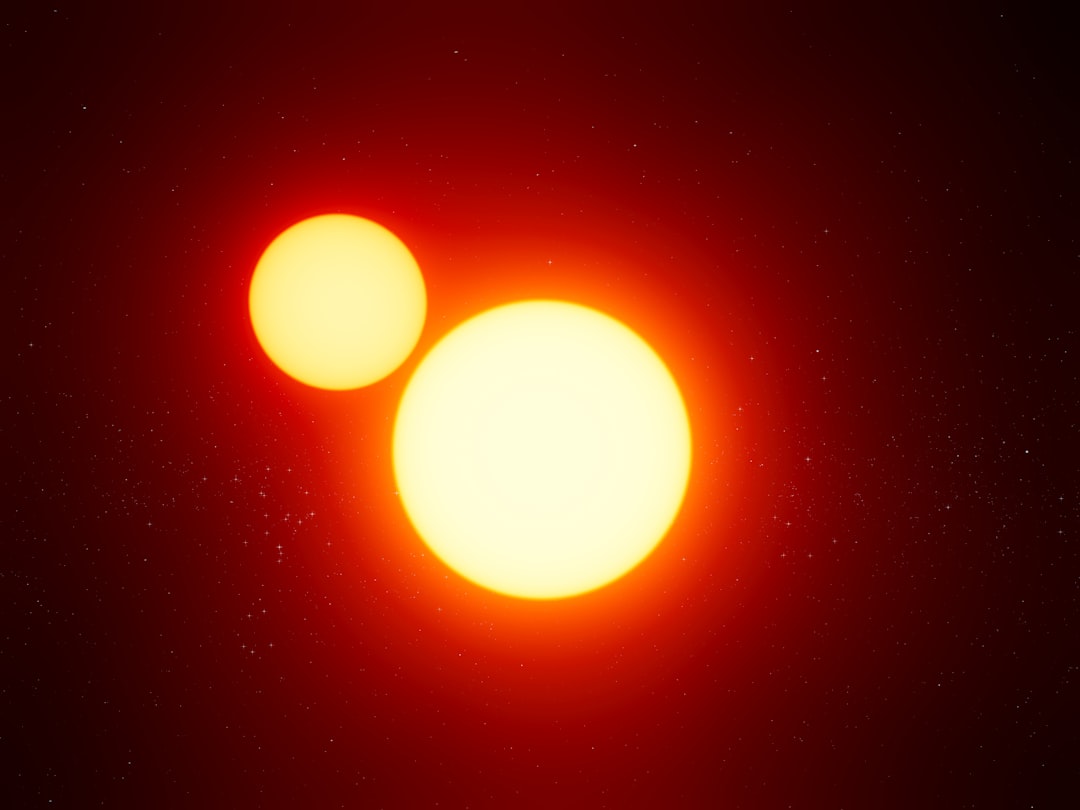
The conventional explanation for periodic comet showers involves random stellar interlopers — nearby stars that pass close enough to the outer edges of the Oort Cloud to gravitationally perturb it, sending cascades of comets inward. But Muller's hypothesis goes significantly further. He proposes that our Sun is part of a binary star system, with Nemesis — a low-mass red dwarf star — orbiting our Sun in a wide, slightly eccentric elliptical orbit at a period of approximately 26 million years.
"Every time Nemesis gets closest to the Oort Cloud is when the comets kick in, and this comet shower lasts for maybe a million years. That's when Nemesis is in the densest part of the comet cloud, and that's when the number of deflected Oort Cloud comets into the inner solar system are at a maximum." — Richard Muller, UC Berkeley
This is fundamentally different from random stellar perturbations or the speculative Planet X concept. Nemesis, if real, would be a bona fide stellar companion — a gravitationally bound partner to our Sun — whose periodic close approaches to the Oort Cloud trigger predictable, cyclical comet showers. The key distinction is periodicity: unlike random events, Nemesis would impose a measurable, repeating rhythm on the bombardment of Earth.
The Paleontological Evidence: 26 Million Years of Periodic Death
The intellectual foundation for the Nemesis hypothesis rests on a landmark 1982 study published in the journal Science. Paleontologists David Raup and Jack Sepkoski assembled the most comprehensive record of marine fossil extinctions ever compiled at that time, analyzing extinction rates across hundreds of millions of years of Earth's geological record.
"If you plot those extinctions, you see there's a strong 26-million-year period in the data." — Richard Muller
This periodicity was not subtle statistical noise — it was a striking, recurring signal embedded in the deep history of life on Earth. The extinction peaks identified by Raup and Sepkoski aligned with known impact events and geological disruptions at intervals of approximately 26 million years, spanning some 250 million years of Earth history. Among the most prominent of these peaks was the extinction event 66 million years ago — the famous Cretaceous-Paleogene (K-Pg) boundary event, which wiped out approximately 75% of all species on Earth, most famously the non-avian dinosaurs.
Muller recognized that this periodicity demanded a periodic cause. Random asteroid impacts or stochastic stellar flybys could not produce such a consistent, clock-like pattern. The logical solution was a bound companion with a regular orbit — Nemesis.
Was the K-Pg Extinction Caused by a Comet, Not an Asteroid?
The prevailing scientific consensus, following the pioneering work of Walter Alvarez — also a professor at UC Berkeley — holds that the K-Pg boundary extinction was caused by the impact of a large asteroid that struck the Yucatan Peninsula, forming the Chicxulub crater. The evidence includes a global layer of iridium — an element rare in Earth's crust but common in extraterrestrial objects — deposited precisely at the K-Pg boundary worldwide.
However, Muller raises a provocative point: the geochemical evidence cannot definitively distinguish between an asteroidal impactor and a cometary one. When Muller directly asked Alvarez whether the Chicxulub impactor could have been a comet rather than an asteroid, Alvarez reportedly replied:
"Sure, we couldn't tell the difference." — Walter Alvarez, as recounted by Richard Muller
This ambiguity matters enormously. If a significant proportion of major Earth impacts throughout geological history were caused by comets — particularly long-period comets deflected from the Oort Cloud — it would considerably strengthen the case for a periodic external trigger like Nemesis. The European Space Agency's Rosetta mission has greatly expanded our understanding of cometary composition, but the fundamental challenge of distinguishing ancient cometary and asteroidal craters remains unsolved.
Why Hasn't Nemesis Been Found?
Skeptics of the Nemesis hypothesis frequently point out that modern sky surveys are extraordinarily thorough. If a red dwarf star existed within a few light-years of the Sun, surely it would have been found by now. Muller has a carefully reasoned response to this objection.
The key lies in proper motion — the apparent movement of a star across the sky relative to background stars, caused by the star's actual velocity through space. Stars close to our solar system typically display measurable proper motion, making them identifiable in systematic surveys. However, because Nemesis would be gravitationally bound to the Sun, it would share our Sun's overall motion through the galaxy. As a result, Nemesis would show far less proper motion than an unbound nearby star, making it far harder to detect through conventional survey techniques.
- Nemesis is estimated to be at least 5% the mass of the Sun — massive enough to gravitationally perturb the Oort Cloud
- As a dim red dwarf, it would likely be an 8th or 9th magnitude star — invisible to the naked eye but detectable with telescopes
- Its location near the plane of the ecliptic means it would be lost among a dense stellar background, complicating detection efforts
- Its minimal proper motion relative to the Sun would prevent easy identification in proper-motion-based star catalogs
"Nemesis really is probably lost in a field of view that includes a huge number of other stars." — Richard Muller
Despite searches using infrared surveys — including data from NASA's Wide-field Infrared Survey Explorer (WISE), which was specifically capable of detecting cool, dim red and brown dwarf stars — no confirmed candidate for Nemesis has been identified. Muller acknowledges this, but notes that the absence of detection is not the same as evidence of absence, particularly given the specific observational challenges involved.
The Rubin Observatory: A New Hope for Oort Cloud Science
While Nemesis itself may remain elusive for the foreseeable future, our understanding of the Oort Cloud is poised for a dramatic expansion. The Vera C. Rubin Observatory, located in Chile and now entering its operational phase, represents a generational leap in wide-field astronomical survey capability. With its massive 8.4-meter mirror, 3.2-gigapixel camera, and ability to survey the entire visible sky every few nights, Rubin is expected to detect vast numbers of previously unknown solar system objects — including, critically, long-period Oort Cloud comets.
By dramatically increasing the sample size of known long-period comets, Rubin may allow astronomers to better characterize their orbital distribution, test whether their arrival rates show statistically significant periodicity, and place tighter constraints on models of Oort Cloud structure and dynamics. The Rubin Observatory's Legacy Survey of Space and Time (LSST) is expected to transform nearly every area of observational astronomy over its planned 10-year survey period.
Scientific Context: Binary Star Systems and Galactic Dynamics
It is worth noting that binary and multiple star systems are, statistically speaking, the norm rather than the exception in our galaxy. Studies suggest that roughly half of all Sun-like stars exist in binary or higher-order multiple systems. The existence of a distant, low-mass stellar companion to the Sun would, in many respects, be entirely unremarkable from a stellar population standpoint. What would be remarkable — and potentially deeply significant for the history of life on Earth — is the specific orbital dynamics and the comet-triggering mechanism that such a companion would impose.
Some researchers have also explored whether galactic-scale dynamics — specifically, the gravitational influence of the galactic disk as the solar system bobs up and down through it over tens of millions of years — could also impose periodic perturbations on the Oort Cloud. This "galactic tide" hypothesis offers an alternative or complementary explanation for periodic comet showers, and both mechanisms may operate simultaneously.
The Bottom Line: A Hypothesis That Refuses to Die
The Nemesis hypothesis occupies a fascinating position in modern astrophysics — well-motivated by paleontological data, physically plausible, and yet stubbornly resistant to either definitive confirmation or definitive refutation. As Muller himself states plainly:
"Despite what others seem to think, there is no clear evidence against this hypothesis." — Richard Muller
The good news, at least for humanity in the near term, is that Muller's model predicts that the next major comet shower associated with Nemesis's orbital approach is not expected for another 12 to 15 million years. On geological timescales, that is a relatively comfortable margin. On human timescales, it is essentially an eternity.
Yet the deeper question lingers: has the rhythm of mass extinctions — the periodic pruning of Earth's biosphere that has shaped the entire trajectory of evolution — been set in motion by a stellar companion that shares our cosmic address but has never once been seen? If Nemesis is real, it is arguably the most consequential object in the solar neighborhood, hiding in plain sight among a sea of stars, patiently completing another loop in its vast, ancient orbit around our Sun.
For further reading and primary sources, explore the following authoritative references: