Reconstructing Cosmic History and Earth's Evolution From Cosmic Explosions
When we think of the Solar System, we often view it as a self-contained entity, isolated from its cosmic neighborhood. Yet this perception is fundamentally incomplete. Scientists have long recognized that Earth and its planetary siblings are profoundly influenced by activity in nearby star systems — including supernovae, neutron star mergers, and other extraordinarily energetic astrophysical events that have shaped our world across billions of years. The story of life on Earth, it turns out, may be inseparable from the story of exploding stars.
One of the most compelling connections between stellar death and terrestrial life lies in the chemical legacy left behind. When massive stars exhaust their nuclear fuel and catastrophically collapse, the resulting explosions forge and scatter heavy elements across interstellar space. These elements — ranging from the biologically essential to the geologically significant — eventually find their way into planetary systems like our own, enriching worlds like Earth with the raw materials of chemistry and, ultimately, biology.
The Stellar Forge: Where Heavy Elements Are Born
To appreciate the significance of this research, it helps to understand how the Universe manufactures its heaviest atoms. The lightest elements — hydrogen, helium, and trace amounts of lithium — were forged in the first minutes after the Big Bang. But the construction of heavier elements required the extreme conditions found only inside stars and in their violent deaths.
Through the process of stellar nucleosynthesis, stars fuse progressively heavier nuclei in their cores over millions to billions of years. This builds up intermediate elements ranging from carbon and oxygen to iron, nickel, and their radioactive isotopes. However, iron marks a critical boundary: fusing elements heavier than iron consumes rather than releases energy, so stars cannot naturally produce elements beyond it through ordinary fusion.
The creation of elements heavier than iron — including zinc, silver, tin, gold, mercury, lead, platinum, and uranium — requires a different and far more violent mechanism. The leading process is known as the rapid neutron-capture process, or r-process, which occurs when atomic nuclei are bombarded by an intense flood of neutrons in extreme astrophysical environments. Through rapid successive neutron captures, nuclei are built up far beyond iron's atomic mass, creating approximately half of all elements heavier than iron found in the Universe today.
- Supernovae: The explosive deaths of massive stars, capable of briefly outshining entire galaxies, dispersing heavy elements across vast interstellar distances.
- Neutron star mergers (kilonovae): Collisions between the ultra-dense remnants of dead stars, now recognized as a key site of r-process nucleosynthesis.
- Core-collapse supernovae: Potential r-process sites where the collapsed stellar core generates extreme neutron fluxes.
- Radioactive isotopes such as iron-60, plutonium-244, and curium-247 serve as cosmic fingerprints, preserving the signatures of these ancient events in geological archives on Earth and the Moon.
Despite decades of theoretical progress, the precise astrophysical sites and mechanisms responsible for r-process nucleosynthesis remain among the most debated questions in modern astrophysics. The SUPREME project is designed to bring hard observational evidence to bear on this question.
Introducing the SUPREME Project
At the Helmholtz-Zentrum Dresden-Rossendorf (HZDR), Prof. Anton Wallner and his interdisciplinary team have launched the ambitious SUPREME project — an acronym encapsulating its sweeping scientific mandate — to uncover microscopic traces of heavy elements embedded in Earth's geological record. Their goal is both to reconstruct the history of energetic cosmic events in our galactic neighborhood and to shed new light on how the heaviest elements in nature are created and transported across interstellar space.
The project recently received a landmark endorsement from Europe's premier scientific funding body. SUPREME was awarded a prestigious €3 million grant (approximately $3.29 million USD) through the European Research Council's (ERC) Advanced Grants program — one of the most competitive research funding mechanisms in the world. Prof. Wallner's team was selected as one of only 319 leading research groups across Europe from a highly competitive pool, sharing in a total funding allocation of €838 million (~$918.86 million USD) earmarked for projects with the potential to generate major scientific breakthroughs.
The SUPREME project has crystallized its scientific ambitions around two fundamental and deeply interconnected questions in modern astrophysics, focusing specifically on the past 500 million years of cosmic and terrestrial history.
Question One: Did Nearby Supernovae Shape Life on Earth?
The first question SUPREME seeks to address is both audacious and profound: How have nearby supernovae influenced Earth's geology and the trajectory of biological evolution since the Cambrian Period?
The Cambrian Period (approximately 538.8 to 485 million years ago) represents one of the most pivotal chapters in Earth's biological history. It was during this era that complex, multicellular marine animal life underwent its extraordinary diversification — an event known as the Cambrian Explosion. Within a geologically brief window of roughly 20 million years, nearly all major animal body plans appeared in the fossil record for the first time, transforming Earth from a world dominated by microbial mats into one teeming with sophisticated organisms.
When the Cambrian began, Earth's continents were clustered predominantly in the southern hemisphere, their surfaces largely barren of complex life. As subsequent geological eras unfolded — the Ordovician, Silurian, Devonian, and beyond — life progressively colonized the land, giving rise to vascular plants, amphibians, reptiles, mammals, the towering dinosaurs of the Mesozoic, and eventually the primates from which humanity descended.
What role, if any, did the stellar neighborhood play in this drama? When a massive star within a few hundred light-years of Earth explodes as a supernova, the resulting radiation and energetic particle flux can have measurable consequences for our planet. Cosmic rays generated by the supernova shockwave can penetrate Earth's atmosphere, potentially increasing mutation rates, affecting cloud formation and climate, and altering the intensity of ultraviolet radiation reaching the surface. Some researchers have even proposed links between nearby supernova events and mass extinction episodes recorded in the fossil record.
Beyond radiation effects, supernovae distribute a characteristic cocktail of heavy elements — including gold, platinum, lead, and zinc — across interstellar space. When this material reaches Earth, it is preserved in deep-sea sediments, Antarctic ice cores, and other geological archives, leaving a chemical record that scientists can now read with increasing precision.
Question Two: How Are the Heaviest Elements Created and Delivered to Earth?
The second fundamental question concerns the cosmic alchemy that produces the Universe's heaviest atoms and the pathways by which those atoms reach Earth and the Moon. While theoretical models predict the r-process as the dominant mechanism, observational confirmation of specific r-process events recorded in terrestrial and lunar materials would represent a transformative scientific achievement.
To answer these questions, SUPREME researchers will conduct systematic searches for extremely rare radioactive isotopes in a carefully curated suite of geological archives:
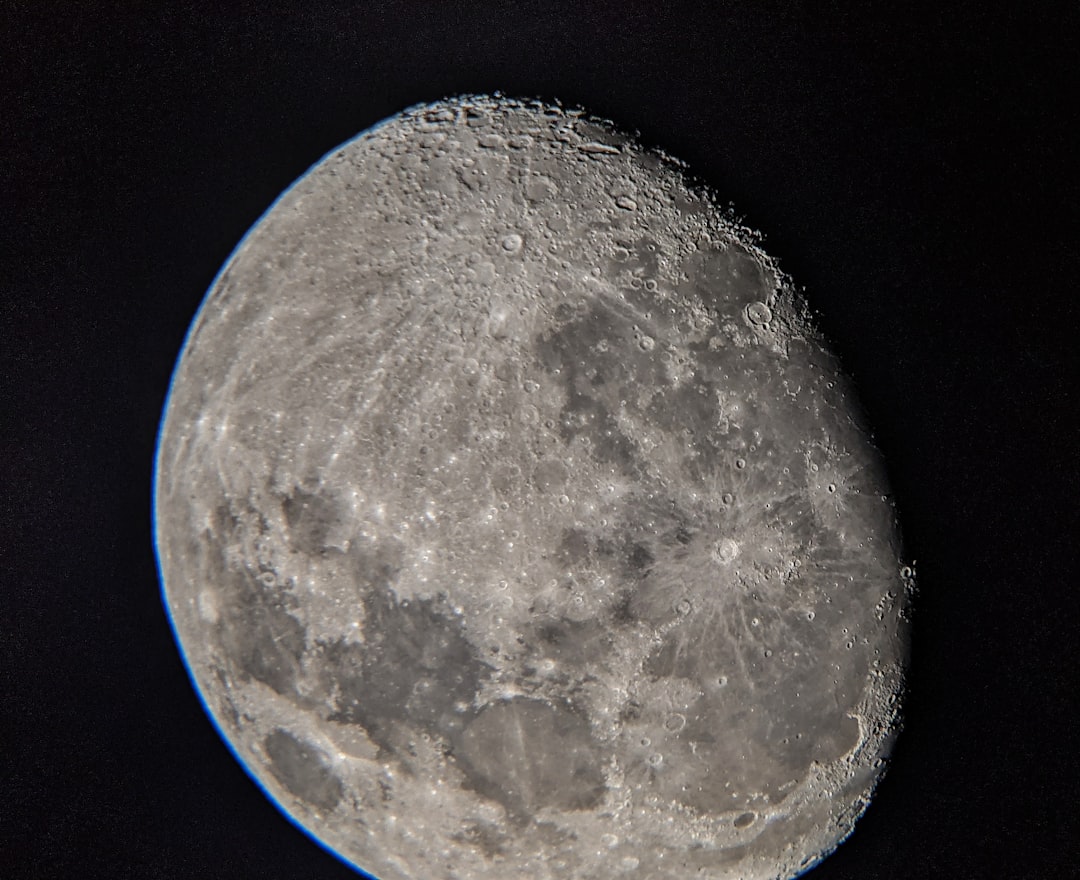
- Lunar samples provided by NASA's Apollo missions, which offer a pristine record of interstellar infall uncomplicated by Earth's active geology and atmosphere.
- Deep-sea ferromanganese crusts and sediments, which accumulate interstellar dust over millions of years and have already yielded detections of supernova-produced iron-60.
- Antarctic and polar ice cores, which preserve a layered chemical record of atmospheric deposition extending hundreds of thousands of years into the past.
- Other geological archives, including ancient rock formations and mineral deposits that may have captured cosmic isotopic signatures at critical moments in Earth's history.
These archives collectively function as a natural time capsule, preserving the chemical fingerprints of interstellar material that has rained down on Earth across geological time. By identifying the specific radioactive isotopes present and measuring their abundances, scientists can not only detect the signatures of ancient supernovae and neutron star mergers but also reconstruct when these events occurred and how close they were to our Solar System.
A Historic First: Detecting r-Process Isotopes in Interstellar Matter
The SUPREME project builds directly on a landmark scientific achievement that underscores the team's world-leading capabilities. In June 2026, scientists from the HZDR accomplished something unprecedented in the history of nuclear astrophysics: the first significant measurement of curium-247 and plutonium-244 in interstellar matter preserved on Earth. Both of these isotopes are exclusively produced by the r-process, making their detection direct evidence of a past r-process event — most likely a neutron star merger or a rare type of supernova — that deposited material in our cosmic neighborhood within the past few hundred million years.
This detection was itself a profound milestone. Plutonium-244, with a half-life of approximately 80 million years, and curium-247, with a half-life of about 15.6 million years, are far too short-lived to have survived from the formation of the Solar System 4.6 billion years ago. Their presence in geological samples therefore constitutes unambiguous evidence of relatively recent r-process nucleosynthesis events occurring in the galactic neighborhood — a finding with far-reaching implications for our understanding of heavy element production in the Milky Way.
"This award is a remarkable recognition of Anton Wallner's internationally leading research. SUPREME addresses fundamental questions about the origin of the elements and the history of our cosmic environment while building on measurement capabilities that are unique worldwide. We are proud that this pioneering work is being carried out at HZDR."
— Prof. Sebastian M. Schmidt, Scientific Director of HZDR
HAMSTER: A Revolutionary Instrument for Cosmic Detection
The analytical demands of SUPREME are extraordinary. The radioactive isotopes the team seeks are present in geological samples at concentrations so vanishingly small that detecting them pushes the absolute frontiers of analytical chemistry and nuclear physics. To meet this challenge, Prof. Wallner and his team developed a purpose-built instrument of remarkable capability.
HAMSTER — the Helmholtz Accelerator Mass Spectrometer Tracing Environmental Radionuclides — is a next-generation accelerator mass spectrometry (AMS) facility installed at HZDR in 2025. Accelerator mass spectrometry is among the most sensitive analytical techniques ever devised, capable of detecting individual rare atoms against a background of trillions of more common ones. It works by accelerating ions to high energies and using magnetic and electric fields to separate them by mass and charge, allowing the identification of specific isotopes with extraordinary precision.
What sets HAMSTER apart even within the AMS field is its integration with an innovative laser-based background suppression technology developed by Wallner's team. This system dramatically reduces the interfering signals that would otherwise mask the faint isotopic signatures being sought, pushing detection sensitivity to levels previously unattainable. The result is a facility capable of detecting and counting individual atoms of rare radioactive isotopes — a capability that opens new vistas not only for astrophysics but also for environmental science, radiological safety, and nuclear forensics.
Broader Implications: Connecting Cosmic Events to Life on Earth
The scientific significance of SUPREME extends well beyond the technical achievement of detecting rare isotopes. If the project succeeds in establishing a detailed timeline of nearby supernovae and r-process events over the past 500 million years and correlating these with geological and biological records, the implications would reverberate across multiple scientific disciplines.
In astrobiology, understanding how stellar explosions have modulated Earth's radiation environment and chemical inventory over geological timescales is essential for assessing the habitability of other worlds and the conditions that favor the emergence and persistence of complex life. In geology, supernova-derived isotopes offer novel stratigraphic markers that could help correlate rock sequences and date ancient events with unprecedented precision. In nuclear astrophysics, direct observational constraints on where and when r-process events occurred in the solar neighborhood will help discriminate between competing theoretical models of heavy element production.
The recognition SUPREME has received reflects the breadth of its scientific ambitions. As Saxony's Minister of Science, Sebastian Gemkow, noted in response to the ERC grant award:
"Securing one of the European Union's most competitive research grants is an outstanding accomplishment. This distinction is not only a major milestone in the recipients' scientific careers, but also a significant gain for Saxony as a leading research and innovation hub."
— Sebastian Gemkow, Saxony's Minister of Science
The results of the SUPREME project are expected to deliver unprecedented insights into the history of our cosmic neighborhood and its measurable influence on Earth's geology and the evolution of life. By reading the chemical messages encoded in ancient rocks, ocean sediments, polar ice, and Moon rocks, Prof. Wallner and his team at HZDR aim to tell a story that began in the hearts of dying stars and ultimately led to the emergence of complex life on our pale blue dot.
Key Facts About the SUPREME Project
- Institution: Helmholtz-Zentrum Dresden-Rossendorf (HZDR), Germany
- Principal Investigator: Prof. Anton Wallner
- Funding: €3 million (~$3.29 million USD) via ERC Advanced Grant
- Focus Period: The past 500 million years of cosmic and terrestrial history
- Key Instrument: HAMSTER accelerator mass spectrometry facility (operational 2025)
- Sample Archives: Lunar rocks (NASA Apollo samples), deep-sea sediments, polar ice cores
- Scientific Goals: Mapping nearby supernovae; identifying r-process events; tracing heavy element delivery to Earth and Moon
- Landmark Achievement: First detection of curium-247 and plutonium-244 in preserved interstellar matter (June 2026)