ESA's Euclid Space Telescope Makes an Unexpected Discovery: A Brand-New Comet
In a remarkable demonstration of science's capacity for surprise, the European Space Agency's Euclid Space Telescope — a mission designed to peer billions of light-years into the cosmos and unravel the mysteries of dark energy — has made an entirely unexpected discovery much closer to home. Euclid has identified its first comet, a previously unknown icy wanderer now officially designated C/2026 S1 (Euclid). The finding is a testament to both the telescope's extraordinary imaging power and the ingenuity of the scientists who built new software tools capable of spotting fast-moving interlopers in data meant for the deepest reaches of the universe.
A Telescope Built for the Universe's Largest Scales
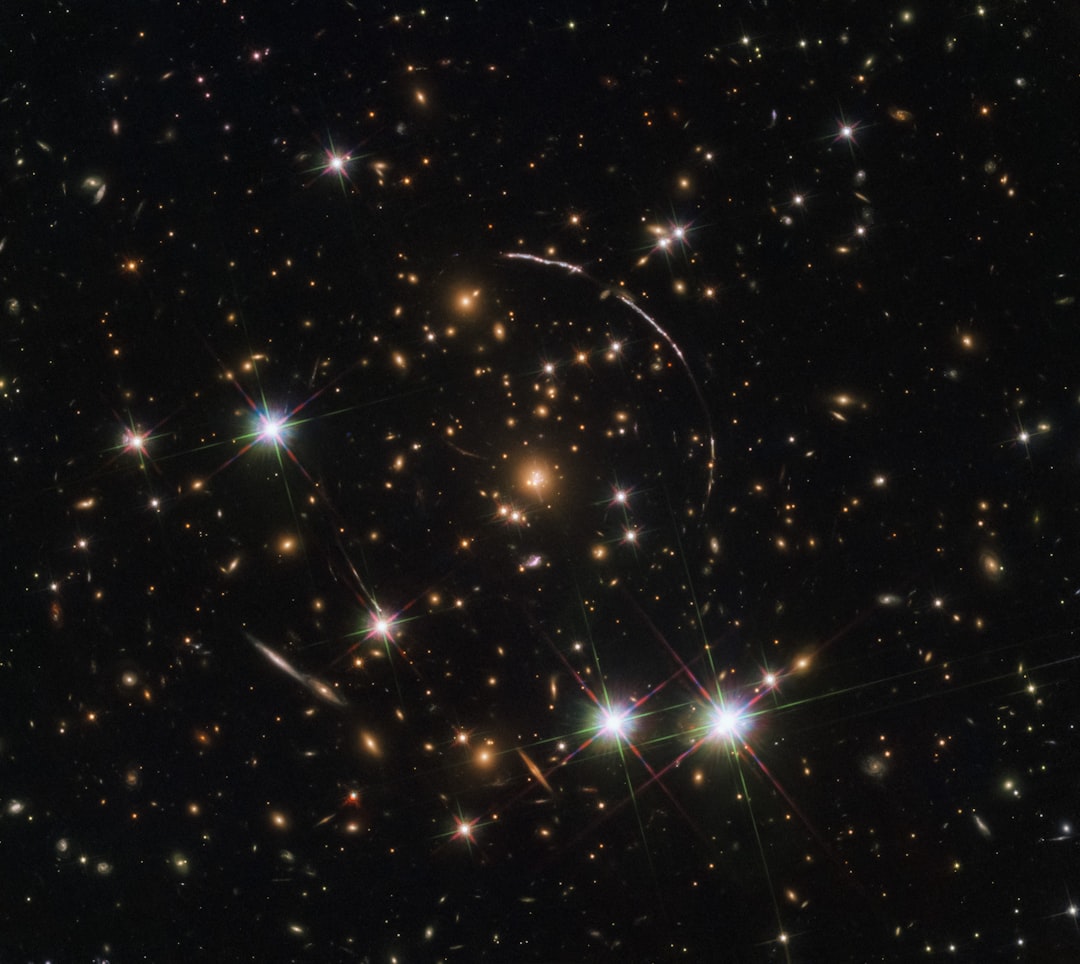
To appreciate just how surprising this discovery is, it helps to understand what Euclid was designed to do. Launched in early July 2023 aboard a SpaceX Falcon 9 rocket, Euclid is a flagship mission of the European Space Agency with an ambitious mandate: to survey approximately 1.5 billion galaxies across more than one-third of the sky, reaching back in cosmic time to a redshift of z=2 — roughly 10 billion years into the past.
By measuring the redshifts of galaxies across such an enormous volume of space, Euclid aims to reconstruct the expansion history of the Universe with unprecedented precision. This will allow scientists to probe the nature of dark energy, the mysterious force responsible for the Universe's accelerating expansion, as well as dark matter, the invisible scaffolding upon which galaxies form and cluster. These two components together account for roughly 95% of the total energy content of the Universe, yet their fundamental nature remains one of the deepest unsolved problems in modern physics.
To achieve these cosmic goals, Euclid carries two primary instruments: VIS, a visible-light imager capable of measuring the shapes of galaxies with extraordinary precision, and NISP, a near-infrared spectrometer and photometer for measuring redshifts. The combination gives the telescope a unique ability to capture vast swaths of sky in exquisite detail — a capability that, as it turns out, has unexpected applications even within our own Solar System.
The Discovery: Software Spots a Streak in the Stars
The comet's discovery was not the product of a deliberate Solar System search — it was the result of a clever piece of software encountering something it was not quite designed to find. The critical tool was developed by Mikko Pöntinen of the University of Helsinki, working in collaboration with the Solar System Objects Science Working Group of the Euclid Consortium. This group has been developing methods to extract Solar System science as a valuable by-product of Euclid's primary mission data.
"I was excited to see my software flag a 'streak' smeared across several images — the result of a fast-moving object. By predicting its position I could identify it in other images, in total finding it in five image sets. Further inspection revealed that it had a fuzzy cloud around it, indicative of an active object like a comet that is shedding dust and gas." — Mikko Pöntinen, University of Helsinki
The comet was identified in a series of images captured between September 16th and 24th, 2026, appearing across multiple exposures as a telltale smeared streak — a signature of an object moving rapidly relative to the background stars. Unlike distant galaxies, which remain essentially stationary across Euclid's observing timescales, Solar System objects betray their presence through this distinctive motion. Pöntinen's software was designed to catch exactly this kind of anomaly, tracking the object's trajectory to predict where it would appear in adjacent images and confirming its presence across a total of five image sets, comprising 16 individual exposures.
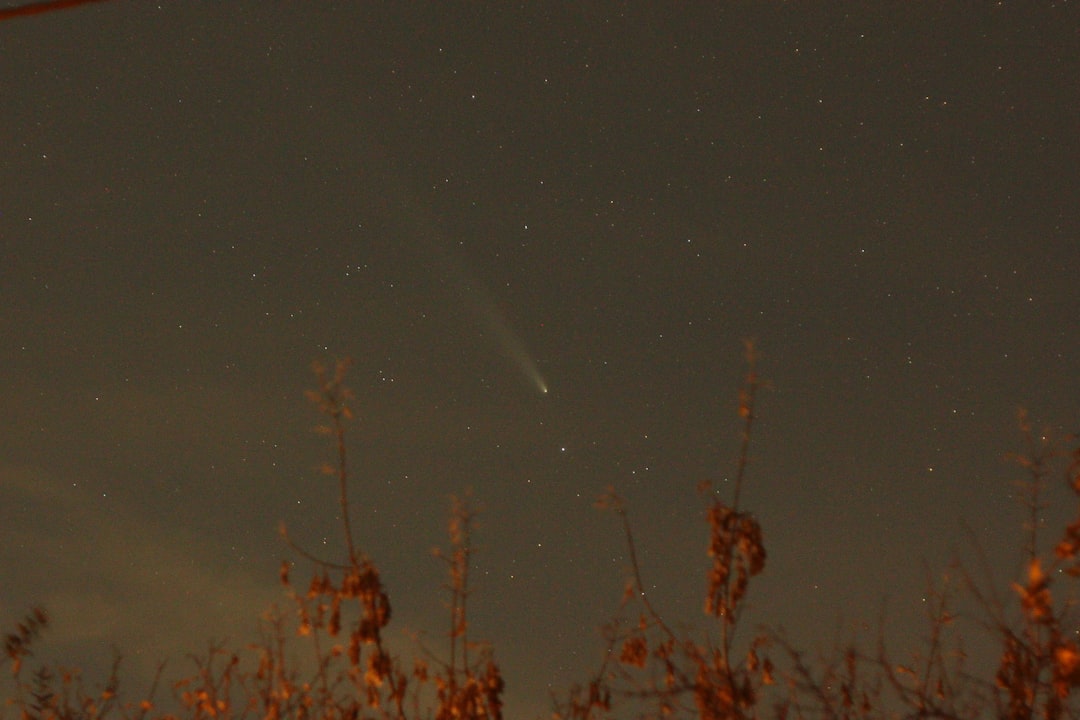
Crucially, the presence of a faint, diffuse coma — a hazy cloud of gas and dust enveloping the nucleus — confirmed that this was not merely an asteroid. The coma is the defining observational hallmark of a comet actively sublimating its surface ices under the warmth of the Sun.
What Is a Comet? Ancient Relics of the Solar System
Comets are among the most scientifically valuable objects in our Solar System. These dusty, icy bodies are effectively frozen time capsules, preserving material from the protoplanetary disk that surrounded the young Sun more than 4.6 billion years ago. Unlike the rocky planets of the inner Solar System, whose original compositions have been profoundly altered by geological processes, heat, and differentiation, comets have remained largely unchanged since the Solar System's formative epoch.
Most comets originate from one of two distant reservoirs:
- The Oort Cloud — a vast, spherical shell of icy bodies extending from roughly 2,000 to 100,000 astronomical units (AU) from the Sun, thought to be the source of long-period comets like C/2026 S1 (Euclid).
- The Kuiper Belt — a flattened disk of icy objects beyond the orbit of Neptune, extending from about 30 to 50 AU, and the primary source of short-period comets.
When a comet is perturbed from its distant reservoir — by gravitational interactions with passing stars, giant molecular clouds, or the planets themselves — and falls into the inner Solar System, solar radiation heats its surface. Volatile compounds such as water ice, carbon dioxide, carbon monoxide, and methanol begin to sublimate directly from solid to gas, carrying dust particles with them. This process generates the characteristic coma and the iconic tails — one composed of ionised gas pushed radially away from the Sun by the solar wind, and another of dust particles gently nudged by radiation pressure.
Beyond their role as pristine archives of early Solar System chemistry, comets hold particular fascination for their potential role in delivering water and organic molecules to the early Earth. Measurements of the deuterium-to-hydrogen ratio in cometary water have been a key line of evidence in debates about whether cometary impacts could have contributed meaningfully to Earth's oceans and perhaps even to the chemical precursors of life. Missions such as ESA's Rosetta mission, which rendezvoused with Comet 67P/Churyumov-Gerasimenko, have dramatically advanced our understanding of cometary composition and activity. Learn more about cometary science through NASA's Solar System Exploration portal.
An Unusual Orbit: Why Euclid Found It at All
One of the most intriguing aspects of C/2026 S1 (Euclid) is the reason it appeared in Euclid's field of view in the first place. The telescope deliberately avoids observing along the plane of the Milky Way, a region of sky densely packed with stars, gas, and interstellar dust that would hopelessly contaminate deep-sky imaging of background galaxies. Under normal circumstances, this observing strategy would mean that Euclid rarely encounters Solar System objects, most of which orbit close to the ecliptic plane — the plane defined by Earth's orbit around the Sun, which roughly coincides with the galactic plane in projection on the sky.
C/2026 S1 (Euclid), however, follows a highly inclined orbit. Rather than circling the Sun in the same flat disk as the planets, this comet follows a path that arches high above the plane of the Solar System — a characteristic that brought it directly into one of Euclid's meticulously chosen survey regions. This kind of high-inclination, long-period orbit is strongly suggestive of an Oort Cloud origin, where gravitational perturbations can redirect comets onto trajectories with inclinations spanning the full range from 0° to 180°.
At the time of discovery, C/2026 S1 (Euclid) was located approximately 1.3 billion kilometres (about 808 million miles) from Earth — a distance comparable to the space between the Sun and a point roughly halfway between the orbits of Jupiter and Saturn, or approximately 8.7 astronomical units. This distance is notable: at such a range, only a telescope of Euclid's sensitivity would have been likely to detect the comet's faint coma.
Deep Field North: The Sky Window That Made the Discovery Possible
The specific region of sky where the comet was found, Euclid's Deep Field North, located in the constellation Draco, was chosen for a scientifically strategic reason. It spatially overlaps with a region previously surveyed at great depth by NASA's Spitzer Space Telescope, the venerable infrared observatory that operated from 2003 until its retirement in January 2020. This overlap enables powerful multi-wavelength comparisons of galaxy populations across cosmic time.
In total, Euclid observed C/2026 S1 (Euclid) in five separate sub-fields within the Deep Field North, with between two and four exposures per sub-field, yielding a total of 16 exposures — a rich dataset that allowed precise characterisation of the comet's trajectory and confirmed the presence of its active coma.
"Very few comets are expected to be discovered by Euclid so it was a happy coincidence that the combination of the comet's orbit and Euclid's scanning over those days captured the object in multiple images." — Bruno Altieri, Euclid Archive Scientist
Confirmation, Designation, and the Road to Official Recognition
Scientific discoveries require rigorous verification before they become official. After Pöntinen's initial identification, the candidate comet was cross-checked against all known Solar System objects — comets and asteroids alike — catalogued in existing databases. Finding no match, Pöntinen reported the discovery to the Minor Planet Center (MPC), the internationally recognised clearinghouse operated under the auspices of the International Astronomical Union (IAU) and hosted at the Harvard-Smithsonian Center for Astrophysics. The MPC is responsible for the identification, designation, and orbital computation of small Solar System bodies.
Ground-based follow-up observations were subsequently obtained, providing the additional astrometric data needed to refine the comet's orbit and confirm its cometary nature. With these data in hand, the MPC formally assigned the designation C/2026 S1 (Euclid). The naming convention encodes key information: C/ indicates a non-periodic comet (or one with a period greater than 200 years), 2026 S1 reflects the year and half-month of discovery, and (Euclid) credits the discovering observatory.
Implications for Future Missions: A Link to Comet Interceptor
Beyond the immediate excitement of the discovery itself, the detection of C/2026 S1 (Euclid) carries significant implications for the coordination between Euclid and ESA's upcoming Comet Interceptor mission. Comet Interceptor, targeted for launch in the early 2030s, is designed to fly past a dynamically new comet — one making its first passage through the inner Solar System — or potentially even an interstellar object similar to 'Oumuamua or Borisov. The challenge is identifying such a target with sufficient lead time for a spacecraft already waiting at the Sun-Earth L2 Lagrange point to intercept it.
Euclid's discovery of C/2026 S1, while not itself a suitable Comet Interceptor target, demonstrates that the telescope's data pipeline can successfully identify and alert the community to newly discovered comets — precisely the kind of capability that will be essential for finding Comet Interceptor's eventual quarry.
"While this particular comet is not a suitable candidate for Comet Interceptor, the process of discovery and alert gives us a real test case for how our two mission teams will coordinate in the future. And we are of course happy to have discovered a previously unknown comet for the Solar System community to follow-up on." — Valeria Pettorino, Euclid Project Scientist
The Bigger Picture: Euclid as an Accidental Solar System Observatory
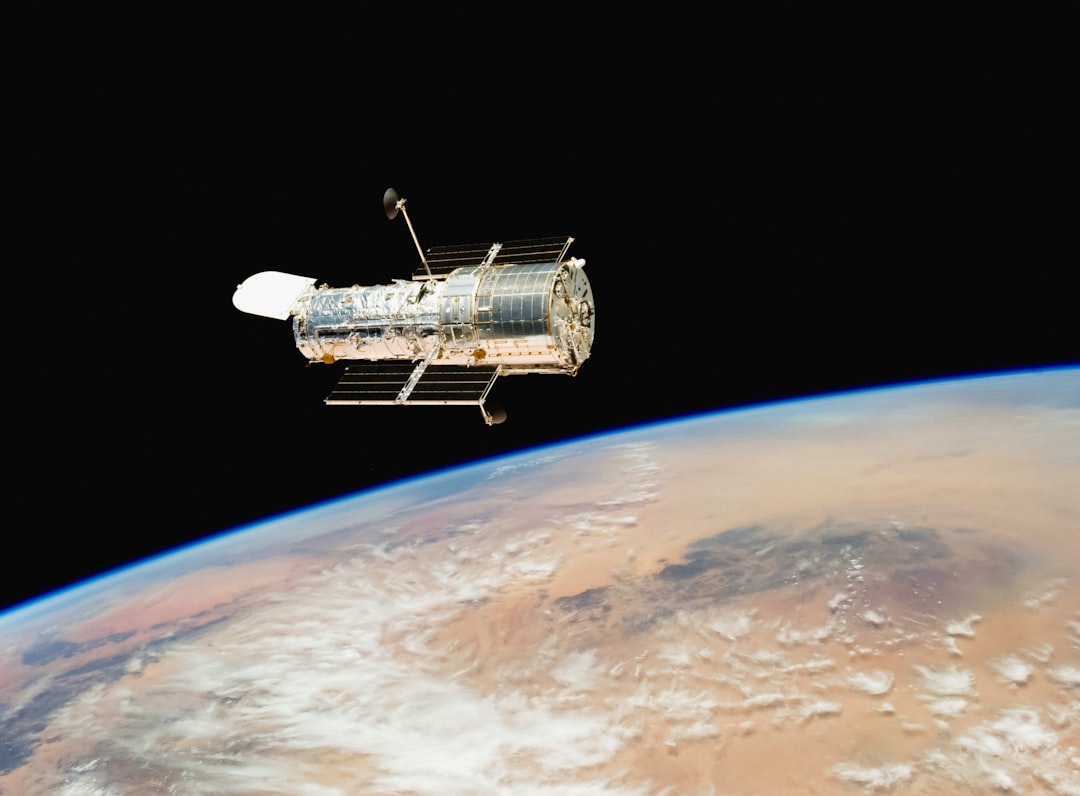
The discovery of C/2026 S1 (Euclid) is a vivid illustration of a broader truth about ambitious space observatories: their extraordinary capabilities frequently yield science far beyond their primary mandates. Euclid joins a distinguished lineage of space telescopes that have made unexpected Solar System contributions, from the Hubble Space Telescope's observations of comets, Kuiper Belt Objects, and trans-Neptunian bodies, to HubbleSite's iconic images of Comet Shoemaker-Levy 9's collision with Jupiter in 1994.
As Euclid continues its multi-year survey, the Solar System Objects Science Working Group will continue to refine its detection algorithms. Although only a tiny fraction of Euclid's total sky coverage is expected to intersect with the orbits of comets sufficiently inclined to appear in its fields, the telescope's sheer survey power — combined with increasingly sophisticated software — means that additional Solar System discoveries remain a genuine possibility. Each such finding enriches not only planetary science but also our understanding of the dynamical architecture of the Solar System and the distant reservoirs from which comets are drawn.
For a mission charged with mapping the dark universe at cosmic scales, finding a frozen relic of our own Solar System's birth wandering through its field of view is a delightful reminder that the universe has a way of surprising even the most meticulously planned scientific endeavours.
Key Facts: C/2026 S1 (Euclid)
- Discovered by: Euclid Space Telescope / Mikko Pöntinen (University of Helsinki) and the Euclid Consortium Solar System Objects Science Working Group
- Discovery images captured: September 16–24, 2026
- Location of discovery: Euclid Deep Field North, constellation Draco
- Distance from Earth at discovery: ~1.3 billion km (~808 million miles, ~8.7 AU)
- Orbital type: Long-period, high-inclination orbit (likely Oort Cloud origin)
- Orbital period: