The First Confirmed Exo-satellite Challenges Our Definitions of Planets and Moons
The cosmos has a way of humbling our most confident classifications. Stars, planets, and moons seem easy enough to define in the broad strokes: stars shine by nuclear fusion, planets orbit stars, and moons orbit planets. It sounds elegantly simple — until the universe decides to complicate things. As our observational technology has grown more sophisticated and our understanding of both our own solar system and distant star systems has deepened, these seemingly intuitive definitions have frayed at the edges, revealing a far messier and more spectacular cosmic reality.
A Familiar Debate: When Definitions Break Down
The most culturally resonant example of this definitional struggle is, of course, the ongoing debate over Pluto's planetary status. Pluto does orbit the Sun, but so does the asteroid Ceres, and thousands of other bodies in the Kuiper Belt. In 2006, the International Astronomical Union (IAU) made the landmark — and contentious — decision to reclassify Pluto as a dwarf planet, primarily because it has not "cleared its orbital neighborhood" of other debris, a criterion that full-fledged planets must meet. That decision has remained a lightning rod for debate within the astronomical community ever since.
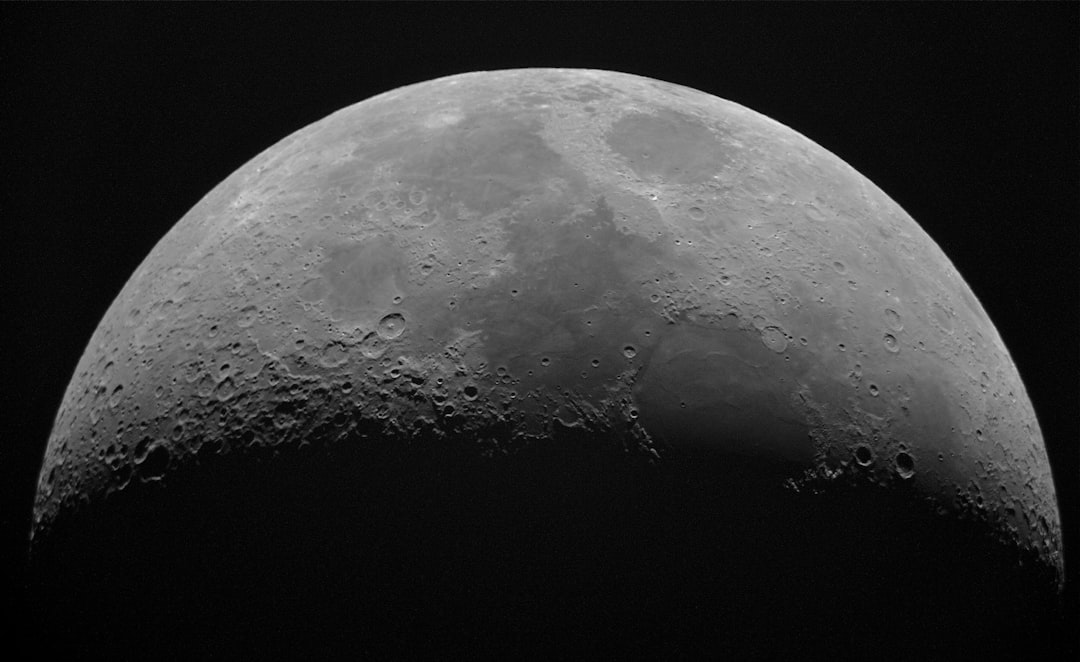
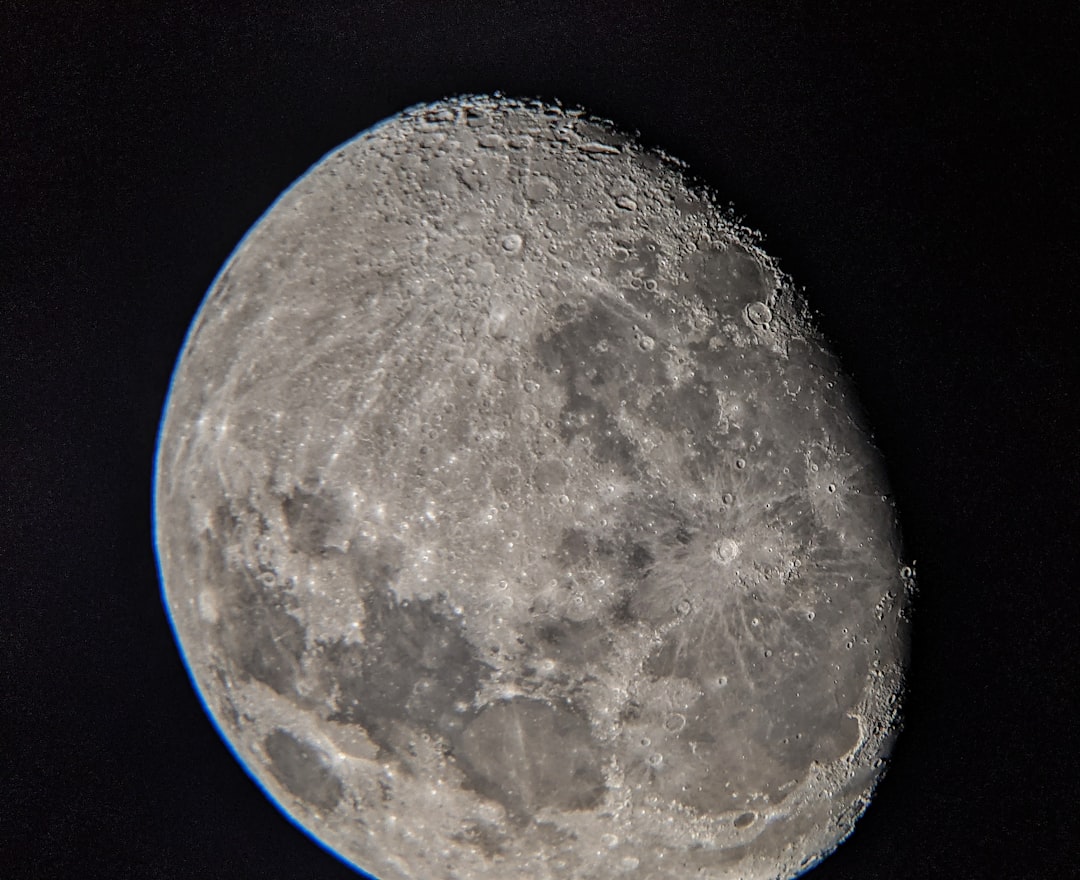
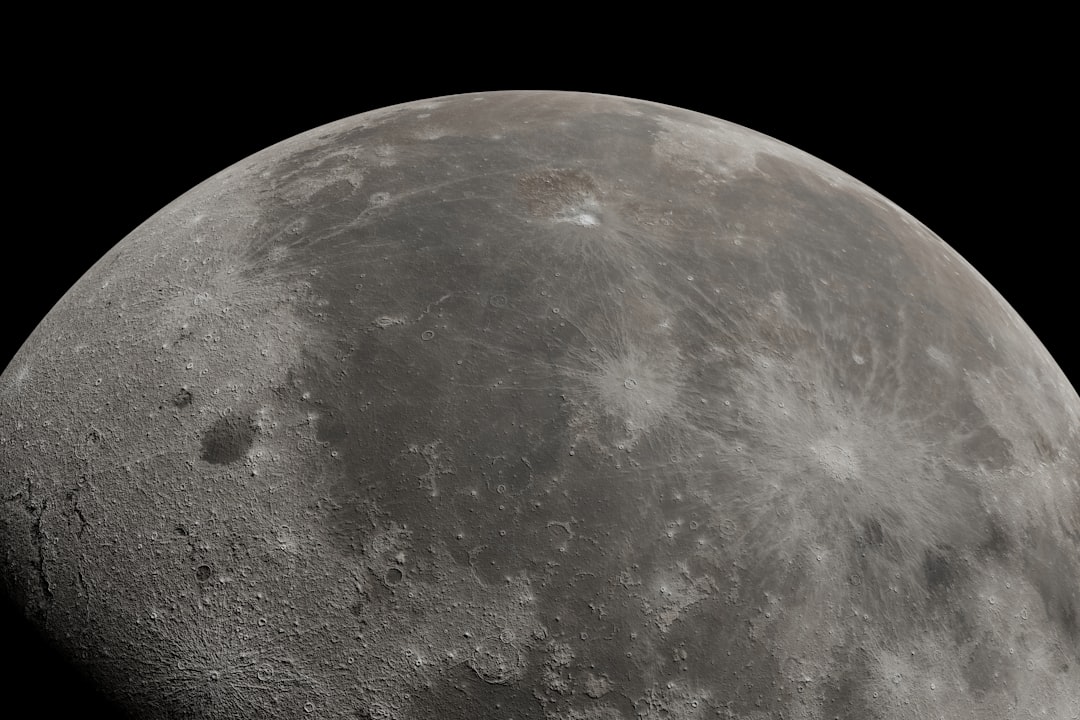
But Pluto's demotion opens a cascade of further questions. Pluto's largest companion, Charon, is so massive relative to Pluto — roughly half its diameter — that some astronomers argue the two form a double dwarf planet system rather than a planet-moon pairing. Their common barycenter, the point around which both objects mutually orbit, lies outside Pluto's surface, a characteristic more reminiscent of a binary system than a classical planet-moon relationship. Meanwhile, Earth's Moon is actually larger than Pluto in diameter — should it, too, be reconsidered? These debates, fascinating as they are, have largely centered on smaller bodies at the edges of our solar system. But a remarkable discovery in a distant star system now challenges our definitions at the opposite end of the mass spectrum.
"The universe does not organize itself according to our textbook categories. Every time we look deeper, we find objects that defy easy classification — and that is precisely what makes astronomy so thrilling."
Meet CD-35 2722: A Red Dwarf with Secrets
The star at the center of this story is CD-35 2722, an M-type red dwarf located approximately 70 light-years from Earth. Red dwarfs are the most common type of star in the Milky Way, accounting for an estimated 70–80% of all stars, yet they are too dim to be seen with the naked eye. They burn cool and slow, with surface temperatures typically ranging from about 2,400 to 3,700 Kelvin, and they can sustain nuclear fusion for tens to hundreds of billions of years — far outlasting stars like our own Sun.
Spectral observations of CD-35 2722 revealed something intriguing: the star exhibits a periodic radial velocity wobble, a telltale signature that it is being gravitationally tugged by an unseen companion. By carefully analyzing the amplitude and period of this wobble — a technique that has been central to exoplanet discovery since the 1990s — astronomers were able to estimate the mass of the companion object, designated CD-35 2722b. The results placed its mass somewhere between 29 and 38 Jupiter masses, firmly within the realm of a brown dwarf.
What Exactly Is a Brown Dwarf?
Brown dwarfs occupy a fascinating and poorly understood niche in the hierarchy of celestial objects, straddling the boundary between the most massive planets and the least massive stars. To qualify as a true star, an object needs sufficient mass — roughly 80 Jupiter masses — to sustain the fusion of hydrogen in its core. Objects below this threshold cannot ignite hydrogen fusion and are therefore not stars in the classical sense. However, objects with a mass exceeding approximately 13–15 Jupiter masses are still capable of fusing deuterium (a heavy isotope of hydrogen) for a period during their early lives, distinguishing them from ordinary gas giant planets that exist in pure hydrostatic equilibrium without any fusion at all.
- Stars: Greater than ~80 Jupiter masses; sustain hydrogen fusion.
- Brown Dwarfs: ~13–80 Jupiter masses; capable of deuterium fusion, but not sustained hydrogen fusion.
- Gas Giant Planets: Less than ~13 Jupiter masses; no nuclear fusion of any kind.
This makes brown dwarfs cosmically ambiguous — too massive to be planets in any traditional sense, yet too light to be stars. They are sometimes poetically called "failed stars", though many astronomers resist this characterization, preferring to see them as a distinct class of object entirely. You can learn more about brown dwarf classification from NASA's official brown dwarf resources.
A World Orbiting a World Orbiting a Star
Because CD-35 2722b is massive enough to be detected via direct imaging, astronomers turned to the European Southern Observatory's Very Large Telescope (VLT) in Chile — one of the most powerful ground-based observatories on Earth — to study it in detail. High-resolution spectral analysis of the brown dwarf then revealed something extraordinary: CD-35 2722b itself exhibits a periodic wobble, indicating that it, too, is being orbited by a companion object.
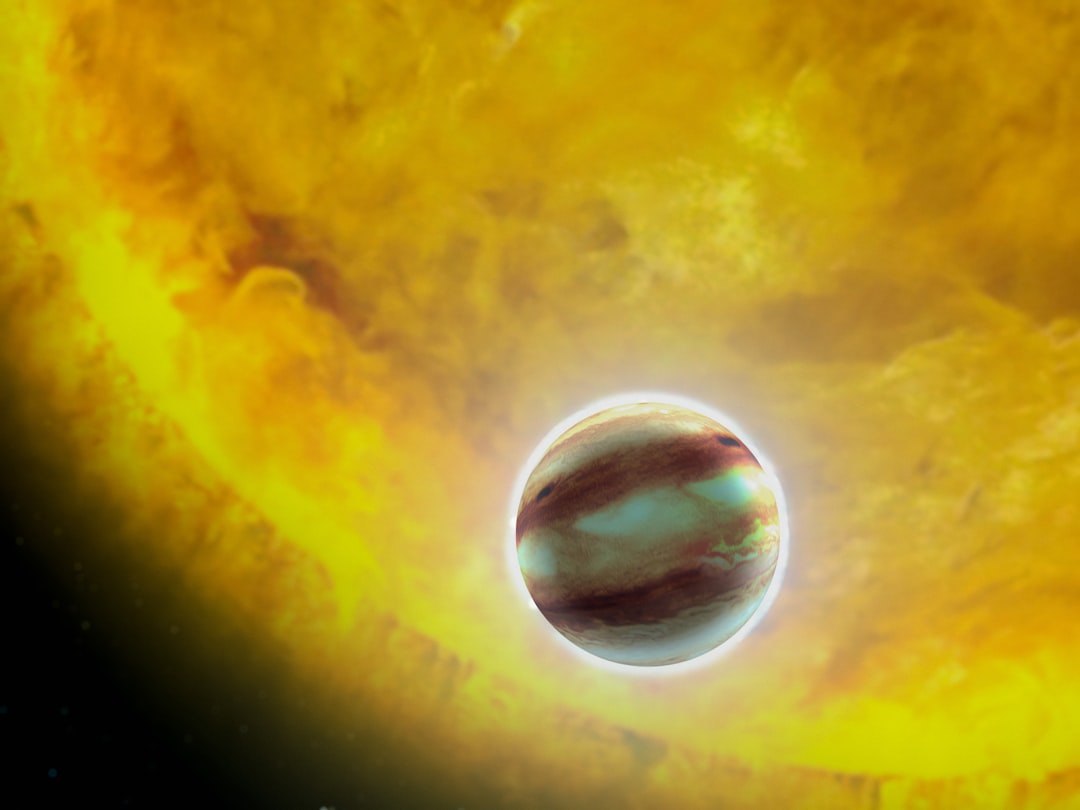
The best estimates place the mass of this inner companion at approximately one Jupiter mass — making it, in terms of size and mass, comparable to the gas giants of our own solar system. This object represents the first confirmed exo-satellite: a moon-like body orbiting not a star, but a substellar companion that is itself orbiting a star. The hierarchy is dizzying — a Jupiter-mass object orbiting a brown dwarf, which in turn orbits a red dwarf star, 70 light-years from Earth.
This discovery was published in the prestigious journal Nature by Hoy, Zurlo, Peña R, and colleagues, representing a landmark moment in observational astronomy. Details of the study can be found via the published paper in Nature.
"It is the first 'exo-satellite' to be confirmed, but it's a Jupiter-sized object orbiting a brown dwarf, which in turn orbits a star — a discovery that forces us to reconsider the very vocabulary we use to describe worlds."
The Definitional Crisis: Is It a Moon, a Planet, or Something Else?
This is where the discovery becomes philosophically as well as scientifically provocative. Under current IAU definitions, a moon is a natural satellite orbiting a planet. But CD-35 2722b is not a planet — it is a brown dwarf. And the object orbiting it has a mass comparable to Jupiter, the largest planet in our solar system. If Jupiter itself were declared a moon because it orbited a more massive substellar body, our entire planetary taxonomy would collapse.
The term "exo-satellite" offers a pragmatic, if temporary, workaround — acknowledging that the object is a satellite of something beyond our solar system, without committing to calling it a moon or a planet. But this linguistic patch reveals a deeper problem: our definitions of celestial bodies were built around our solar system, and the universe is under no obligation to conform to them. The International Astronomical Union may eventually need to revisit and expand its classification framework.
Could Exo-satellites Harbor Life?
The philosophical stakes are raised even higher when we consider the possibility of habitable exo-satellites. Brown dwarfs do emit heat and radiation, particularly when they are younger. The largest and youngest brown dwarfs can have surface temperatures approaching 2,000 Kelvin, glowing with a dim, reddish luminosity that is visible to a sufficiently sensitive telescope. The smallest and coolest brown dwarfs, by contrast, would be indistinguishable from large gas giant planets to the naked eye.
CD-35 2722b is estimated to be a mid-sized brown dwarf, placing it somewhere in the middle of this temperature range. More intriguingly, the red dwarf star it orbits could itself provide a habitable zone — the region around a star where liquid water could theoretically exist on a planetary surface. If the Jupiter-mass exo-satellite orbits the brown dwarf at the right distance, and if the brown dwarf is at the right distance from its parent star, then conditions for liquid water — and potentially life — could theoretically exist. Research into habitable zones around red dwarfs is ongoing and can be explored further through the NASA Exoplanet Exploration program.
Of course, significant obstacles remain. Red dwarf stars are known for intense stellar flares that can strip away the atmospheres of nearby bodies. Brown dwarfs cool rapidly over time, meaning their habitability window may be narrow. And a Jupiter-mass object in our own solar system is a gas giant, not a rocky world — raising questions about whether such a body could even possess a solid surface or liquid water in the conventional sense. Still, the possibility alone is enough to spark serious scientific inquiry.
A Gateway to an Entirely New Class of Worlds
Perhaps the most significant implication of this discovery is not the object itself, but what it suggests about the broader cosmos. If a Jupiter-mass exo-satellite can be found orbiting a brown dwarf in this star system, it is reasonable to expect that similar configurations exist throughout the galaxy — potentially in great numbers. Many brown dwarfs, particularly those orbiting in the habitable zones of their parent stars, may harbor planetary-mass companions of their own.
Next-generation observatories, including the James Webb Space Telescope (JWST), are uniquely positioned to probe the atmospheres and thermal emissions of such objects, potentially revealing whether any harbor conditions suitable for complex chemistry or even biology. The detection capabilities of JWST represent a quantum leap beyond previous instruments, making the study of exo-satellites not merely theoretical but an achievable observational goal.
- Exo-satellites could exist around a significant fraction of brown dwarfs in the Milky Way.
- Some may lie within the combined habitable zones of both their brown dwarf host and parent star.
- Their study could redefine our understanding of where life might exist in the universe.
- Future missions and telescopes will need classification frameworks designed with these bodies in mind.
The Universe Defies Our Categories — And That's the Point
The story of CD-35 2722b and its newly discovered companion is, at its heart, a story about the limits of human categorization in the face of cosmic complexity. Our definitions — stars, planets, moons — are tools built for a purpose, but like all tools, they have boundaries. The universe does not consult our textbooks before arranging its matter. It simply does what gravity, thermodynamics, and chance dictate, leaving us to catch up with new words, new frameworks, and new wonder.
What is certain is that the confirmed detection of the first exo-satellite marks the beginning of a new chapter in planetary science. It is the first of its kind to be found, but it will almost certainly not be the last. As our telescopes grow more powerful and our detection methods more refined, the catalog of strange and boundary-defying worlds will only grow — and with it, our understanding of what it means to be a world at all.
Reference
Hoy, K., Zurlo, A., Peña R, P.A. et al. Planetary-mass exosatellite detected around the substellar companion of a star. Nature 655, 865–869 (2026).