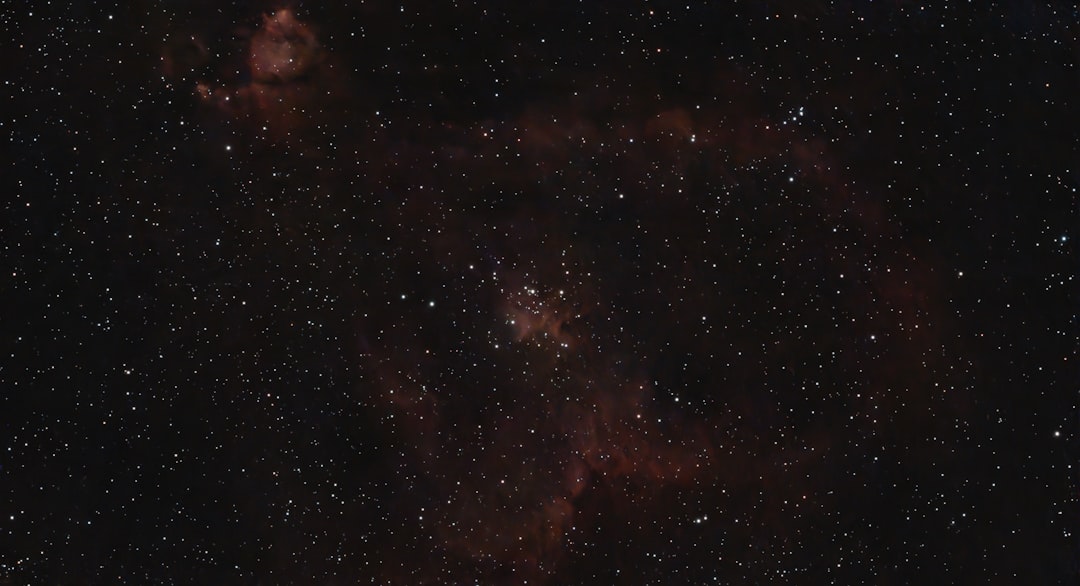
In the vast cosmic archive of our galaxy, some stars serve as ancient manuscripts, preserving the story of the Milky Way's tumultuous birth within their very atoms. A groundbreaking new study has assembled the most comprehensive catalogue yet of these stellar time capsules, revealing surprising insights about how our galactic home came into being more than ten billion years ago. The findings, based on observations of thousands of RR Lyrae variable stars, challenge long-held assumptions about galactic evolution and suggest that the Milky Way's formation was far more rapid and synchronized than previously believed.
The research represents a triumph of modern astronomical techniques, combining data from the European Space Agency's Gaia satellite with ground-based observations to create an unprecedented three-dimensional map of our galaxy's earliest stellar populations. This cosmic archaeology reveals not just where these ancient stars are located, but how they move through space—allowing astronomers to effectively rewind the clock and witness the Milky Way's assembly in reverse.
Cosmic Lighthouses: Understanding RR Lyrae Variables
At the heart of this discovery lies a remarkable class of stars known as RR Lyrae variables. These ancient stellar objects pulsate with extraordinary regularity, expanding and contracting over periods of just a few hours, causing their brightness to fluctuate in predictable patterns. What makes these stars invaluable to astronomers is their status as standard candles—objects whose intrinsic brightness is known with high precision.
The physics behind RR Lyrae variables is elegantly simple yet profoundly useful. These stars occupy a specific region on the Hertzsprung-Russell diagram, the fundamental chart astronomers use to classify stars based on their temperature and luminosity. Because all RR Lyrae stars have roughly the same absolute brightness, astronomers can determine their distance by measuring how bright they appear from Earth—a technique that has proven crucial for mapping the three-dimensional structure of our galaxy.
But the true value of RR Lyrae stars extends far beyond their role as cosmic measuring sticks. These stellar fossils formed when the universe was less than three billion years old, during the chaotic epoch when the first galaxies were coalescing from primordial gas clouds. According to research from NASA's Hubble Space Telescope, these stars contain chemical signatures that record the conditions of the early universe, making them living witnesses to cosmic history.
Mapping the Ancient Milky Way in Three Dimensions
The international research team's achievement required combining multiple cutting-edge observational techniques. At the core of their work was data from the Gaia satellite, which has revolutionized our understanding of the Milky Way by precisely measuring the positions, distances, and motions of more than one billion stars. By identifying thousands of RR Lyrae variables within this vast dataset, the researchers could trace the distribution and movement of the galaxy's oldest stellar populations with unprecedented accuracy.
The team's methodology went beyond simple position measurements. By analyzing the proper motions—the apparent movement of stars across the sky—and radial velocities—how fast stars are moving toward or away from us—the astronomers could reconstruct the orbital paths of these ancient stars. This allowed them to essentially run time backward, determining where these stars were located billions of years ago and how the early Milky Way was structured.
"We're not just taking a snapshot of where these stars are today. We're creating a time-lapse movie of galactic evolution, watching the Milky Way assemble itself from the building blocks of ancient stellar populations. It's like having a cosmic video recorder that lets us witness events that happened before Earth even existed."
Revolutionary Findings: A Synchronized Galactic Formation
The results of this extensive analysis have overturned a fundamental assumption about how the Milky Way's structural components came into being. For decades, astronomers believed that the different layers visible when we view our galaxy edge-on—the thin disk, thick disk, and stellar halo—formed sequentially over billions of years, each representing a distinct epoch in galactic history.
The new data tells a dramatically different story. The research reveals that these structural components all appear to have formed during a remarkably compressed timeframe, roughly simultaneously in cosmic terms. Rather than being separated by age, these galactic layers are distinguished primarily by their chemical composition, specifically their iron content.
This chemical gradient tells a story of progressive enrichment. The stellar halo, the diffuse sphere of stars surrounding the galactic disk, contains stars with the lowest iron abundance—these are the most pristine stellar populations, formed from gas that had been minimally processed by previous stellar generations. The thick disk shows intermediate iron levels, while the thin disk—where our Sun resides—contains the highest concentrations of heavy elements.
The Chemical Evolution Story
Understanding this chemical stratification requires appreciating how elements are created and dispersed throughout the cosmos. In the early universe, only hydrogen and helium existed in significant quantities. All heavier elements—what astronomers call metals, including life-essential elements like carbon, oxygen, and iron—are forged in the nuclear furnaces of stars and dispersed when those stars die, particularly in spectacular supernova explosions.
Each successive generation of stars forms from gas clouds that have been enriched by the deaths of previous stellar generations. This creates a cosmic inheritance system, where newer stars contain higher concentrations of heavy elements. The research from the Astrophysical Journal suggests that the Milky Way's different structural components represent gas reservoirs that experienced different degrees of this chemical enrichment, but all condensed into stars during the same general epoch of galactic formation.
The Andromeda Connection: Universal Formation Mechanisms
Perhaps the most intriguing aspect of this research involves comparisons with our nearest large galactic neighbor, Andromeda (M31). Despite being separated by 2.5 million light-years and having experienced quite different evolutionary histories, the chemical fingerprints of ancient stars in both galaxies show striking similarities.
This parallel is particularly remarkable given the galaxies' different characteristics. Andromeda is considerably more massive than the Milky Way and has undergone a different sequence of galactic mergers—the collisions and absorptions of smaller satellite galaxies that help shape galactic structure and stellar populations. Yet the pattern of chemical enrichment in their oldest stellar populations appears remarkably consistent.
This similarity suggests something profound: the fundamental processes governing early galaxy formation may operate according to universal principles, regardless of a galaxy's eventual size or merger history. The initial collapse and star formation that occurred in the first few billion years after the Big Bang seems to follow similar patterns across different environments, a finding that has important implications for our understanding of galaxy formation throughout the cosmos.
Implications and Future Directions
The implications of this research extend far beyond our understanding of the Milky Way itself. By establishing that galactic structural components can form rapidly and nearly simultaneously, the findings challenge theoretical models of hierarchical galaxy formation—the prevailing framework suggesting that large galaxies build up gradually through the merger of smaller systems over cosmic time.
The research also provides crucial constraints for cosmological simulations. Computer models that attempt to recreate galaxy formation from first principles must now account for the rapid assembly of multiple galactic components and the specific patterns of chemical enrichment observed in these ancient stellar populations. Teams at institutions like the Space Telescope Science Institute are already incorporating these findings into next-generation simulations.
Key Insights from the Research
- Synchronized Formation: The Milky Way's major structural components—halo, thick disk, and thin disk—all formed during a compressed timeframe in the early universe, rather than sequentially over billions of years
- Chemical Stratification: The primary distinction between galactic components is chemical composition rather than age, with progressive iron enrichment marking different stellar populations
- Universal Mechanisms: Similar chemical patterns in both the Milky Way and Andromeda suggest that early galaxy formation follows consistent physical processes across different environments
- RR Lyrae Precision: The catalogue of thousands of RR Lyrae variables provides the most detailed map yet of the galaxy's ancient stellar populations and their three-dimensional distribution
- Merger History Insights: The data reveals how the Milky Way incorporated smaller satellite galaxies during its formation, with chemical signatures preserving evidence of these ancient collisions
The Broader Context of Galactic Archaeology
This research exemplifies the growing field of galactic archaeology—the use of present-day stellar populations to reconstruct the history of galaxies. Just as terrestrial archaeologists piece together human history from artifacts and ruins, astronomers use the chemical compositions, ages, and orbital characteristics of stars to reconstruct the sequence of events that shaped our galaxy.
The technique relies on the fact that stars are remarkably stable over cosmic timescales. A star born ten billion years ago preserves in its atmosphere the chemical composition of the gas cloud from which it formed. By studying large populations of ancient stars, astronomers can map out how the galaxy's chemical composition evolved over time and how different regions assembled themselves from primordial material.
Future missions will build upon this foundation. The James Webb Space Telescope is already providing unprecedented views of the earliest galaxies in the universe, allowing astronomers to directly observe systems similar to what the infant Milky Way might have looked like. Meanwhile, upcoming ground-based surveys will identify and characterize even more RR Lyrae variables, further refining our understanding of galactic evolution.
Looking Forward: The Next Generation of Discovery
The comprehensive catalogue of RR Lyrae variables assembled by this research team represents just the beginning of a new era in galactic studies. As observational techniques continue to improve and datasets grow larger, astronomers will be able to probe even finer details of the Milky Way's formation history.
Upcoming missions like the Nancy Grace Roman Space Telescope, scheduled for launch in the mid-2020s, will dramatically expand the census of ancient stars, potentially identifying RR Lyrae variables in the most distant reaches of the galactic halo. These observations will test whether the rapid formation scenario holds true for the galaxy's outermost regions, or whether different formation mechanisms operated in the periphery.
The research also opens new questions about the role of dark matter in galactic assembly. The distribution and motions of these ancient stars provide clues about the underlying dark matter structure that provided the gravitational scaffolding for the Milky Way's formation. By comparing the observed stellar distributions with predictions from dark matter models, astronomers can test fundamental theories about the nature of this mysterious substance that comprises most of the universe's mass.
As we continue to decode the messages written in starlight from the earliest epochs of galactic history, we gain not just knowledge about our cosmic home, but insights into the fundamental processes that govern how structure emerges from chaos in the universe. These ancient stellar fossils, pulsating steadily across the eons, continue to illuminate both our past and the path toward future discoveries in the grand story of cosmic evolution.