In the ongoing quest to determine the precise age of our universe, cosmologists face a fundamental question: are our current models accurate enough, or could subtle assumptions be leading us astray? This third installment in our series examining cosmic timekeeping explores a provocative alternative theory that challenges one of cosmology's most fundamental frameworks—the assumption that our universe is essentially smooth and uniform at the largest scales.
The debate centers on whether the lumpiness of cosmic structure—the vast voids and dense galaxy clusters that dominate our observable universe—might fundamentally alter how we calculate cosmic time itself. If this alternative view is correct, the implications would be profound: not only would we need to revise our estimates of the universe's age, but we might also need to reconsider the very existence of dark energy, the mysterious force thought to be accelerating cosmic expansion.
At the heart of this controversy lies a sophisticated mathematical framework called the Friedmann-Lemaître-Robertson-Walker (FLRW) metric, which has served as the backbone of modern cosmology for nearly a century. But as observational technology improves and our maps of cosmic structure become more detailed, some researchers are asking: is this elegant model too simple to capture the full complexity of our universe?
The Foundation of Cosmic Timekeeping
The FLRW metric represents cosmology's most successful attempt to apply Einstein's general relativity to the universe as a whole. Like all scientific models, it relies on simplifying assumptions—a necessary compromise that allows physicists to extract meaningful predictions from equations that would otherwise be impossibly complex. The model's central assumption is cosmic homogeneity: the idea that when you zoom out far enough, the universe looks essentially the same in all directions and at all locations.
This assumption isn't arbitrary wishful thinking. Observations, particularly of the cosmic microwave background (CMB) radiation, confirm that the universe is remarkably uniform at scales of several hundred million light-years. The Wilkinson Microwave Anisotropy Probe (WMAP) and subsequent missions have shown that temperature variations in the CMB are only about one part in 100,000—an extraordinary degree of smoothness.
Within this framework, the FLRW metric provides a cosmic clock—a way to define a universal time coordinate that applies throughout the observable universe. This "proper time," typically denoted by the Greek letter tau (τ), measures the passage of time for observers who are at rest with respect to the overall cosmic expansion. It's the time you would measure on a clock if you weren't moving in any particular direction relative to the average motion of galaxies around you.
Finding Your Place in Cosmic Time
But how do we know if we're actually at rest with respect to cosmic expansion? After all, Earth orbits the Sun, the Sun orbits the galactic center, and our Milky Way galaxy is falling toward the massive Virgo Cluster. Fortunately, the universe provides a remarkably elegant solution: the cosmic microwave background serves as a universal reference frame.
The CMB was released approximately 380,000 years after the Big Bang, when the universe cooled enough for neutral atoms to form and photons to travel freely through space. Because this radiation was emitted simultaneously throughout the entire universe, it creates a natural reference frame. By measuring the CMB's temperature in different directions, astronomers can detect our motion through space—if we're moving in one direction, the CMB appears slightly blueshifted (hotter) ahead of us and redshifted (cooler) behind us due to the Doppler effect.
Measurements from the European Space Agency's Planck satellite reveal that our Local Group of galaxies is moving at approximately 627 kilometers per second relative to the CMB rest frame. Once we account for this motion, we can calculate proper time since the Big Bang—currently estimated at 13.8 billion years.
The Challenge of Cosmic Structure
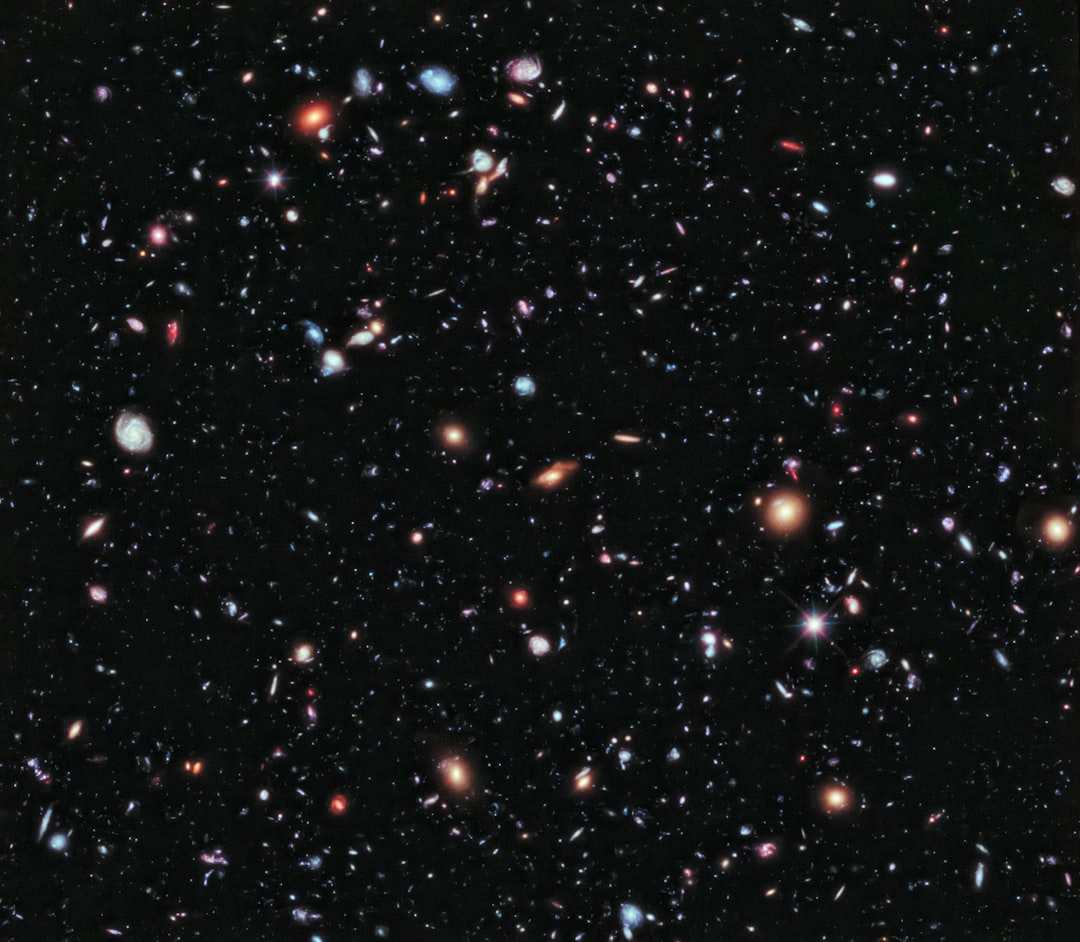
Here's where things get interesting—and controversial. While the universe appears smooth at scales of hundreds of millions of light-years, at smaller scales it's anything but uniform. Galaxies cluster together in vast filaments and sheets, separated by enormous voids containing almost no matter. These voids occupy approximately 70-90% of the universe's volume, depending on how you define their boundaries.
According to general relativity, gravity affects not just the motion of objects but the flow of time itself—a phenomenon called gravitational time dilation. Clocks run slightly slower in stronger gravitational fields. This effect has been precisely measured on Earth and is essential for the proper functioning of GPS satellites. But could this same effect, operating on cosmic scales, significantly alter our calculations of the universe's age?
"The question isn't whether gravitational time dilation exists in cosmic voids versus galaxy clusters—it definitely does. The question is whether this effect is large enough to matter for cosmological calculations, or whether it averages out to something negligibly small."
Enter the Timescape Cosmology
This is where David Wiltshire, a cosmologist at the University of Canterbury in New Zealand who trained under Stephen Hawking at Cambridge, proposes a radical alternative. His timescape cosmology suggests that the standard approach of assuming smoothness first and adding structure later may be fundamentally flawed. Instead, Wiltshire argues, we should start with the actual lumpy structure of the universe and then calculate what happens when we average over it.
The mathematical distinction might seem subtle, but the implications are dramatic. In Wiltshire's framework, time flows at significantly different rates in different cosmic environments. In the dense regions containing galaxies and clusters, where gravitational fields are stronger, time runs slower. In the vast empty voids, where gravity is weak, time runs faster—potentially much faster.
According to timescape theory, this differential time flow could explain several puzzling observations without invoking dark energy. The apparent acceleration of cosmic expansion, discovered in 1998 and honored with the 2011 Nobel Prize in Physics, might instead be an artifact of averaging over regions where time flows at different rates. Under this interpretation, the universe's age would vary depending on your location: approximately 14.2 billion years in galaxy-rich regions, but potentially over 18 billion years in the voids.
The Standard Cosmology Counterargument
Mainstream cosmologists remain deeply skeptical of timescape theory, and for good reason. The standard approach treats time dilation effects in voids and clusters as second-order corrections—real but tiny, contributing less than 0.01% to cosmological calculations. This seems reasonable given that even the densest galaxy clusters occupy only a small fraction of the universe's volume.
More importantly, the FLRW metric isn't just used to calculate the universe's age—it forms the foundation for cosmological simulations that model how structure formed and evolved over billions of years. These simulations, such as the Illustris Project and its successors, successfully reproduce the observed distribution of galaxies, clusters, and voids. They predict the properties of the cosmic web with remarkable accuracy, from the sizes of galaxy clusters to the statistical properties of void regions.
If the FLRW metric's treatment of time and structure were fundamentally wrong, these simulations would fail spectacularly. Instead, they work remarkably well, suggesting that the standard approach, while approximate, captures the essential physics.
Observational Tests and Future Prospects
The debate between timescape cosmology and standard ΛCDM (Lambda Cold Dark Matter) cosmology isn't purely theoretical—it makes testable predictions. The two models predict slightly different patterns in how galaxies cluster, different relationships between distance and redshift, and different evolution of cosmic structure over time.
Recent observations from surveys like the Sloan Digital Sky Survey and upcoming missions such as ESA's Euclid telescope will provide increasingly precise tests. These observations will measure the expansion history of the universe with unprecedented accuracy, potentially distinguishing between the predictions of different cosmological models.
Key Points of the Timescape Debate
- Mathematical Framework: Timescape proposes averaging over lumpy structure first, rather than assuming smoothness and adding perturbations—a fundamentally different approach to applying general relativity on cosmic scales
- Time Dilation Effects: While both models acknowledge gravitational time dilation, they differ dramatically in estimating its magnitude—standard cosmology says <0.01%, timescape suggests effects large enough to eliminate the need for dark energy
- Simulation Success: The remarkable agreement between FLRW-based simulations and observations of cosmic structure provides strong support for the standard approach
- Observational Constraints: Future surveys will provide increasingly stringent tests, particularly through precise measurements of cosmic expansion at different epochs
- Theoretical Consistency: Critics argue that timescape's non-standard application of general relativity leads to ambiguities and inconsistencies that undermine its predictive power
The Bigger Picture: Why This Matters
At stake in this debate is more than just the precise age of the universe. If timescape cosmology were correct, it would eliminate the need for dark energy—the mysterious component thought to constitute about 68% of the universe's total energy density. This would represent one of the most dramatic paradigm shifts in physics since the acceptance of general relativity itself.
However, the weight of evidence currently favors the standard model. The FLRW metric, despite its simplifying assumptions, has proven to be an extraordinarily successful framework. It correctly predicted the existence of the CMB decades before its discovery, accurately describes the expansion history of the universe, and provides the foundation for simulations that successfully reproduce observed cosmic structure.
The principle at work here is one that physicists have relied on for centuries: when a simple model works well across multiple independent tests, it's probably capturing something fundamental about reality, even if it's not the complete story. The FLRW metric may indeed be an approximation, but it appears to be an excellent one—good enough that corrections from cosmic lumpiness, while real, are too small to fundamentally alter our conclusions about the universe's age and evolution.
As we continue to refine our observations and develop more sophisticated theoretical tools, we may yet discover subtle effects that require modifications to our standard cosmological model. But for now, we can be reasonably confident that the universe is indeed approximately 13.8 billion years old—at least in the cosmic reference frame defined by the CMB, which is the most meaningful way to define a universal age.
The story of cosmic timekeeping continues to evolve, reminding us that science progresses not through absolute certainty, but through the careful evaluation of competing ideas against an ever-growing body of observational evidence. In this ongoing process, even unsuccessful challenges to the standard model serve a valuable purpose: they force us to examine our assumptions, sharpen our arguments, and ultimately deepen our understanding of the cosmos we inhabit.